To save content items to your account,
please confirm that you agree to abide by our usage policies.
If this is the first time you use this feature, you will be asked to authorise Cambridge Core to connect with your account.
Find out more about saving content to .
To save content items to your Kindle, first ensure no-reply@cambridge.org
is added to your Approved Personal Document E-mail List under your Personal Document Settings
on the Manage Your Content and Devices page of your Amazon account. Then enter the ‘name’ part
of your Kindle email address below.
Find out more about saving to your Kindle.
Note you can select to save to either the @free.kindle.com or @kindle.com variations.
‘@free.kindle.com’ emails are free but can only be saved to your device when it is connected to wi-fi.
‘@kindle.com’ emails can be delivered even when you are not connected to wi-fi, but note that service fees apply.
This book presents a reconstruction of the socio-economic, ethnic, cultural, and political history of the Carpathian-Danubian area in the eighth and ninth centuries at a period when nomadic peoples from the east including the Bulgars, Avars, and Khazars migrated here. The work is based on a comprehensive analysis of narrative and archaeological sources including sites, artefacts, and goods in the basin bordered by the Tisza river in the west, the Danube in the south, and the Dniestr river in the east, covering swathes of modern-day Romania, Moldova, Ukraine, Serbia, and Hungary.
In Roman times, the area between the Lower Rhine and the Meuse in the present day province of South Holland in the Netherlands, was known as the administrative district of the community of the Cananefates (the civitas Cananefatium). The formation of this community, as well as the changes that took place within this group, were researched by means of a systematic analysis of the archaeological remains. In order to understand the role of the Roman state in these processes, the urban and military communities were also studied. In this way an overview was created of an administrative region in which aspects such as the interaction between the different groups, the character of the rural community and the differences with other rural groups along the borders of the Roman Empire could be studied.
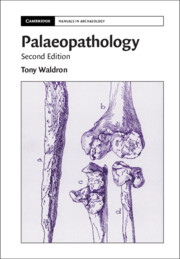
Palaeopathology is an evidence-based guide to the principal types of pathological lesions often found in human remains and how to diagnose them. Tony Waldron presents an innovative method of arriving at a diagnosis in the skeleton by applying what he refers to as 'operational definitions'. The method ensures that those who study bones will use the same criteria for diagnosing disease, thereby enabling valid comparisons to be made between studies. Waldron's book is based on modern clinical knowledge and provides background information on the natural history of bone disease. In addition, the volume demonstrates how results from studies should be analysed, methods of determining the frequency of disease, and other types of epidemiological analysis. This edition includes new chapters on the development of palaeopathology, basic concepts, health and disease, diagnosis, and spinal pathology. Chapters on analysis and interpretation have been thoroughly revised and enlarged.
Heterarchical or hierarchical? Egalitarian or unequal? Segmented or complex? Tribe, chiefdom, middle range? All these questions have been vividly discussed in an effort to reconstruct Bronze Age society within a wider area of central Europe. The extensive spectrum of published literature offers varied and often contradictory theoretical models, but we still know very little about the organization of particular social units, especially in the context of settlements. The morphological, technological and spatial analysis of movable and immovable sources from the fortified settlement in Spišský Štvrtok contributes in many respects to solution of the discussed problem in the northeastern Carpathian region. In the case of the Spišský Štvrtok locality, we can interpret the degree of social complexity on the basis of qualitative and quantitative parameters of material culture, evidence of production activities and their specialization level in correlation with spatial distribution of intra-site activity areas. Moreover, the detected tendencies are independently confirmed by the morpho-typological differences between gold and bronze artefacts contained in hoards, by architectonic details and by the presence of regular ritual activities. The achieved results thus indicate possible horizontal and vertical ranking, which was adapted to the local community.
In this paper, we discuss observations from fieldwork in northern Kenya which revealed solid evidence for a vital ongoing rock art tradition among warriors of Samburu—lmurran. They make rock art during their lives as warriors, typically between the ages of 15 and 30, when they live away from their villages, herding cattle and thus representing a specific ‘community of practice’. Our findings reveal that Samburu rock art is made predominantly as a leisure occupation, while camping in shelters, as part of activities also involving the preparation of food. Typical images include domestic animals, humans (both men and women) and occasionally wild animals such as elephants and rhinos. Each age-set and new generation of lmurran is inspired by previous artwork, but they also change the tradition slightly by adding new elements, such as the recent tradition of writing letters and names close to the images. We conclude that even though rock art as such is not part of any ritual or ceremonial setting, it plays an important role as an inter-generational visual culture that transfers a common ongoing cultural engendered warrior identity through time.
The history of reindeer domestication is a critical topic in the study of human-animal relationships across Northern Eurasia. The Iamal-Nenets region of Arctic Siberia, now a global centre of reindeer pastoralism, has been the subject of much recent research on reindeer domestication. However, tracking the beginnings of reindeer domestication in this region and elsewhere in Eurasia has proved challenging. Archaeological imagery is an under-utilized source of information for exploring animal domestication. In this paper we explore the abundant reindeer imagery found at the Iron Age site of Ust’-Polui in Iamal, dating from ~260 bce to ce 140. While reindeer were hunted in Siberia long before the occupation of Ust’-Polui, portable reindeer imagery appears abruptly at this time period, co-occurring at the site with equipment thought to be for training transport reindeer. Training and working with transport reindeer required long-term engagement with specific animals that became well known and precious to their human keepers. Creating, utilizing and depositing the reindeer imagery objects at Ust’-Polui was a way of acknowledging critical new working relationships with specific domestic reindeer.
Archaeological analyses of child funerary remains have often revolved around discussions of ascribed status and demographic trends. Other social and spatial dimensions of child burial are often left unexplored. This article introduces a novel perspective, through the analysis of child burials in Predynastic Egypt. My analysis focuses on the changing rates and spatial distribution of child burials in community necropoleis, with special attention to how their placement was used to renegotiate power relationships, and perhaps even concepts of personhood, in Predynastic society. The importance of children's funerals for creating of a sense of community through attachment to place is also considered. Criticizing analyses that rely on quantitative data to the exclusion of other factors, I emphasize the contribution of childhood, practice theory, emotions and personhood for the study of social complexity. My arguments point towards significant changes in the emotional dimension of children's funerary practices experienced during the later fourth millennium bc, and links these transformations to processes of state formation in Egypt.
Large material accumulations from single events found in the archaeological record are frequently defined as evidence of ritual. They are interpreted as generalized deposit categories that imply rather than infer human motivations. While useful in the initial collection of data, these categories can, over time, become interpretations in and of themselves. The emic motivations behind the formation process of ‘ritual deposits’ ought to be considered using a relational ontology as an approach to understanding how past populations interacted with non-human actors, such as structures and natural features on the landscape. The present study evaluates the assembly and possible function of a dense deposit of artifacts recovered from a Classic period sweat bath at Xultun, Guatemala. Analyses of the various artifact types and human remains in the deposit in relation to what is known of the social history of the sweat bath itself illustrate ontological relationships among offered materials as well as between the offering and the personified place in which it was recovered. We observe that with a better understanding of place, it is possible to evaluate the ritual logic in Classic Maya material negotiations.
This article makes the case for the utility of an aesthetic approach to the archaeological record, drawing on the philosophical work of Jacques Rancière on aesthetics and politics. The case of an archaeology of African slavery on Jesuit vineyards in colonial Peru is offered to explore nuances in power and the production of enslaved subjectivities that become visible through a consideration of aesthetic fields. Of particular interest are the aesthetics of administrative policy as materialized in space and the built environment and enslaved responses through aesthetic interventions. Rather than focusing on the specific meaning or hybridity involved in the creation of the material, a Rancièrean aesthetic approach considers how materials were potentially charged with multiple, sometimes contentious meanings through activation and engagement in the aesthetic experience.
Engraving sites are rare in mainland and Island Southeast Asia (ISEA) where painted art dominates the prehistoric artistic record. Here we report two new engraving sites from the Tutuala region of Timor-Leste comprising mostly humanoid forms carved into speleothem columns in rock-shelters. Engraved face motifs have previously been reported from Lene Hara Cave in this same region, and one was dated to the Pleistocene–Holocene transition using the Uranium–Thorium method. We discuss the engravings in relation to changes in technology and material culture that took place in the terminal Pleistocene and early Holocene archaeological records in this region of Timor as well as neighbouring islands. We suggest that the engravings may have been produced as markers of territorial and social identity within the context of population expansion and greater inter-group contacts at this time.
Joan Gero argued that archaeological interpretation is not the accumulation of truth but rather an ideological construct. Post-colonial studies building on Gero's work critique notions of universal value, that aspects of human cultural heritage hold value for all peoples. However, these studies are not specific about what a post-colonial analysis of the archaeological record might look like, particularly involving material culture categories. What appear as fundamental artefact classes remain and so appeal to a form of universal value. Here we employ a novel application of the ontological turn, specifically Holbraad's method of ontography, to break away from conventional approaches to stone artefact categorization and interpretation. We use Lucas’ discussion of materialization to develop an alternative approach to artefact categories considering two assemblages of artefacts from the North Island of Aotearoa. Both feature large numbers of obsidian artefacts. The obsidian provides the means to investigate levels of historical use, since the material is identifiable to geological source, analysable technologically and retains traces of use. Using the results of obsidian analyses, we investigate the concepts on which archaeologists have based assessments of the relationships among material culture items, suggesting ways in which archaeologists might consider creating space for post-colonial ontologies.
Many archaeologists have sought to interpret the archaeological record with an understanding that non-humans are active constituents within myriad human ontologies. I suggest that to truly understand the spaces with which we exist, we need not invite non-humans into our ontologies, but rather reincorporate ourselves into theirs. This approach decenters humans and puts forth an ontology of matter, within which diverse human ontologies can unfold but to which we are all subject. A closer look at water, specifically at the ancient Maya pilgrimage site of Cara Blanca, Belize, offers an example of how humans exist as only one part of many that participate in the formation of landscapes and shows how water's affect preempts cultural relationships with water. The inherent qualities of water are affective, and it is this affect that integrates Cara Blanca. I introduce my adoption of the concept of kinesis, a territorializing force that allows for the possibility of non-humans to cause history. Thus, I follow water through the archaeological data, elucidating how water's kinesis created possibility at Cara Blanca.
Geoglyphs are widely seen as an expression of past sacred landscapes. In this article, I offer a new theoretical approach to geoglyphs, interpreting them as a distinctly anarchic and decentralized medium for ritual activity. When we define geoglyphs as large-scale images, and exclude other phenomena such as earthworks, it is clear that their occurrence is actually quite limited in space and time. Almost all known examples of geoglyphs are located in the Americas, and they are particularly associated with ‘middle-range’ societies, rather than states or empires. Geoglyphs produced by hunter-gatherer communities are also comparatively rare. I regard this pattern as a direct consequence of the anarchist affordances of the geoglyph medium. In agricultural societies where regional integration and incipient centralization were taking place (e.g. the ancient Nasca), geoglyphs provided a decentralizing counterbalance. I therefore theorize the incorporation of geoglyph-based ritual practices as a historically situated process of constitutional reform, whereby ancient peoples consciously sought to redistribute power and authority.
First comprehensive account of the origins and early history of the Chewa as revealed by oral tradition and archaeology that allows a more accurate picture of a pre-literate society