To save content items to your account,
please confirm that you agree to abide by our usage policies.
If this is the first time you use this feature, you will be asked to authorise Cambridge Core to connect with your account.
Find out more about saving content to .
To save content items to your Kindle, first ensure no-reply@cambridge.org
is added to your Approved Personal Document E-mail List under your Personal Document Settings
on the Manage Your Content and Devices page of your Amazon account. Then enter the ‘name’ part
of your Kindle email address below.
Find out more about saving to your Kindle.
Note you can select to save to either the @free.kindle.com or @kindle.com variations.
‘@free.kindle.com’ emails are free but can only be saved to your device when it is connected to wi-fi.
‘@kindle.com’ emails can be delivered even when you are not connected to wi-fi, but note that service fees apply.
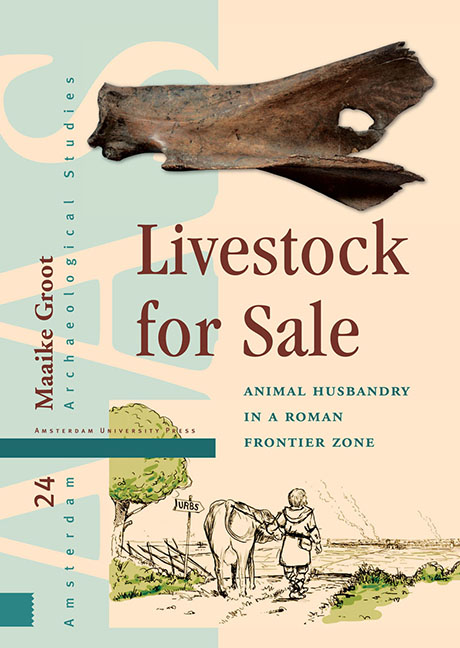
The civitas Batavorum was a settlement on the north-western frontier of the Roman Empire, and it is now the site of numerous archaeological excavations. This book offers the most up-to-date look yet at what has been discovered, using the newest archaeological techniques, about the town and its economy, its military importance, and the religious and domestic buildings it held. It will be essential reading for anyone studying the economy of the Roman provincial countryside or the details of food supply for the Roman army and town.
We propose a new theory of human cognitive evolution, which we term Complementary Cognition. We build on evidence for individual neurocognitive specialization regarding search abilities in the modern population, and propose that our species cooperatively searches and adapts through a system of group-level cognition. This paper sets out a coherent theory to explain why Complementary Cognition evolved and the conditions responsible for its emergence. Using the framework of search, we show that Complementary Cognition can be contextualized as part of a hierarchy of systems including genetic search and cognitive search. We propose that, just as genetic search drives phenotypic adaptation and evolution, complementary cognitive search is central to understanding how our species adapts and evolves through culture. Complementary Cognition has far-reaching implications since it may help to explain the emergence of behavioural modernity and provides a new explanatory framework for why language and many aspects of cooperation evolved. We believe that Complementary Cognition underpins our species’ success and has important implications for how modern-day systems are designed.
As a raw material, ivory has been used to manufacture a wide range of objects, normally associated with sumptuous material culture. In this article we explore the role played by ivory and ivory artefacts among early complex societies, and particularly its importance in the definition of identities among emergent elites. To this end, we make a thorough examination of the evidence from Copper Age Iberia, focusing on the mega-site of Valencina, in southern Spain. This site has provided what to date is the largest assemblage of prehistoric ivory in western Europe, with an estimated total of 8.8 kg, including finely crafted artefacts of unrivalled beauty and sophistication. Our study looks carefully at the technological, morphological and contextual dimensions of Copper Age ivory. As a result, we contend that the broad morphological variability together with the technological uniformity of this assemblage suggest that, while belonging to a common technological tradition, objects were deliberately crafted as unique and unrepeatable so that they could be used to create and maintain socio-cultural idiosyncrasies and ideological legitimation.
In the Late Mesolithic graves of Yuzhniy Oleniy Ostrov, northwest Russia, large numbers of Eurasian elk (Alces alces) incisors have been found. These teeth, for the most part fashioned into portable pendants, seem to have formed decorative sets for the garments or accessories of the deceased. This article examines both the technologies associated with these artefacts and their uses, as well as reflecting on the sensorial experiences generated by them. Osteological analysis of a sample of 100 specimens indicates that all types of incisors were used for making the pendants. Traceological analysis indicates that the teeth were modified by scraping, grooving, grinding and retouching. Traces of wear consist of general wear and distinctive pits or pecks on the perimeters of the crowns. These traces indicate that the pendants were worn before their deposition in the graves, in such a way that they were in contact with both soft and solid materials. This pattern of pits or pecks has until now been unreported in the traceological literature. In experiments, a similar pattern emerged when pendants of fresh elk incisors were hung in rows and bunches and struck against one another. These strokes created a rattling sound. Thus, the elk incisors of Yuzhniy Oleniy Ostrov appear to provide insight into previously unattainable sonic experiences and activities of Mesolithic hunter-gatherers, as well as the early history of the instrument category of rattles.
Dedicatory offerings of small colourful objects are often found in pre-Hispanic architectural contexts in the Ancestral Pueblo region of the American Southwest. These deposits are particularly numerous in the roof support pillars of circular ritual structures (kivas) at the site of Pueblo Bonito, Chaco Canyon, which served as the ceremonial hub of the Chacoan regional system between the tenth and twelfth centuries ce. Based on the importance of directionality and colour in traditional Pueblo worldviews, archaeologists speculate that the contents of these radial offerings may likewise reference significant Chacoan cosmographic elements. In this paper, I explore this idea by examining the distribution of colours and materials in kiva pilaster repositories in relation to directional quadrants, prominent landscape features, and raw material sources. I discuss the results in the context of Pueblo cosmology and assemblage theory, arguing that particular colours were polyvalent and relational, deriving their meanings from their positions within interacting and heterogenous assemblages.
Archaeologists, like many other scholars in the Social Sciences and Humanities, are particularly concerned with the study of past and present subalterns. Yet the very concept of ‘the subaltern’ is elusive and rarely theorized in archaeological literature, or it is only mentioned in passing. This article engages with the work of Gramsci and Patricia Hill Collins to map a more comprehensive definition of subalternity, and to develop a methodology to chart the different ways in which subalternity is manifested and reproduced.
In this paper we argue that to understand the difference Posthumanism makes to the relationship between archaeology, agency and ontology, several misconceptions need to be corrected. First, we emphasize that Posthumanism is multiple, with different elements, meaning any critique needs to be carefully targeted. The approach we advocate is a specifically Deleuzian and explicitly feminist approach to Posthumanism. Second, we examine the status of agency within Posthumanism and suggest that we may be better off thinking about affect. Third, we explore how the approach we advocate treats difference in new ways, not as a question of lack, or as difference ‘from’, but rather as a productive force in the world. Finally, we explore how Posthumanism allows us to re-position the role of the human in archaeology,
This essay argues for the diversity and promise of posthuman approaches in archaeology by dispelling blanket critiques, by differentiating between distinct lines of post-anthropocentric thought and by pointing to parallels between Posthumanism and collaborative Indigenous archaeologies. It begins by arguing that symmetrical archaeology is but one part of the diverse body of thought labelled ‘posthuman’. Next, it explores broader posthuman engagements with political issues relevant for collaborative Indigenous archaeologies, particularly concerns regarding under-represented groups in the field. Finally, it identifies flat ontologies as key components of posthuman approaches, clarifying what this term means for different lines of post-anthropocentric thought and briefly considering how the concept of flatness compares with Indigenous metaphysics.
Posthumanism is a growing field of interdisciplinary study that has emerged, principally in the last 20 years, as a broad church which seeks to reconceptualize human beings’ relationships with the world. At its heart, Posthumanism seeks to destabilize and question the category of ‘human’, which it sees as having previously been treated as transcendent and ahistorical. In its place, the figure of the posthuman aims to capture the complex and situated nature of our species’ existence, outside traditional dichotomies like culture and nature, mind and body, person and environment, and so on. From animal studies (e.g. Despret 2016; Wolfe 2009), via a rekindled attention to the material world (Coole & Frost 2010) to the cutting edge of quantum physics (Barad 2007), Posthumanism draws on a diverse range of inspiration (Ferrando 2019). This diversity also covers a significant internal dissonance and difference, with some posthumanists taking relational approaches, others arguing for the essential qualities of things, some focusing primarily on material things without humans and others calling for explicitly feminist investigations.
The ‘ontological turn’ is currently being touted in anthropology and other social sciences as a way of providing new insights into the global ecological crisis. This move encompasses a variety of posthumanist and New Materialist approaches including assemblage theory, vibrant matter, perspectivism and object-oriented ontology. Although distinctive, these approaches share an interest in animating things. Not surprisingly, archaeologists have taken notice of this new-found fascination with things and are participating in the ontological debates on our own terms. One can distinguish three main approaches: symmetrical archaeology, assemblage thinking and relational archaeologies. This paper will examine the nature of the ontological turn and offer a critical review of its use in archaeology.
Well before the turn of the century, it had become clear that archaeology's aspiration to study the past was, true to the modern project, a pretext for a deeper desire to fabricate its objects. Material culture, materiality, the material past, material residues, heritage—the objects of interpretive (post-processual) archaeology could only be characterized as a continuation of this modern project. While finding symmetry was tied to an upheaval from this mode of disciplinary production, it may now be characterized as one cue among others in more agile archaeological theory. After briefly contrasting archaeological thought before and after the turn of the century, this article sketches out some of the core features of an object-oriented approach to things, including symmetry, irreduction, emergent causality, and strangeness, among others. It then outlines how, by finding our way alongside things, we might aspire to ever more creative work with archaeological objects and their pasts. Finally, it closes with a few words on Posthumanism.
In archaeology, a Posthumanism has arisen from the ashes of post-modernism and declared that Marxism is dead in archaeology. Archaeological advocates of the posthumanist theory of Symmetrical Archaeology cherry-pick ideas to dismiss Marxism out of hand without considering the depth and nuances of different Marxist theories. They misrepresent the relational dialectic as oppositional thinking and ignore the fundamental dualism of their own polemic. They equate humans and things by arguing that they share a common ontology. A relational Marxism resolves the dualistic nature of their polemic and shows that things, animals and people may be studied relationally while still recognizing ontological differences. Marxism lives.
The life-histories of gold artefacts can provide rich insight into technology and culture, but so far the potential of this research approach has not been exploited in the south central Andes. Here we present the analysis of 34 gold and silver objects from the Middle Period cemetery of Casa Parroquial (San Pedro de Atacama, northern Chile), using pXRF, SEM-EDS, PIXE and digital microscopy. Chemical analyses detected variable compositions (2.4–73.1 per cent Ag and 0.2–3.4 per cent Cu) suggesting that artisans used both native gold and artificial gold-silver-copper alloys. Based on their manufacturing techniques, quality and designs, we identify two working styles, one technically more ‘careful’ than the other. Given their elemental and technological variety, together with the lack of local production evidence, we propose that these artefacts were imported as finished objects from Tiwanaku or Cochabamba and northwest Argentina. However, we identify a series of objects that were modified or reshaped as they entered a new cultural context, revealing complex life-histories. Modifications used relatively simple mechanical means: punching, cutting and folding, most likely made in multi-craft contexts by non-metallurgists from San Pedro.
Critical feminist Posthumanism provides novel ways of dealing with bodies as material-discursive phenomena. As such, bodies come about, change and dissolve by re-workings of entangled relations. Such relationships are making human bodies more-than-human. Bodies can be understood as full of excesses—that will not be captured by, for example, gender or age categories alone—albeit occasionally materially shaped by them. Examples of such excessive relations are captured by DNA analysis or various isotope analyses—where diet as well as geological habitat gets imprinted into the body and become a part of the personhood—and can be discussed as the landscape within. This paper deals with some misunderstandings around Posthumanism, but also with how critical posthumanist feminist theory can breathe new life into archaeological gender studies and thereby also forge new relationships with the archaeological sciences.
Drawn by their foundation in fundamentally ‘otherwise’ posthuman ethical and moral worlds, archaeologists have in recent years employed a number of indigenous theories to interpret archaeological materials. In this paper I consider the potential of New Zealand Maori whakapapa, loosely and reductively translatable as genealogy or ancestry, to become a strand of general theory in archaeology. The qualities of whakapapa which I feel have particular potential are its moral and ethical embeddedness and its insistence on multiple forms of relating. Importantly, whakapapa has an accessible indigenous voice. There is an extensive published literature, both Maori and non-Maori, academic and general, discussing, interpreting and applying Maori social theory, including whakapapa. In addition, whakapapa remains today fundamental to everyday and ceremonial Maori life. It is lived. Employing whakapapa as archaeological theory does not, then, depend on a having a specific authoritative interpreter. Here I have taken recent work by installation artist Maureen Lander as a forum to outline the key principles of whakapapa and to inform my discussion of whakapapa as archaeological theory.
Posthumanist approaches in archaeology have given plenty of focus to things in the last decade. This focus on things is a reaction to the over-anthropocentric view of social life advanced by postprocessual archaeologists. Whereas agency of more than 10 years ago was about how individuals expressed purpose and identity, agency today is about how both humans and non-human objects affect one another in a symmetrical manner. It seems without doubt that Posthumanism has contributed greatly to new understandings of social reality, but in the process it has also forced archaeologists to sacrifice many topics of interest, namely those involving consciousness and purpose. But is this sacrifice really necessary? This is one of the central problems of Posthumanism: it disallows a compromise of ideas from more conventional social theory (e.g. norms, purpose, practice) with those of posthumanist theory. This paper revisits John Searle's ‘Chinese Room’ and reiterates what this thought-experiment meant to understanding consciousness and purpose. The thought-experiment highlighted the differences between humans and machines and demonstrated that, even if a machine could replicate human purpose, it would still not be considered human because, unlike mechanical processes, human purpose is based on ethics. The thought-experiment was the first step in debunking the computational theory of mind. In light of this thought-experiment, the paper argues that, in a world where things interact with humans, we should think of agency in terms of ethics and keep the focus on humans.
Is the ‘material’ or ‘ontological’ turn a major new paradigm in archaeological theory? Or is it another iteration of the cycle of piecemeal innovation which has created a very fragmented discipline? While there are insights from recent scholarship in this vein which are certainly important, this paper will err toward the latter view. Even though ‘symmetrical’ and other object-agency approaches are still growing in mainstream archaeological debate, much of the source literature upon which they draw has been around for several decades, and accumulated a fair amount of critique. At the very least, therefore, we need to learn from the way the materiality debate is playing out in other sub-fields. Beyond that, I will argue, we should go back to the turn before this one—the practice turn—and explore that road a bit more thoroughly, if we are to find the most useful approaches to develop in the future.
Posthumanist or new materialist tools, positions and conversations contain some useful ideas for archaeologists to think with, but others that I find deeply problematic. In this opinion piece, I organize my thoughts around three posthumanist ‘turns’ to objects and materials, relations and assemblages, and non-human animacy. I appreciate how some strands of Posthumanism can help us think more creatively and thoughtfully about relations between humans and non-humans, but I argue against non-anthropocentrism, flat ontology and symmetrical archaeology. Animacy and perspectivism can help remedy colonialist and late-stage capitalist destructive forces, but archaeologists should take care not simply to appropriate, patronize, or re-colonize non-western thinkers. Ultimately, I argue, we should not need continental philosophy to remind us to care about one other, all living creatures and the well-being of our shared planet. What is needed today are ethics, not convoluted turns toward objects.
In this paper, we analyse some of the issues associated with the posthumanist rejection of Humanism. First, we discuss some of the possibilities and challenges that New Materialism and the Ontological Turn have brought into archaeology in terms of understanding past ontologies and decolonizing archaeological thought. Then, focusing on the concept of agency, we reflect on how its use by some posthumanist authors risks turning it into an empty signifier, which can have ethical implications and limit archaeology's potential for social critique. The concept of things’ effectancy is presented as a valuable alternative to previous conceptualizations of ‘object agency’. While we acknowledge the heuristic potential of many posthumanist proposals, we believe that humanist perspectives should not be rejected altogether. Instead of creating rigid divides, we argue that elements of New Humanism, as recently defined by philosophical anthropology, can hold value when facing current societal challenges.
Domestic architecture played a central role in the identity of later prehistoric communities, particularly in creating lasting bonds between the living and the dead. Acting as a conduit of memory and legacy for successive generations of inhabitants, roundhouses straddled the divide between house and memorial. The exceptionally well preserved Late Iron Age settlement at Broxmouth in southeast Scotland demonstrates the potential of biographical approaches in understanding the central role that roundhouses played in fashioning the identity of successive households, and the role of objects in constructing genealogical narratives.