To save content items to your account,
please confirm that you agree to abide by our usage policies.
If this is the first time you use this feature, you will be asked to authorise Cambridge Core to connect with your account.
Find out more about saving content to .
To save content items to your Kindle, first ensure no-reply@cambridge.org
is added to your Approved Personal Document E-mail List under your Personal Document Settings
on the Manage Your Content and Devices page of your Amazon account. Then enter the ‘name’ part
of your Kindle email address below.
Find out more about saving to your Kindle.
Note you can select to save to either the @free.kindle.com or @kindle.com variations.
‘@free.kindle.com’ emails are free but can only be saved to your device when it is connected to wi-fi.
‘@kindle.com’ emails can be delivered even when you are not connected to wi-fi, but note that service fees apply.
The Duterte administration is often considered a rupture in Philippines' politics. Yet, how different is Duterte's programme of change from the past governments, particularly from its predecessor, the Aquino II administration? Is there a shift in regime orientation and policy preferences from Aquino II to Duterte? What will this mean to the future direction of Philippine democracy, its economic development, peace and security, and relations with other countries. This volume focuses on four critical areas—politics and governance; economic governance; Mindanao peace process; and international relations—to illustrate continuities or discontinuities in policies and governance of institutions to explain the dynamics of change in the Philippines. It pays particular attention to the crucial period between Aquino II and the early years of Duterte. The reason is that Aquino II represents an important period for rebuilding and consolidating institutions of governance and accountability after two previous tumultuous administrations. Yet Aquino II also demonstrates the inherent flaws of Philippine democracy and unravels the contradictory forces vying for state power that sets the scene for Duterte's rise. Reflecting on the crucial transition period between the two presidencies, while also providing a much-needed update on the most noteworthy policy changes since Duterte's inauguration, the book fills an important scholarly gap in understanding Asia's oldest and most puzzling democracy.
As a continent lying to the east of Europe, Asia has been malleable to different spatial and temporal imaginations and politics. Recent scholarship has highlighted how the seemingly self-contained regional configurations of West and Central Asia, South and Southeast Asia, and East Asia carved by the Area Studies paradigm reflect changing (geo)political and economic interests than historical or cultural root. This volume advances the question as to what Asia is, and as to whether there existed one or many Asia(s). It seeks to explore Asian societies as interconnected formations through trajectories/networks of circulation of people, ideas, and objects in the longue durée. Moving beyond the divides of Area Studies scholarship and the arbitrary borders set by late colonial empires and the rise of post-colonial nation-states, this volume maps critically the configuration of contact zones in which mobile bodies, minds, and cultures interact to foster new images, identities, and imaginations of Asia.
The e-commerce market has grown rapidly within the ASEAN region in recent years. This trend is expected to continue in the future given the region's large population base, rising middle-class and improvements in connectivity. This edited volume examines the current state of e-commerce in ASEAN countries. It highlights some of the key domestic and cross-border challenges faced by ASEAN member states in developing e-commerce. These challenges include the regulatory and legal environment in which e-commerce firms operate across ASEAN, and the supporting infrastructure in ASEAN member states. "A comprehensive snapshot of the latest emerging regulatory, policy and consumer issues. It's essential reading for anyone working in this field. E-commerce is fundamentally altering the way in which businesses are being conducted, both within and between ASEAN countries. More than just an alternate distribution channel, online trading offers new opportunities and challenges for consumers, businesses, regulators and policymakers. How do markets operate in the new paradigm? How should regulators and governments ensure that dynamic competitive economies evolve, instead of descending into anti-competitive structures? And how are markets evolving in different parts of Southeast Asia? All of these issues — and much more — are discussed in here. The editors are to be congratulated for assembling a range of insightful perspectives from across ASEAN. These are issues that will affect the region for many years to come. The lessons here are timely and timeless." —Michael Schaper Ph.D., Deputy Chairman, Australian Competition and Consumer Commission, 2008—18
China's engagement with ASEAN over the South China Sea, from the Declaration on the Conduct of Parties in the South China Sea to the ongoing negotiations on the Code of Conduct (COC), exhibits a dynamic continuum with two constants: 1. Dismissal of any legally binding instrument that would constrain China's freedom of action; and 2. Persistent territorialization of the SCS despite Beijing's simultaneous diplomatic engagement with ASEAN. The continuity is juxtaposed with elements of change in China's engagement with ASEAN, as afforded by the former's growing power and influence. This metamorphosis is manifested in China's efforts to undermine ASEAN unity, robustly assert its claims in the SCS, and use economic statecraft towards ASEAN member states in return for their acquiescence. China's more "active" engagement in the COC over the past three years is tactical and does not signify a fundamental change in its long-term strategy that seeks to eventually establish its sovereignty and control over the SCS based on the nine-dash-line (NDL). The divergent positions between China and some ASEAN member states on the COC, especially its scope of application, self-restraint elements, legal status and dispute settlement mechanism, are not easy to reconcile. The COC may end up being a non-binding political document with a general scope of application, which will have little effect in regulating the contracting parties' behaviour.
The shift in the framework of Australia's strategic thinking from the Asia-Pacific to the Indo-Pacific reflects the primary focus on the maritime environment in the coming decades and the expectation that over time India will become more embedded in the strategic dynamics of the Asia-Pacific. India is in the midst of a major geopolitical repositioning, as it pursues a hard-headed national interests-based policy and builds stronger strategic ties with a wide range of countries including the United States and its allies in the region. The region is entering a potentially dangerous phase in U.S.–China relations. China's rise needs to be managed not frustrated; balanced not contained. Constructing that balance and anchoring China in a new multi-polar strategic equilibrium in the Indo-Pacific is the big challenge of our time. More and more individual Southeast Asian countries are being pulled into China's orbit: not with enthusiasm or conviction but because they see that the economic cost of opposing China's agenda is too high. The United States is so far doing little to change this.
A new phase in US foreign policy, in which China is viewed as a major threat to American economic and security interests, has begun under the Trump administration. The strong anti-China sentiment is accompanied by efforts to "decouple" from China. If carried too far, they will alienate allies and friends whose cooperation the US will need in order to compete with China. In the broader American foreign policy community, there is an intense ongoing debate on how strong the push-back against China should be. Both moderates and hawks agree on the need for a "tougher" approach but differ on the degree and method of toughness. No coherent strategy has been possible partly because President Trump's thinking does not always accord with that of his own administration and partly because it is still too early in the day to come out with well-thought-out policies to support such a major change in foreign policy direction. The ongoing adjustments to global policy and strategy will therefore continue as the security focus shifts to the Indo-Pacific region. The "Free and Open Indo-Pacific" concept provides some signs of the broad direction policy may take but its vital economic dimension is still missing. There is greater recognition in Washington of the importance of Southeast Asia. Located in the middle of Indo-Pacific, it will be a contested zone between China and the US and its allies. The US will step up its public diplomacy to better promote its own narrative in Southeast Asia. Under the Trump administration, the importance of the South China Sea to the US has risen. The US will remain a powerful factor in Asia despite Trump and problems at home. China is not on an inevitable path of dominance given its own significant domestic challenges.
The Chinese diaspora, consisting of both Chinese living overseas who are citizens of China (huaqiao), and people of Chinese descent who are citizens of foreign countries (huaren), have significantly shaped the making of modern China. China's policy towards its diaspora is primarily governed by its national interests and foreign policy imperatives. However, the Chinese government has been careful to ensure that the huaqiao and the huaren fall into different policy domains: Chinese citizens living overseas are subject to China's domestic policies, while Chinese descendants who are citizens of other countries come under China's foreign affairs. Nevertheless, from the beginning, the latter continue to be regarded as kinsfolk distinct from other foreign nationals. The huaqiao-huaren distinction is often blurred in ordinary discourse and this has been a source of much misunderstanding. However, it has not been the policy of the Chinese government to blur this distinction, and it is acutely aware of the complexity of the issue and is therefore very cautious about implying any change. As such, when terms such as huaqiao-huaren are introduced in the official lexicon, they are meant to acknowledge certain historical and contemporary realities, and not to deliberately obfuscate the two categories. The use of the combined term is in fact a recognition of the clear-cut distinction between the two groups, and is meant to convey a semantic balance in which neither category is emphasized at the expense of the other. In general, since the establishment of the People's Republic of China in 1949, the Chinese government has treated the diaspora as an asset, rather than a liability. The sole exception was during the Cultural Revolution when returnees, or the guiqiao, were condemned as reactionary and bourgeois elements. There is therefore a fundamental continuity in China's diaspora policy: namely, that China embraces both groups as part of a global Chinese community. Some policy shifts can be expected in future as China becomes more proactive in reaching out to its diaspora while balancing the needs and interests of Chinese abroad with the needs and interests of the Mainland.
Malaysia established the Digital Free Trade Zone (DFTZ) to facilitate the development of e-commerce and the country's small and medium enterprises' (SMEs') exports. The data revealed thus far indicates an increasing number of SMEs coming on board the DFTZ e-commerce platforms. The publicly disclosed data focus on the value of exports achieved but do not show whether these are from new or existing exporters or whether they are re-exports. They also do not highlight Malaysia's imports through the zone. The overall trend signals that Malaysia is losing its bilateral revealed comparative advantage in exports to China, as well as an increasing use of imports for exporting to China. While the DFTZ facilitates both exports and imports, differing standards and customs processes in different export destinations, including China, will require Malaysian SMEs to know and understand the standards and customs processes governing imports in each export destination involved. Imports are also encouraged by the de minimis rule, which allows duty- and tax-free imports of up to RM800 into Malaysia. Overall, imports can help enhance the competitiveness of Malaysian SMEs, expand choices for Malaysian consumers, as well as facilitate re-exports. A clearer understanding of the role of DFTZ in facilitating trade will require more detailed data collection, and a closer investigation of the imports going through the zone, and their uses.
The Pakatan Harapan (PH) government promised education reforms before getting elected in 2018, and presently grapples with the complexities of making good on those pledges while seeking to negotiate continuity and change with regard to the previous administration's Malaysian Education Blueprint launched in 2013. This article situates the education reforms in the context of Malaysia's highly centralized administration, embedded practices and policy initiatives of recent years. Discussion focuses on three areas-quality, equity, autonomy—where PH has more distinctly differentiated itself from its predecessor. On the quality of national schools, efforts to alleviate teachers' bureaucratic workload and enhance the schooling experience mark a positive start. However, transforming mindsets and practices will require more systemic changes, critical self-reflection, and sustained efforts on difficult matters, particularly in basic schooling and technical and vocational programmes. On equity, the government's consistent attention to Bottom 40 (B40) households progressively allocates opportunity, and continual need to address ethnic concerns poses steep challenges. However, policy responses tend to unfold in an ad hoc manner, and the balancing of ethnic interests lacks clarity and coherence. On autonomy, at the institutional level, legislative overhaul in higher education is in the works, while at the personal level, academic freedom clearly thrives more under PH administration. Meaningful and effective reform will hinge on devolution of power away from central government, institutionalization of autonomy, and depoliticization of the system.
In 2002, ASEAN made history when two of its founder members "Indonesia and Malaysia" amicably settled a dispute over the ownership of the two Bornean islands of Sipadan and Ligitan by accepting the jurisdiction of the International Court of Justice (ICJ) which ruled in favour of Malaysia. The case at once assumed great significance as a beacon of hope for the region which is plagued by numerous disruptive territorial disputes. As both the historical evidence and legal milieu are vital considerations for the ICJ to award sovereignty, this book covers in detail the historical roots of the issue as well as the law dimension pertaining to the process of legal proceedings and the ICJ deliberations. The work concludes by offering a set of guidelines on cardinal principles of international law for successfully supporting a claim to disputed territories. These may be usefully utilized by interested parties. "An invaluable account of the dispute between Malaysia and Indonesia over the Sipadan and Ligitan Islands. Written skillfully by a historian who is in clear command of the facts. Highly recommended for anyone who wishes to understand border disputes in Southeast Asia."—Professor James Chin, Director, Asia Institute, University of Tasmania
This book is about the politics of Myanmar under the reformist president Thein Sein. After taking office in March 2011, Thein Sein initiated the bloodless Myanmar Spring. He was able to transform Myanmar into a more transparent and dynamic society, bring Aung San Suu Kyi and other opposition activists into the political process, initiate a peace process with the ethnic armed organizations, reintegrate Myanmar into the international community after five decades of isolation, and, most importantly, for the first time since the country regained independence in 1948, he was able to enact the peaceful transfer of power from one elected government to another. But Thein Sein also lost opportunities to deliver what the people anticipated, and he failed to bring his USDP party to victory in the 2015 election. This book is not about the successes of the Thein Sein administration. Rather, it examines the reasons behind the lost opportunities in the transition to democracy. It draws on the author's experiences as a member of Thein Sein's cabinet as well as on extensive interviews with other cabinet members and politicians involved in the crucial events that took place between 2010 and 2016. The book is a must-read for anyone interested in this critical period of change for Myanmar.
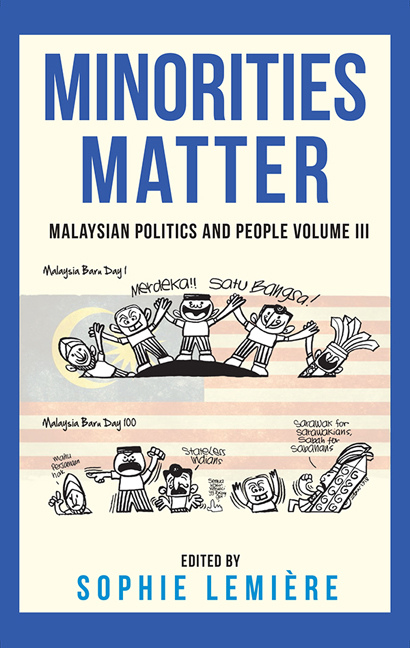
Bringing together a group of both international and Malaysian scholars, Minorities Matter: Malaysian Politics and People Volume III, is the third instalment in the 'Malaysian Politics and People' series, a series which has tracked Malaysian politics and society from the outcome of GE12 to the present day. Published in the aftermath of the fall of the BN government, Minorities Matter looks at the contemporary situation of Malaysian politics and society with a particular focus on those who are often left out of the national narrative, minorities, to understand the ways in which minority groups, from women to East Malaysians, the Orang Asli, refugees and more, have contributed towards, and been affected by, political change in Malaysia. With a particular focus on the problem of political culture, Minorities Matter highlights both the political and social changes, as well as continuities, witnessed since the 14th General Election highlighting, through the lens of minority groups, the contemporary contestations which now dominate Malaysian politics.
The 1950s saw Lim Chong Eu taking an increasingly central role in Malayan politics, moving from the exhilarating preparation for independence to him losing political influence by the end of the decade. The following decade saw him trying to revive his political fortunes, and finally succeeding at the ballot box in 1969. Becoming the Chief Minister of Penang State—retreating from national politics, as it were—provided him with the platform from which he would excel as nation builder and political leader. In the process, he contributed decisively to the industrialisation, not only of Penang but also of Malaysia as a whole. This collection of articles tells the story of how the declining fortunes of the port of Penang was turned around through daring and forceful leadership into the industrialised society that it is today.
The United States launched a new Free and Open Indo-Pacific (FOIP) strategy in late 2017 after reluctantly concluding that its patient effort to engage and socialize China to the rules-based order since 1972 had failed. China's behaviour since 2009 convinced the United States that China is a revisionist power seeking to impose an authoritarian model of governance in Asia which, if successful, would end the rules-based order in the Indo-Pacific as well as endanger US security and vital trade interests. The new US FOIP strategy initiative seeks to engage like-minded nations in economic, security (both traditional and non-traditional), and political governance partnerships to construct a collaborative and scalable network of relations that will be able to respond flexibly to meet a wide range of stakeholder needs and regional contingencies across the Indo-Pacific region. The United States occupies a peak organizing role in this network and works with a hierarchy of partners distributed throughout the vast Indo-Pacific to meet the economic, security, and governance capacity needs of network members at any level. The rules-based order is the "operating system" of this network approach, and so the network itself sustains the rules-based order for its members as a collective good. FOIP is more like a club that generates rules-based order benefits for its members and as such has little in common with Cold War bloc politics and containment strategy. Bearing in mind that FOIP is only in its start-up phase and is likely to gather momentum going forward; that the elements of this network strategy are already in place; and that the United States and its main FOIP partners together have considerable material, organizational, and soft power resources, one may say that its prospects for long-term sustainability and success are not bad.
Muhammadiyah, together with the Nahdlatul Ulama (NU), are seen as the two pillars of moderate Islam in Indonesia. Muhammadiyah is currently often perceived to be the more conservative of the two and to have more affinity with Islamist groups. On political issues, for instance, it is steered by Islamist imagery. On cultural issues, Muhammadiyah is often guided by old enmity towards what is called the TBC (takhayul, bid'ah dan churafat; delusions, religious innovation without precedence in the Prophetic traditions and the Qur'an, and superstitions or irrational belief). This position has placed Muhammadiyah in an uneasy relationship with both local cultures and traditionalist Islam. Three issues that were raised in 2017—the banning of Hizbut Tahrir Indonesia (HTI), the recurrent controversy on the Indonesian Communist Party (PKI), and the ruling of the Constitutional Court on Penghayat Kepercayaan—are issues where Muhammadiyah has been easily drawn towards Islamist and conservative tendencies.Be that as it may, Muhammadiyah remains a social movement guided by its long-held theology of al- Mā`ūn (kindness) and with a strong emphasis on social services. It is this doctrine that has prevented Muhammadiyah from dwelling on mythical or abstract issues and neutralized it against Islamism, making its members more realistic in viewing the world, more prone to distancing themselves from the utopian vision of a caliphate, from the dream of shariah as the Messiah that will solve every problem, and from the temptation to create an Islamic state.The "pragmatic Islamism" that Muhammadiyah has adopted allows it to handle social dynamics well.
The EU has threatened to suspend Generalized Scheme of Preferences (GSP) status for Myanmar, under which the country's exports can enter Europe without any tariffs or quotas. The official reason cited by the EU is a growing concern over human rights violations and issues around labour rights in Myanmar. If this threat were to be carried out, the business sector that will be most affected is Myanmar's burgeoning garment sector, which employs around 700,000 people, most of whom are women. The principal worry in Myanmar is that if EU buyers and brands have to start paying tariffs to import Myanmar-made garments, then they will opt to shift their sourcing to other countries. Without GSP, Myanmar's garment exports may no longer be price competitive. As one of the few manufacturing sectors in Myanmar to employ semi-skilled women, many of whom migrated from poor rural areas, the garment sector has come to play an important socioeconomic role in the country. Whether or not the EU decides to withdraw GSP status, Myanmar's garment sector faces a number of challenges. How Myanmar's policymakers and garment industry leaders respond to global industry trends will be just as important, in the long run, in determining the sector's commercial sustainability.
Military enterprises, ostensibly set up to feed and supply soldiers, were some of the earliest and largest Burmese commercial conglomerates, established in the 1950s. Union Myanmar Economic Holdings Limited (UMEHL) and Myanmar Economic Corporation (MEC) are two profit-seeking military enterprises established by the military after the dissolution of the Burma Socialist Programme Party in 1988, which remain central players in Myanmar's post-2011 economy. Military conglomerates are a major source of off-budget revenue for the military and a main employer of retired soldiers. Yet few veterans receive more than a small piece of the profits from UMEHL. The vast bulk of formal dividends instead disproportionately benefit higher ranking officers and institutions within the Tatmadaw. Military capitalism entrenches the autonomy of the Tatmadaw from civilian oversight. Despite this, obligatory or semi-coerced contributions from active-duty soldiers are a source of cash flow for UMEHL, effectively constituting a transfer from the government budget to the military's off-budget entities. The most significant source of livelihoods support for most veterans is the service pension dispersed by the Ministry of Finance and Planning (MoPF). Despite delivering suboptimal welfare outcomes for most soldiers and veterans while eroding the legitimacy of ceasefires, successive governments since 1988, including Aung San Suu Kyi's National League for Democracy (NLD) administration, have entrenched military capitalism by encouraging commercial activities of armed groups that enter into ceasefire agreements. Extending military pensions already paid by the Ministry of Planning and Finance to retired members of armed groups could deliver a far more consistent and tangible "peace dividend" than the commercial extraction of resources from ceasefire areas. More balanced civil-military relations, and fairer social outcomes for military personnel, will rely on civilian-led state institutions delivering effective and substantive welfare support beyond the commercially oriented welfare arrangements of military conglomerates.
Legal pluralism in Myanmar is a reality that is not sufficiently recognized. A lack of recognition of and clear mandates for the informal justice providers, along with the absence of coordination between these providers and the judiciary, present critical challenges to local dispute resolution and informal legal systems. This results in a high level of unpredictability and insecurity concerning the justice outcomes and in the underreporting of cases. The lack of jurisdictional clarity represents an even greater challenge in areas of mixed control and where numerous armed actors are present. Discussion of reform of the justice sector in Myanmar and debates surrounding peace negotiations and the role of the ethnic armed groups in service provision are separated. This situation reinforces the divide between ceasefire areas and the rest of the country and raises concern that the improvement of justice systems will leave conflict-affected populations behind. Recognition of and support for community-based dispute resolution are crucial to reducing the escalation of conflict at the local level. Justice systems like those of ethnic armed groups can contribute significantly to stability and order at times when the official system has limited territorial reach and is mistrusted by civilians.
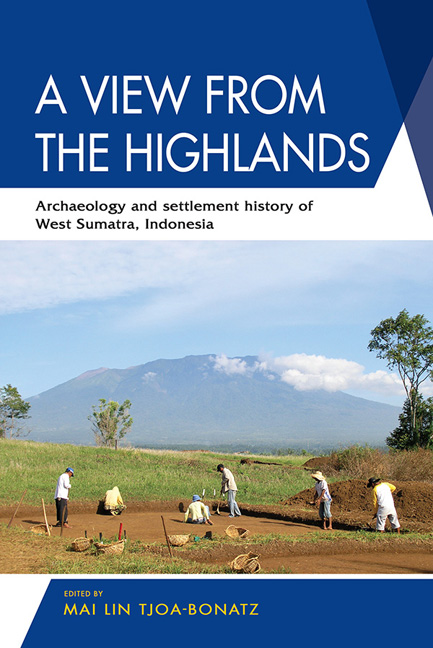
This book analyses the rise of the settlement system in the heartland of the Minangkabau region in the highlands of West Sumatra, Indonesia. It explores the regional settlement pattern arising from Adityavarman's highland interregnum (c. 1347 This book analyses the rise of the settlement system in the heartland of the Minangkabau region in the highlands of West Sumatra, Indonesia. It explores the regional settlement pattern arising from Adityavarman's highland interregnum (c. 1347-75), and provides the first attempt to place the archaeological remains and the landscape of Tanah Datar, a fertile plain in the highlands of West Sumatra, in a cultural historic synthesis. The core of this research consisted of excavations at Bukit Gombak and Bukit Kincir. Bukit Gombak was a central place in Adityavarman's kingdom,75), and provides the first attempt to place the archaeological remains and the landscape of Tanah Datar, a fertile plain in the highlands of West Sumatra, in a cultural historic synthesis. The core of this research consisted of excavations at Bukit Gombak and Bukit Kincir. Bukit Gombak was a central place in Adityavarman's kingdom, and provides evidence of the organization and material development of this political entity. Surveys uncovered other settlements that could be examined in relation to each other and to sites from earlier and later periods, and used to sketch out the settlement history of Tanah Datar from prehistoric times to the colonial period. The book consists of detailed studies of metal, ceramics and glass finds by laboratory-based specialists as well as careful descriptions of stone, clay and other finds.
Amidst successive episodes of interreligious violence in Myanmar between 2012 and 2014, interfaith dialogue emerged as a crucial conflict resolution and prevention mechanism. The 2011–16 Union Solidarity and Development Party administration often indirectly promoted the use of interfaith dialogue to defuse interreligious tensions and conflicts, though its political will was questionable. Various governmental, intergovernmental, and non-governmental actors have engaged in interfaith dialogue, peace, and harmony initiatives in the past seven years. The present National League for Democracy administration has more actively sought to engage in intrafaith promotion of Buddhism and in interfaith peace and harmony initiatives. Intergovernmental, international and local interfaith actors also work in the interfaith dialogue field, but their impact is relatively weak because the government remains the most important actor in Myanmar in transition. Although the National League for Democracy has largely eliminated Buddhist nationalist groups such as Ma Ba Tha, Buddhist identity politics remains influential after the Arakan Rohingya Salvation Army's attacks in Rakhine State in 2016 and 2017 and the consequent refugee crisis. Although extreme anti-Muslim Buddhist identity politics may not see a resurgence in the approach to the 2020 general elections, it may come back in more nuanced forms. Interfaith dialogue and other training and activities for interreligious peace and harmony will thus remain relevant to the political scene.