To save content items to your account,
please confirm that you agree to abide by our usage policies.
If this is the first time you use this feature, you will be asked to authorise Cambridge Core to connect with your account.
Find out more about saving content to .
To save content items to your Kindle, first ensure no-reply@cambridge.org
is added to your Approved Personal Document E-mail List under your Personal Document Settings
on the Manage Your Content and Devices page of your Amazon account. Then enter the ‘name’ part
of your Kindle email address below.
Find out more about saving to your Kindle.
Note you can select to save to either the @free.kindle.com or @kindle.com variations.
‘@free.kindle.com’ emails are free but can only be saved to your device when it is connected to wi-fi.
‘@kindle.com’ emails can be delivered even when you are not connected to wi-fi, but note that service fees apply.
In early 2019 I was dining with a Japanese diplomat in the company of two fellow Singaporeans. When the conversation turned to the Bicentennial Commemorations, the diplomat asked inquisitively, “Why do Singaporeans find it necessary to celebrate two hundred years of colonialism?” After a moment's pause the Singaporeans around the table took random stabs at answering our dinner companion's question. Our replies ranged from the pedantic (“It's not a celebration, it's a commemoration”), the cynical (“It's for the feel-good factor to help with upcoming elections”), to the dismissive (“you know Singaporeans, they love nostalgia”). As we spoke I sensed that we were ourselves struggling to understand the event as much as we sought to explain it to our Japanese friend. Like most Singaporeans, we had felt that the Bicentennial Commemorations simply did not embody the same significance or emotional heft as SG50 in 2015 when we celebrated fifty years of independence. The country's Golden Jubilee was easier to embrace because it was an unabashed and unambiguous celebration of the nation-building project and the undeniable progress we had made as one people. But what were the Bicentennial Commemorations—or SG200—supposed to commemorate? Was it to mark the arrival of English rogue gentleman Stamford Raffles and the East India Company and, by implication, the unplugging of the island from the Malay world and its ascension into the global economy? If so, then it's understandable that the celebration of colonial capitalism and globalization did not exactly tug at the heartstrings of Singaporeans. The unthinking celebration of colonialism would also certainly be out of step with our sensibilities. Or was SG200 a knowing wink at the island's distinction from a region still mired in its internal political and economic squabbles and thus a marker of the nation's discrete sense of self, or what we would describe today as Singapore exceptionalism? The more we mulled over the question, the more uncertain we became. Then, somewhere between the fourth and seventh cup of sake, a particular remark from one of us, I forget who, struck me—“We don't have history, so we imagine it.”
In the build-up to Malaysia's 14th General Elections (GE14), the then-opposition Pakatan Harapan (PH) coalition campaigned on multiple reform platforms— including that of sustainability and inclusivity. Buku Harapan (The Book of Hope), the coalition's much-lauded manifesto, was written to encapsulate the grievances of an electorate hankering for change (with a little less regard to the practicality of the promises within), and it had all the right sustainability targets. The publication won praise from non-governmental organizations (NGOs), with a coalition of twenty NGOs releasing the results of a survey indicating that 69 per cent of those who intended to vote considered the environment a factor in their choice of government.
The Promise
The PH coalition promised to govern “based on principles of sustainability and sustainable development”, pledging that development projects would comply with international environmental protection standards, that logging quotas would be strictly enforced and that a PH government would support the United Nation's Sustainable Development Goals (UN SDGs). The coalition also vowed it would focus on the development of green technology and renewable energy, and that it would set up a “National Coordination Council for Climate Adaptation and Mitigation”. Promise 39 of the Buku Harapan declared that a PH government would be “an environmentally friendly government”. For the indigenous peoples of Malaysia, whose lives, identities and livelihoods depend entirely on the preservation of natural habitats, the manifesto's Promise 38 was an assurance that the coalition would advance “the interests of Orang Asal in Peninsular Malaysia” and “recognise, uphold and protect the dignity and rights” of the indigenous people.
The Action
Immediately after the wholly unexpected outcome of the elections, media announcements designed to demonstrate the new regime's commitment to environmental and indigenous causes came thick and fast. A new Ministry of Energy, Science, Technology, Environment and Climate Change (MESTECC) was established. The MESTECC minister Yeo Bee Yin announced in September 2018 that a 20 per cent renewable energy production target would be achieved by 2030. In October she launched the Roadmap towards Zero Single-Use Plastic 2018–2030, declaring that Malaysia will have done away with single-use plastics by 2030.
In 2019, Thailand held its first election in eight years, a period that included five years of military rule. While Pheu Thai won the most seats—as it has in every election since 2001, under several different guises—in second and third place were two new parties. The second-placed party, Palang Pracharat (PPRP), was a party supported by the military regime, comprised largely of former members of parliament (MPs) who had been members of other political parties in the past. Palang Pracharat thus tended to replicate the campaign tactics that had previously secured victory for its MPs in past elections, while also relying on strong support from the state. Although Palang Pracharat garnered the most votes overall, it fell behind Pheu Thai in terms of parliamentary seats. In third place was another new party, Anakhot Mai (lit. New Future), known in English as the Future Forward Party.
Future Forward pursued a campaign strategy that was largely novel in Thai politics. Analysts have observed that the party carefully cultivated an image centred on its leader, Thanathorn Juangroongruangkit, as representative of the party's aspirations. According to these analysts, many cast their votes for Future Forward candidates because of the image of the leader and the policies of the party, while the qualifications of the individual Future Forward candidates were of little import. Future Forward was also seen as banking its chances for electoral gold on the use of social media to court young voters.
Some analysts would thus describe Future Forward as a new type of party: one built for social media, particularly the young people who spend significant time on it. If this is the case, we may expect to see substantial changes in how other political parties operate, given the success of Future Forward. And since the government is composed of political parties, these changes may eventually reshape the political system in Thailand. In this chapter, I will examine the novelty of Future Forward, the role of Thanathorn, and the function of social media in the party's campaign. I will conclude by considering the future of Future Forward and whether it establishes a new model for political parties in Thailand.
On 30 August 2019, Timor-Leste commemorated the twentieth anniversary of the self-determination referendum when 98.6 per cent of registered voters chose by a very wide margin (78.5 versus 21.5 per cent) to break away from the Republic of Indonesia and open the way to independence. Since 20 May 2002, the Democratic Republic of Timor-Leste has been an independent country, recognized by the international community, and a member of the United Nations. High-ranking representatives from friendly nations headed to Dili for the celebrations. Amongst these, the Australian prime minister was a special guest.
Timor-Leste and Australia formally exchanged confirmation notes that brought to full fruition the treaty that had been negotiated in the preceding years, which was to put an end to the “Timor Gap” issue. The maritime borders of Timor- Leste were thus established after a turbulent period of negotiations and juridical claims in international courts. It was highly symbolic that the treaty could be signed in Dili on such a prominent date. In fact, the authorities of Timor-Leste, and chiefly the main negotiator, the once resistance leader, president of the republic (2002–7) and prime minister (2007–15), Xanana Gusmão, presented his efforts as destined to complete the recovery of sovereignty. He placed the agreement on par with the referendum, claiming that full sovereignty could only be achieved when the maritime borders were fixed for good and access to the plentiful natural resources—especially oil and natural gas—firmly placed at the disposal of the people of Timor-Leste. The East Timorese had a fundamental reason to rejoice.
At the time Timor-Leste became independent (20 May 2002), the country was among the poorest on Earth. The first time the United Nations Development Program Human Development Index included data on Timor-Leste (2004, with data for 2002), the country was ranked in 162nd place, included in the group of Low Human Development, with a rating of 0.436. Fifteen years later, Timor- Leste had moved to 132nd place and its performance had risen to 0.625, which permitted its inclusion in the group of Medium Human Development. Much of this tremendous improvement was due to the growth of the country's wealth. The World Bank estimates that the gross national product per capita (in purchasing power parity terms) rose from US$2,578 in 2003 to US$7,645 in 2018, having peaked at US$10,370 in 2012.
After the global economic crisis of 2008, there has been a trend towards a configuration of institutions and ideologies of state-society relations with a more intensified authoritarian form. At the heart of these political changes is the rise of right-wing political and ideological forces that seek to use religious, ethnic and/ or national communities to build coalitions which are hostile to pluralist politics. This trend is combined with the deepening of the neoliberal market-reform agenda within a more authoritarian framework, especially in a further consolidation of politically linked domestic conglomerates. As such, it marks a shift from the technocratic governance—combined with the social forces that supported it—that had underpinned neoliberal reform over three decades. These mark the political changes that occurred over the long 1990s in Southeast Asia, which is a period that covers the implementation—albeit haltingly—of the Washington consensus and neoliberal policies, the establishment of the World Trade Organization (WTO), the collapse of the Soviet Union and the socialist project, as well as a push towards democratic polities.
In this chapter, I focus on Indonesia and the Philippines—two countries seen as the democratic benchmarks over the last two decades—as these nations now move in an increasingly authoritarian direction. The first term of President Jokowi's presidency saw a range of illiberal trends, such as the use of legislative means to criminalize political opposition, the passing of social conservative legislation, the increasing role of the security agencies in the political process, the growth of paramilitaries linked to right-wing parties, and the gutting of oversight institutions. The recent elevation of his presidential election opponent Prabowo Subianto to the cabinet suggests that these trends will—if anything—intensify in Jokowi's second term. In the Philippines, the election of President Duterte has led to a spate of extrajudicial killings, the intimidation of political opponents and journalists, and the stacking of courts such as the Supreme Court of the Philippines. As such, both Indonesia and the Philippines provide a window into the drivers of the new authoritarian climate in Southeast Asia. In Thailand, despite the attempt by the junta to provide some form of legitimacy to its rule—via its recent election—there has been only an intensification of the junta's authoritarian rule.
Neoliberalism, Democratic Transitions and the Politics of Governance
The standard model of the transition to democracy has always been problematic in Southeast Asia.
Trends in 2018 indicated that ASEAN regionalism was under pressure, putting into question the grouping's role and function. In contrast, developments in 2019 reflect the independent and collective resolve of Southeast Asian states to manage external political and economic risk, which has had the effect of shoring up cohesiveness of the ten-member grouping, or at least compelling members to put aside regionally divisive issues in order to deal with common challenges. Firstly, and perhaps most importantly, ASEAN and its member states have had to adjust to the realities and impact of the ongoing US-China trade war in a bid to ensure economic development and growth.
Secondly, they have sought to break out from the impasse of being sidelined in the regional power play of the United States and China. Despite adhering to a hedging strategy in dealing with China and the United States in the region's management of major power politics, ASEAN member states have telegraphed a heightened consideration of China as both a dialogue and free-trade partner. Thirdly, a stronger consideration of China's political and economic role in the region did somewhat mute the assertions of claimant states against China over disputed features and waters in the South China Sea for most of 2019 until the closing months of that year. Fourthly, in seeking to manage common external challenges in a united fashion, member states—as in previous years—remained unwilling to put more direct pressure on the Myanmar government for human rights violations relating to its Rohingya crisis; a problem that become internationalized since late 2017.
Adjusting to the US-China Trade War
The US-China Trade War, which began in July 2018 when the US government led by President Donald Trump implemented its first round of tariffs and other trade barriers on China—with the goal of forcing it to make changes to what the US says are “unfair trade practices”—has further impacted Asian countries whose supply chains have been closely linked to Chinese industries and are dependent on the US market as a significant export destination. Because of the US-China trade war—amidst the prospect of a global economic slowdown that is already dampening business confidence around the world—the year 2019 saw the worst twelve months for Asia-Pacific trade in goods and services by both volume and value since the global financial crisis ten years ago.
Frequent travellers flying to Changi Airport may occasionally find their aircraft caught in a holding pattern, as their flight circles the airport while waiting for clearance to land. Singapore in 2019 appears to be in a similar holding pattern as the country awaits an election that is coming sooner rather than later. Although the current parliamentary term only expires in April 2021, the Election Department's announcement on 4 September 2019 about the formation of the Electoral Boundaries Review Committee (EBRC) was the first—and clearest—sign of an impending election. Convened by the prime minister prior to every general election, the EBRC is tasked with determining the number of parliamentary seats and delineating the electoral map of constituencies, taking into account demographic changes and shifts in the residential housing populations. The committee of five senior civil servants was also instructed to increase the number of single-member wards while reducing the average size of Group Representation Constituencies (GRCs). In the past, the committee has taken between three weeks and seven months to issue its report to the prime minister, who would then generally call for an election soon after. This time, however, the committee was reported to be still in the midst of deliberations as of early January 2020, suggesting that the next election will only be likely to be called in the second quarter of 2020 or later, after the conclusion of the Budget and Committee of Supply debates in February 2020.
The PAP Continues Apace with Its Leadership Transition
As part of its preparations for the elections, the ruling People's Action Party (PAP) has taken steps to consolidate its fourth-generation (4G) leadership as Prime Minister Lee Hsien Loong moves ahead with his plans to step down after the next election. After being appointed as the PAP's first assistant secretarygeneral in November 2018, Finance Minister Heng Swee Keat was elevated to deputy prime minister in April 2019, in a further affirmation to the public and the international community of his status as heir apparent. In order to facilitate this leadership renewal, the two incumbent deputy prime ministers—Teo Chee Hean and Tharman Shanmugaratnam—relinquished their positions and were appointed as senior ministers, while retaining their roles as coordinating minister for national security and coordinating minister for social policies, respectively.
As an infrastructure financier in many parts of the developing world, China has built hydroelectric plants, railroads, roads, airports and telecommunication networks on a global scale. Southeast Asia occupies a significant place in China's Belt and Road Initiative (BRI). Situated at the very centre of the Indo-Pacific region, Southeast Asia has long been a strategically important region for China's foreign relations and security. A stable and positive relationship with the region will serve several of China's interests, such as the development of its maritime economy, energy security, and maritime claims in the South China Sea. Moreover, the centrality of ASEAN in regional multilateralism and its stated neutrality in great power competition adds to the geostrategic importance for China.
To incentivize Southeast Asian states to participate in the BRI, China highlighted the long-term economic benefits of the BRI that could be gained through cooperation on policy coordination, trade facilitation, financial integration, infrastructure development and societal-level exchanges. To counter anti-globalization sentiments, the BRI can be used to sustain and revitalize globalization, to improve infrastructure connectivity, and to promote regional and global trade as part of Chinese efforts to provide public goods. Two corridors pass through Southeast Asia: the China-Indochina Peninsular Economic Corridor and the Sino-Myanmar Economic Corridor (originally Bangladesh-China-India- Myanmar Economic Corridor). In addition, China's proposed Maritime Silk Road includes marine industry cooperation, port alliances and logistics. China has also proposed the Lancang-Mekong Cooperation (LMC) in Southeast Asia. The LMC has supported some projects that reduce poverty and others that promote small and medium-sized enterprises, agriculture, training in water resource management, and education.
It is undeniable that the vision of infrastructure connectivity is targeted at economic growth and regional development. According to the World Bank, connectivity projects in the BRI will increase the trade of countries along the route by 4.1 per cent. The United Nations Development Programme also suggests that the initiative can help BRI-participating countries accelerate industrial diversification and economic growth to achieve the Sustainable Development Goals (SDG). With Chinese companies having set up more than fifty-six economic cooperation zones in more than twenty countries, generating US$1.1 billion in tax revenues and 180,000 jobs during the 2014–16 period, the hubs for capital and manufacturing investment may trigger broader market reforms and spur local employment, export earnings and growth.
While Vietnam is often proclaimed to be at a “crossroads”, in retrospect the period between 2014 and 2016 was genuinely an inflection point. Given heightened anxiety over Chinese assertiveness in the South China Sea and a desire to join the Transpacific Partnership (TPP), Vietnam signalled a greater desire to side with the United States than ever before. This led to a flurry of high-profile visits of Vietnamese leaders to the United States as well as an unprecedented agreement to allow independent trade unions in exchange for TPP membership. It also led to a reduction in political repression.
With President Donald Trump's decision in 2017 to pull out of the TPP, the dynamics have changed. Nearly three years after that decision, Vietnam has returned to its previous political and foreign policy orientations. As this chapter will discuss, the top contenders for power have returned to the previous hedging strategy of maintaining friendly ties with the United States while avoiding antagonizing China. The most likely successors to General Secretary Nguyen Phu Trong have maintained a generally balanced approach to political reforms and alignment with the United States. In short, it does not appear that there will be an elite-led liberalization on the horizon. If there is a question about significant elite-led political reforms in Vietnam, it is whether it is going to further centralize power in the hands of the party. On this question, we also believe that Vietnam is likely to revert to its previous collective-leadership pattern.
Although party-led political reform is largely off the table, this does not mean social pressures that could possibly force change from the outside have remained static. A number of important developments continue to challenge the regime. On the South China Sea, Vietnam's relationship with China continues to represent a volatile mobilizing issue for collective action. The environment also remains a potent social concern. Additionally, social media continues to inject a new dynamic into these issues, providing both the opportunity for citizens to challenge the regime but at the same time allowing the regime to respond more quickly and shift blame to local governments.
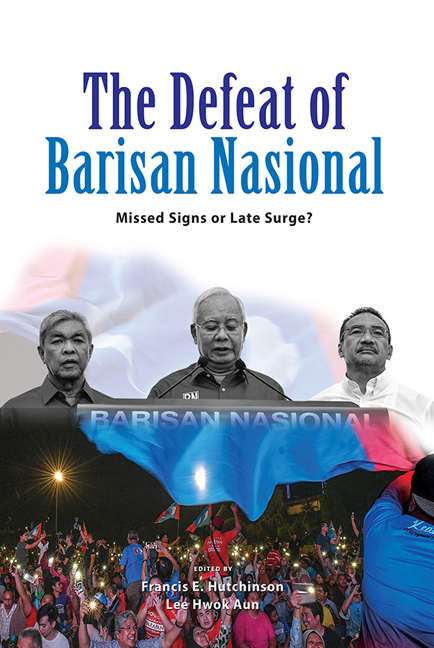
The results of Malaysia's 14th General Elections of May 2018 were unexpected and transformative. Against conventional wisdom, the newly reconfigured opposition grouping Pakatan Harapan (PH) decisively defeated the incumbent Barisan Nasional (BN), ending six decades of uninterrupted dominant one-party rule. Despite a long-running financial scandal dogging the ruling coalition, pollsters and commentators predicted a solid BN victory or, at least, a narrow parliamentary majority. Yet, on the day, deeply rooted political dynamics and influential actors came together, sweeping aside many prevailing assumptions and reconfiguring the country's political reality in the process. In order to understand the elections and their implications, this edited volume brings together contributions from ISEAS – Yusof Ishak Institute researchers and a group of selected collaborators to examine the elections from three angles: campaign dynamics; important trends among major interest groups; and local-level developments in key states. This analytical work is complemented by personal narratives from a selection of GE-14 participants.
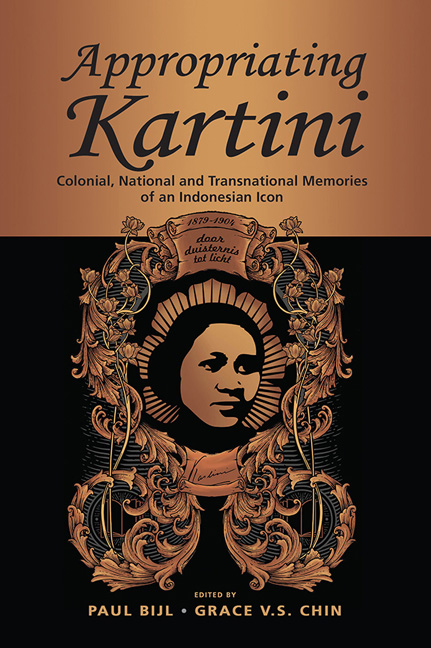
This rich collection of essays on the appropriation of Indonesian national heroine and international feminist icon Kartini provides an incisive insight into the multiple ways her brilliant letters have been read, interpreted and used. This volume's timely contribution is to reposition Kartini's life, legacy and afterlife within the intersectional dynamics of gender, race, class, religion and sexuality that so shaped the origin, interpretation and impact of the 'Javanese princess' across time and space.
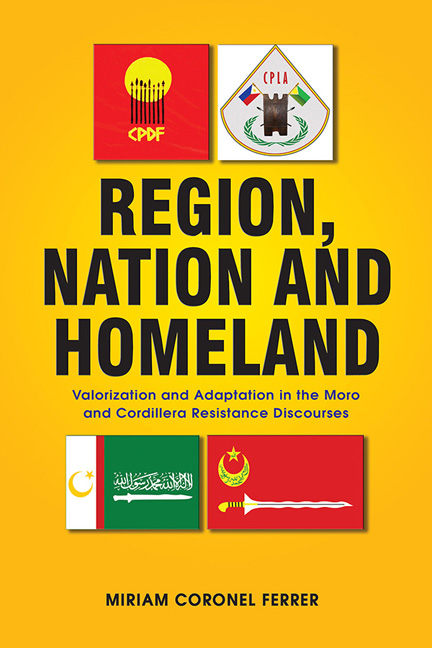
Movements tell stories of oppression and liberation. They critique the power relations that exist. They offer alternative visions of the homeland they hope to build. This volume looks at the Moro and Cordillera movements as told in their own words. Within and among these movement organizations in the Philippines, their constructed identities and claims for demanding the right to self-determination differed and evolved over time. The author shows the significant intertextuality in the discourse of the Moro Islamic Liberation Front, which broke away from the Moro National Liberation Front. She traces the drift to heightened ethnonationalism in the case of the Cordillera Peoples' Liberation Army when it split from the national democratic Cordillera People's Democratic Front. She reflects on where these mobilizations are now, and the strands of discourses that have remained salient in current times.