A collection of out-of-copyright and rare books from the Cambridge University Library and other world-class institutions that have been digitally scanned, made available online, and reprinted in paperback.
To save content items to your account,
please confirm that you agree to abide by our usage policies.
If this is the first time you use this feature, you will be asked to authorise Cambridge Core to connect with your account.
Find out more about saving content to .
To save content items to your Kindle, first ensure no-reply@cambridge.org
is added to your Approved Personal Document E-mail List under your Personal Document Settings
on the Manage Your Content and Devices page of your Amazon account. Then enter the ‘name’ part
of your Kindle email address below.
Find out more about saving to your Kindle.
Note you can select to save to either the @free.kindle.com or @kindle.com variations.
‘@free.kindle.com’ emails are free but can only be saved to your device when it is connected to wi-fi.
‘@kindle.com’ emails can be delivered even when you are not connected to wi-fi, but note that service fees apply.
Richard Hakluyt's 12-volume Principal Navigations Voyages Traffiques and Discoveries of the English Nation, originally published at the end of the sixteenth century, and reissued by the Cambridge Library Collection in the edition of 1903–5, was followed in 1625 by Hakluytus Posthumus or, Purchas his Pilgrimes, now reissued in a 20-volume edition published in 1905–7. When first published in four folio volumes, the work was the largest ever printed in England. An Anglican priest, Samuel Purchas (1577–1626) was a friend of Hakluyt, and based his great work in part on papers not published by Hakluyt before his death. As well as being a wide-ranging survey of world exploration, it is notable as an anti-Catholic polemic, and a justification of British settlement in North America. Volume 11 focuses on journeys into central Asia by Marco Polo and the less well-known Franciscan missionary William of Rubruck, and also contains an Arabic life of Tamerlane.
Isaac Schomberg (1753–1813) had a controversial career in the Royal Navy. Although he distinguished himself at the relief of Gibraltar and the battles of St Kitts and the Saintes, his aggressive temperament and scholarly interests meant he was a poor choice to serve as first lieutenant under the petulant, pleasure-seeking future William IV. Schomberg's career never recovered after they clashed. Retiring to Wiltshire in 1796, he began this long-planned chronology of the Royal Navy. Published in 1802, with detailed descriptions of engagements, events on board, and politics at home, as well as an appendix of facts and figures stretching back to the origins of the Senior Service, this five-volume work remains a classic source of naval history. Forming a thorough appendix, Volume 4 presents numerous lists, including information on the number of vessels in the Royal Navy and how many guns and men were aboard each ship.
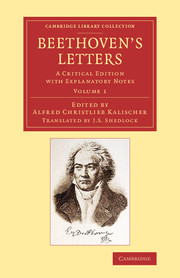
Ludwig van Beethoven (1770–1827) was a prolific letter writer. Often written in great haste - he regularly signed off 'in der Eile' - his correspondence allows us to follow his anxieties and preoccupations. From his first letter, written at the age of thirteen, wherein he declared his lifelong commitment to the craft of music, through the poignant 'Heiligenstadt Testament', up to the final codicil to his will, these documents reveal the human figure behind some of the greatest music ever written. In this two-volume English translation of 1909, John South Shedlock (1843–1919) retains as far as possible the idiosyncratic and error-ridden texts as written by the great composer. Volume 1 covers the years to 1816, and includes the heartbreaking unsent 1802 letter to his brothers in which Beethoven reveals his misery over his increasing deafness and his determination to overcome his physical and emotional weaknesses.
This three-volume history of England from before the Roman conquest through to the Glorious Revolution of 1688 was originally serialised in Charles Dickens' magazine Household Words between 1851 and 1853. The text was published in book form in the same period, although each volume was post-dated to the following year. Dickens dedicated the work to his own children, intending it to be a stepping stone to more substantial histories. The volumes were popular with readers for decades, and were used in British schools well into the twentieth century. Dickens employs his signature style to bring events and personalities to life, making use of vivid similes, unabashedly partisan language and direct speech, as well as the occasional moral lesson. Volume 1 covers the period from the campaigns of Julius Caesar up to the close of the reign of the 'miserable brute' King John.
A precursor of modern academic journals, this quarterly periodical, published between 1810 and 1829 and now reissued in forty volumes, was founded and edited by Abraham John Valpy (1787–1854). Educated at Pembroke College, Oxford, Valpy established himself in London as an editor and publisher, primarily of classical texts. Edmund Henry Barker (1788–1839), who had studied at Trinity College, Cambridge, became a contributor and then co-editor of this journal, which fuelled a scholarly feud with the editors of the Museum criticum (1813–26), a rival periodical (also reissued in the Cambridge Library Collection). Although its coverage overlapped with that of its competitor, the Classical Journal also included general literary and antiquarian articles as well as Oxford and Cambridge prize poems and examination papers. It remains a valuable resource, illuminating the development of nineteenth-century classical scholarship and academic journals. Volume 29 contains the March and June issues for 1824.
The pre-eminent historian of his day, Edward Gibbon (1737–94) produced his magnum opus in six volumes between 1776 and 1788. Reissued here is the authoritative seven-volume edition prepared by J. B. Bury (1861–1927) between 1896 and 1900. Immediately and widely acclaimed, Gibbon's work remains justly famous for its magisterial account of Roman imperialism and Christianity from the first century CE through to the fall of Constantinople and beyond. Innovative in its use of primary sources and notable for its tone of religious scepticism, this epic narrative stands as a masterpiece of English literature and historical scholarship. Volume 7 covers the period 1206–1590 CE, examining the rise of Genghis Khan, the conquests of Tamerlane, the Council of Basel, the Ottoman capture of Constantinople, the Western schism and reunion, and the ruins of ancient Rome. Indexes to the text and appendices are also included.
Sir William Wilde (1815–76), surgeon and father of Oscar Wilde, was an Irish patriot and antiquarian with a keen interest in the history of his country. This life of Gabriel Beranger (1729–1817), published in 1880, describes the activities of an Irish antiquarian in the eighteenth century. Born in Rotterdam, the Huguenot Beranger moved to Dublin in 1750 and opened a print shop. Historical pursuits were becoming popular in Dublin society at the time, and Beranger's sketches of ruins and monuments found great popularity. He went on several tours of Ireland, keeping a journal of his observations and the people he encountered, while making plans and drawings of antiquities with a view to later publication. Wilde's work, drawn from Beranger's journal and from the memories of people who had known him in his old age, offers an engaging insight into early antiquarian practice in Ireland.
A precursor of modern academic journals, this quarterly periodical, published between 1810 and 1829 and now reissued in forty volumes, was founded and edited by Abraham John Valpy (1787–1854). Educated at Pembroke College, Oxford, Valpy established himself in London as an editor and publisher, primarily of classical texts. Edmund Henry Barker (1788–1839), who had studied at Trinity College, Cambridge, became a contributor and then co-editor of this journal, which fuelled a scholarly feud with the editors of the Museum criticum (1813–26), a rival periodical (also reissued in the Cambridge Library Collection). Although its coverage overlapped with that of its competitor, the Classical Journal also included general literary and antiquarian articles as well as Oxford and Cambridge prize poems and examination papers. It remains a valuable resource, illuminating the development of nineteenth-century classical scholarship and academic journals. Volume 37 contains the March and June issues for 1828.
French zoologist and naturalist Georges Cuvier (1769–1832), one of the most eminent scientific figures of the early nineteenth century, is best known for laying the foundations of comparative anatomy and palaeontology. He spent his lifetime studying the anatomy of animals, and broke new ground by comparing living and fossil specimens - many he uncovered himself. However, Cuvier always opposed evolutionary theories and was during his day the foremost proponent of catastrophism, a doctrine contending that geological changes were caused by sudden cataclysms. He received universal acclaim when he published his monumental Le règne animal, which made significant advances over the Linnaean taxonomic system of classification and arranged animals into four large groups. The sixteen-volume English translation and expansion, The Animal Kingdom (1827–35), is also reissued in the Cambridge Library Collection. First published in 1817, Volume 2 of the original version covers reptiles and fish.
After a brief career at sea, during which he tested Harrison's chronometer for the Board of Longitude, John Robison (1739–1805) became lecturer in chemistry at the University of Glasgow. In 1774, having spent a period teaching mathematics in Russia, he returned to Scotland as professor of natural philosophy at Edinburgh. Despite his busy schedule, he contributed major articles on the sciences to the Encyclopaedia Britannica, giving an overview of contemporary scientific knowledge for the educated layperson. After his death, these and other pieces of his scientific writing were edited by his former pupil David Brewster (1781–1868) and were finally published in four volumes in 1822, with a separate volume of illustrative plates. This reissue incorporates those plates in the relevant volumes of text. Volume 4 contains a variety of Robison's encyclopaedia articles: on electricity and on magnetism, various pieces on the physics of sound and music, and assorted others.
Or, a Display of the Topography, History, Customs, Manners, Arts, Manufactures, Commerce, Literature, Religion, Jurisprudence, etc. of the Chinese Empire
Remarkable yet controversial, the Prussian-born Protestant missionary Karl Friedrich August Gützlaff (1803–51) sought to spread Christianity in the Far East. A gifted linguist, he sailed to Siam and worked on translating the Bible into Thai. The British missionary Robert Morrison had fired his interest in China, and Gützlaff later focused his evangelising efforts there, learning several dialects and distributing translated literature. Furthermore, he served as an interpreter for the East India Company. Also reissued in this series are his Journal of Three Voyages along the Coast of China (1834) and A Sketch of Chinese History (1834). Edited down into two substantial volumes by the Congregational minister Andrew Reed (1787–1862), the present work was published in 1838. It aimed to generate support for the missionary cause by giving Anglophone readers deeper insight into an unfamiliar civilisation. Volume 1 addresses geography and topography, before moving onto history, language and culture.
The Nautical Magazine first appeared in 1832, and was published monthly well into the twenty-first century. It covers a wide range of subjects, including navigation, meteorology, technology and safety. An important resource for maritime historians, it also includes reports on military and scientific expeditions and on current affairs. The 1872 volume, the second in the 'new series', begins by stating the journal's updated editorial policy: it will now include a regular digest of recent maritime law cases and other official news. Part 1 (January–June) reports on the meetings of learned societies, and scientific matters including health and steam power. It contains serialised essays on the propulsion of ancient galleys, and on the structures of the British constitution and government. It also discusses aspects of trade, commercial disputes and insurance, and lifesaving and its cost. A new departure is the inclusion of colourful stories, 'yarns' and ballads.
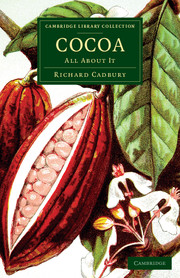
In Britain, the name of Cadbury has been synonymous with chocolate ever since John Cadbury opened his factory in 1831. This book, written by Richard Cadbury (1835–99) under the pen name 'Historicus', was published in 1892. It describes the natural history of the tropical American cocoa plant, its spread in cultivation across the world, and the history of its use. He also deals with the manufacturing process, as exemplified by the Cadbury factory at Bournville, surrounded by the model housing and leisure facilities which the family built for its workers. The processing of cocoa beans into solid and drinking chocolate is described in detail, with emphasis on the developments in machinery which simplified production. A chapter deals with the importance of the vanilla plant for flavouring, and an appendix gives guidance on the cultivation of cocoa trees. This remains a fascinating account of one of the world's most popular indulgences.
Containing Words from the English Writers Previous to the Nineteenth Century Which Are No Longer in Use, or Are Not Used in the Same Sense; and Words Which Are Now Used Only in Provincial Dialects
Thomas Wright (1810–77), a respected folklorist and medievalist, wrote prolifically on a wide range of subjects. His work is, however, considered broad rather than deep, and his extensive output, while impressive, sometimes came at the expense of quality. Wright was involved in many academic societies, and co-founded the British Archaeological Association in 1843. Much of his work promoted the use of vernacular literature for research into the Middle Ages, and this dictionary, first published in 1857, was compiled to help readers of historical literature navigate unfamiliar vocabulary. It lists obsolete words and phrases, with particular emphasis on those of Old English and Anglo-Norman origin, and obscure or dialectal words. Many of the definitions include illustrative examples or quotes as well as etymologies. Examples include belly-timber, meaning 'food', and dweezle, a Northamptonshire word that means 'to dwindle away'. Volume 1 covers the letters A–F.
Even while professionally engaged in banking, Sir John William Lubbock (1803–65) applied his formidable mind to scientific questions. Several of his early writings on astronomy - his particular sphere of interest - are gathered together in this reissue, notably On the Determination of the Distance of a Comet from the Earth, and the Elements of its Orbit (1832), On the Theory of the Moon and on the Perturbations of the Planets (1833), and An Elementary Treatise on the Computation of Eclipses and Occultations (1835). Lubbock received a Royal Society medal for tidal research in 1834, and herein is his Elementary Treatise on the Tides (1839). Also included is Lubbock's On the Heat of Vapours and on Astronomical Refractions (1840), in which he relates celestial observations to Gay-Lussac's gas expansion law. The collection closes with On the Discovery of the Planet Neptune (1861), Lubbock's lecture discussing how John Couch Adams first predicted the planet's existence.
Originally published in 1791, this work by classical scholar and connoisseur Richard Payne Knight (1751–1824) attempts to reconstruct the original pronunciation of ancient Greek. Emphasising the importance of knowing what the various ancient dialects sounded like in order to better appreciate surviving works of ancient literature, Knight engages in textual criticism of certain notable writings, including the poetry of Homer and Hesiod and the plays of Sophocles. Representing a learned contribution to classical philology, the essay also goes some way towards analysing the ways in which Greek sounds were distorted by their inclusion in other languages. Several plates at the end of the text reproduce a selection of ancient inscriptions on stone, coins and ceramics. Knight's Analytical Inquiry into the Principles of Taste (1805) and Inquiry into the Symbolical Language of Ancient Art and Mythology (1818) are also reissued in this series.
Richard Hakluyt's 12-volume Principal Navigations Voyages Traffiques and Discoveries of the English Nation, originally published at the end of the sixteenth century, and reissued by the Cambridge Library Collection in the edition of 1903–5, was followed in 1625 by Hakluytus Posthumus or, Purchas his Pilgrimes, now reissued in a 20-volume edition published in 1905–7. When first published in four folio volumes, the work was the largest ever printed in England. An Anglican priest, Samuel Purchas (1577–1626) was a friend of Hakluyt, and based his great work in part on papers not published by Hakluyt before his death. As well as being a wide-ranging survey of world exploration, it is notable as an anti-Catholic polemic, and a justification of British settlement in North America. Volume 6 describes the relations between European and North African fleets in the Mediterranean, and goes on to consider the first European voyages down the west coast of Africa.
First published in 1881, this popular and entertaining work by the printer and bibliographer William Blades (1824–90) examines the numerous threats that books have faced throughout their existence. Based on the author's experience of collecting printed works, the book explores such destructive forces as fire, water, disgruntled pirates, ignorance, and vermin. Even bookbinders and collectors are accused of causing mischief. In 1886, Blades was cruelly tormented by one of his enemies when his printing works burned down. A founder of the Library Association, he most notably investigated the work of Caxton: his two-volume Life and Typography of William Caxton (1861–3) is also reissued in this series. After his death, his extensive collection of books formed the basis of the St Bride Printing Library. Six editions of The Enemies of Books emerged between 1881 and 1886. Reissued here is the revised, enlarged and illustrated version that appeared in 1888.
Violinist and conductor Anton Schindler (1795–1864) became Beethoven's unpaid private secretary for two periods in the 1820s, notably caring for the composer in his last months. Schindler published his biography of Beethoven in 1840, and in 1841 this English translation appeared, with a preface and additional letters provided by the pianist Ignaz Moscheles (1794–1870), who in 1814 had prepared the piano version of Fidelio for publication by Artaria. That the biography is unreliable has long been recognised, as it presents Schindler's idealised, romantic view of Beethoven, whom he revered, and contains inaccuracies and fabrications uncovered by later research. While the work must therefore be approached with care, it remains nonetheless an important source of first-hand information through its use of documents unavailable to other early biographers. Volume 1 covers Beethoven's life to the completion of the Ninth Symphony in 1824.
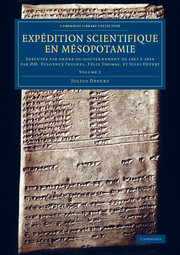
Born in Hamburg to Jewish parents, Julius Oppert (1825–1905) later moved to France, where he established a reputation as a remarkably gifted Assyriologist, making significant contributions to the decipherment of cuneiform Akkadian. Between 1851 and 1854, he accompanied the orientalist Fulgence Fresnel (1795–1855) on the French expedition to Mesopotamia. In recognition of his role, involving important excavations at the site of the ancient city of Babylon, Oppert was granted French citizenship. In May 1855, however, a great many of the discovered antiquities were lost when the raft transporting them sank in the Tigris under the weight of its priceless cargo. The present work appeared in two volumes between 1859 and 1863; the publication of the second volume preceded that of the first, as Oppert prioritised the analysis of the cuneiform inscriptions. Volume 2 (1859) is devoted to these inscriptions and the painstaking work of deciphering them.