To save content items to your account,
please confirm that you agree to abide by our usage policies.
If this is the first time you use this feature, you will be asked to authorise Cambridge Core to connect with your account.
Find out more about saving content to .
To save content items to your Kindle, first ensure no-reply@cambridge.org
is added to your Approved Personal Document E-mail List under your Personal Document Settings
on the Manage Your Content and Devices page of your Amazon account. Then enter the ‘name’ part
of your Kindle email address below.
Find out more about saving to your Kindle.
Note you can select to save to either the @free.kindle.com or @kindle.com variations.
‘@free.kindle.com’ emails are free but can only be saved to your device when it is connected to wi-fi.
‘@kindle.com’ emails can be delivered even when you are not connected to wi-fi, but note that service fees apply.
The jurisprudence of international administrative tribunals holds great relevance for international organisations, as seen in the proliferation of these tribunals, the complexity of their jurisprudence, and their practical impact. This book provides a comprehensive and accessible analysis of essential topics in this field, including applicable sources, jurisdiction and admissibility, grounds for review, equality and non-discrimination, and remedies. It also covers key emerging issues, such as the rights of non-staff personnel, the growing application of international human rights law by tribunals, and the protection of acquired rights. Drawing on thousands of decisions, this book is an invaluable resource for both practitioners and scholars. For practitioners, it offers a practical guide to navigating complex cases. For scholars, it highlights common principles and key divergences across the jurisprudence of some thirty tribunals, at the same time illuminating the increasingly sophisticated interplay between international administrative law and public international law.
This Element explores the yearning for things of the past, from early modern antiquarianism to the contemporary art market. It tells a global story about scholars who, driven by this yearning, roamed the world and amassed many of its historical artefacts. Their motivation was not just pleasure or profit. They longed for a past that had been lost and strived to reconstruct world history anew. This rewriting of history unleashed heated debates, all over the world and raging for centuries. The debates concerned not only the past but also the present and the future. Many believed that, by revealing a strange and foreign past, the material remains opened a path to modernity. So, the Element investigates not only the history of historical scholarship, and its obsession with things, but also our relationship to the past as modern human beings.
Mandated by the Inflation Reduction Act of 2022, the US government is negotiating with pharmaceutical companies over the 'maximum fair price' of ten drugs widely used by Medicare patients. The pharmaceutical companies contend that a 'fair' price is a 'value-based price' that enables their shareholders to capture the value the drug creates for society and warn that lowering drug prices will reduce investments in new drugs. This Element responds to these arguments by showing that pharmaceutical companies (a) should have their drug prices regulated, given scale economies in supplying drugs and price inelasticity of drug demand; (b) use their profits from unregulated drug prices to distribute cash dividends and stock buybacks to shareholders; (c) do not typically rely upon investment by shareholders to fund drug innovation; and (d) benefit from 'collective and cumulative learning' in foundational and translational research that is antecedent and external to their investments in clinical research.
Diffusion decision models are widely used to characterize the cognitive and neural processes involved in making rapid decisions about objects and events in the environment. These decisions, which are made hundreds of times a day without prolonged deliberation, include recognition of people and things as well as real-time decisions made while walking or driving. Diffusion models assume that the processes involved in making such decisions are noisy and variable and that noisy evidence is accumulated until there is enough for a decision. This volume provides the first comprehensive treatment of the theory, mathematical foundations, numerical methods, and empirical applications of diffusion process models in psychology and neuroscience. In addition to the standard Wiener diffusion model, readers will find a detailed, unified treatment of the cognitive theory and the neural foundations of a variety of dynamic diffusion process models of two-choice, multiple choice, and continuous outcome decisions.
This book presents an expansive collection of case studies focused on Critical Race Theory (CRT), offering insights into understanding racial oppression and its societal impacts. Featuring contributions from expert practitioner–scholars, chapters introduce core tenets of CRT and explore how CRT can be applied across a range of different contexts, providing practical examples of how CRT can be implemented into the curriculum. By dividing its case studies at the micro, mezzo, and macro level, the text demonstrates how CRT is relevant for different levels of social work practice and contributes to ongoing movements to apply an anti-oppressive approach into all areas of social work. The first book of its kind, this is an essential resource for anyone seeking to develop their knowledge and explore how CRT can be used to enhance social work practice across a range of different settings.
How can you take your writing to the next level? In this follow-up to their acclaimed handbook The Book You Need to Read to Write the Book You Want to Write, Sarah Burton and Jem Poster offer exercises and practical advice designed to set aspiring authors of fiction on their way to creating compelling short stories and novels. Carefully explaining the purpose and value of each exercise and encouraging writers to reflect on what they have learned in tackling each task, this themed collection of writing prompts provides both encouragement and inspiration. There are many books of prompts already available, but this one is different. Its structured, in-depth approach significantly increases the impact of the exercises, ensuring that storytellers use their time and talent to best effect – not only exploring their own creativity but also developing a wider and clearer understanding of the writer's craft.
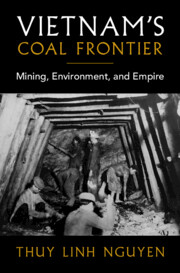
In one of the first energy histories of Southeast Asia, Thuy Linh Nguyen explores the environmental, economic, and social history of large-scale coal mining in French colonial Vietnam. Focusing on the Quảng Yên coal basin in northern Vietnam, known for the world's largest anthracite coal mines, this deeply researched study demonstrates how mining came to dominate the landscape, restructuring the region's environment and upending local communities. Nguyen pays particular attention to the role of various non-state local actors, often underrepresented in grand narratives of modern Vietnam, including Vietnamese and Chinese migrant mine workers, timber traders, loggers, and local ethnic minorities. Breaking away from the metropole-colony paradigm, Nguyen offers a new lens through which to explore the dynamics of colonial rule and the importance of inter-Asian networks, arguing that the colonial energy regime must be understood as a complex, multilayered interaction between empire, capital, labor, water, sea, land, and timber forests.
As digital technologies transform governance, communication, and public life, human rights frameworks must adapt to new challenges and opportunities. This book explores four fundamental questions: how digitalisation changes the application of human rights, how human rights law can respond to the challenges of digital technology, how freedom of expression applies online, and how vulnerable groups are affected by digitalisation. With contributions from leading scholars, the book combines legal analysis with insights from ethics, environmental education, and medical research. It examines critical topics such as AI regulation, platform accountability, privacy protections, and disinformation, offering an interdisciplinary and international perspective. By balancing different viewpoints, this book helps readers navigate the complexities of human rights in the digital age. It is an essential resource for anyone seeking to understand and shape the evolving landscape of digital rights and governance. This title is also available as open access on Cambridge Core.
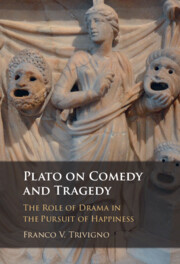
For Plato, tragedy and comedy are meaningful generic forms with proto-philosophical content concerning the moral character of their protagonists. He operates with a distinction between actual drama, the comedy and tragedy of the fourth and fifth centuries BCE, and ideal drama, the norm for what comedy and tragedy ought to be like. In this book Franco Trivigno reconstructs, on Plato's behalf, an original philosophical account of tragedy and comedy and illustrates the interpretive value of reading Plato's dialogues from this perspective. He offers detailed analyses of individual dialogues as instances of ideal comedy and tragedy, with attention to their structure and philosophical content; he also reconstructs Plato's ideals of comedy and tragedy by formulating definitions of each genre, specifying their norms, and showing how the two genres are related to each other. His book will be valuable for a range of readers interested in Plato and in Greek drama.
The fourth edition of Explaining the History of American Foreign Relations reconceptualizes this long-established classic to focus squarely on methods: not what we do, but how we do what we do. It presents revised, sharply focused essays on methods for researching national security, development, political economy, gender, religion, race, emotion, and nongovernmental organizations, alongside entirely new contributions on digital resources, spatial analysis, technology, materials, the natural world, the interaction of race and empire, US-Indigenous relations, ideology, and culture. The chapters are bracketed with an essay that assesses changes in the conception of US foreign relations history, and with an overview of how US foreign relations history is practiced in China. The essays, by scholars who have made a significant contribution in their areas of specialization, highlight conceptual approaches and methods that, taken together, offer an innovative and practical 'how-to' manual for both experienced scholars and newcomers to the field.
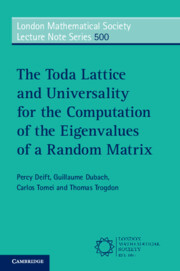
Written by leaders in the field, this text showcases some of the remarkable properties of the finite Toda lattice and applies this theory to establish universality for the associated Toda eigenvalue algorithm for random Hermitian matrices. The authors expand on a 2019 course at the Courant Institute to provide a comprehensive introduction to the area, including previously unpublished results. They begin with a brief overview of Hamiltonian mechanics and symplectic manifolds, then derive the action-angle variables for the Toda lattice on symmetric matrices. This text is one of the first to feature a new perspective on the Toda lattice that does not use the Hamiltonian structure to analyze its dynamics. Finally, portions of the above theory are combined with random matrix theory to establish universality for the runtime of the associated Toda algorithm for eigenvalue computation.
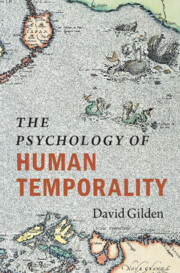
Understanding human temporality is a theoretical and experimental challenge, requiring oblique and imaginative ways to capture the manner in which time enters and structures human experience. This book bridges music, physics, and experimental psychology to present a unique perspective on the experience of time that is rooted in both physical theory and Gestalt psychology. Featuring a novel framework based on the idea that time enters mind through the dynamics of memory decay, it draws on the author's research experience in astrophysics and cognitive psychology to present a unique perspective on this topic. It will be of interest to students, researchers, and anyone seeking deeper insight into how the mind and body interact to shape personal experience and the world we inhabit.
In a time of colonial subjugation, subaltern, illicit and courtesan dancers in India radically disturbed racist, casteist and patriarchal regimes of thought. The criminalized 'nautch' dancer, vilified by both British colonialism and Indian nationalism, appears in this book across multiple locations, materials and timelines: from colonial human exhibits in London to open-air concerts in Kolkata, from heritage Bengali bazaar art to cheap matchbox labels and frayed scrapbooks, and from the late nineteenth century to our world today. Combining historiography and archival research, close reading of dancing bodies in visual culture, analysis of gestures absent and present, and performative writing, Prarthana Purkayastha brings to light rare materials on nautch women, real and fictional outlawed dancers, courtesans and sex-workers from India. Simultaneously, she decolonises existing ontologies of dance and performance as disappearance and advocates for the restless remains of nautch in animating urgent debates on race, caste, gender and sexuality today.
In this volume, David Litwa offers a fresh introduction to the 'gnostic Bible,' arguably the most significant and widely read of all gnostic Christian texts ever written. Providing a fresh introduction to a particular version of the Secret Book of John, namely the shorter version that is found in Nag Hammadi Codex III, his study includes a new translation of this text and an extensive commentary in which he introduces the notable features of this codex and interrogates whether the Secret Book emerged from an actual gnostic community. Litwa also posits solutions to many questions related to this text, notably: its date and find spot, its relationship to the treatise known and summarized by Irenaeus in the late second century, its interpretation and re-creation of the book of Genesis for Christian readers, its novel interpretation of Greco-Roman philosophy, its foundations in apostolic authority, and the reception of the Secret Book of John in late antiquity, well into the fifth century CE.
How language change manifests itself in the history of English is the primary focus of this volume. It considers the transmission of English though dictionaries and grammars down to the digital means found today. The chapters investigate various issues in language change, for instance what role internal and external factors played throughout history. There are several chapters dedicated to change in different areas and on different levels of language, includinginvestigations of the verbal system, of adverbs, of negation and case variation in English as well as more recent instances of syntactic change. This volume also looks atissues such as style and spelling practices which fed into emergent standard writing, and the complex issue of linguistic prescriptivism, with chapters on linguistic ideology, phonological standards and the codification of English in dictionaries. Itconcludes with a consideration of networks and communities of practice and also of the historical enregisterment of linguistic features.
What is moral heroism? In this book, Kyle Fruh criticizes virtue-centric answers to this question and builds a compelling alternative theoretical view: moral heroism without virtue. Drawing on real-world examples, psychology, and moral philosophy both ancient and contemporary, he argues that in fact the central achievement of moral heroes is the performance of high-stakes sacrifices, so that moral heroism is clearly not a sign of rare moral attainment among an enlightened few, but is instead something enacted by all sorts of people from all walks of life. He also looks at the question of how we respond to moral heroism, both by honoring it and by recruiting it to our efforts at moral improvement and moral education. His book is for anyone interested in moral excellence, the long philosophical traditions which examine it, and contemporary discussions of morally outstanding actions and agents.
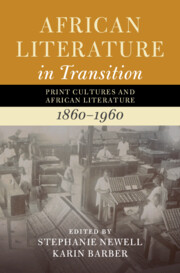
This book offers a compelling vision of the dynamism of local printing presses across colonial Africa and the new textual forms they generated. It invites a reconceptualisation of African literature as a field by revealing the profusion of local, innovative textual production that surrounded and preceded canonical European-language literary traditions. Bringing together examples of print production in African, Europea and Arabic languages, it explores their interactions as well as their divergent audiences. It is grounded in the material world of local presses, printers, publishers, writers and readers, but also traces wider networks of exchange as some texts travelled to distant places. African print culture is an emerging field of great vitality, and contributors to this volume are among those who have inspired its development. This volume moves the subject forward onto new ground, and invites literary scholars, historians and anthropologists to contribute to the on-going collaborative effort to explore it.
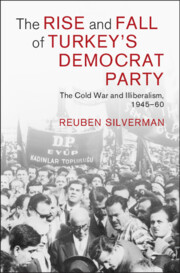
More than sixty years after Turkey's Democrat Party was removed from office by a military coup and three of its leaders hanged, it remains controversial. For some, it was the defender of a more democratic political order and founder of a dominant center-right political coalition; for others, it ushered in an era of corruption, religious reaction, and subordination to American influence. This study moves beyond such stark binaries. Reuben Silverman details the party's establishment, development, rule, and removal from power, showing how its leaders transformed themselves from champions of democracy and liberal economics to advocates of illiberal policies. To understand this change, Silverman draws on periodicals and archival documents to detail the Democrat Party's continuity with Turkey's late Ottoman and early republican past as well as the changing nature of the American-led Cold War order in which it actively participated.
Cutting-edge computational tools like artificial intelligence, data scraping, and online experiments are leading to new discoveries about the human mind. However, these new methods can be intimidating. This textbook demonstrates how Big Data is transforming the field of psychology, in an approachable and engaging way that is geared toward undergraduate students without any computational training. Each chapter covers a hot topic, such as social networks, smart devices, mobile apps, and computational linguistics. Students are introduced to the types of Big Data one can collect, the methods for analyzing such data, and the psychological theories we can address. Each chapter also includes discussion of real-world applications and ethical issues. Supplementary resources include an instructor manual with assignment questions and sample answers, figures and tables, and varied resources for students such as interactive class exercises, experiment demos, articles, and tools.
In today's data-driven world, this book offers clear, accessible guidance on the logical foundations of optimal decision making. It introduces essential tools for decision analysis and explores psychological theories that explain how people make decisions in both professional and personal contexts. Using real-world examples, the book covers topics such as decision making under uncertainty, decision trees, strategies of risk management, decisions that are gambles, heuristics, trade-offs, decision making under stress, game theory, decision making in a dispute or conflict, and multi-attribute decision analysis. Readers will identify common decision traps and learn how to avoid them, understand the causes of indecisiveness and find out how to deal with it, gain insights into their own decision-making processes, and build confidence in their ability to make and defend informed decisions across a range of scenarios.