Refine search
Actions for selected content:
237328 results in Physics and Astronomy

Evaporation dynamics of wavy sessile droplets
-
- Journal:
- Journal of Fluid Mechanics / Volume 1010 / 10 May 2025
- Published online by Cambridge University Press:
- 02 May 2025, A38
-
- Article
- Export citation
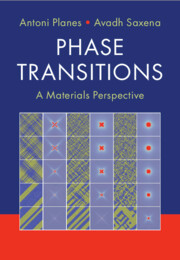
Phase Transitions
- A Materials Perspective
-
- Published online:
- 01 May 2025
- Print publication:
- 15 May 2025
Performance differences in lifeboat launching procedures between IVR training and traditional practical lessons in maritime safety education
-
- Journal:
- The Journal of Navigation / Volume 78 / Issue 2-3 / May 2025
- Published online by Cambridge University Press:
- 01 September 2025, pp. 246-261
- Print publication:
- May 2025
-
- Article
- Export citation
Path planning for search and rescue of unmanned surface vehicles based on combined convolutional neural network rapid-exploration random tree and improved artificial potential field
-
- Journal:
- The Journal of Navigation / Volume 78 / Issue 2-3 / May 2025
- Published online by Cambridge University Press:
- 07 November 2025, pp. 320-338
- Print publication:
- May 2025
-
- Article
- Export citation
Software package for nautical astronomy
-
- Journal:
- The Journal of Navigation / Volume 78 / Issue 2-3 / May 2025
- Published online by Cambridge University Press:
- 01 October 2025, pp. 305-319
- Print publication:
- May 2025
-
- Article
- Export citation
Low-cost SDR-based GNSS signal recorder and replayer for equipment testing
-
- Journal:
- The Journal of Navigation / Volume 78 / Issue 2-3 / May 2025
- Published online by Cambridge University Press:
- 07 November 2025, pp. 339-357
- Print publication:
- May 2025
-
- Article
- Export citation
Scientific data in Pero Vaz de Caminha’s letter
-
- Journal:
- The Journal of Navigation / Volume 78 / Issue 2-3 / May 2025
- Published online by Cambridge University Press:
- 08 September 2025, pp. 280-288
- Print publication:
- May 2025
-
- Article
- Export citation
Terrain matching without redundant 3D Zernike moments
-
- Journal:
- The Journal of Navigation / Volume 78 / Issue 2-3 / May 2025
- Published online by Cambridge University Press:
- 22 August 2025, pp. 210-220
- Print publication:
- May 2025
-
- Article
- Export citation
PSP volume 178 issue 3 Cover and Back matter
-
- Journal:
- Mathematical Proceedings of the Cambridge Philosophical Society / Volume 178 / Issue 3 / May 2025
- Published online by Cambridge University Press:
- 29 May 2025, pp. b1-b5
- Print publication:
- May 2025
-
- Article
-
- You have access
- Export citation
Maritime piracy bibliometric analysis: A literature overview and map review
-
- Journal:
- The Journal of Navigation / Volume 78 / Issue 2-3 / May 2025
- Published online by Cambridge University Press:
- 03 September 2025, pp. 262-279
- Print publication:
- May 2025
-
- Article
-
- You have access
- Open access
- HTML
- Export citation
Correspondence between Pestov and Weitzenböck identities
- Part of
-
- Journal:
- Mathematical Proceedings of the Cambridge Philosophical Society / Volume 178 / Issue 3 / May 2025
- Published online by Cambridge University Press:
- 02 May 2025, pp. 443-463
- Print publication:
- May 2025
-
- Article
-
- You have access
- Open access
- HTML
- Export citation
NAV volume 78 issue 2-3 Cover and Back matter
-
- Journal:
- The Journal of Navigation / Volume 78 / Issue 2-3 / May 2025
- Published online by Cambridge University Press:
- 01 December 2025, pp. b1-b2
- Print publication:
- May 2025
-
- Article
-
- You have access
- Export citation
Probability of active navigational failures: incident analyses for use in ship-bridge allision risk assessments
-
- Journal:
- The Journal of Navigation / Volume 78 / Issue 2-3 / May 2025
- Published online by Cambridge University Press:
- 08 August 2025, pp. 171-189
- Print publication:
- May 2025
-
- Article
-
- You have access
- Open access
- HTML
- Export citation
GPS to assess an Olympic regatta: 49er and 49erFX classes
-
- Journal:
- The Journal of Navigation / Volume 78 / Issue 2-3 / May 2025
- Published online by Cambridge University Press:
- 07 November 2025, pp. 358-368
- Print publication:
- May 2025
-
- Article
-
- You have access
- Open access
- HTML
- Export citation
Remarks about inhomogeneous pair correlations – CORRIGENDUM
-
- Journal:
- Mathematical Proceedings of the Cambridge Philosophical Society / Volume 178 / Issue 3 / May 2025
- Published online by Cambridge University Press:
- 02 May 2025, p. 465
- Print publication:
- May 2025
-
- Article
-
- You have access
- HTML
- Export citation
Maritime Head-up Display (mHUD): a safety-enhancing navigational tool for ship bridges and remote operation centres
-
- Journal:
- The Journal of Navigation / Volume 78 / Issue 2-3 / May 2025
- Published online by Cambridge University Press:
- 27 August 2025, pp. 221-245
- Print publication:
- May 2025
-
- Article
-
- You have access
- Open access
- HTML
- Export citation
Intermittency assessed through a model of kurtosis–skewness relation in MHD in fast dynamo regimes
-
- Journal:
- Journal of Plasma Physics / Volume 91 / Issue 2 / April 2025
- Published online by Cambridge University Press:
- 01 May 2025, E69
-
- Article
-
- You have access
- Open access
- HTML
- Export citation
-
Intermittency as it occurs in fast dynamos in the magnetohydrodynamics (MHD) framework is evaluated through the examination of relations between normalized moments at third order (skewness $S$) and fourth order (kurtosis $K$) for both the velocity and magnetic field, and for their local dissipations. As investigated by several authors in various physical contexts such as fusion plasmas (Krommes 2008 Phys. Plasmas 15, 030703), climate evolution (Sura & Sardeshmukh 2008 J. Phys. Oceano. 38, 639-647), fluid turbulence or rotating stratified flows (Pouquet et al. 2023 Atmosphere 14, 01375), approximate parabolic $K(S)\sim S^\alpha$ laws emerge whose origin may be related to the applicability of intermittency models to their dynamics. The results analyzed herein are obtained through direct numerical simulations of MHD flows for both Taylor–Green and Arnold–Beltrami–Childress forcing at moderate Reynolds numbers, and for up to $3.14 \times 10^5$ turn-over times. We observe for the dissipation $0.2 \lesssim \alpha \lesssim 3.0$, an evaluation that varies with the field, the forcing and when filtering for high-skewness intermittent structures. When using the She & Lévêque (1994) Phys. Rev. Lett. 72, 336-339 intermittency model, one can compute $\alpha$ analytically; we then find $\alpha \approx 2.5$, clearly differing from a (strict) parabolic scaling, a result consistent with the numerical data.


Nowcasting of typhoon tracks based on LLM and RAG
-
- Journal:
- The Journal of Navigation / Volume 78 / Issue 2-3 / May 2025
- Published online by Cambridge University Press:
- 19 September 2025, pp. 289-304
- Print publication:
- May 2025
-
- Article
- Export citation
NAV volume 78 issue 2-3 Cover and Front matter
-
- Journal:
- The Journal of Navigation / Volume 78 / Issue 2-3 / May 2025
- Published online by Cambridge University Press:
- 01 December 2025, pp. f1-f2
- Print publication:
- May 2025
-
- Article
-
- You have access
- Export citation
PSP volume 178 issue 3 Cover and Front matter
-
- Journal:
- Mathematical Proceedings of the Cambridge Philosophical Society / Volume 178 / Issue 3 / May 2025
- Published online by Cambridge University Press:
- 29 May 2025, pp. f1-f2
- Print publication:
- May 2025
-
- Article
-
- You have access
- Export citation
