Refine search
Actions for selected content:
237328 results in Physics and Astronomy
10 - The ADM parametrization and applications
-
- Book:
- General Relativity
- Published online:
- 24 April 2025
- Print publication:
- 08 May 2025, pp 105-115
-
- Chapter
- Export citation
9 - Gravity and geometry, Lovelock and Chern–Simons, topological terms, extensions, and anomalies
-
- Book:
- General Relativity
- Published online:
- 24 April 2025
- Print publication:
- 08 May 2025, pp 96-104
-
- Chapter
- Export citation
13 - Penrose diagrams and black holes: the Schwarzschild example
-
- Book:
- General Relativity
- Published online:
- 24 April 2025
- Print publication:
- 08 May 2025, pp 137-148
-
- Chapter
- Export citation
8 - Vielbein–spin connection formulation of general relativity: gravity vs. gauge theory, in four dimensions and three dimensions
-
- Book:
- General Relativity
- Published online:
- 24 April 2025
- Print publication:
- 08 May 2025, pp 86-95
-
- Chapter
- Export citation
29 - The (parametrized) post-Newtonian expansion and metric frames
-
- Book:
- General Relativity
- Published online:
- 24 April 2025
- Print publication:
- 08 May 2025, pp 323-335
-
- Chapter
- Export citation

Multiscale circulation in wall-parallel planes of turbulent channel flows
-
- Journal:
- Journal of Fluid Mechanics / Volume 1009 / 10 May 2025
- Published online by Cambridge University Press:
- 07 May 2025, R4
-
- Article
-
- You have access
- Open access
- HTML
- Export citation
-
Wall turbulence consists of various sizes of vortical structures that induce flow circulation around a wide range of closed Eulerian loops. Here we investigate the multiscale properties of circulation around such loops in statistically homogeneous planes parallel to the wall. Using a high-resolution direct numerical simulation database of turbulent channels at Reynolds numbers of $Re_\tau =180$, 550, 1000 and 5200, circulation statistics are obtained in planes at different wall-normal heights. Intermittency of circulation in the planes of the outer flow ( $y^+ \gtrsim 0.1Re_\tau$) takes the form of universal bifractality as in homogeneous and isotropic turbulence. The bifractal character simplifies to space-filling character close to the wall, with scaling exponents that are linear in the moment order, and lower than those given by the Kolmogorov paradigm. The probability density functions of circulation are long-tailed in the outer bifractal region, with evidence showing their invariance with respect to the loop aspect ratio, while those in the inner region are closely Gaussian. The unifractality near the wall implies that the circulation there is not intermittent in character.


Aspect ratio effect on side and basal melting in fresh water
-
- Journal:
- Journal of Fluid Mechanics / Volume 1010 / 10 May 2025
- Published online by Cambridge University Press:
- 07 May 2025, A40
-
- Article
-
- You have access
- Open access
- HTML
- Export citation
-
The aspect ratio effect on side and basal melting in fresh water is systematically investigated across a range of Rayleigh numbers and ambient temperatures using direct numerical simulations. The side mean melt rate follows a ${Ra}^{1/4}\,\gamma ^{-3/8}$ scaling relation in the side-melting dominant regime, where ${Ra}$ is the Rayleigh number, and $\gamma$ is the width-to-height aspect ratio of the ice block. In the basal-melting dominant regime, the basal mean melt rate follows a ${Ra}^{1/4}\gamma ^{3/8}$ scaling relation at low Rayleigh numbers, but transitions to a ${Ra}^{1/3}\gamma ^{1/2}$ scaling relation at higher Rayleigh numbers. This scaling transition is attributed to the formation of a bottom cavity resulting from flow separation at high Rayleigh numbers. The overall mean melt rate exhibits a non-monotonic dependence on the aspect ratio, driven by the competition between side and basal melting. The proposed theoretical model successfully captures the observed non-monotonic behaviour, and accurately predicts the overall mean melt rate over the considered range of Rayleigh numbers and ambient temperatures, especially in the side- and basal-melting dominant regimes. More specifically, the side, basal and overall mean melt rates follow a linear ${St}$ scaling relation for ambient temperatures $T_{w}\geqslant 15^{\,\circ }\textrm {C}$, with ${St}$ being the Stefan number (the ratio between sensible heat and latent heat), but deviations from this scaling relation and a non-monotonic dependence on the ambient temperature are observed at lower ambient temperatures, which can be attributed to the density anomaly effect.


The behaviour of turbulence production in adverse pressure gradient turbulent boundary layers
-
- Journal:
- Journal of Fluid Mechanics / Volume 1009 / 10 May 2025
- Published online by Cambridge University Press:
- 07 May 2025, A34
-
- Article
- Export citation

Linear dynamics of over-expanded annular supersonic jets
-
- Journal:
- Journal of Fluid Mechanics / Volume 1009 / 10 May 2025
- Published online by Cambridge University Press:
- 07 May 2025, A32
-
- Article
- Export citation
Particle-based modelling of axisymmetric tandem mirror devices
-
- Journal:
- Journal of Plasma Physics / Volume 91 / Issue 2 / April 2025
- Published online by Cambridge University Press:
- 07 May 2025, E70
-
- Article
-
- You have access
- Open access
- HTML
- Export citation

Scaling law in the inviscid coalescence of unequal-size droplets
-
- Journal:
- Journal of Fluid Mechanics / Volume 1010 / 10 May 2025
- Published online by Cambridge University Press:
- 07 May 2025, R2
-
- Article
-
- You have access
- Open access
- HTML
- Export citation

The effect of surfactants on droplet generation in a plunging breaker
-
- Journal:
- Journal of Fluid Mechanics / Volume 1009 / 10 May 2025
- Published online by Cambridge University Press:
- 07 May 2025, A31
-
- Article
-
- You have access
- Open access
- HTML
- Export citation
-
An experimental study is conducted to compare droplet generation in a deep-water plunging breaker in filtered tap water and in the presence of low and high bulk concentrations of the soluble surfactant Triton X-100. The breakers are generated by a programmable wave maker that is set with a single motion profile that produces a highly repeatable dispersively focused two-dimensional (2-D) wave packet with a central wavelength of $\lambda _0=1.18\,\rm m$. The droplets are measured with an in-line cinematic holographic system. It is found that the presence of surfactants significantly modifies the overall droplet number and the distributions of droplet diameter and velocity components produced by the four main droplet producing mechanisms of the breaker as identified by Erinin et al. ( J. Fluid Mech., vol. 967, 2023, p. A36). These modifications are due to both surfactant-induced changes in the flow structures that generate droplets and changes in the details of droplet production mechanisms in each flow structure.


Poromechanical modelling of responsive hydrogel pumps
-
- Journal:
- Journal of Fluid Mechanics / Volume 1009 / 10 May 2025
- Published online by Cambridge University Press:
- 07 May 2025, A38
-
- Article
-
- You have access
- Open access
- HTML
- Export citation

Viscoelastic Worthington jets and droplets produced by bursting bubbles
-
- Journal:
- Journal of Fluid Mechanics / Volume 1010 / 10 May 2025
- Published online by Cambridge University Press:
- 06 May 2025, A2
-
- Article
-
- You have access
- Open access
- HTML
- Export citation
-
Bubble bursting and subsequent collapse of the open cavity at free surfaces of contaminated liquids can generate aerosol droplets, facilitating pathogen transport. After film rupture, capillary waves focus at the cavity base, potentially generating fast Worthington jets that are responsible for ejecting the droplets away from the source. While extensively studied for Newtonian fluids, the influence of non-Newtonian rheology on this process remains poorly understood. Here, we employ direct numerical simulations to investigate the bubble cavity collapse in viscoelastic media, such as polymeric liquids. We find that the jet and drop formations are dictated by two dimensionless parameters: the elastocapillary number $Ec$ (the ratio of the elastic modulus and the Laplace pressure) and the Deborah number $De$ (the ratio of the relaxation time and the inertio-capillary time scale). We show that, for low values of $Ec$ and $De$, the viscoelastic liquid adopts a Newtonian-like behaviour, where the dynamics is governed by the solvent Ohnesorge number $Oh_s$ (the ratio of visco-capillary and inertio-capillary time scales). In contrast, for large values $Ec$ and $De$, the enhanced elastic stresses completely suppress the formation of the jet. For some cases with intermediate values of $Ec$ and $De$, smaller droplets are produced compared with Newtonian fluids, potentially enhancing aerosol dispersal. By mapping the phase space spanned by $Ec$,
$Ec$,  $De$ and $Oh_s$, we reveal three distinct flow regimes: (i) jets forming droplets, (ii) jets without droplet formation and (iii) absence of jet formation. Our results elucidate the mechanisms underlying aerosol suppression versus fine spray formation in polymeric liquids, with implications for pathogen transmission and industrial processes involving viscoelastic fluids.


The Cahn–Hilliard–Navier–Stokes framework for multiphase fluid flows: laminar, turbulent and active
-
- Journal:
- Journal of Fluid Mechanics / Volume 1010 / 10 May 2025
- Published online by Cambridge University Press:
- 05 May 2025, P1
-
- Article
-
- You have access
- Open access
- HTML
- Export citation

Spectral analysis of the net turbulent force in accelerating turbulent pipe flow
-
- Journal:
- Journal of Fluid Mechanics / Volume 1010 / 10 May 2025
- Published online by Cambridge University Press:
- 05 May 2025, A37
-
- Article
-
- You have access
- Open access
- HTML
- Export citation
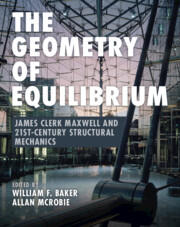
The Geometry of Equilibrium
- James Clerk Maxwell and 21st-Century Structural Mechanics
-
- Published online:
- 03 May 2025
- Print publication:
- 22 May 2025

Quantum Algorithms
- A Survey of Applications and End-to-end Complexities
-
- Published online:
- 03 May 2025
- Print publication:
- 24 April 2025
-
- Book
-
- You have access
- Open access
- Export citation

Quantum Resource Theories
-
- Published online:
- 03 May 2025
- Print publication:
- 10 April 2025

The dispersive potential-vorticity dynamics of coastal outflows
-
- Journal:
- Journal of Fluid Mechanics / Volume 1010 / 10 May 2025
- Published online by Cambridge University Press:
- 02 May 2025, A39
-
- Article
-
- You have access
- Open access
- HTML
- Export citation
-
This paper discusses the propagation of coastal currents generated by a river outflow using a 1 ${1}/{2}$-layer, quasigeostrophic model, following Johnson et al. (2017) (JSM17). The model incorporates two key physical processes: Kelvin-wave-generated flow and vortical advection along the coast. We extend JSM17 by deriving a fully nonlinear, long-wave, dispersive equation governing the evolution of the coastal current width. Numerical solutions show that, at large times, the flow behaviour divides naturally into three regimes: a steady outflow region, intermediate regions consisting of constant-width steady currents and unsteady propagating fronts leading the current. The widths of the steady currents depend strongly on dispersion when the constant outflow potential-vorticity anomaly is negative. Simulations using contour dynamics show that the dispersive equation captures the full quasigeostrophic behaviour more closely than JSM17 and give accurate bounds on the widths of the steady currents.

