To save content items to your account,
please confirm that you agree to abide by our usage policies.
If this is the first time you use this feature, you will be asked to authorise Cambridge Core to connect with your account.
Find out more about saving content to .
To save content items to your Kindle, first ensure no-reply@cambridge.org
is added to your Approved Personal Document E-mail List under your Personal Document Settings
on the Manage Your Content and Devices page of your Amazon account. Then enter the ‘name’ part
of your Kindle email address below.
Find out more about saving to your Kindle.
Note you can select to save to either the @free.kindle.com or @kindle.com variations.
‘@free.kindle.com’ emails are free but can only be saved to your device when it is connected to wi-fi.
‘@kindle.com’ emails can be delivered even when you are not connected to wi-fi, but note that service fees apply.
Nutrition labelling is mandatory on food products in retail stores, but compliance in the rapidly expanding online setting remains unclear. We assessed mandatory and voluntary labelling information across major U.S. online retailers.
Design:
Between January and August 2022, we evaluated a representative basket of sixty food and beverage items across eight product categories of ten major retailers. We evaluated online presence, accessibility and legibility of four mandatory elements – Nutrition Facts, ingredients, allergen statements and percent juice for fruit drinks – and presence of seven voluntary elements – nutrient content claims, health/qualified health claims, ingredient claims, structure–function claims, additive claims, front-of-package nutrient profiling symbols and other marketing claims.
Setting:
Major online food retailers in the USA.
Participants:
N/A.
Results:
On average, each mandatory element was present, accessible and legible for only 35·1 % of items, varying modestly by element (from 38·3 % for ingredients lists to 31·5 % for Nutrition Facts) but widely by retailer (6·6–86·3 %). Voluntary elements were present for 45·8 % of items, ranging from 83·7 % for marketing claims to 2·0 % for structure–function claims. Findings were generally consistent across the eight product categories. Voluntary elements were more frequently present than accessible and legible mandatory elements for six of ten retailers and seven of eight product categories.
Conclusions:
Mandatory nutrition label elements are not commonly present, accessible and legible in online retail settings and are less consistently present than marketing elements. Coordinated industry and regulatory actions may be needed to ensure consumers can access mandatory nutrition information to make healthy and safe food choices online.
Loss of skeletal muscle strength and mass (sarcopenia) is common in older adults and associated with an increased risk of disability, frailty and premature death. Finding cost-effective prevention and treatment strategies for sarcopenia for the growing ageing population is therefore of great public health interest. Although nutrition is considered an important factor in the aetiology of sarcopenia, its potential for sarcopenia prevention and/or treatment is still being evaluated. Nutrition research for sarcopenia utilises three main approaches to understand muscle-nutrition relationships, evaluating: single nutrients, whole foods and whole diet effects – both alone or combined with exercise. Applying these approaches, we summarise recent evidence from qualitative and quantitative syntheses of findings from observational and intervention studies of healthy older adults, and those with sarcopenia. We consider protein supplements, whole foods (fruits and vegetables) and the Mediterranean diet as exemplars. There is some evidence of beneficial effects of protein supplementation ≥ 0·8 g/kg body weight/d on muscle mass when combined with exercise training in intervention studies of healthy and sarcopenic older adults. In contrast, evidence for effects on muscle function (strength and physical performance) is inconclusive. There is reasonably consistent epidemiological evidence suggesting benefits of higher fruits and vegetables consumption for better physical performance. Similarly, higher adherence to the Mediterranean diet is associated with beneficial effects on muscle function in observational studies. However, intervention studies are lacking. This review discusses how current evidence may inform the development of preventive and intervention strategies for optimal muscle ageing and nutritional public policy aimed at combatting sarcopenia.
Despite the urgent need for plant-based dietary shifts, few studies have examined current diet trajectories using longitudinal data. This study analyzed dietary transitions of French adults over 8 years (2014-2022), assessing diet quality and the role of various socio-economic factors. Consumption data from 17 187 NutriNet-Santé cohort participants, weighted for the French Census, were collected via FFQ in 2014, 2018 and 2022. Adopting a gender-specific approach, consumption changes in twenty-three food groups were assessed over time. Diet quality was evaluated using the Comprehensive Diet Quality Index score, categorising foods into ‘healthy’ and ‘unhealthy’. Socio-economic analysis targeted four food groups (red meat (including fresh beef, pork, offal and lamb), processed meat (e.g. sausages, ham and bacon), legumes and whole-grain products), strongly linked to mortality risk and recognised as significant markers of the sustainable diet transition. All analyses were conducted using multi-adjusted mixed-effects models. Consumption of some healthy plant-based foods (nuts +59 %, legumes +22 %, whole-grain products +7 %) significantly increased over time, while consumption of some unhealthy foods (red meat −19 %, refined cereals −18 %, sweetened drinks −15 %) decreased. Conversely, consumption of prepared and mixed dishes (+16 %) and processed meat (+35 %) increased. These changes differed in magnitude between genders and translated into an improved diet quality score (Comprehensive Diet Quality Index). Occupational status was linked to longitudinal changes in food consumption, showing increased consumption of plant-based foods among students and higher socio-professional categories. Our findings provide accurate data on trends and factors for targeted initiatives, guiding strategic interventions for a sustainable dietary transition.
Within the USA military, monitoring body composition is an essential component of predicting physical performance and establishing soldier readiness. The purpose of this study was to explore mobile phone three-dimensional optical imaging (3DO), a user-friendly technology capable of rapidly obtaining reliable anthropometric measurements and to determine the validity of the new Army one-site body fat equations using 3DO-derived abdominal circumference. Ninety-six participants (51 F, 45 M; age: 23·7 ± 6·5 years; BMI: 24·7 ± 4·1 kg/m2) were assessed using 3DO, dual-energy X-ray absorptiometry (DXA) and a 4-compartment model (4C). The validity of the Army equations using 3DO abdominal circumference was compared with 4C and DXA estimates. Compared with the 4C model, the Army equation overestimated BF% and fat mass (FM) by 1·3 ± 4·8 % and 0·9 ± 3·4 kg, respectively, while fat-free mass (FFM) was underestimated by 0·9 ± 3·4 kg (P < 0·01 for each). Values from DXA and Army equation were similar for BF%, FM and FFM (constant errors between −0·1 and 0·1 units; P ≥ 0·82 for each). In both comparisons, notable proportional bias was observed with slope coefficients of −0·08 to −0·43. Additionally, limits of agreement were 9·5–10·2 % for BF% and 6·8–7·8 kg for FM and FFM. Overall, while group-level performance of the one-site Army equation was acceptable, it exhibited notable proportional bias when compared with laboratory criterion methods and wide limits of agreement, indicating potential concerns when applied to individuals. 3DO may provide opportunities for the development of more advanced, automated digital anthropometric body fat estimation in military settings.
Emerging evidence suggests that low-grade systemic inflammation plays a key role in altering brain activity, behaviour and affect. Modulation of the gut microbiota using prebiotic fibre offers a potential therapeutic tool to regulate inflammation, mediated via the production of short-chain fatty acids (SCFA). However, the impact of prebiotic consumption on affective symptoms and the possible contribution from inflammation, gut symptoms and the gut microbiome are currently underexamined. In this 12-week study, the effects of a diverse prebiotic blend on inflammation, gut microbiota profiles and affective symptoms in a population with metabolic syndrome (MetS) were examined. Sixty males and females with MetS meeting the criteria for MetS were randomised into a treatment group (n 40), receiving 10 g per day of a diverse prebiotic blend and healthy eating advice, and a control group (n 20), receiving healthy eating advice only. Our results showed a significant reduction in high sensitivity C-reactive protein (hs-CRP) in the treatment (–0·58 [–9·96 to–2·63]) compared with control (0·37 [–3·64 to–3·32]), alongside significant improvements in self-reported affective scores in the treatment compared with the control group. While there were no differences in relative abundance between groups at week 12, there was a significant increase from baseline to week 12 in fecal Bifidobacterium and Parabacteroides in the treatment group, both of which are recognised as SCFA producers. Multivariate regression analyses further revealed an association between gastrointestinal symptoms and hs-CRP with affective scores. Together, this study provides preliminary support for a diverse prebiotic blend for mood, stress and anxiety.
Coffee drinking has been associated with benefits for various health outcomes, with many attributed to the most prevalent family of polyphenols within coffee, chlorogenic acids (CGA). Whilst reviews of the association between coffee and cognition exist, evidence exploring effects of coffee-specific CGA on cognition has yet to be systematically synthesised. The purpose was to systematically review the current literature investigating the relationship between CGA from coffee and cognitive performance. A further objective was to undertake a meta-analysis of relevant randomised controlled trials (RCT). Observational and intervention studies were included if they considered coffee-based CGA consumption in human participants and applied a standardised measure of cognition. Furthermore, intervention studies were required to define the CGA content and include a control group/placebo. Studies were excluded if they examined CGA alone as an extract or supplement. A search of Scopus, PubMed, Web of Science, ScienceDirect and PsycINFO resulted in including twenty-three papers, six of which were interventions. The evidence from the broader systematic review suggests that CGA from coffee may need to be consumed chronically over a sustained period to produce cognitive benefits. However, the meta-analysis of RCT showed no benefits of coffee CGA intake on cognitive function (d = 0.00, 95% CI −0.05, 0.05). Overall, this review included a limited number of studies, the sample sizes were small, and a wide range of cognitive measures have been utilised. This indicates that further, good-quality interventions and RCT are required to systematically explore the conditions under which coffee CGA may provide benefits for cognitive outcomes.
To improve the interpretation and utilisation of blood lipids, ketones and acylcarnitine concentrations as biomarkers in clinical assessments, more information is needed on their dynamic alterations in response to dietary intake and fasting. The aim of this intervention study was to characterise the changes in serum lipid, ketone and acylcarnitine concentrations 24 h after a standardised breakfast meal. Thirty-four healthy subjects (eighteen males and sixteen females) aged 20–30 years were served a breakfast meal (∼500 kcal, 36 E% fat, 46 E% carbohydrates, 16 E% protein, 2E% fibre), after which they consumed only water for 24 h. Blood samples were drawn before and at thirteen standardised timepoints after the meal. Metabolite concentrations were plotted as a function of time since the completion of the breakfast meal. Results demonstrated that concentrations of HDL-cholesterol and LDL-cholesterol decreased until ∼2 h (–4 % for both), while TAG concentrations peaked at 3 h (+27 %). Acetoacetate and β-hydroxybutyrate were highest 24 h after the meal (+433 and +633 %, respectively). Acetylcarnitine, butyrylcarnitine, hexanoylcarnitine, octanoylcarnitine, decanoylcarnitine and dodecanoylcarnitine reached the lowest values at 60 min (decreases ranging from –47 to –70 %), before increasing and peaking at 24 h after the meal (increases ranging from +86 to +120 %). Our findings suggest that distinguishing between fasting and non-fasting blood samples falls short of capturing the dynamics in lipid, ketone, carnitine and acylcarnitine concentrations. To enhance the utility of serum acylcarnitine analyses, we strongly recommend accounting for the specific time since the last meal at the time of blood sampling.
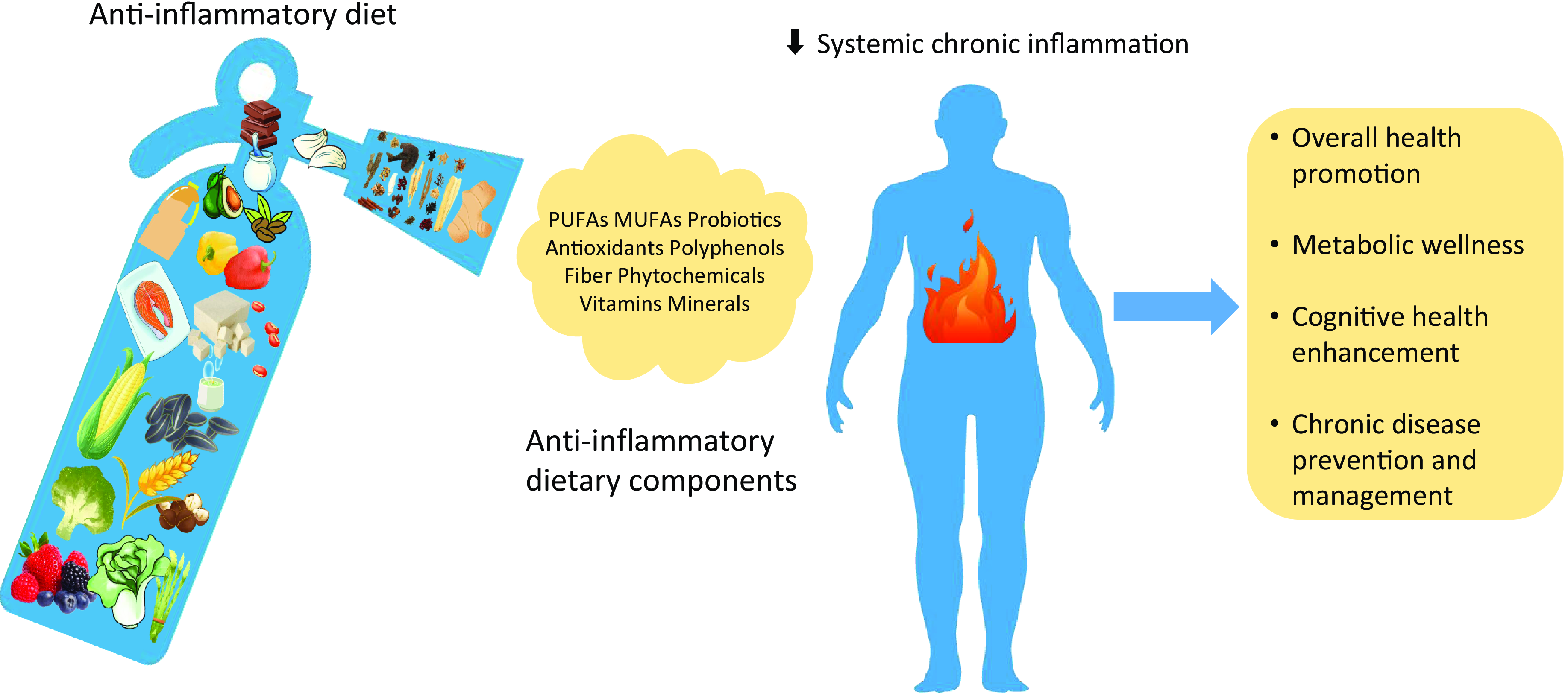
An anti-inflammatory diet is characterised by incorporating foods with potential anti-inflammatory properties, including fruits, vegetables, whole grains, nuts, legumes, spices, herbs and plant-based protein. Concurrently, pro-inflammatory red and processed meat, refined carbohydrates and saturated fats are limited. This article explores the effects of an anti-inflammatory diet on non-communicable diseases (NCD), concentrating on the underlying mechanisms that connect systemic chronic inflammation, dietary choices and disease outcomes. Chronic inflammation is a pivotal contributor to the initiation and progression of NCD. This review provides an overview of the intricate pathways through which chronic inflammation influences the pathogenesis of conditions including obesity, type II diabetes mellitus, CVD, autoinflammatory diseases, cancer and cognitive disorders. Through a comprehensive synthesis of existing research, we aim to identify some bioactive compounds present in foods deemed anti-inflammatory, explore their capacity to modulate inflammatory pathways and, consequently, to prevent or manage NCD. The findings demonstrated herein contribute to an understanding of the interplay between nutrition, inflammation and chronic diseases, paving a way for future dietary recommendations and research regarding preventive or therapeutic strategies.
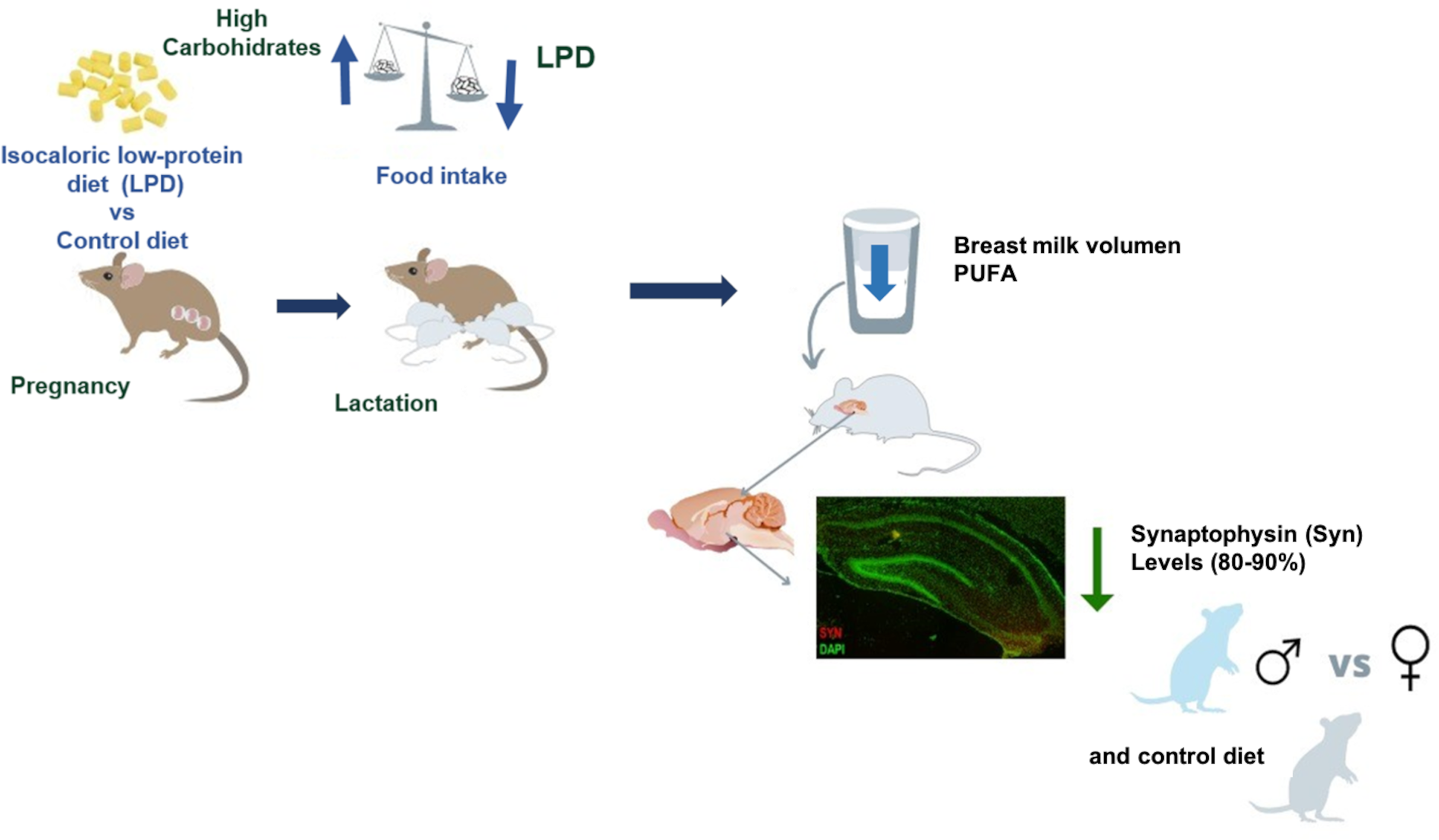
The developmental origins of health and disease hypothesis have highlighted the link between early life environment and long-term health outcomes in offspring. For example, maternal protein restriction during pregnancy and lactation can result in adverse metabolic and cognitive outcomes in offspring postnatal. Hence, in the present study, we assess whether an isocaloric low-protein diet (ILPD) affects the fatty acid profile in breast milk, the hippocampal synaptophysin (Syn) ratio, and the oxidative stress markers in the neonatal stage of male and female offspring. The aim of this work was to assess the effect of an ILPD on the fatty acid profile in breast milk, quantified the hippocampal synaptophysin (Syn) ratio and oxidative stress markers in neonatal stage of male and female offspring. Female Wistar rats were fed with either a control diet or an ILPD during gestation to day 10 of lactation. Oxidative stress markers were assessed in serum and liver. All quantifications were done at postnatal day 10. The results showed: ILPD led to decreases of 38.5% and 17.4% in breast milk volume and polyunsaturated fatty acids content. Significant decreases of hippocampal Syn ratio in male offspring (decreases of 98% in hippocampal CA1 pyramidal and CA1 oriens, 83%, stratum pyramidal in CA3, 80%, stratum lucidum in CA3, and 81% stratum oriens in CA3). Male offspring showed an increase in pro-oxidant status in serum and liver. Thus, the data suggest that male offspring are more vulnerable than females to an ILPD during gestation and lactation.
The present systematic review and meta-analysis sought to evaluate the effects of conjugated linoleic acid (CLA) supplementation on cardiovascular risk factors in patients at risk of CVD. Relevant studies were obtained by searching the PubMed, SCOPUS and Web of Science databases (from inception to January 2023). Weighted mean differences (WMD) and 95% CI were pooled using a random-effects model. Heterogeneity, sensitivity analysis and publication bias were reported using standard methods. A pooled analysis of 14 randomised controlled trials (RCT) with 17 effect sizes revealed that CLA supplementation led to significant reductions in body weight (WMD: −0·72 kg, 95% CI: −1·11, −0·33, P < 0·001), BMI (WMD: −0·22 kg/m2, 95% CI: −0·44, −0·00, P = 0·037) and body fat percentage (BFP) (WMD: −1·32 %, 95% CI: −2·24, −0·40, P = 0·005). However, there was no effect on lipid profile and blood pressure in comparison with the control group. In conclusion, CLA supplementation may yield a small but significant beneficial effect on anthropometric indices in patients at risk of CVD. Moreover, CLA seems not to have adverse effects on lipid profiles and blood pressure in patients at risk of CVD. It should be noted that the favourable effects of CLA supplementation on anthropometric variables were small and may not reach clinical importance.
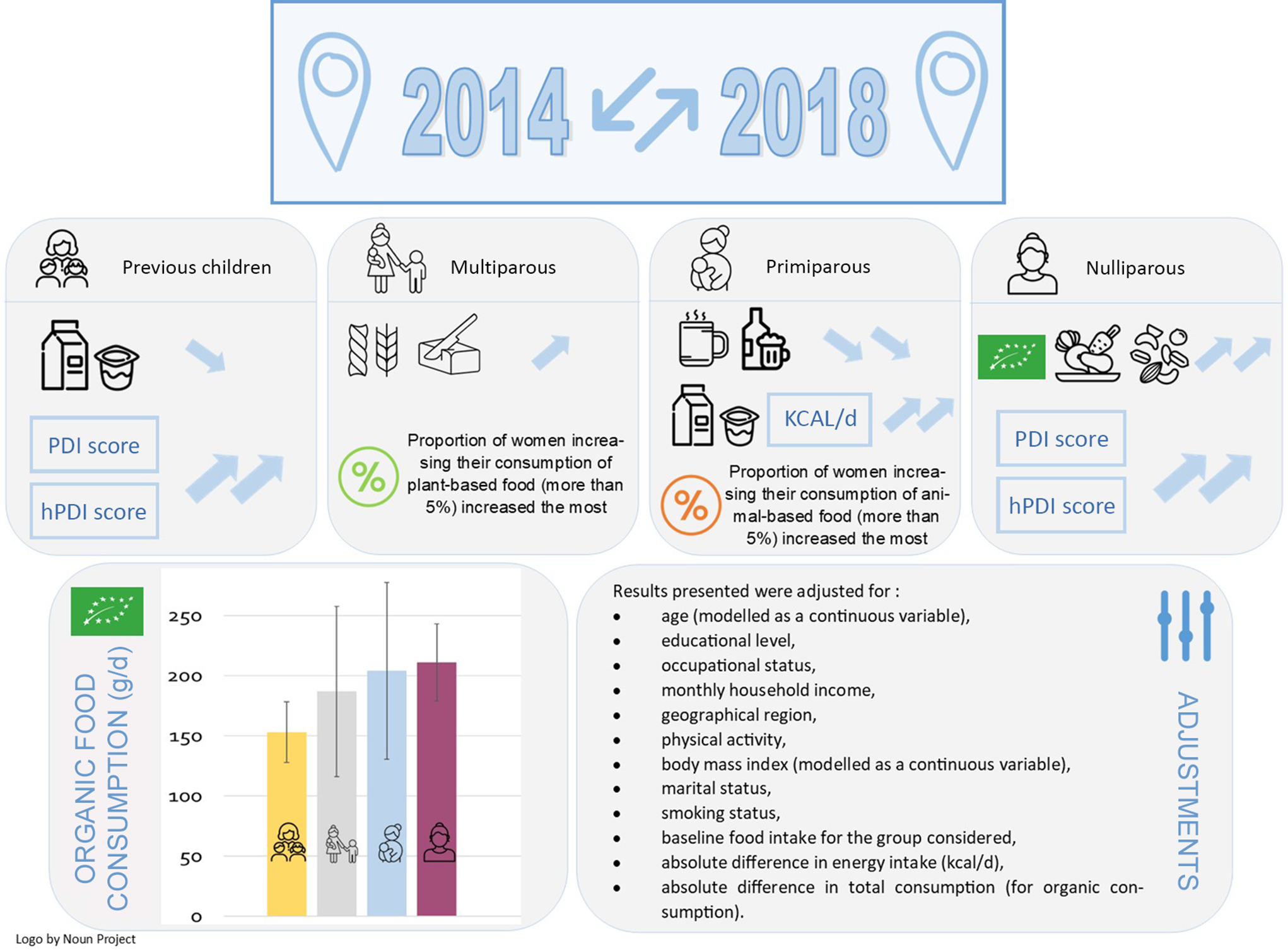
Childbirth is a major life-changing event, this period is an opportunity to improve eating habits. The aim of this longitudinal study was to identify and characterise dietary changes in women according to their parity status. Dietary intake data from 4194 women of childbearing age included in the NutriNet-Santé cohort were derived using a FFQ, administered in 2014 and 2018, distinguishing between organic and conventional food consumption. Women were classified into four groups: ‘previous children’, ‘multiparous’, ‘primiparous’ and ‘nulliparous’. Multi-adjusted ANCOVA models were used to estimate the changes according to the parity group. Changes in food consumption towards a more plant-based, healthier and organic diet were observed in all four groups of women, although to various degrees. In multivariable models, ‘Nulliparous’ women showed a greater improvement in terms of ‘sustainable’ food consumption than ‘previous children’ women. ‘Primiparous’ women significantly increased their energy intake (+349 (269–429) kcal/d) and their consumption of dairy products (+30 (3–56) g/d), and they significantly decreased their consumption of alcohol (–23 (–32–15) g/d), coffee and tea (–107 (–155–60) g/d). Regarding organic food, ‘nulliparous’ women increased their consumption more than ‘previous children’ and ‘primiparous’ women were those who were most frequently in the top quintile of organic food increase. Although there were dietary changes in all groups of women according to their parity, childless women have a shift moving towards a more sustainable diet. Women who had a first child reduced their alcohol and caffeine consumption.
Ruminants can recycle nitrogen (N) and phosphorus (P), which are essential for vital body processes. Reduced N- and P-intake in ruminants is desirable for economic and ecologic reasons. Simultaneous modulation of mineral homoeostasis and bone metabolism occurs in young goats. This study aimed to investigate potential effects of dietary N- and/or P-restriction on molecular changes in bone metabolism. The twenty-eight young male goats were fed a control diet, an N-reduced diet, a P-reduced diet or a combined N- and P-reduced diet for 6–8 weeks. The N-restricted goats had lower plasma Ca concentration and higher plasma osteocalcin (OC) and CrossLaps concentrations. The P-restricted goats had reduced plasma inorganic phosphate (Pi) concentrations and increased plasma Ca concentrations. Due to the initiation of a signalling pathway that inhibits the fibroblast growth factor 23 (FGF23) expression, this was lower with P-restriction. Consequently, lower Pi concentrations were the main factor influencing the reduction in FGF23. The changes in mineral homoeostasis associated with P-restriction led to a reduction in OC, bone mineral content and mineral density. Simultaneously, bone resorption potentially increased with P-restriction as indicated by an increased receptor activator of NF-κB ligand/osteoprotegerin (OPG) ratio and an increase in OPG mRNA expression. Additionally, the increased mRNA expression of the calcitonin receptor during P-restriction points to a higher number of osteoclasts. This study demonstrates an impairment of bone remodelling processes in young goats by N- or P-restriction. With P-restriction, bone mineralisation rate was potentially reduced and bone quality impaired, while with N-restriction, bone remodelling increased.
China has been undergoing a rapid nutrition transition in the past few decades. This review aims to characterise commonly reported dietary patterns in Chinese populations and their associations with health outcomes.
Design:
We searched PubMed, Embase and CNKI from inception to June 2020 to identify observational studies reporting dietary patterns or the associations between dietary patterns and health outcomes. Information regarding dietary patterns, their association with health outcomes and other related items was collected.
Setting:
Chinese population and Chinese immigrants.
Participants:
Not applicable.
Results:
Results from 130 studies with over 900 000 participants were included. Six dietary patterns were identified: traditional whole-grain diet (Traditional WG), traditional non-whole-grain diet (Traditional NWG), plant-based diet (Plant-based), animal food diet (Animal-food), Western energy-dense diet (Western) and other unclassified diets (Unclassified). The Plant-based diet was associated with a reduced risk of CVD and cancer from prospective studies, reduced risk of diabetes, hypertension, cognitive impairment and depressive symptoms from all study designs. The Traditional WG diet was associated with a reduced risk of diabetes and hypertension. Animal-food diet is associated with a range of metabolic diseases, and Western diet was associated with increased risks of obesity and depressive symptoms.
Conclusion:
Multiple dietary patterns identified reflect the diversity and transitioning of the Chinese diet. A healthy Chinese diet, comprising both the Traditional WG and Plant-based diets, was associated with reduced risks of specific undesirable health outcomes. Promoting this healthy diet will improve public health among the Chinese populations.
Depression is highly prevalent in haemodialysis patients, and diet might play an important role. Therefore, we conducted this cross-sectional study to determine the association between dietary fatty acids (FA) consumption and the prevalence of depression in maintenance haemodialysis (MHD) patients. Dietary intake was assessed using a validated FFQ between December 2021 and January 2022. The daily intake of dietary FA was categorised into three groups, and the lowest tertile was used as the reference category. Depression was assessed using the Patient Health Questionnaire-9. Logistic regression and restricted cubic spline (RCS) models were applied to assess the relationship between dietary FA intake and the prevalence of depression. As a result, after adjustment for potential confounders, a higher intake of total FA [odds ratio (OR)T3 vs. T1 = 1·59, 95 % confidence interval (CI) = 1·04, 2·46] and saturated fatty acids (SFA) (ORT3 vs. T1 = 1·83, 95 % CI = 1·19, 2·84) was associated with a higher prevalence of depressive symptoms. Significant positive linear trends were also observed (P < 0·05) except for SFA intake. Similarly, the prevalence of depression in MHD patients increased by 20% (OR = 1.20, 95% CI = 1.01–1.43) for each standard deviation increment in SFA intake. RCS analysis indicated an inverse U-shaped correlation between SFA and depression (Pnonlinear > 0·05). Additionally, the sensitivity analysis produced similar results. Furthermore, no statistically significant association was observed in the subgroup analysis with significant interaction. In conclusion, higher total dietary FA and SFA were positively associated with depressive symptoms among MHD patients. These findings inform future research exploring potential mechanism underlying the association between dietary FA and depressive symptoms in MHD patients.
The practice of antenatal colostrum expression (ACE), or the extraction of colostrum from the breasts during pregnancy, has an interesting history and continues to evolve. This narrative review aims to describe how perception and practices of ACE have changed over time, summarise the evidence on ACE in maternal and infant care, and highlight areas for future research. The literature demonstrates that ACE is safe for low-risk women when done from around 36 weeks’ gestation. Women should be reassured that the skill of hand expressing is a valuable tool post-birth, regardless of whether they are able to collect colostrum antenatally or not. The collection and storage of colostrum in pregnancy can help avoid formula use in hospital, which may have follow on effects immune function and other areas. Ideally, colostrum collected during pregnancy would be kept safely frozen during the hospital stay and only defrosted and used during the stay if medically indicated, with parents supported through that process. Although ACE does not appear to improve long-term breastfeeding rates at present, it can increase confidence around breastfeeding. Further research in more diverse population groups, long-term breastfeeding and long-term health outcomes of using frozen antenatally expressed colostrum for babies (as compared to formula or fresh colostrum) would be valuable to gain a better understanding of the importance of ACE in maternity care.
There has been limited focus placed on exploring food insecurity within the UK-ex-Armed Forces population. The present study aims to build on initial work by investigating the prevalence and associated factors of food insecurity within UK veterans and their families and their current health status. 881 veterans (or a family member) who previously served in the Royal Navy and Royal Marines, Army and the Royal Air Force completed an online survey to explore health status, food insecurity and receipt of benefits. In total, 16.9% of survey respondents were part of food-insecure households, with 12% of these also experiencing some element of hunger. Working age, non-officer rank at the time of service discharge, not being married, living in rented accommodation, having at least one medical condition and in receipt of other benefits were significant risk factors associated with food insecurity. Understanding the specific risk factors associated with food insecurity is vital to develop personalised interventions and policies, such as income support programmes and affordable housing initiatives. However, more work is needed to further explore the factors associated with food insecurity, particularly in the long term.
Previous animal studies found beneficial effects of choline and betaine on maternal glucose metabolism during pregnancy, but few human studies explored the association between choline or betaine intake and incident gestational diabetes mellitus (GDM). We aimed to explore the correlation of dietary choline or betaine intake with GDM risk among Chinese pregnant women. A total of 168 pregnant women with GDM cases and 375 healthy controls were enrolled at the Seventh People’s Hospital in Shanghai during their GDM screening at 24–28 gestational weeks. A validated semi-quantitative FFQ was used to estimate choline and betaine consumption through face-to-face interviews. An unconditional logistic regression model was adopted to examine OR and 95 % CI. Compared with the controls, those women with GDM incidence were likely to have higher pre-pregnancy BMI, be older, have more parities and have higher plasma TAG and lower plasma HDL-cholesterol. No significant correlation was observed between the consumption of choline or betaine and incident GDM (adjusted OR (95 % CI), 0·77 (0·41, 1·43) for choline; 0·80 (0·42, 1·52) for betaine). However, there was a significant interaction between betaine intake and parity on the risk of GDM (Pfor interaction = 0·01). Among those women with no parity history, there was a significantly inverse correlation between betaine intake and GDM risk (adjusted OR (95 % CI), 0·25 (0·06, 0·81)). These findings indicated that higher dietary betaine intake during pregnancy might be considered a protective factor for GDM among Chinese women with no parity history.
This study aimed to assess hemoglobin concentration and its association with oral contraceptive (OC) use, food insecurity (FI) and dietary iron availability (DIA) in adult women of reproductive age (20–44 years). This is a population-based cross-sectional study that analysed 505 women living in favelas and urban communities in a capital city in northeastern Brazil. Hemoglobin concentration was determined using capillary blood samples. FI and DIA were assessed using the Brazilian Food Insecurity Scale and the 24-h food recall, respectively. Association analysis was carried out using logistic regression. A directed acyclic graph (DAG) was designed to illustrate the causal paths between hemoglobin concentration and DIA. A significance level of 5 % was adopted. Low hemoglobin concentrations (11·2 g/dl: (1·79)) and a high prevalence of anaemia (64·0 %) were observed; 28·7 % used OC (28·7 %) and 76·4 % were in FI. An average energetic intake of 1495 kcal/d (482·0) and 0·46 mg/d (0·27) of DIA were also observed. In the DAG-guided multivariable analysis, it was observed that hemoglobin concentrations ≥ 12 mg/dl were directly associated with higher DIA (OR: 1·67; 95 % CI (1. 08, 2·59)) and OC use (OR: 1·67; 95 % CI (1·10, 2·55)) and inversely associated with mild FI (OR: 0·60; 95 % CI (0·37, 0·96)) or severe FI (OR: 0·37; 95 % CI: (0·18, 0·76)). Women taking OC and with a higher DIA were less likely to have low hemoglobin concentrations, while those in the context of FI were in the opposite situation.