To save content items to your account,
please confirm that you agree to abide by our usage policies.
If this is the first time you use this feature, you will be asked to authorise Cambridge Core to connect with your account.
Find out more about saving content to .
To save content items to your Kindle, first ensure no-reply@cambridge.org
is added to your Approved Personal Document E-mail List under your Personal Document Settings
on the Manage Your Content and Devices page of your Amazon account. Then enter the ‘name’ part
of your Kindle email address below.
Find out more about saving to your Kindle.
Note you can select to save to either the @free.kindle.com or @kindle.com variations.
‘@free.kindle.com’ emails are free but can only be saved to your device when it is connected to wi-fi.
‘@kindle.com’ emails can be delivered even when you are not connected to wi-fi, but note that service fees apply.
The negative role of malnutrition in patients with Crohn’s disease is known; however, many coexisting disease-related factors could cause misinterpretation of the real culprit. This study aimed to describe the role of malnutrition using a novel methodology, entropy balancing. This was a retrospective analysis of consecutive patients undergoing elective major surgery for Crohn’s disease, preoperatively screened following the European Society for Clinical Nutrition guidelines. Two-step entropy balancing was applied to the group of malnourished patients to obtain an equal cohort having a null or low risk of malnutrition. The first reweighting homogenised the cohorts for non-modifiable confounding factors. The second reweighting matched the two groups for modifiable nutritional factors, assuming successful treatment of malnutrition. The entropy balancing was evaluated using the d-value. Postoperative results are reported as mean difference or OR, with a 95 % CI. Of the 183 patients, 69 (37·7 %) were at moderate/high risk for malnutrition. The malnourished patients had lower BMI (d = 1·000), Hb (d = 0·715), serum albumin (d = 0·981), a higher lymphocyte count (d = 0·124), Charlson Comorbidity Index (d = 0·257), American Society of Anaesthesiologists (d = 0·327) and Harvey-Bradshaw scores (d = 0·696). Protective loop ileostomy was more frequently performed (d = 0·648) in the malnourished group. After the first reweighting, malnourished patients experienced a prolonged length of stay (mean difference = 1·9; 0·11, 3·71, days), higher overall complication rate (OR 4·42; 1·39, 13·97) and higher comprehensive complication index score (mean difference = 8·9; 2·2 15·7). After the second reweighting, the postoperative course of the two groups was comparable. Entropy balancing showed the independent role of preoperative malnutrition and the possible advantages obtainable from a pre-habilitation programme in Crohn’s disease patients awaiting surgery.
Evaluate knowledge and beliefs about dietary nitrate among United Kingdom (UK)-based adults.
Design:
An online questionnaire was administered to evaluate knowledge and beliefs about dietary nitrate. Overall knowledge of dietary nitrate was quantified using a twenty-one-point Nitrate Knowledge Index. Responses were compared between socio-demographic groups.
Setting:
UK.
Participants:
A nationally representative sample of 300 adults.
Results:
Only 19 % of participants had heard of dietary nitrate prior to completing the questionnaire. Most participants (∼70 %) were unsure about the effects of dietary nitrate on health parameters (e.g. blood pressure, cognitive function and cancer risk) or exercise performance. Most participants were unsure of the average population intake (78 %) and acceptable daily intake (83 %) of nitrate. Knowledge of dietary sources of nitrate was generally low, with only ∼30 % of participants correctly identifying foods with higher or lower nitrate contents. Almost none of the participants had deliberately purchased, or avoided purchasing, a food based around its nitrate content. Nitrate Knowledge Index scores were generally low (median (interquartile range (IQR)): 5 (8)), but were significantly higher in individuals who were currently employed v. unemployed (median (IQR): 5 (7) v. 4 (7); P < 0·001), in those with previous nutrition education v. no nutrition education (median (IQR): 6 (7) v. 4 (8); P = 0·012) and in individuals who had heard of nitrate prior to completing the questionnaire v. those who had not (median (IQR): 9 (8) v. 4 (7); P < 0·001).
Conclusions:
This study demonstrates low knowledge around dietary nitrate in UK-based adults. Greater education around dietary nitrate may be valuable to help individuals make more informed decisions about their consumption of this compound.
Polycystic ovary syndrome (PCOS) is a common hormonal disorder in women of reproductive age, associated with increased risks of metabolic disorders, depression and reduced quality of life. This study examined the impact of the Mediterranean-DASH Intervention for Neurodegenerative Delay (MIND) diet on mental health, PCOS-related quality of life (PCOSQ), anthropometric indices, hirsutism, and metabolic/hormonal parameters in women with PCOS. Total of 52 women with PCOS, aged between 18 and 45 years, were randomly assigned to either the low calorie MIND diet group or the control group. Anthropometric data, depression and anxiety scores, serum levels of gonadotropins (luteinizing hormone [LH], follicle-stimulating hormone [FSH]), PCOSQ, and Ferriman-Gallwey score were evaluated before and after the intervention. Outcomes were assessed at baseline and at the end of the 8-week follow-up period. After 8 weeks, the MIND diet significantly reduced depression (β –3·03; 95 % CI: [–5·36, –0·70]; P = 0·011) and anxiety (β –3·54; 95 % CI: [–6·60, –0·49]; P = 0·024) scores compared with the control group. The MIND diet group exhibited significant increases in the emotion (β 0·63; 95 % CI: [0·18, 1·08]; P = 0·007) and body hair (β 0·65; 95 % CI: [0·03, 1·28]; P = 0·04) domains of the PCOSQ compared to the control group. The changes in other parameters did not show significant differences between the two groups. Both the MIND diet and control groups showed improvements in weight and BMI, with a slight advantage for the MIND diet group. These findings suggest that the MIND diet may be beneficial for improving mental health and some aspects of PCOSQ in women with PCOS.
Perinatal malnutrition is a critical cause of diseases in offspring. Based on the different rates of organ development, we hypothesised that malnutrition at varying early life stages would have a differential impact on cardiovascular disease in middle-aged and older adults. This study sought to assess the long-term impact of exposure to the 1959–1961 Great Chinese Famine (GCF) during early developmental periods on risks of cardiovascular diseases in the late middle-aged offspring. A total 6, 662 individuals, born between 1958 and 1964, were divided into six groups according to the birth date. The generalised line model was used to control age and estimate differences with 95% confidence interval (CI) in blood pressure. Binary logistic regression was applied to evaluate the association between famine exposure and cardiovascular diseases. Compared to the unexposed late middle-aged persons, blood pressure was elevated in the entire gestation exposure group, regardless of postnatal exposure to GCF. Increased blood pressure was also found in the female offspring exposed to GCF during early and middle gestation. The early-childhood exposure was associated with the risk of bradycardia in the offspring. The risks of vertebral artery atherosclerosis were elevated in GCF famine-exposed groups except first trimester exposed group. The chronic influence of GCF in early life periods was specific to the developmental timing window, sexesand organs, suggesting an essential role of interactions among multiple factors and prenatal malnutrition in developmentally “programming” cardiovascular diseases.
This article aims to evaluate the sociodemographic determinants of ultra-processed foods (UPF) consumption in the Brazilian population ≥ 10 years of age. The study used data from the personal and resident food consumption module of the Family Budget Surveys, grouping foods according to the NOVA classification of food processing. The classification and regression tree (CART) was used to identify the factors determining the lowest to highest percentage participation of UPF in the Brazilian population. UPF accounted for 37·0 % of energy content in 2017–2018. In the end, eight nodes of UPF consumption were identified, with household situation, education in years, age in years and per capita family income being the determining factors identified in the CART. The lowest consumption of UPF occurred among individuals living in rural areas with less than 4 years of education (23·78 %), while the highest consumption occurred among individuals living in urban areas, < 30 years of age and with per capita income ≥ US$257 (46·27 %). The determining factors identified in CART expose the diverse pattern of UPF consumption in the Brazilian population, especially conditions directly associated with access to these products, such as penetration in urban/rural regions. Through the results of this study, it may be possible to identify focal points for action in policies and actions to mitigate UPF consumption.
This study aimed to understand the potassium voltage-gated channel KQT-like subfamily, member 1 gene polymorphism in a rural elderly population in a county in Guangxi and to explore the possible relationship between its gene polymorphism and blood sugar. The 6 SNP loci of blood DNA samples from 4355 individuals were typed using the imLDRTM Multiple SNP Typing Kit from Shanghai Tianhao Biotechnology Co. The data combining epidemiological information (baseline questionnaire and physical examination results) and genotyping results were statistically analyzed using GMDR0.9 software and SPSS22.0 software. A total of 4355 elderly people aged 60 years and above were surveyed in this survey, and the total abnormal rate of glucose metabolism was 16·11 % (699/4355). Among them, male:female ratio was 1:1·48; the age group of 60–69 years old accounted for the highest proportion, with 2337 people, accounting for 53·66 % (2337/4355). The results of multivariate analysis showed that usually not doing farm work (OR 1·26; 95 % CI 1·06, 1·50), TAG ≥ 1·70 mmol/l (OR 1·19; 95 % CI 1·11, 1·27), hyperuricaemia (OR 1·034; 95 % CI 1·01, 1·66) and BMI ≥ 24 kg/m2 (OR 1·06; 95 % CI 1·03, 1·09) may be risk factors for abnormal glucose metabolism. Among all participants, rs151290 locus AA genotype, A allele carriers (AA+AC) were 0.70 times more likely (0.54 to 0.91) and 0.82 times more likely (0.70 to 0.97) to develop abnormal glucose metabolism than CC genotype carriers, respectively. Carriers of the T allele at the rs2237892 locus (CT+TT) were 0.85 times more likely to have abnormal glucose metabolism than carriers of the CC genotype (0.72 to 0.99); rs2237897 locus CT gene. The possibility of abnormal glucose metabolism in the carriers of CC genotype, TT genotype and T allele (CT + TT) is 0·79 times (0·67–0·94), 0·74 times (0·55–0·99) and 0·78 times (0·66, 0·92). The results of multifactor dimensionality reduction showed that the optimal interaction model was a three-factor model consisting of farm work, TAG and rs2237897. The best model dendrogram found that the interaction between TAG and rs2237897 had the strongest effect on fasting blood glucose in the elderly in rural areas, and they were mutually antagonistic. Environment–gene interaction is an important factor affecting abnormal glucose metabolism in the elderly of a county in Hechi City, Guangxi.
Around 55 million people worldwide live with dementia, and more are expected due to population ageing. We aimed to investigate associations between healthy diet and mild cognitive impairment and dementia in 1753 older adults aged 60–64 from the PATH (Personality and Total Health Through Life Cohort) study. Healthy diet was defined by the Mediterranean-DASH diet Intervention for Neurological Delay (MIND) and two dietary guideline quality scores (Dietary Guideline Index (DGI) and Index Diet Quality (IDQ)), which were calculated from baseline FFQ. Higher dietary scores indicated higher diet quality. Incidence of Alzheimer’s disease/vascular dementia (National Institute of Neurological Disorders criteria) and mild cognitive impairment (Winbald criteria) was assessed after 12 years of follow-up using validated questionnaires with nominated proxies. Logistic regression explored associations between dietary scores and cognitive function, adjusting for demographics, lifestyle factors and medical preconditions. Adjusted logistic regression comparing the per unit linear increase in diet scores showed MIND (OR = 0·82, 95 % CI = 0·68, 0·99), but not DGI (0·99 (0·97, 1·00)) or IDQ (1·12 (0·95, 1·32)), was significantly associated with lower odds of developing cognitive impairment. In conclusion, a healthier neuroprotective dietary pattern is associated with better cognitive function over time, whereas dietary patterns generated from general dietary guidelines did not show a significant association. Further research and well-designed clinical studies are needed to determine the effects of the MIND diet on cognitive impairment in older adults without a family history of dementia.
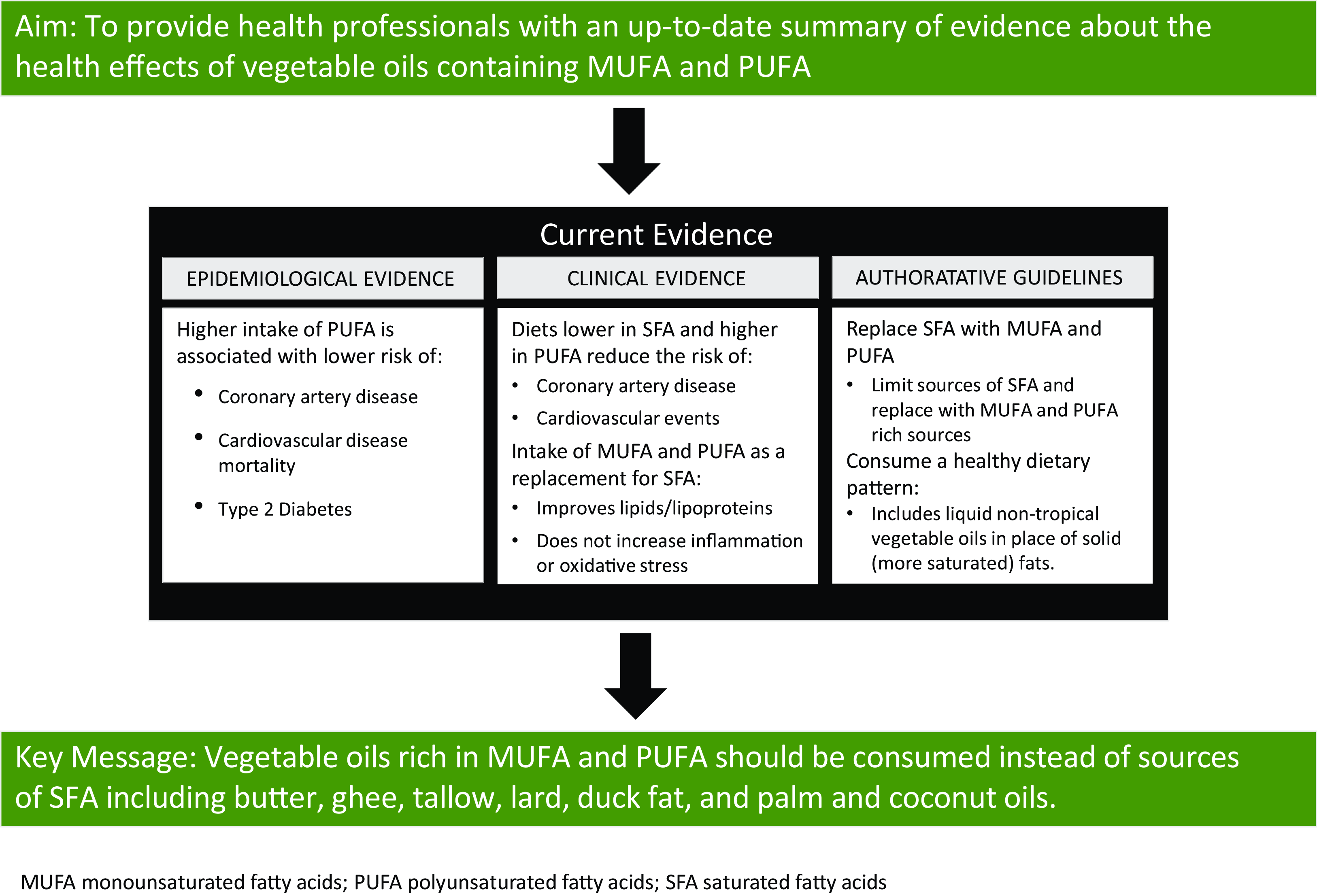
Epidemiological and clinical trial evidence indicates that n-6 polyunsaturated fatty acid (PUFA) intake is cardioprotective. Nevertheless, claims that n-6 PUFA intake promotes inflammation and oxidative stress prevail. This narrative review aims to provide health professionals with an up-to-date evidence overview to provide the requisite background to address patient/client concerns about oils containing predominantly unsaturated fatty acids (UFA), including MUFA and PUFA. Edible plant oils, commonly termed vegetable oils, are derived from vegetables, nuts, seeds, fruits and cereal grains. Substantial variation exists in the fatty acid composition of these oils; however, all are high in UFA, while being relatively low in saturated fatty acids (SFA), except for tropical oils. Epidemiological evidence indicates that higher PUFA intake is associated with lower risk of incident CVD and type 2 diabetes mellitus (T2DM). Additionally, replacement of SFA with PUFA is associated with reduced risk of CVD and T2DM. Clinical trials show higher intake of UFA from plant sources improves major CVD risk factors, including reducing levels of atherogenic lipids and lipoproteins. Importantly, clinical trials show that increased n-6 PUFA (linoleic acid) intake does not increase markers of inflammation or oxidative stress. Evidence-based guidelines from authoritative health and scientific organisations recommend intake of non-tropical vegetable oils, which contain MUFA and n-6 PUFA, as part of healthful dietary patterns. Specifically, vegetable oils rich in UFA should be consumed instead of rich sources of SFA, including butter, tallow, lard, palm and coconut oils.
Selenium (Se) deficiency among populations in Ethiopia is consistent with low concentrations of Se in soil and crops that could be addressed partly by Se-enriched fertilisers. This study examines the disease burden of Se deficiency in Ethiopia and evaluates the cost-effectiveness of Se agronomic biofortification. A disability-adjusted life years (DALY) framework was used, considering goiter, anaemia, and cognitive dysfunction among children and women. The potential efficiency of Se agronomic biofortification was calculated from baseline crop composition and response to Se fertilisers based on an application of 10 g/ha Se fertiliser under optimistic and pessimistic scenarios. The calculated cost per DALY was compared against gross domestic product (GDP; below 1–3 times national GDP) to consider as a cost-effective intervention. The existing national food basket supplies a total of 28·2 µg of Se for adults and 11·3 µg of Se for children, where the risk of inadequate dietary Se reaches 99·1 %–100 %. Cereals account for 61 % of the dietary Se supply. Human Se deficiency contributes to 0·164 million DALYs among children and women. Hence, 52 %, 43 %, and 5 % of the DALYs lost are attributed to anaemia, goiter, and cognitive dysfunction, respectively. Application of Se fertilisers to soils could avert an estimated 21·2–67·1 %, 26·6–67·5 % and 19·9–66·1 % of DALY via maize, teff and wheat at a cost of US$129·6–226·0, US$149·6–209·1 and US$99·3–181·6, respectively. Soil Se fertilisation of cereals could therefore be a cost-effective strategy to help alleviate Se deficiency in Ethiopia, with precedents in Finland.
Prior research has suggested an inverse correlation between dried fruit intake and type 2 diabetes mellitus (T2DM), yet the causal link remains uncertain. This study seeks to investigate the potential causal impact of dried fruit intake on T2DM, covering cases both with and without various complications, as well as glycaemic traits, using a two-sample Mendelian randomisation (MR) approach. Using MR analysis with genome-wide association study summary statistics, the primary analysis investigated the causal relationship between dried fruit intake and T2DM, both with and without complications, as well as glycaemic traits, employing the inverse variance weighted method. Supplementary analyses were conducted using MR-Egger and the weighted median method. Heterogeneity and intercept tests were utilised to evaluate the robustness of the study outcomes. The results show a significant association between dried fruit intake and T2DM without complications, as well as fasting insulin. Sensitivity analyses confirmed the robustness of the results and the independence from multicollinearity. However, no association was found between dried fruit intake and T2DM with various complications or other glycaemic traits. The significant association between dried fruit intake and T2DM without complications and fasting insulin persisted even after adjusting for BMI. This study offers genetic evidence endorsing the protective effects of dried fruit intake against T2DM, specifically for cases without complications, and in regulating fasting insulin. These findings suggest that dried fruit intake might serve as a primary preventive strategy for T2DM.
A well-functioning immune system requires balanced immune responses. In vitro studies have shown that plant stanols contribute to restoring the T-helper (Th)1/Th2 ratio when it is imbalanced. However, effects of plant stanols on healthy immune responses are unknown. Therefore, we studied effects of recommended (2·5 g/d) or high (9·0 g/d) plant stanol intakes on the Th1/Th2 cytokine balance in immunologically healthy subjects. In two RCTs, peripheral blood mononuclear cells (PBMCs) were isolated, cultured, and stimulated with 5 µg/ml Phytohemagglutinin-M to study ex vivo cytokine production. In the first study, twenty participants consumed margarines (2·5 g/d plant stanols) or control for three weeks. In the second study, nineteen participants consumed margarines and yogurts (9·0 g/d plant stanols) or control for four weeks. T-cell cytokine concentrations were measured in culture medium and in study 2 a standardized Th1/Th2 index was calculated. Serum lipids and non-cholesterol sterols were also measured. Compliance was confirmed by significant increases in serum total cholesterol (TC)-standardized sitostanol and campestanol levels in both studies. Changes in ex vivo cytokine production and Th1/Th2 index did not differ between intervention and control groups. In the first study, no statistically significant changes were observed in lipid and lipoprotein concentrations. In the second study, LDL cholesterol significantly decreased compared to control (–0·77 (–1·11, –0·42) mmol/l; P < 0·001). Recommended (2·5 g/d) or high (9·0 g/d) intakes of plant stanols did not alter PBMC ex vivo cytokine production in immunologically healthy subjects. This suggests that plant stanols might only affect immune function when Th1/Th2 immune responses are imbalanced.
Globally, more than 13 % of adolescents have clinically significant mental health problems, with anxiety and depression comprising over 40 % of cases. Despite the high prevalence of anxiety disorders among youth, dietary research has been focused on youth with depression, resulting in a significant knowledge gap regarding the impact of anxiety on adolescent diet quality. Adolescents with diagnosed anxiety disorders and healthy controls were included in this study. Anxiety symptoms were measured using the Screen for Child Anxiety-Related Disorders. Diagnosis of anxiety disorder was determined using the Kiddie Schedule for Affective Disorders and Schizophrenia interview. Five diet quality indices were scored from FFQ. Diet quality indices associated with anxiety symptoms in the correlation matrix were interrogated using multiple linear regression modelling. All models were adjusted for depression. One hundred and twenty-eight adolescents (mean age 14·8 years (sd: 2·1); 66·4 % female) were included in this cross-sectional analysis. Although healthy controls and outpatient participants had similar unhealthy dietary index subscale scores, outpatient participants had lower healthy index scores. Higher anxiety symptoms were associated with lower healthy dietary indices in univariate analysis; after adjusting for comorbid depression; however, anxiety symptoms were no longer associated with dietary indices following adjustment for multiple testing (P = 0·038 to P = 0·077). The association between anxiety symptoms and a poor diet is attenuated by depression. The results of this study support the need for an integrated approach to the assessment of mental and physical well-being and further research aimed at understanding the unique contribution of depression to healthy dietary patterns.
Maintaining optimal growth of preterm infants after hospital discharge remains a challenge. There has been no data on the long-term growth trajectory of preterm infants in Indonesia. We aimed to describe the growth trajectory of preterm infants up to 24 months of corrected age and its variation among gestational age groups. A longitudinal study was conducted in Cipto Mangunkusumo Hospital, Jakarta, from 2018 to 2020. All preterm infants who were discharged during the study period were included. Growth trajectory analysis used weight-for-age, length-for-age and weight-for-length z-score of 3-month time intervals across gestational age groups using repeated measure ANOVA and generalised estimating equation regression. Length trajectory was specifically reported as a stunted proportion. Among 306 preterm infants included, most were moderate preterm (49·67 %) and low birth weight (69·93 %). Overall weight-for-age at 0 months was in the median of the curve, then decreased at 3 months but consistently increased slowly until 24 months. The weight-for-age trends were unique across gestational age groups but statistically similar (P= 0·263). The proportion of stunted gradually decreases to 13·40 % at 24 months, mostly among the moderate preterm group in the first 6 months (P< 0·001), but then becomes similar at 24 months. All subjects were in the normal range for weight-for-length but had variations in trends across gestational age groups (P< 0·001). Growth trajectory differed between weight, length and weight-for-length in the first 24 months and varied among gestational age groups. Close follow-up is crucial to ensure optimal growth after neonatal intensive care unit discharge.
This study aimed to measure urinary sodium and potassium as a measure of sodium and potassium intake concerning the knowledge, attitude and practice towards sodium intake among a group of healthy residents in the UAE.
Design:
A cross-sectional study on a sample of healthy adults in the UAE. In addition to the knowledge, attitude and practice questionnaire, sodium and potassium excretions and food records were taken.
Setting:
The UAE.
Participants:
A sample of 190 healthy individuals aged between 20 and 60 years.
Results:
The mean (± sd) age of the sample was 38·6 (± 12·5) years, and 50·5 % were females. The mean urinary sodium and potassium intake were 2816·2 ± 675·7 mg/d and 2533·3 ± 615 mg/d, respectively. The means were significantly different compared with the WHO recommendation of sodium and potassium (P < 0·001). About 65 % of the participants exceeded the WHO recommendations for salt intake, and participants’ knowledge classification for health-related issues was fair, while food-related knowledge was poor (P = 0·001). A two-stage stepwise multiple regression analysis revealed that knowledge, attitude and practice scores were negatively associated with urinary sodium excretion (r = –0·174; P = 0·017) and those older participants and females had lower urinary sodium excretion (P < 0·001).
Conclusions:
These findings may suggest an increase in the risk of hypertension in the UAE population. Moreover, these findings emphasise the need to establish education and public awareness programmes focusing on identifying the sodium contents of foods and establishing national regulations regarding food reformulation, particularly for staple foods such as bread.
Inflammation and infections such as malaria affect micronutrient biomarker concentrations and hence estimates of nutritional status. It is unknown whether correction for C-reactive protein (CRP) and α1-acid glycoprotein (AGP) fully captures the modification in ferritin concentrations during a malaria infection, or whether environmental and sociodemographic factors modify this association. Cross-sectional data from eight surveys in children aged 6–59 months (Cameroon, Cote d’Ivoire, Kenya, Liberia, Malawi, Nigeria and Zambia; n 6653) from the Biomarkers Reflecting Inflammation and Nutritional Determinants of Anaemia (BRINDA) project were pooled. Ferritin was adjusted using the BRINDA adjustment method, with values < 12 μg/l indicating iron deficiency. The association between current or recent malaria infection, detected by microscopy or rapid test kit, and inflammation-adjusted ferritin was estimated using pooled multivariable linear regression. Age, sex, malaria endemicity profile (defined by the Plasmodium falciparum infection prevalence) and malaria diagnostic methods were examined as effect modifiers. Unweighted pooled malaria prevalence was 26·0 % (95 % CI 25·0, 27·1) and unweighted pooled iron deficiency was 41·9 % (95 % CI 40·7, 43·1). Current or recent malaria infection was associated with a 44 % (95 % CI 39·0, 52·0; P < 0·001) increase in inflammation-adjusted ferritin after adjusting for age and study identifier. In children, ferritin increased less with malaria infection as age and malaria endemicity increased. Adjustment for malaria increased the prevalence of iron deficiency, but the effect was small. Additional information would help elucidate the underlying mechanisms of the role of endemicity and age in the association between malaria and ferritin.
The ability to manipulate brain function through the communication between the microorganisms in the gastrointestinal tract and the brain along the gut-brain axis has emerged as a potential option to improve cognitive and emotional health. Dietary composition and patterns have demonstrated a robust capacity to modulate the microbiota-gut-brain axis. With their potential to possess pre-, pro-, post-, and synbiotic properties, dietary fibre and fermented foods stand out as potent shapers of the gut microbiota and subsequent signalling to the brain. Despite this potential, few studies have directly examined the mechanisms that might explain the beneficial action of dietary fibre and fermented foods on the microbiota-gut-brain axis, thus limiting insight and treatments for brain dysfunction. Herein, we evaluate the differential effects of dietary fibre and fermented foods from whole food sources on cognitive and emotional functioning. Potential mediating effects of dietary fibre and fermented foods on brain health via the microbiota-gut-brain axis are described. Although more multimodal research that combines psychological assessments and biological sampling to compare each food type is needed, the evidence accumulated to date suggests that dietary fibre, fermented foods, and/or their combination within a psychobiotic diet can be a cost-effective and convenient approach to improve cognitive and emotional functioning across the lifespan.
This study aimed to explore the combined association between the dietary antioxidant quality score (DAQS) and leisure-time physical activity on sleep patterns in cancer survivors. Data of cancer survivors were extracted from the National Health and Nutrition Examination Surveys database in 2007–2014 in this cross-sectional study. Weighted multivariable logistic regression models were used to estimate OR and 95 % CI for the association of DAQS and leisure-time physical activity on sleep patterns. The combined association was also assessed in subgroups of participants based on age and use of painkillers and antidepressants. Among the eligible participants, 1133 had unhealthy sleep patterns. After adjusting for covariates, compared with low DAQS level combined with leisure-time physical activity level < 600 MET·min/week, high DAQS level combined with leisure-time physical activity ≥ 600 MET·min/week was associated with lower odds of unhealthy sleep patterns (OR = 0·41, 95 % CI: 0·23, 0·72). Additionally, the association of high DAQS level combined with high leisure-time physical activity with low odds of unhealthy sleep patterns was also significant in < 65 years old (OR = 0·30, 95 % CI: 0·13, 0·70), non-painkiller (OR = 0·39, 95 % CI: 0·22, 0·71), non-antidepressant (OR = 0·49, 95 % CI: 0·26, 0·91) and antidepressant (OR = 0·11, 95 % CI: 0·02, 0·50) subgroups. DAQS and leisure-time physical activity had a combined association on sleep patterns in cancer survivors. However, the causal associations of dietary nutrient intake and physical activity with sleep patterns in cancer survivors need further clarification.