To save content items to your account,
please confirm that you agree to abide by our usage policies.
If this is the first time you use this feature, you will be asked to authorise Cambridge Core to connect with your account.
Find out more about saving content to .
To save content items to your Kindle, first ensure no-reply@cambridge.org
is added to your Approved Personal Document E-mail List under your Personal Document Settings
on the Manage Your Content and Devices page of your Amazon account. Then enter the ‘name’ part
of your Kindle email address below.
Find out more about saving to your Kindle.
Note you can select to save to either the @free.kindle.com or @kindle.com variations.
‘@free.kindle.com’ emails are free but can only be saved to your device when it is connected to wi-fi.
‘@kindle.com’ emails can be delivered even when you are not connected to wi-fi, but note that service fees apply.
This study aimed to evaluate the association between vegetable intake and major depressive disorder (MDD) through cross-sectional analysis and bidirectional two-sample Mendelian randomisation (MR).
Design:
Cross-sectional analysis was conducted on National Health and Nutrition Examination Survey (NHANES) data from 2005 to 2018 and the corresponding Food Patterns Equivalents Database (FPED). Genome-wide association study (GWAS) data were obtained from UK Biobank and Psychiatric Genomics Consortium (PGC) dataset. Logistic regression analysis was performed after calculating the weights of the samples. Inverse variance weighted, MR-Egger and weighted median methods were used to evaluate the causal effects.
Setting:
A Patient Health Questionnaire-9 score ≥ 10 was considered to indicate MDD. Low vegetable intake was defined as < 2 cups of vegetables per day.
Participants:
30 861 U.S. adults from NHANES. The GWAS data sample size related to vegetable intake were comprised 448 651 and 435 435 cases respectively, while the GWAS data sample size associated with MDD encompassed 500 199 cases.
Results:
There were 23 249 (75·33 %) participants with low vegetable intake. The relationship between vegetable intake and MDD was nonlinear. In the multivariate model adjusted for sex, age, education, marital status, poverty income ratio, ethnicity and BMI, participants with low vegetable intake were associated with an increased risk of MDD (OR = 1·53, 95 % CI (1·32, 1·77), P < 0·001). Bidirectional MR showed no causal effects between vegetable intake and MDD.
Conclusions:
Cross-sectional analysis identified a significant relationship between vegetable intake and MDD, whereas the results from bidirectional two-sample MR did not support a causal role.
The high availability of energy-dense nutrient-poor discretionary foods in large serving and package sizes may have shifted portion size norms (described as a typical perception of how much people choose to eat from a given food at a single eating occasion) towards larger sizes. Few public health recommendations exist around appropriate discretionary food portion sizes. This qualitative study aimed to explore the underlying rationale of portion size norms of discretionary foods among Australian adults 18–65 years.
Design:
Four focus group sessions were conducted. Collected data were analysed using inductive thematic analysis.
Setting:
Focus groups were held online via Zoom between September and October 2023.
Participants:
Thirty-four participants were recruited in the study (mean age 38 years, 19 females).
Results:
The key themes raised from inductive analysis were personal factors, eating context factors and food environment factors relevant to the portion size norms. A framework was established to illustrate the interaction across these themes during the conceptualisation of the norms. For serving size availability, consumers found that there were limited serving size choices when making portion size selections and lacked the knowledge and skills in portion control.
Conclusions:
These findings highlight the need to make positive changes to the current food environment and develop relevant public health guidelines around appropriate portion sizes to promote healthier portion size norms and enable better portion control.
In this paper, we examined whether there are inequalities in access to food retail (by type and healthiness) across local government areas (LGA) in Greater Melbourne and by LGA grouped based on their distance from the central business district and Growth Area designation. We also examined whether these inequalities persisted over time.
Design:
This is a secondary analysis of a repeated cross-sectional census of food outlets collected at four time points (2008, 2012, 2014 and 2016) across 31 LGA. Using Geographical Information Systems, we present a spatial analysis of food retail environments in Melbourne, Australia, at these four times over eight years.
Setting:
Greater Melbourne, Australia.
Participants:
31 LGA in Greater Melbourne.
Results:
Findings show significant inequalities in access to healthy food retail persisting over time at the LGA level. Residents in lower density urban growth areas had the least access to healthy food retail. Unhealthy food retail was comparatively more accessible, with a temporal trend indicating increased accessibility over time in urban growth areas only.
Conclusion:
Accessibility to food outlets, particularly healthy food outlets and supermarkets, in Greater Melbourne is not equal. To identify and address health inequalities associated with rapid urban growth, further understanding of how people interact with the food environment needs to be explored.
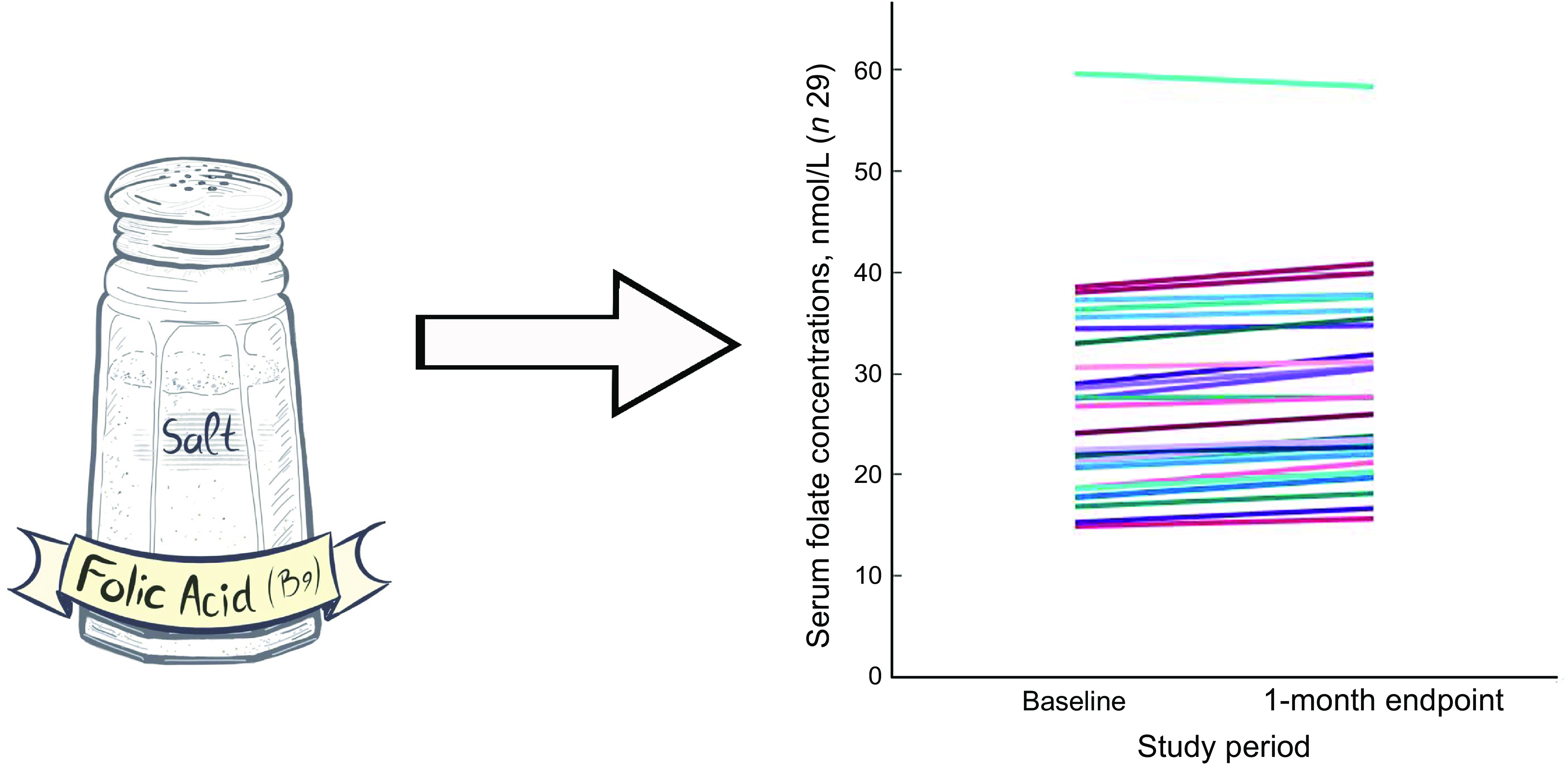
Mandatory folic acid fortification of enriched grains has reduced neural tube defect prevalence in several countries. We examined salt as an additional vehicle for folic acid fortification. The primary objective was to examine the change in serum folate concentration after 1 month of consumption of fortified iodised salt with folic acid (FISFA) among women of reproductive age. The secondary objectives were to examine (1) the feasibility of implementing FISFA intervention and (2) the acceptability of FISFA.
Design:
We conducted a pre–post intervention study (January–April 2023). Participants received a FISFA saltshaker with the study salt (1 g of sodium chloride salt fortified with 100 mcg of folic acid) to use instead of regular table salt for 1 month. Serum folate was measured using the Elecsys Folate-III immunoassay method at baseline and 1-month endpoint. Change in serum folate was assessed using a two-tailed Wilcoxon signed rank test for paired samples.
Setting:
Metropolitan city, Southern USA.
Participants:
Non-pregnant, 18–40-year-old women who lived alone/with a partner.
Results:
Thirty-two eligible women consented to participate, including eleven non-Hispanic-White, eleven non-Hispanic-Black and ten Hispanic. Post-intervention, there was a significant increase in median serum folate concentration of 1·40 nmol/l (IQR 0·74–2·05; P < 0·001) from 24·08 nmol/l to 25·96 nmol/l in an analytical sample of n 29. An increase was seen in 28/29 (93 %) participants. Feasibility: 100 % study consent and compliance. FISFA acceptability: 25 d average use; 1·28 g average daily intake; 96·7 % and 90 % reported taste and colour of FISFA as highly acceptable, respectively.
Conclusions:
FISFA is an effective approach to increasing serum folate concentrations among women of reproductive age. Findings should be replicated in a larger study.
Previous research has suggested a potential link between folic acid (FA) supplementary therapy and gastric ulcers (GU). To investigate this relationship further, we conducted a Mendelian randomisation (MR) analysis using data from the UK Biobank. Our analysis primarily employed inverse-variance weighted (IVW) methods, including both fixed-effect and random-effect models. To ensure the robustness of our findings, additional methods such as the simple median, the weighted median and the penalised weighted median were also applied. The MR analysis aimed to explore the causal effect of FA supplementary therapy on GU. Seven SNP at genetic loci associated with FA supplementary therapy were identified. Both the random-effect and fixed-effect IVW models indicated that genetically predicted FA supplementary therapy significantly reduced the risk of GU (OR, 0·870; 95 % CI 0·826, 0·917, P < 0·001). This result was consistent across other methods, with similar outcomes observed using the simple median (OR, 0·835; 95 % CI 0·773, 0·901, P < 0·001), the weighted median (OR, 0·854; 95 % CI 0·794, 0·919, P < 0·001) and the penalised weighted median (OR, 0·849; 95 % CI 0·789, 0·914, P < 0·001). Leave-one-out sensitivity analysis confirmed that no individual SNP significantly drove the association between FA supplementary therapy and GU. This MR study provides genetic evidence that FA supplementary therapy may decrease the risk of GU.
To assess the availability and marketing of ultra-processed foods (UPF) in modern retail food outlets (supermarkets and minimarts) in Kenya and associated factors.
Design:
This cross-sectional study was conducted in Kenya from August 2021 to October 2021. Variables included the geographic location and the socio-economic status (SES) levels, the food items displayed for sale and advertised in the stores, and locations in the stores such as the entrance.
Setting:
Three counties in Kenya (Nairobi – urban, Mombasa – coastal tourist and Baringo – rural). Each county was stratified into high and low SES using national poverty indices.
Participants:
Food outlets that offered a self-service, had at least one checkout and had a minimum of two stocked aisles were assessed.
Results:
Of 115 outlets assessed, UPF occupied 33 % of the cumulative shelf space. UPF were the most advertised foods (60 %) and constituted 40 % of foods available for sale. The most commonly used promotional characters were cartoon characters (18 %). UPF were significantly more available for sale in Mombasa (urban) compared to Baringo (rural) (adjusted prevalence rate ratios (APRR): 1·13, 95 % CI 1·00, 1·26, P = 0·005). UPF advertisements were significantly higher in Mombasa ((APRR): 2·18: 1·26, 3·79, P = 0·005) compared to Baringo and Nairobi counties. There was a significantly higher rate of advertisement of UPF in larger outlets ((APRR): 1·68: 1·06, 2·67 P = 0·001) compared to smaller outlets.
Conclusions:
The high marketing and availability of UPF in modern retail outlets in Kenya calls for policies regulating unhealthy food advertisements in different settings in the country.
The increased global prevalence of type II diabetes mellitus (T2DM) is associated with consumption of low fibre ‘Western diets’. Characteristic metabolic parameters of these individuals include insulin resistance, high fasting and postprandial glucose, as well as low-grade systemic inflammation. Gut microbiota composition is altered significantly in these cohorts suggesting a causative link between diet, microbiota and disease. Dietary fibre consumption has been shown to alleviate these changes and improve glucose parameters in individuals with metabolic disease. We previously reported that yeast β-glucan (yeast beta-1,3/1,6-D-glucan; Wellmune) supplementation ameliorated hyperinsulinaemia and insulin resistance in a murine model. Here, we conducted a randomised, placebo-controlled, two-armed dietary fibre phase I exploratory intervention study in patients with T2DM. The primary outcome measure was alteration to microbiota composition, while the secondary outcome measures included markers of glycaemic control, inflammation as well as metabolomics. Patients were supplemented with 2·5g/day of maltodextrin (placebo) or yeast β-1,3/1,6-D-glucan (treatment). Yeast β-glucan (Wellmune) lowered insulin resistance compared with the placebo maltodextrin after 8 weeks of consumption. TNFα was significantly lower after 4 weeks of β-glucan supplementation. Significantly higher fecal concentrations of several bile acids were detected in the treatment group when compared with the placebo after 8 weeks. These included tauroursodeoxycholic acid, which was previously shown to improve glucose control and lower insulin resistance. Interestingly, the hypoglycaemic and anti-inflammatory effect of yeast β-glucan was independent of any changes in fecal microbiota composition or short-chain fatty acid levels. Our findings highlight the potential of yeast β-glucan to lower insulin resistance in patients with T2DM.
Carbohydrate intake and key food sources of carbohydrates in early childhood are poorly understood. The present study described total carbohydrate intake and subtypes (i.e. starch, sugar), their primary food sources and their tracking among young Australian children. Data from children at ages 9 months (n 393), 18 months (n 284), 3·5 years (n 244) and 5 years (n 240) from the Melbourne InFANT Program were used. Three 24-hour recalls assessed dietary intakes. The 2007 AUSNUT Food Composition Database was used to calculate carbohydrates intake and food groups. Descriptive statistics summarised total carbohydrate and subtype intake and their main food sources. Tracking was examined using Pearson correlations of residualised scores between time points. Total carbohydrate, starch and sugar intakes (g/d) increased across early childhood. The percentage of energy from total carbohydrates (% E) remained stable overtime (48·4–50·5 %). From ages 9 months to 5 years, the %E from total sugar decreased from 29·4 % to 22·6 %, while the %E from starch increased from 16·7 % to 26·0 %. Sources of total carbohydrate intake changed from infant formula at 9 months to bread/cereals, fruits and milk/milk products at 18 months, 3·5 and 5 years. Across all time points, the primary sources of total sugar intake were fruit, milk/milk products and cakes/cookies, whereas main food groups for starch intake included bread/cereals, cakes/cookies and pasta. Weak to moderate tracking of total carbohydrates, total sugar and starch (g/d) was observed. These findings may have the potential to inform the refinement of carbohydrate intake recommendations and design of interventions to improve children’s carbohydrate intake.
Salivary iodine concentrations (SIC) and urinary iodine concentrations are correlated. This study aimed to verify the use of SIC as a biomarker for estimating iodine intake in pregnant and lactating women and to diagnose abnormal thyroid function. A cross-sectional study was conducted in northern Xinjiang, China. Participants provided venous blood, random urine, saliva and milk samples. A total of 607 pregnant and 171 lactating women volunteered to participate in the study. The average daily iodine intake was calculated for each participant. Pregnant women were divided according to trimester. The median daily iodine intake was 436·41 μg/d in the first trimester, 425·83 μg/d in the second trimester and 430·56 μg/d in the third trimester. The average daily iodine intake in lactating women was 416·16 μg/d. Different indicators were used to diagnose excessive iodine intake (> 500 μg/d). Among pregnant women, SIC had an AUC of 0·62 (P < 0·01), sensitivity of 51·75 % and specificity of 65 %. Among lactating women, SIC had an AUC of 0·63 (P = 0·03), sensitivity of 43·52 % and specificity of 85 %. SIC was an effective biomarker for diagnosing abnormal thyroid function (P = 0·03). In conclusion, this study demonstrated that SIC is a reliable biomarker for evaluating both iodine nutrition status and abnormal thyroid function in pregnant and lactating women.
This study aimed to explore the potential causal association between PUFA and the risk of intrahepatic cholestasis of pregnancy (ICP) using Mendelian randomisation (MR) analysis. A two-sample MR analysis was conducted utilising large-scale European-based genome-wide association studies summary databases. The primary MR analysis was carried out using the inverse variance-weighted (IVW) method, complemented by other methods such as MR-egger, weighted-median and weighted mode. Sensitivity analysis was also performed to validate the robustness of the findings. Results indicated a 31 % reduced risk of ICP for every 1 standard deviation (sd) increase in n-3 fatty acids levels (OR = 0·69, 95 % CI: 0·54, 0·89, P = 0·004) and in the ratio of n-3 fatty acids to total fatty acids (OR = 0·69, 95 % CI: 0·53, 0·91, P = 0·008). Conversely, there was a 51 % increased risk of ICP for every 1 sd increase in the ratio of n-6 fatty acids to n-3 fatty acids (OR = 1·51, 95 % CI: 1·20, 1·91, P < 0·001) and a 138 % increased risk for every 1 sd increase in the ratio of linoleic fatty acids to total fatty acids (OR = 2·38, 95 % CI: 1·55, 3·66, P < 0·001). The findings suggest that n-3 fatty acids may have a protective effect against the risk of ICP, while n-6 fatty acids and linoleic fatty acids could be potential risk factors for ICP. The supplementation of n-3 fatty acids, as opposed to n-6 fatty acids, could be a promising strategy for the prevention and management of ICP.
Provide an in-depth examination of consumers’ food safety beliefs and practices to draw implications for interventions to improve nutrition and food safety in Ethiopia.
Design:
Adapted Focused Ethnographic Study approach using in-person semi-structured interviews and free-listing exercises, in two iterative phases.
Setting:
A traditional food market in Hawassa, a mid-sized city.
Participants:
Forty-six market shoppers, selected randomly in line with quotas for age and gender.
Results:
Consumers did not clearly differentiate between quality and safety, seeing them through connected concepts such as ‘freshness’. While most respondents had some understanding of the causes of unsafe food, they did not generally worry about becoming ill themselves and felt food safety risks were easily mitigated through in-home behaviours. Thus, food safety practices were not a main motivator of market or vendor choice. There was no evidence that food safety concerns led consumers to prefer packaged, processed food or to avoid consuming fresh foods.
Conclusions:
The study offers novel depth and detail on a topic of strong policy relevance. While building on an encouraging base of understanding of food safety, there remains considerable scope for increasing knowledge, particularly with regard to the need to procure safe food as opposed to expecting household-level practices to mitigate all safety risks. Motivating customers to give food safety factors more consideration when making food purchasing decisions, such as by leveraging emotion-based communication from trusted messengers to elevate the issue’s salience in their minds, may contribute to improvements in food safety in low-income countries such as Ethiopia.
The relationship between nutrition and ageing is complex. The metabolism and synthesis of micronutrients within the gut microbiome can influence human health but is challenging to study. Furthermore, studying ageing in humans is time-consuming and difficult to control for environmental factors. Studies in model organisms can guide research efforts in this area. This review describes how the nematode Caenorhabditis elegans can be used to study how bacteria and diet influence ageing and inform follow-on studies in humans. It is known that certain bacteria accelerate ageing in C. elegans. This age-accelerating effect is prevented by inhibiting folate synthesis within the bacteria, and we propose that in the human microbiome, certain bacteria also accelerate ageing in a way that can be modulated by interfering with bacterial folate synthesis. Bacterial-derived folates do not promote ageing themselves; rather, ageing is accelerated by bacteria in some way, either through secondary metabolites or other bacterial activity, which is dependent on bacterial folate synthesis. In humans, it may be possible to inhibit bacterial folate synthesis in the human gut while maintaining healthy folate status in the body via food and supplementation. The supplement form of folic acid has a common breakdown product that can be used by bacteria to increase folate synthesis. Thus, supplementation with folic acid may not be good for health in certain circumstances such as in older people or those with an excess of proteobacteria in their microbiome. For these groups, alternative supplement strategies may be a safer way to ensure adequate folate levels.
This study aimed to assess the association between emotional attitudes towards diabetes, eating behaviour styles and glycaemic control in outpatients with type 2 diabetes.
Design:
Observational study.
Setting:
Endocrinology Division of Hospital de Clínicas de Porto Alegre, Brazil.
Participants:
Ninety-one outpatients diagnosed with type 2 diabetes. Baseline assessments included data on clinical parameters, lifestyle factors, laboratory results, eating behaviour styles and emotional attitudes. All patients received nutritional counseling following diabetes recommendations. A follow-up visit was scheduled approximately 90 days later to evaluate changes in weight, medication dosages and glycated Hb (HbA1c) values. Patients were categorised based on their emotional attitude scores towards diabetes (positive or negative), and their characteristics were compared using appropriate statistical tests.
Results:
At baseline, no differences were observed in the proportion of patients with good glycaemic control, eating behaviour styles and emotional attitudes. However, patients with a positive attitude towards the disease exhibited a significantly better response in glycaemic control compared with the reference group (OR = 3·47; 95 % CI = 1·12, 10·75), after adjusting for diabetes duration, sex and medication effect score. However, when BMI was included in the model, the association did not reach statistical significance. Therefore, these results should be interpreted with caution.
Conclusions:
Patients with a positive attitude towards diabetes showed a greater reduction in HbA1c levels following nutritional counseling. However, baseline BMI could be a potential confounding factor.
Oceania is currently facing a substantial challenge: to provide sustainable and ethical food systems that support nutrition and health across land and water. The Nutrition Society of Australia and the Nutrition Society of New Zealand held a joint 2023 Annual Scientific Meeting on ‘Nutrition and Wellbeing in Oceania’ attended by 408 delegates. This was a timely conference focussing on nutrition challenges across the Pacific, emphasising the importance of nutrition across land and water, education settings, women’s health and gut health. Cutting-edge, multi-disciplinary and collaborative research was presented in a 4-day programme of keynote presentations, workshops, oral and poster sessions, breakfast and lunch symposiums and early career researcher sessions. The conference highlighted the importance of collaboration between nations to address the challenge facing nutrition and wellbeing across Oceania. A systems approach of collaboration among scientists, industry and government is vital for finding solutions to this challenge.
This study aimed to determine differences in food consumption by the NOVA food categories in South Africa and Ghana and how they relate to poverty and food supply systems.
Design:
This study used a cross-sectional design to assess household food acquisition and lived poverty index.
Setting:
The study was conducted in Khayelitsha and Mount Frere, urban and rural communities in South Africa, respectively, and Ahodwo and Ejuratia, urban and rural communities in Ghana, respectively.
Participant:
An adult in charge of or knowledgeable about household food acquisition and consumption was selected to participate in the study.
Results:
A total of 1299 households participated in the study. Supermarkets were a prominent source of ultra-processed foods for households in South Africa, while informal outlets were an important source of ultra-processed foods in Ghana. Consumption of unprocessed foods was higher among South African households (58·2 %) than Ghanaian households (41·8 %). In South Africa, deprivation was associated with increased odds of infrequent consumption of both unprocessed foods (OR 3·431 P < 0·001) and ultra-processed foods (OR 2·656 P < 0·001) compared with non-deprivation. In Ghana, no significant differences were observed between deprived households and non-deprived households in relation to the consumption of the NOVA food classes.
Conclusion:
Different food supply systems and poverty are associated with household acquisition of the different NOVA food classes. Policies should be geared towards formal shops in South Africa and informal shops in Ghana to reduce the consumption of key obesogenic foods.
Behaviour Change Communication (BCC) intervention programmes often lack documentation of successful processes. This manuscript aims to describe the development of Program Impact Pathway (PIP) using Theory of Change (ToC) approach for a mHealth BCC intervention titled ‘Mobile Solutions Aiding Knowledge for Health Improvement (M-SAKHI)’ aimed at reducing stunting in infants at 18 months of age.
Design:
The PIP was developed using ToC to design the intervention and plan its implementation. Literature review and data from previous pilots helped to identify health service gaps that needed to be addressed by the PIP of this intervention.
Setting:
M-SAKHI was implemented in 244 villages under governance of forty primary health centres of Nagpur and Bhandara districts of eastern Maharashtra in central India.
Participants:
The study investigators and the public health stakeholders participated in developing the PIP. M-SAKHI evaluation study recruited 2501 pregnant women who were followed up through delivery until their infants were 18 months old.
Results:
The PIP was developed, and it identified the following pathways for the final impact: (1) improving maternal and infant nutrition, (2) early recognition of maternal and infant danger signs, (3) improving access and utilisation to healthcare services, (4) improving hygiene, sanitation and immunisation practices, and (5) improving implementation and service delivery of community health workers through their training, monitoring and supervision in real time.
Conclusion:
This paper will illustrate the significance of development of PIP for M-SAKHI. It can aid other community-based programmes to design their PIP for nutrition-based BCC interventions.
(1) To develop a new regression equation for estimating fat mass percentage (%FM) from anthropometric measurements in a heterogeneous Caucasian population and (2) to compare it with the Durnin and Womersley equation, which is one of the most used anthropometric equations for FM assessment.
Design:
Body mass, stature and four skinfolds (biceps, triceps, subscapular and supracrestal) were assessed by an accredited anthropometrist, according to the International Society for Advancement in Kinanthropometry. Participants completed a dual-energy X-ray absorptiometry (DXA) whole-body scan to determine their %FM. A new anthropometric equation to estimate %FM was developed using multiple forward regression analyses with DXA as the reference method. Tests for the accuracy of the different equations included mean differences, coefficient of determination, SE of the estimate (SEE), concordance correlation coefficient (CCC) and Bland–Altman plots.
Setting:
Spain.
Participants:
Two hundred and eighteen healthy Caucasian participants aged 18–65 years participated in this cross-sectional study.
Results:
Our proposed equation explained 89·9 % of the variance in the DXA-derived %FM, with a low random error (SEE = 3·00 %), a very strong agreement (CCC = 0·93), no fixed or proportional bias and a relatively low individual variability (5·84 %). However, the Durnin and Womersley equations obtained a fixed bias of –3·65 % when compared with DXA and a greater individual variability (6·74 %).
Conclusions:
The proposed equation can accurately estimate %FM in a heterogeneous Caucasian population with a wide age range (18–65 years). Additionally, the Durnin and Womersley equation was inadequate when applied to our participants.
The aim of this study is to conduct a comparative analysis across nations to: (1) identify the determinants influencing knowledge and attitudes related to sodium (Na) intake and (2) to analyse the association between knowledge and attitudes related to Na intake.
Design:
We utilised a secondary data from a cross-sectional study that was conducted across seven nations. Structural equation modelling (SEM) was utilised to assess the impact of socio-economic and health-related predictors on knowledge and attitudes pertaining to Na intake and further to investigate the relationship between knowledge and attitude.
Setting:
Indonesia, Brazil, Thailand, Japan, France, the UK and the USA.
Participants:
7090 participants aged 15 years and above were included in the study.
Results:
SEM analysis showed a strong association between knowledge about Na intake and related attitude across all countries, particularly in the UK (2·65, 95 % CI 1·48–3·82), France (2·62, 1·45–3·79) and the USA (1·97, 1·21–2·73). In Brazil, Japan and France, individuals or family members having certain health conditions such as raised blood pressure, heart diseases, strokes or other diseases exhibited a positive attitude towards reducing Na intake. Conversely, socio-economic factors like education and income demonstrated the complexity of influences on knowledge and attitudes about Na intake.
Conclusion:
The study underscores the need for tailored public health interventions to reduce excessive Na consumption, considering the diverse cultural, social and economic factors. It highlights the complex determinants of knowledge and attitudes towards Na intake, calling for further research in varied populations.