To save content items to your account,
please confirm that you agree to abide by our usage policies.
If this is the first time you use this feature, you will be asked to authorise Cambridge Core to connect with your account.
Find out more about saving content to .
To save content items to your Kindle, first ensure no-reply@cambridge.org
is added to your Approved Personal Document E-mail List under your Personal Document Settings
on the Manage Your Content and Devices page of your Amazon account. Then enter the ‘name’ part
of your Kindle email address below.
Find out more about saving to your Kindle.
Note you can select to save to either the @free.kindle.com or @kindle.com variations.
‘@free.kindle.com’ emails are free but can only be saved to your device when it is connected to wi-fi.
‘@kindle.com’ emails can be delivered even when you are not connected to wi-fi, but note that service fees apply.
Age-related macular degeneration (AMD) is one of the most prevalent eye diseases among the ageing population worldwide. It is a leading cause of blindness in individuals over 55, particularly in industrialised Western countries. The prevalence of AMD increases with age, and genetic factors and environmental influences are believed to contribute to its development. Among the environmental factors, diet plays a significant role in AMD. This review explores the association between dietary components, dietary patterns and AMD. Various nutrients, non-nutrient substances and dietary models that have the potential to counteract oxidative stress and inflammation, which are underlying mechanisms of AMD, are discussed. Consuming fruits, vegetables, fish and seafood, whole grains, olive oil, nuts and low-glycaemic-index foods has been highlighted as beneficial for reducing the risk of AMD. Adhering to the Mediterranean diet, which encompasses these elements, can be recommended as a dietary pattern for AMD. Furthermore, the modulation of the gut microbiota through dietary interventions and probiotics has shown promise in managing AMD.
Vitamin D is a vital indicator of musculoskeletal health, as it plays an important role through the regulation of bone and mineral metabolism. This meta-analysis was performed to investigate the effects of vitamin D supplementation/fortification on bone turnover markers in women. All human randomised clinical trials reported changes in bone resorption markers (serum C-terminal telopeptide of type-I collagen (sCTX) and urinary type I collagen cross-linked N-telopeptide (uNTX)) or bone formation factors (osteocalcin (OC), bone alkaline phosphatase (BALP) and procollagen type-1 intact N-terminal propeptide (P1NP)) following vitamin D administration in women (aged ≥ 18 years) were considered. Mean differences (MD) and their respective 95 % CI were calculated based on fixed or random effects models according to the heterogeneity status. Subgroup analyses, meta-regression models, sensitivity analysis, risk of bias, publication bias and the quality of the included studies were also evaluated. We found that vitamin D supplementation had considerable effect on sCTX (MD: −0·038, n 22) and OC (MD: −0·610, n 24) with high heterogeneity and uNTX (MD: −8·188, n 6) without heterogeneity. Our results showed that age, sample size, dose, duration, baseline vitamin D level, study region and quality of studies might be sources of heterogeneity in this meta-analysis. Subgroup analysis also revealed significant reductions in P1NP level in dose less than 600 μg/d and larger study sample size (>100 participants). Moreover, no significant change was found in BALP level. Vitamin D supplementation/fortification significantly reduced bone resorption markers in women. However, results were inconsistent for bone formation markers.
Caregivers require tangible (e.g. food and financial) and intangible resources to provide care to ensure child health, nutrition and development. Intangible resources include beliefs and knowledge, education, self-efficacy, perceived physical health, mental health, healthy stress levels, social support, empowerment, equitable gender attitudes, safety and security and time sufficiency. These intangible caregiver resources are included as intermediate outcomes in nutrition conceptual frameworks yet are rarely measured as part of maternal and child nutrition research or evaluations. To facilitate their measurement, this scoping review focused on understudied caregiver resources that have been measured during the complementary feeding period in low- and lower-middle-income countries.
Design:
We screened 9,232 abstracts, reviewed 277 full-text articles and included 163 articles that measured caregiver resources related to complementary feeding or the nutritional status of children 6 months to 2 years of age.
Results:
We identified measures of each caregiver resource, though the number of measures and quality of descriptions varied widely. Most articles (77 %) measured only one caregiver resource, mental health (n 83) and social support (n 54) most frequently. Psychometric properties were often reported for mental health measures, but less commonly for other constructs. Few studies reported adapting measures for specific contexts. Existing measures for mental health, equitable gender attitudes, safety and security and time sufficiency were commonly used; other constructs lacked standardised measures.
Conclusions:
Measurement of caregiver resources during the complementary feeding period is limited. Measuring caregiver resources is essential for prioritising caregivers and understanding how resources influence child care, feeding and nutrition.
UK front of package labelling (FOPL) informs consumers on the nutrient content of food. However, FOPL does not consider food processing, and with the UK government being urged to act on ultra-processed food (UPF), whether UPF should be added to FOPL is unclear. This study compared food and drink in the UK National Diet and Nutrition Survey (NDNS) Intake24 database based on FOPL, nutrient content and NOVA classification, to understand whether UPF are covered by dietary recommendations for foods high in fat, salt and sugar. NDNS items were coded into minimally processed food (MPF), processed culinary ingredients, processed food and UPF according to the NOVA classification and FOPL traffic lights. UPF contained greater energy, fat, saturated fat (SF), total sugar (TS) and salt than MPF. UPF had a greater odds of containing red FOPL and an unhealthier overall FOPL score (OR:4·59 (95 % CI: 3·79, 5·57); OR:7·0 (95 % CI: 6·1, 8·2), respectively) and lower odds of containing green FOPL (OR:0·05 (95 % CI: 0·03, 0·10)), compared with MPFs. For items with no red FOPL, UPF still contained greater energy, fat, SF, TS and salt than MPF. However, several UPF have healthier FOPL scores. UPF had an unhealthier nutritional profile and FOPL score than MPF. For items with no red FOPL, UPF still had an unhealthier profile than MPF, with a higher energy density. Importantly, not all UPF were unhealthy according to FOPL. These results indicate partial overlap between FOPL, nutrient content and NOVA classification of UK food and drink products, with implications for UK food and drink labelling.
Our objective was to evaluate the association of antioxidant intake and the inflammatory potential of the diet with functional decline in older men. A diet history questionnaire was used to collect dietary intake data from men aged ≥ 75 years (n 794) participating in the Concord Health and Aging in Men Project cohort study. Intake of vitamins A, C, E and Zn were compared with the Australian Nutrient Reference Values to determine adequacy. The Energy-adjusted Dietary Inflammatory Index (E-DIITM) was used to assess the inflammatory potential of the diet. Physical performance data were collected via handgrip strength and walking speed tests, and activities of daily living (ADL) and instrumental activities of daily living (IADL) questionnaires, at baseline and 3-year follow-up (n 616). Logistic regression analysis was used to identify associations between diet and incident poor physical function and disability. Both poor antioxidant intake and high E-DII scores at baseline were significantly associated with poor grip strength and ADL disability at 3-year follow-up. No significant associations with walking speed or IADL disability were observed. Individual micronutrient analysis revealed a significant association between the lowest two quartiles of vitamin C intake and poor grip strength. The lowest quartiles of intake for vitamins A, C, E and Zn were significantly associated with incident ADL disability. The study observed that poor antioxidant and anti-inflammatory food intake were associated with odds of developing disability and declining muscle strength in older men. Further interventional research is necessary to clarify the causality of these associations.
To explore dietary patterns in relation to periodontitis and number of teeth.
Design:
A cross-sectional study.
Setting:
We used data from the seventh survey of the Tromsø Study in Norway, 2015–2016. Three periodontitis groups were compared: (i) no periodontitis/slow bone loss; (ii) moderate bone loss; and (iii) rapid bone loss. Number of teeth was categorised as 25–28, 20–24 and ≤ 19. Dietary patterns were identified by principal component analysis. Multiple logistic regression was applied to examine associations between tertiles of dietary pattern scores and periodontitis, and between these same tertiles and number of teeth.
Participants:
1487 participants (55·5 % women) aged 40–79 years who were free of major chronic diseases, attended an oral health examination and completed a FFQ.
Results:
Four dietary patterns were identified, which explained 24 % of the total variability in food intake: fruit and vegetables, Westernised, meat/fish and potatoes, and refined grain and dessert. The fruit and vegetables pattern was inversely associated with periodontitis characterised by rapid bone loss when compared with no periodontitis/slow bone loss (OR tertile 3 v. 1 0·49, 95 % CI: 0·25, 0·98). Participants who were in the highest tertile of the refined grain and dessert pattern (tertile 3 v. 1) had 2·38- and 3·52-fold increased odds of having ≤ 19 than 20–24 and 25–28 teeth, respectively.
Conclusion:
Out of four identified dietary patterns, only the fruit and vegetables pattern was negatively associated with advanced periodontitis. A more apparent positive association was observed between the refined grain and dessert pattern and having fewer teeth (≤ nineteen teeth).
The objective of this systematic review is to synthesise the evidence on public policy interventions and their ability to reduce household food insecurity (HFI) in Canada.
Design:
Four databases were searched up to October 2023. Only studies that reported on public policy interventions that might reduce HFI were included, regardless of whether that was the primary purpose of the study. Title and abstract screening, full-text screening, data extraction, risk of bias and certainty of the evidence assessments were conducted by two reviewers.
Results:
Seventeen relevant studies covering three intervention categories were included: income supplementation, housing assistance programmes and food retailer subsidies. Income supplementation had a positive effect on reducing HFI with a moderate to high level of certainty. Housing assistance programmes and food retailer studies may have little to no effect on HFI; however, there is low certainty in the evidence that could change as evidence emerges.
Conclusion:
The evidence suggests that income supplementation likely reduces HFI for low-income Canadians. Many questions remain in terms of how to optimise this intervention and additional high-quality studies are still needed.
The prevalence of overweight and obesity in children and adults has increased worldwide. A strong environmental factor contributing to the obesity epidemic is food portion size (PS). This review evaluates the current evidence linking food PS to obesity, examines the effects of PS on energy intake (EI), and discusses the drivers of food PS selection. The leading causes of the rise in PS include globalisation, intensive farming methods, the impact of World War II, due to shortage of staple foods, and the notion of ‘waste not, want not’. Large PS of energy-dense foods may stimulate overconsumption, leading to high EI levels. However, the studies have not shown a cause-and-effect relationship, due to confounding factors. Important mechanisms explaining the attractiveness of larger PS leading to higher EI levels are value for money, portion distortion, labels on food packaging, and tableware. Consumers depend on external rather than internal PS cues to guide consumption, irrespective of satiety levels. Further research is recommended on food consumption patterns to inform policymakers and provide information and insights about changes in diet.
This review aims to emphasise the impact of poor nutrition on children’s health and psychological well-being, urging those involved in childhood obesity or nutrition services to broaden their intervention approach. Poor nutrition and childhood obesity affect physical and psychological health. The stress of living with obesity further impacts quality of life, well-being and self-esteem. Children living with obesity may experience adverse childhood events and stress, and young people are able to recall the impact of psychosocial issues such as experiencing stigma and discrimination. Food is often a coping mechanism for managing negative emotions, perpetuating cycles of emotional coping and unhealthy eating behaviours. UK guidelines recommend family-based, multi-component weight management interventions for children living with obesity. Interventions mainly target health behaviours and utilise behaviour change techniques attempting to directly improve diet and physical activity as behavioural outcomes. Whilst these interventions may show some improvements in psychological well-being, there is limited consideration or understanding of the underlying mechanisms of action which indirectly influence engagement and the sustainability of the behaviour change. Lack of attention and inclusion of psychosocial variables in intervention implementation may help explain the variable effectiveness reported across childhood obesity interventions. In conclusion, enhancing the effectiveness of childhood obesity interventions requires a broader approach that fully incorporates psychosocial factors. Those responsible for commissioning, designing and implementing these interventions should adopt a holistic approach that addresses psychological and emotional needs while incorporating underlying mechanisms of action. This shift in focus could result in more sustainable and comprehensive treatment for childhood obesity.
Given the rapidly changing food environment and proliferation of ultra-processed foods (UPF) in South Africa (SA), this study aimed to critically evaluate dietary quality and adequacy of low-income adults using the Nova classification system and WHO and World Cancer Research Fund dietary guidelines.
Design:
Secondary household data and 1-d 24-h recalls were analysed from two cross-sectional studies conducted in 2017–2018. Foods consumed were classified according to the Nova classification system. Compliance with WHO dietary guidelines and UPF consumption trends were evaluated.
Setting:
Three low-income areas (Langa, Khayalitsha and Mount Frere) in SA were included.
Participants:
In total, 2521 participants (18–50 years) were included in the study.
Results:
Participants had a mean energy intake of 7762 kJ/d. Most participants were within the acceptable WHO guideline range for saturated fat (80·4 %), total fat (68·1 %), Na (72·7 %) and free sugar (57·3 %). UPF comprised 39·4 % of diets among the average adult participant. Only 7·0 % of all participants met the WHO guideline for fruit and vegetables and 18·8 % met the guideline for fibre. Those within the highest quartile of share of energy from UPF consumed statistically higher amounts of dietary components to limit and were the highest energy consumers overall.
Conclusions:
Low-income adults living in SA are consuming insufficient protective dietary components, while UPF consumption is prevalent. Higher UPF consumers consume larger amounts of nutrients linked to increased chronic disease risk. Policy measures are urgently needed in SA to protect against the proliferation of harmful UPF and to promote and enable consumption of whole and less UPF.
Cardiovascular disease (CVD) is one of the most important diseases which controlling its related risk factors, such as metabolic and inflammatory biomarkers, is necessary because of the increased mortality risk of that. The aim of our meta-analysis is to reveal the general effect of vitamin K supplementation on its related risk factors. Original databases were searched using standard keywords to identify all randomized clinical trials (RCTs) investigating the effects of vitamin K on CVD. Pooled weighted mean difference (WMD) and 95 % confidence intervals (95 % CI) were achieved by random-model effect analysis for the best estimation of outcomes. The statistical heterogeneity was determined using the Cochran's Q test and I2 statistics. Seventeen studies were included in this systematic review and meta-analysis. The pooled findings showed that vitamin K supplementation can reduce homeostatic model assessment insulin resistance (HOMA-IR) (WMD: −0⋅24, 95 % CI: −0⋅49, −0⋅02, P = 0⋅047) significantly compared to the placebo group. However, no significant effect was observed on other outcomes. Subgroup analysis showed a significant effect of vitamin K2 supplementation compared to vitamin K1 supplementation on HOMA-IR. However, no significant effect was observed on other variables. Also, subgroup analysis showed no potential effect of vitamin K supplementation on any outcome and omitting any articles did not affect the final results. We demonstrated that supplementation with vitamin K has no effect on anthropometrics indexes, CRP, glucose metabolism, and lipid profile factors except HOMA-IR.
We investigated the missed treatment opportunities affecting programmes using mid-upper arm circumference (MUAC) as the sole anthropometric criterion for identification and monitoring of children suffering from severe acute malnutrition (SAM).
Design:
Alongside MUAC, we assessed weight-for-height Z-score (WHZ) in children screened and treated according to the national MUAC only protocol in Pakistan. Besides, we collected parents’ perceptions regarding the treatment received by their children through qualitative interviews.
Setting:
Data were collected from October to December 2021 in Tando Allah Yar District, Sindh.
Subjects:
All children screened in the health facilities (n 8818) and all those discharged as recovered (n 686), throughout the district, contributed to the study. All children screened in the community in the catchment areas of five selected health facilities also contributed (n 8459). Parents of forty-one children randomly selected from these same facilities participated in the interviews.
Results:
Overall, 80·3 % of the SAM cases identified during community screening and 64·1 % of those identified in the health facilities presented a ‘WHZ-only’ diagnosis. These figures reached 93·9 % and 84·5 %, respectively, in children aged over 24 months. Among children treated for SAM and discharged as recovered, 25·3 % were still severely wasted according to WHZ. While parents positively appraised the treatment received by their children, they also recommended to extend eligibility to other malnourished children in their neighbourhood.
Conclusion:
In this context, using MUAC as the sole anthropometric criterion for treatment decisions (referral, admission and discharge) resulted in a large number of missed opportunities for children in need of timely and adequate care.
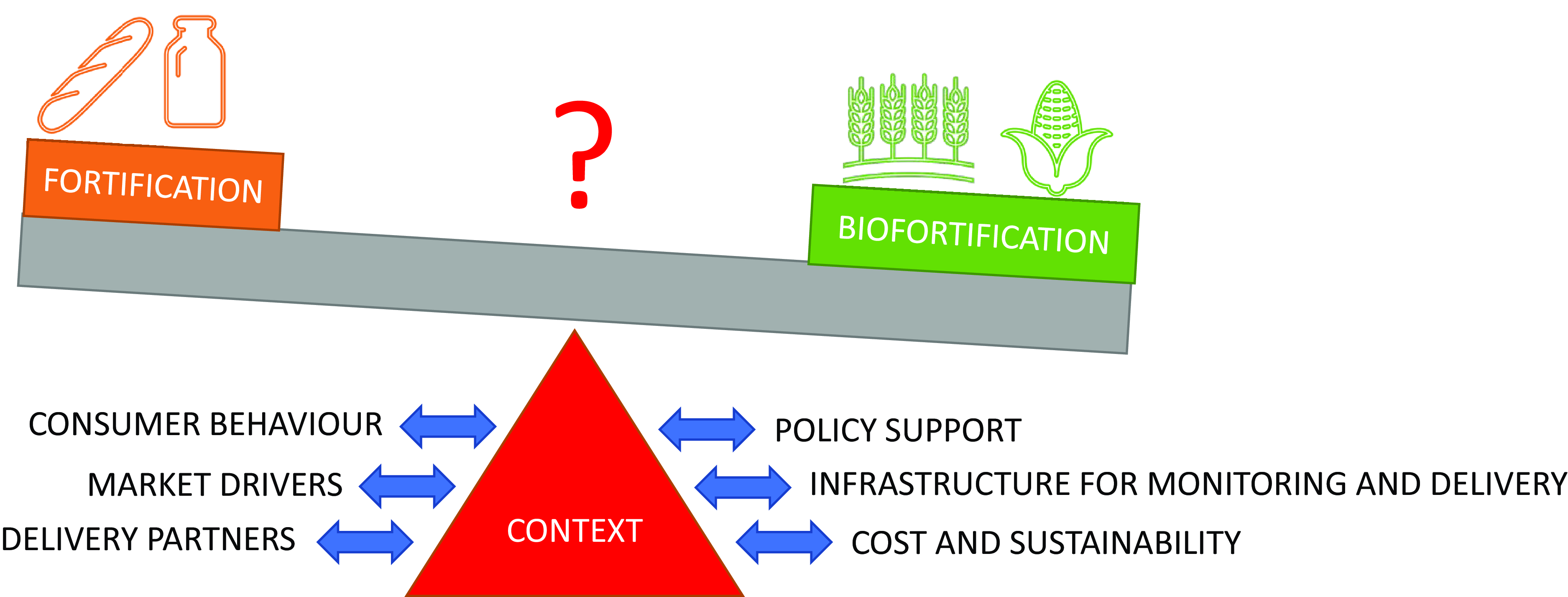
Micronutrient deficiencies continue to be a global concern, with the most common deficiencies being vitamin A, iron, zinc and B vitamins (folate and B12). Addressing this requires strategies that are scalable and equitable such that they reach all members of a population irrespective of socioeconomic status and geography. Fortification and biofortification offer potential large-scale solutions, however each have strengths and limitations depending on the context, particularly the cultural and political factors that may create barriers or opportunities for effectiveness. Planning how to target scarce resources for maximum impact requires an in-depth knowledge and understanding of local food systems and market dynamics, alongside strong government policy and legislative support. A food fortification programme was launched in Pakistan in 2016, supported by UK Aid and designed to address the high prevalence of vitamin A, iron and zinc deficiency, particularly in women and children. In the same year, the first zinc biofortified variety of wheat, Zincol-2016, was released in Pakistan, supported and developed through the HarvestPlus programme in collaboration with the Pakistan National Agriculture Research Centre. This review explores the challenges faced by fortification and biofortification, initiated independently, (but around the same time) in Pakistan.
We searched PubMed, Web of Science, Embase, The Cochrane Library, China Biomedical Literature Database and other databases from inception to June 2023. The included studies were randomised controlled trials (RCT). The studies were screened by four authors, divided into two independent pairs. A total of eighteen studies were included, including 1362 patients, involving twelve intervention measures. The different nutrients had a significant effect on improving blood glucose, reducing inflammation levels and reducing oxidative stress compared with placebo (P < 0.05). Cumulative probability ranking showed that vitamin A + vitamin D + vitamin E ranked first in lowering fasting blood glucose (standardised mean difference (SMD) = 41.30, 95 % CI (2.07, 825.60)) and postprandial 2-h blood glucose (SMD = 15.19, 95 % CI (4.16, 55.53)). In terms of insulin resistance index, the first highest probability ranking is vitamin D (SMD = 5.12, 95 % CI (0.76, 34.54)). In terms of reducing the high-sensitivity C-reactive protein level, the first in probability ranking is VE (SMD = 2.58, 95 % CI (1.87,3.55)). The results of cumulative probability ranking showed that Mg + Zn + Ca + VD ranked first in reducing TNF-α (SMD = 1.90, 95% CI (0.40, 9.08)) and IL-6 (SMD = 1.83, 95 % CI (0.37, 9.12)). In terms of reducing malondialdehyde levels, the first ranked probability is VB1 (SMD = 4.99, 95 % CI (1.85, 13.46)). Cumulative probability ranking results showed that Ca + VD ranked first in reducing total antioxidant capacity (SMD = 0.66,95 % CI (0.38, 1.15)) and glutathione (SMD = 1.39, 95 % CI (0.43, 4.56)). In conclusion, nutritional interventions have significant effects on improving blood glucose, inflammatory levels and oxidative stress in patients with gestational diabetes. Due to the high uncertainty in the results and differences in the number and quality of studies included, the reliability of the conclusions still needs to be validated by conducting large-sample, high-quality RCT studies.