To save content items to your account,
please confirm that you agree to abide by our usage policies.
If this is the first time you use this feature, you will be asked to authorise Cambridge Core to connect with your account.
Find out more about saving content to .
To save content items to your Kindle, first ensure no-reply@cambridge.org
is added to your Approved Personal Document E-mail List under your Personal Document Settings
on the Manage Your Content and Devices page of your Amazon account. Then enter the ‘name’ part
of your Kindle email address below.
Find out more about saving to your Kindle.
Note you can select to save to either the @free.kindle.com or @kindle.com variations.
‘@free.kindle.com’ emails are free but can only be saved to your device when it is connected to wi-fi.
‘@kindle.com’ emails can be delivered even when you are not connected to wi-fi, but note that service fees apply.
Ficopomatus uschakovi has been reported in Galveston Bay (GB), Texas, USA, in taxonomic lists and studies of biofouling communities since 2017; however, after 2 years (from 2022 to 2024) of no observations of this species in the system, we report the first seasonal outbreak after the landfall of Hurricane Beryl in the summer of 2024, followed by 2 weeks of heavy rain, decreasing the salinity at the collection site. In this study, we provide the first genetic characterization of the specimens of F. cf. uschakovi from GB using mitochondrial cytochrome oxidase b DNA sequence data. Results demonstrated that specimens of F. cf. uschakovi in GB belong to the same genetic species as reported on both of coasts of Mexico, the Gulf coast of Florida, and Thailand. The presence of shared haplotypes suggests possible initial introduction from Asia and subsequent expansion of F. cf. uschakovi populations. The comparison of the morphological characters with reports from nearby localities showed a variation in the number of rows and spines on the operculum and in the tube colouration. This study highlights the importance of morphological and genetic analysis for reliable identification of invasive species, the need for wide geographical sampling, as well as examinations of the ecological drivers of F. cf. uschakovi outbreaks.
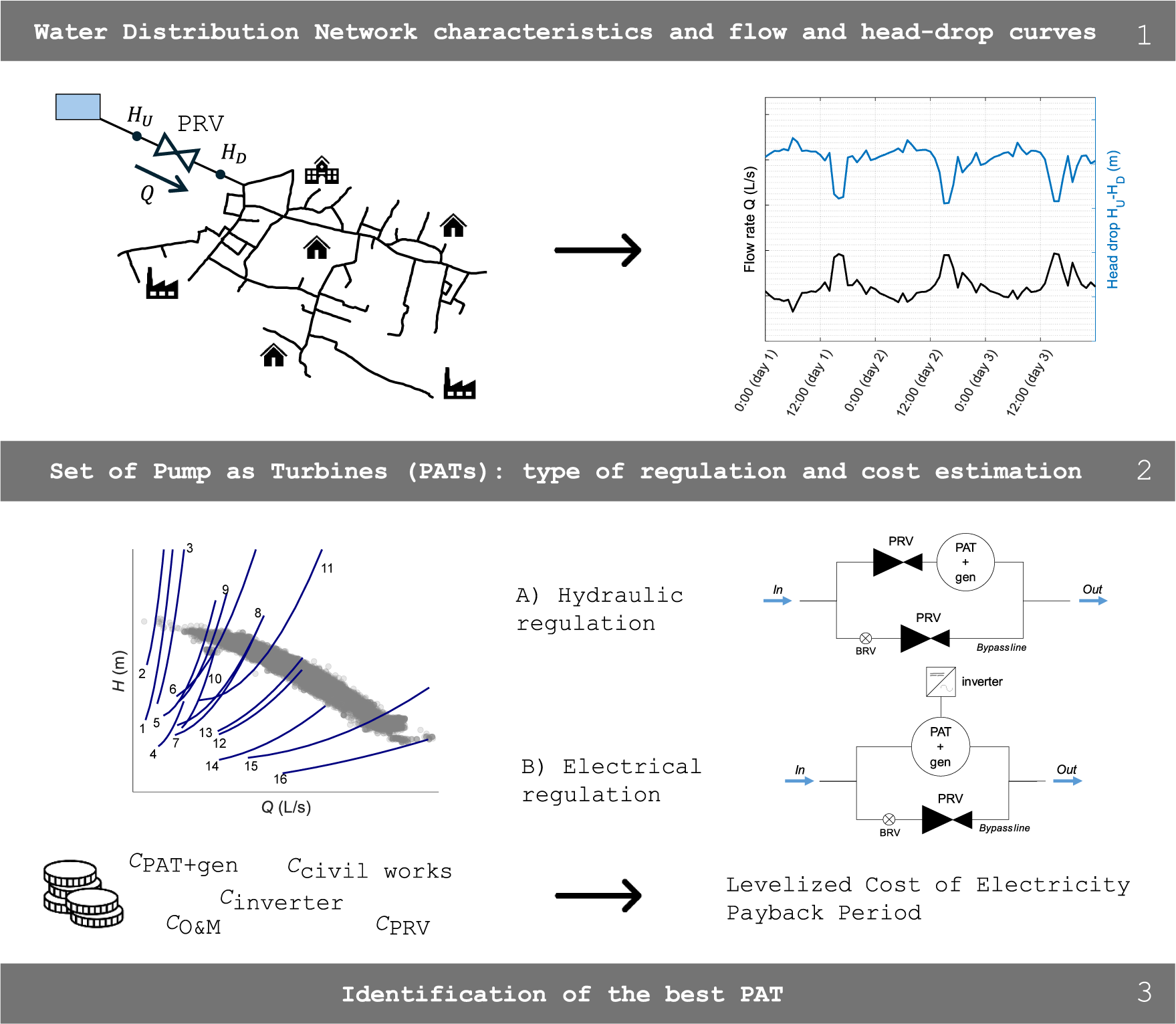
In water distribution networks (WDNs), pressure limitation represents an effective strategy to reduce water losses. This goal can be achieved by means of pressure reducing valves (PRVs), which dissipate exceeding hydraulic energy. For more sustainable management of water systems within a circular economy framework, PRVs can be replaced with energy-producing devices, such as pumps as turbines (PATs). This study presents a general approach for the selection of the optimal PAT to install in a given WDN. The approach assesses the techno-economic feasibility of a fleet of turbomachines by evaluating the rate of energy recovery, the levelized cost of electricity and the payback period of each PAT. Two PAT regulation strategies are accounted for, namely hydraulic and electrical regulations. The approach is applied to a real-world case study consisting of a WDN in Northern Italy that supplies approximately 5,000 users. In addition, a fleet of 16 turbomachines is considered, of which the experimental characteristic curves are available in both pump and turbine modes. The analyses carried out in this article allow selecting the optimal PAT to install within the considered WDN, which recovers 44.1 % of the hydraulic energy of the network with a maximum investment cost of € 24,500.
Ecosystems are increasingly being represented as marketplaces that produce goods for humanity, and because of this, economic metaphors for increasing efficiency have been introduced into conservation. A powerful model for economic growth is the globalised free market, and some are implicitly deploying it to suggest changes in conservation practice. Ecological globalisation is the position that we should not control the free movement of species and rewilding occurs most efficiently through non-intervention. When species can move and interact with new ecological systems, they create novel ecosystems. These novel arrangements create experimental markets in nature’s economy, providing opportunities for the efficient production of goods for humans, also known as ecosystem services. When invasive species supersede local populations, it indicates previous biotic systems were inefficient, which is why they were replaced, and therefore, it is wrong to protect indigenous “losers” from extinction. Those who defend indigenous species are accused of being xenophobic against recent biotic migrants. This position is flawed both empirically and morally as there is a disconnect between these economic and political arguments when applied to human economies and nature’s economy.
Studying deep-water shark species presents inherent challenges stemming from the difficulty in accessing their habitats, coupled with factors such as low population densities, intricate behaviours, and complex biological attributes. The integration of citizen scientists, particularly fishers, offers a valuable avenue to make use of their life-long insights and expertise, thus facilitating the acquisition of crucial data that can effectively enhance the realm of shark research. Our collaborative engagement with fishers since 2017 has yielded an extensive documentation concerning elasmobranchs in the Caribbean region of Puerto Rico providing a unique opportunity to formally record species hitherto unreported. This is exemplified by the first documentation of the smalltooth sandtiger shark (Odontaspis ferox (Risso, 1810)). Despite its broad geographic range and widespread distribution in temperate and tropical marine environments, there is a lack of comprehensive scientific understanding and limited available knowledge regarding this species. A noteworthy finding on December 30, 2020, near Rincón (northwest coast) in Puerto Rico, disclosed a large shark that an experienced fisher had captured as an unidentified by-catch at a depth of 325 m. Through an interdisciplinary approach using molecular (355 bp, Cytochrome Oxidase Subunit 1) and morphological techniques, we successfully confirmed the identity of the specimen as a female smalltooth sandtiger shark. Given the limited information available (e.g., diversity, abundance, behaviour, reproduction, distribution) on shark species in the coastal and deep waters of Puerto Rico, this report provides valuable new data that can significantly contribute to the conservation efforts to protect these enigmatic yet ecologically vital predators.
The endemic Crow Honeyeater Eugymnomyza aubryana of New Caledonia is classified as “Critically Endangered”. Its rainforest habitat on mainland Grande Terre has been reduced by around 80% and the remaining habitat is highly fragmented. It is likely that by early 1900, anthropogenic changes had split the Crow Honeyeater’s distribution into two populations: one in the north of the island and one in the south separated by over 200 km. From 2011, the species was only known to be present in the south of Grande Terre with its distribution centred on the Blue River Provincial Park. It is essential for the species’ survival to protect its remaining natural habitat and its nests from predators.
The global illegal wildlife trade is estimated by Interpol to be worth $20 billion annually. A combination of poverty and rich-world demand is driving several thousand species towards extinction and the conservation sector has struggled to respond. Killing the Trade shows that with a shift in strategy, that dire situation can be turned on its head. By bringing together lessons from conservation successes and failures and incorporating insights from the commercial sector, the book sets out a workable holistic strategy to address the underlying causes of the illicit trade. Built around the guiding principle - if it pays it stays - the book provides policymakers, NGOs and other stakeholders with an action plan to help bring the multi-billion-dollar trade to an end.
Coastal ecosystems have been subject to anthropogenic environmental stressors. Although exposed to different environmental pressures and susceptible to bioinvasion events, Todos-os-Santos Bay (TSB) (12oS, Bahia State, Brazil) has great ecological importance. Among the bioinvasive organisms, Tubastraea corals (the ‘sun corals’) are widespread in artificial and natural environments of the TSB less frequently. Given the lack of baseline information characterizing the original biofouling communities, surveys approaching the malacofauna under the influence of sun corals are essential to the knowledge of local biodiversity and future losses due to possible environmental changes. To provide information on the diversity of the malacofauna, the gastropods, bivalves, and polyplacophorans in the presence of sun corals at 10 sampling stations in the TSB were investigated. Eighty-one taxa of different size classes (micro- and macromolluscs) and mobility (mobile and sessile) were recorded. These species belong to distinct trophic groups (carnivorous, herbivorous, grazers, parasites, and suspensivorous/passive filtering) and life modes (endolithic, epifauna, infauna, and ectoparasitic). Gastropoda had the highest number of species, followed by Bivalvia and Polyplacophora. Cerithiopsidae and Pyramidellidae were the most representative families. Three exotic species and seven new records were identified for the bay. The malacofauna associated with artificial substrates with the presence of sun coral proved to be complex and diverse.
In situ observation of cephalopods is crucial for understanding their behaviour, ecology, and natural interactions. Scientific diving offers a minimally invasive approach to studying these elusive organisms, especially in shallow waters. This systematic review evaluates the application of scientific diving in cephalopod research over the past five decades, analysing trends, methodologies, and global representation. An initial database search was conducted, followed by a second, more targeted search to improve accuracy and coverage. This two-stage process significantly increased the capture rate of relevant studies, from an estimated 28% to 57%, of 225 publications meeting inclusion criteria since 1973. In total, 83 different species were studied, with Octopus cf vulgaris being the most recurrent complex species. Most studies were conducted within recreational and non-decompression diving limits, resulting in a higher representation of orders typically found within these depth ranges: Octopoda (52.7%), Sepiida (19.8%), and Myopsida (18.7%). Orders often inhabiting greater depths, such as Nautilida (4.9%) and Oegopsida (3.8%), were studied primarily through video recordings, egg collections, or specimen release. Manual collection (44%) and direct observations (35%) were the primary goal for diving uses. Publications concentrated in regions such as the West Coast of North and South America and the Mediterranean, with the United States leading contributions (21.2%). The initial under-representation of studies was largely due to inconsistent terminology and lack of direct reference to diving methods in titles, abstracts, or keywords. These findings highlight the need for standardized reporting to fully leverage scientific diving’s potential in cephalopod research.
The Puerto Rico Plain Pigeon Patagioenas inornata wetmorei suffered a severe population decline after hurricanes Irma and Maria in September 2017. We used distance sampling to estimate abundance (density and population size) in April–June 1986−2024, accounting for changes in detection probability. We used the distance-sampling abundance estimates to populate a Bayesian state–space logistic model and update posterior estimates of population carrying capacity, maximum population growth rate, population recovery time, and predicted abundance in April–June 2025−2034, accounting for observation and process variances. In addition, we used predicted abundance to assess potential extinction risk (probability Pr[N2025−2034 = 0|data]), population self-sustainability above 5,000 individuals (Pr[N2025−2034 >5,000|data]), and population surpassing the 2.5th percentile of carrying capacity (Pr[N2025−2034 >30,000|data]). The population has not recovered from the hurricanes, with estimated density averaging 0.0015 individuals/ha (bootstrapped standard error [SE] = 0.0006) and population size averaging 1,097 individuals (SE = 455) at the 749,000-ha survey region in April–June 2018−2024. Posterior mean estimates were 41,580 individuals (Markov Chain Monte Carlo standard deviation [SD] = 8,052) for population carrying capacity, 0.183 (SD = 0.056) for maximum population growth rate, six years (SD = 2) for recovery time, and 7,173 individuals (SD = 12,309) for predicted abundance in April–June 2025−2034. The population may reach self-sustainability levels (range Pr[N2025−2034 >5,000|data] = 0.326−0.631) but currently is undergoing a prolonged bottleneck and may become extinct (range Pr[N2025−2034 = 0|data] = 0.199−0.332), particularly if reproduction continues to be mostly unsuccessful, anthropogenic disturbances remain unabated, and on top of that another devastating hurricane makes landfall during the next 10 years. The Puerto Rico Plain Pigeon subspecies is in urgent need of management aiming to increase and maintain abundance above 5,000 individuals but preferably surpassing the 2.5th percentile of population carrying capacity as in the late 1990s (range Pr[N2025−2034 >30,000|data] = 0.000−0.181).
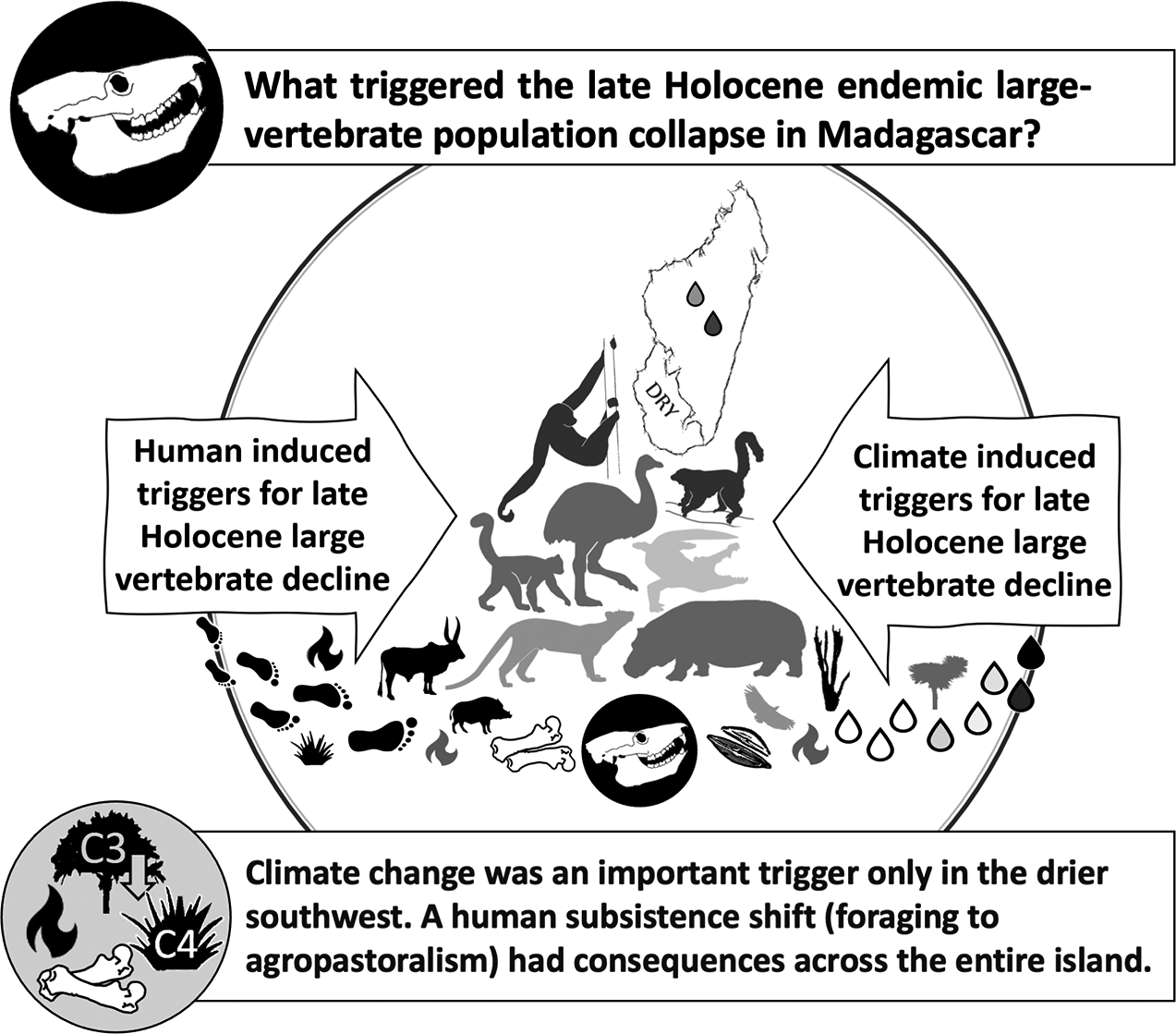
Around 1000 years ago, Madagascar experienced the collapse of populations of large vertebrates that ultimately resulted in many species going extinct. The factors that led to this collapse appear to have differed regionally, but in some ways, key processes were similar across the island. This review evaluates four hypotheses that have been proposed to explain the loss of large vertebrates on Madagascar: Overkill, aridification, synergy, and subsistence shift. We explore regional differences in the paths to extinction and the significance of a prolonged extinction window across the island. The data suggest that people who arrived early and depended on hunting, fishing, and foraging had little effect on Madagascar’s large endemic vertebrates. Megafaunal decline was triggered initially by aridification in the driest bioclimatic zone, and by the arrival of farmers and herders in the wetter bioclimatic zones. Ultimately, it was the expansion of agropastoralism across both wet and dry regions that drove large endemic vertebrates to extinction everywhere.
We review the conservation status of two small rail species breeding in the Galápagos Islands: the endemic Galápagos Rail Laterallus spilonota and the native Paint-billed Crake Neocrex erythrops, widely distributed on the South American mainland. Using distance sampling with point counts, we estimated population sizes across islands with suitable habitat from 2015 to 2025. In 2022, we reassessed long-term trends for the Galápagos Rail on Santa Cruz Island, following the monitoring protocol used in earlier censuses (1986, 2000, 2007). We estimated the Galápagos Rail population at 32,300 pairs across seven islands, including a small, newly recorded breeding population on Pinzón and Floreana, where we rediscovered the rail in 2025. Additional breeding populations of unknown size exist in the humid zones of the two northern volcanoes of Isabela and on adjacent Fernandina. The largest population, on Santiago (22,400 pairs), has recovered remarkably over 40 years since goats and other herbivores were eradicated. We found the Galápagos Rail predominantly in the humid highlands, although a few pairs were recorded in the mangrove forests of Isabela Island. The species is absent from San Cristóbal Island. On Santa Cruz it showed a clear increase between 2007 and 2022. The Paint-billed Crake breeds on the four inhabited islands (Floreana, Isabela, San Cristóbal, and Santa Cruz), with at least 6,300 pairs. It was mainly found in grasslands and open woodlands within agricultural areas at lower altitude than the Galápagos Rail, resulting in minimal range overlap. Its population and range have expanded, especially on Santa Cruz. The significantly higher recent population estimate for the Galápagos Rail compared with past estimates, along with positive trends on at least three islands, warrants reclassifying the species IUCN Red List status from “Vulnerable” to “Near Threatened”.
This study presents a novel approach using machine learning, specifically Random Forest modelling, to create a sensitivity map that addresses the conflict between offshore wind farms (OWFs) and wintering waterbirds in the southern Baltic Sea. This region is crucial or of great importance for wintering species such as the Long-tailed Duck Clangula hyemalis and Velvet Scoter Melanitta fusca. In 2020, the southern and central Baltic Sea hosted approximately one million wintering birds, including over 560,000 Long-tailed Ducks (35% of the species’ biogeographical population), 230,000 Velvet Scoters (41% of the global population), and 4,500 Black Guillemot Cepphus grylle (8% of the Baltic population). Within the Polish Exclusive Economic Zone (PEEZ), 21 wind farms are planned, totalling a capacity of 17.6 GW with an estimated 1,164 turbines. To assess potential risks, a Normalised Overlap Index (NOI) was calculated for each wind farm, quantifying the level of potential threat to wintering birds. High conflict zones, such as the Southern Middle Bank and Pomeranian Bay, were identified, where wind farms significantly overlap with areas of high bird density. Although the wind farms do not intersect with Natura 2000 sites, partial overlaps with Important Bird Areas (IBAs) were noted. The method developed in this study not only addresses the challenges in the Baltic Sea but also offers potential applications in other marine and terrestrial environments. This framework provides a novel tool for evaluating and mitigating the impacts of renewable energy development on wildlife, contributing to the sustainable expansion of green energy solutions globally.
The pebble crab, Leucisca levigena, was recorded for the first time from the intertidal regions of South Andaman in the Andaman and Nicobar Islands, India. This comes after its holotype was described in 1976 from Western Australia. The species was found on the thallus of the green seaweed, Halimeda opuntia. Notably, the study included the first record of a male specimen, previously absent in its first description. L. levigena is characterized by its slightly concave dorsal carapace with a beaded margin, a raised gastric region extending to the front, and a smooth pterygostomial region. A brief description and illustrations of both the male and female species and a map showing the distribution of Leucisca species around the world are provided. L. levigena confirms its distribution from Western Australia to the Andaman Islands.
Saltmarshes are widely recognized as one of the most productive coastal habitats, and on the Amazon coast, Spartina alterniflora marshes are widespread on both marine and freshwater sites. On the Amazon coast, this ecosystem is subject to a wide array of environmental factors that influence its characteristics and associated macrobenthic fauna. However, few studies have been carried out in Amazonian saltmarshes when compared to others regions worldwide. Therefore, this study characterizes the vertical distribution of macrobenthic fauna in Amazon saltmarshes and their seasonal changes. Vertical stratified samples (0–10 and 10–20 cm) were collected during the rainy (April 2008) and dry seasons (November 2008) in saltmarshes located in an Environmental Protected Area located on the Northern Brazilian Amazon coast (Algodoal-Maiandeua island). The saltmarsh area varied between seasons, being denser and taller in the dry season. A total of 38 macrobenthic taxa were recorded, of which 11 were exclusively found in the dry season. The macrobenthic faunal structure varies among seasons, with higher density and richness in the dry season. Overall, higher densities and richness were found at near-surface layers in both seasons. We suggest that the vertical distribution of the macrobenthic fauna depend on the vegetation density in Amazon saltmarshes, since this vertical distribution is more prominent in the dry season where we observed higher Spartina density and most of the fauna is concentrated near the surface. Therefore, this study provides novel insights into macrobenthic distribution patterns, reinforcing that Amazonian saltmarshes have unique characteristics that strongly influence their distribution.
Climate change profoundly affects plant phenology. An important parameter in research on plant dynamics is the plastochrone interval (PI), which is define as the time interval between the formation of successive leaves. The PI has been used to evaluate seagrass demography and as a direct measure of shoot growth and age. Variations in PI determine the growth rates, maintenance, and success of seagrass beds. Global warming could affect the PI dynamics of Zostera marina and, consequently, alter the dynamics of seagrass beds. Using Bayesian linear regression with a time series composed of 316 biweekly sampling dates from 1998 to 2018, we evaluated PI dynamics in the Punta Banda Estuary in Baja California, Mexico. We found that the tendency of the series was linear with parameter values of β0 = 1.65 (SD ±0.19) and β1 = −0.012 (SD ±0. 001). The Bayesian analysis of variance showed strong evidence of differences in the PI among years, given probabilities from 3.2 to 1.88 × 10⁶ times higher of differences than no differences. The largest differences were detected between cold and hot years. The climatology of the time series PI values showed changes in seasonality over time. Summer and autumn were found to be the most perturbed seasons. Finally, by linking the PI estimates with the sea surface temperature anomalies for the complete series, a good inverse correspondence was observed between hot years and high PI, as well as cold years and low PI values, suggesting that climate change has affected PI among years and seasons.
Persecution for belief-based uses is a major threat to raptors in West Africa. Critically Endangered Hooded Vultures Necrosyrtes monachus are traded openly in West African vodun (also known as voodoo or fetish) markets in Benin, despite national laws protecting this species. We interviewed 115 vendors selling Hooded Vultures and/or their body parts at nine different markets in southern Benin to understand the extent and drivers of this illegal trade. Over four months, we counted a total of 522 Hooded Vultures in market stalls, including whole dried vulture carcasses (73.4% of vulture products offered for sale), vulture heads (17.2%), and live birds (9.4%). Vultures offered for sale originated from at least 10 foreign countries, suggesting there are far-reaching impacts of illegal trade on Hooded Vultures. Vodun practitioners sacrifice and consume vultures in the belief these practices will protect them from witchcraft and achieve other supernatural aims, and the resulting high demand for vultures has driven the price of a Hooded Vulture to exceed the average monthly income in Benin. Despite serious legal, conservation, and animal welfare concerns, wildlife trade for belief-based use is thriving and growing in West Africa, and our findings highlight that legislation aimed at protecting vultures in Benin appears to be currently ineffective. From our discussions with traders, it appears that low education levels, weak law enforcement, and disregard for legislation contribute to this trade that threatens remaining vultures across West Africa. Public awareness campaigns to educate residents about conservation laws and improved law enforcement are urgently needed to mitigate on-going threats to this and other Critically Endangered species.
The Water-Energy-Food (WEF) nexus approach has proved valuable in the investigation of complex systems, allowing for tailored analysis for specific scopes. This is particularly relevant due to variations in WEF nexus interactions observed between countries and regions. This article uses qualitative methods to investigate the effects of Fiji’s ambitious carbon mitigation policies through a WEF nexus approach. A framework for Policy Coherence assessment was used to score the strength and direction of policy interactions. Overall, the assessment revealed more synergies than trade-offs between Fiji’s Low Emission Development Strategy (LEDS) and nexus sectoral policies, with the energy sector having the most interactions. Analysis of data obtained from key informant interviews and the policy coherence outcomes show important trade-offs and synergies between sectors, which are useful in informing national and sectoral level policy development. The research provides policy recommendations that address governance, technology and innovation, human capital, and land issues to overcome barriers to implementing climate mitigation targets in the LEDS and Nationally Determined Contributions. This study demonstrates the utility of the WEF nexus approach through applying qualitative methods to provide valuable insights for sectoral-level nexus research. Such an approach can be applied to other small island nations facing similar challenges.
Eels of the congrid genus Coloconger are rare and poorly known for their distributions. This study reports on the collection of the Indo-west Pacific short tail conger Coloconger scholesi Chan 1967 from Indian waters of the Arabian sea for the first time based on a single specimen collected from the deep waters off Kollam, Kerala and provides an additional report about Anguilliformes of India. Previously a single species of the genus Coloconger raniceps Alcock 1889 has been reported from Indian waters up to now. This study adds details about another Coloconger species, C. scholesi, a photograph of the specimen in fresh condition is provided, and comparison with its co-occurring in Indian waters congener C. raniceps is included.
A single specimen of the Australian stargazer, Xenocephalus australiensis, was recently collected from the southwest coast of India, Arabian Sea. Since its original description, from northwest Australia, there have been no detailed reports on the species occurrence. The present study documents the first geographical record of X. australiensis in the Arabian Sea, Western Indian Ocean. Morphological characters are enumerated and compared with the voucher specimens from the original description. A detailed description of the specimen is provided, contributing valuable insights into the characteristics of X. australiensis in the Indian waters along with major distinguishing characters of the species in the genus Xenocephalus. This study extends the known geographic range of the species from northwest Australia, Eastern Indian Ocean, to the Arabian Sea, Western Indian Ocean.