To save content items to your account,
please confirm that you agree to abide by our usage policies.
If this is the first time you use this feature, you will be asked to authorise Cambridge Core to connect with your account.
Find out more about saving content to .
To save content items to your Kindle, first ensure no-reply@cambridge.org
is added to your Approved Personal Document E-mail List under your Personal Document Settings
on the Manage Your Content and Devices page of your Amazon account. Then enter the ‘name’ part
of your Kindle email address below.
Find out more about saving to your Kindle.
Note you can select to save to either the @free.kindle.com or @kindle.com variations.
‘@free.kindle.com’ emails are free but can only be saved to your device when it is connected to wi-fi.
‘@kindle.com’ emails can be delivered even when you are not connected to wi-fi, but note that service fees apply.
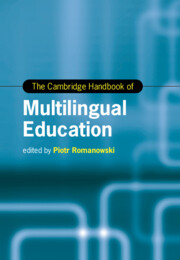
Although multilingual education is still a relatively new field, it has already become a solid and dynamic area of academic investigation growing worldwide. Bringing together a stellar line-up of leading experts, this Handbook covers a wide range of topics crucial for understanding the concept of multilingual education and its implementation. It includes a wide range of overviews and case studies from diverse systems of education from across the globe, to help facilitate effective multilingual instruction relevant in the realities of local and global contexts. All chapters are written in a knowledgeable, yet accessible, style, and the theory is introduced step-by-step, to provide a rich resource for classroom instructors worldwide. It will serve as the principal text for many of the rapidly increasing multilingual programmes, degrees, courses and seminars devoted to multilingual education in tertiary institutions worldwide, as well as a reference text for instructors in primary and secondary education.
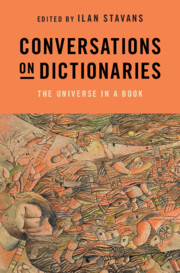
How did dictionaries come to be? When and how did they originate in a specific language? Who was involved in that origin story? How have they evolved over time? What is the tension between scholarly and commercial, and between prescriptive and descriptive, dictionaries? What is the politics behind each dictionary? And what is the connection between dictionaries and nation-building? This fascinating book has the answers. It brings together a collection of conversations with leading lexicographers from around the world to explore the role dictionaries have played in history, comparing the parallel histories of lexicography in twenty different languages. The conversations explore the way dictionaries, which preserve language while contributing to their standardization, are always political in nature, prescribing some words while cancelling others. Covering major world languages, indigenous languages, and hybrid languages, this is essential reading for academic researchers and students of lexicography, and professional and trainee professional lexicographers.
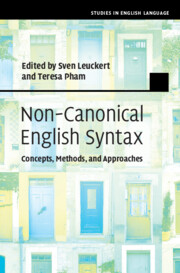
The term non-canonical syntax generally refers to deviations from 'typical' word order. These represent a fascinating phenomenon in natural language use. With contributions from a team of renowned scholars, this book presents a range of case-studies on non-canonical syntax across historical, register-based, and non-native varieties of English. Each chapter investigates a different non-canonical construction and assesses to what extent it can be called 'non-canonical' in a theory-based and frequency-based understanding of non-canonical syntax. A range of state-of-the-art methodologies are used, highlighting that an empirical approach to non-canonical syntactic constructions is particularly fruitful. An introduction, a synopsis, a terminological chapter, and three section introductions frame the case studies and present overviews of the theory behind non-canonical syntax and previous work, while also illustrating open questions and opportunities for future research. The volume is essential reading for advanced students of English grammar and researchers working on non-canonical syntax and syntactic variation. This title is also available as Open Access on Cambridge Core.
This Element presents a computational theory of syntactic variation that brings together (i) models of individual differences across distinct speakers, (ii) models of dialectal differences across distinct populations, and (iii) models of register differences across distinct contexts. This computational theory is based in Construction Grammar (CxG) because its usage-based representations can capture differences in productivity across multiple levels of abstraction. Drawing on corpora representing over 300 local dialects across fourteen countries, this Element undertakes three data-driven case-studies to show how variation unfolds across the entire grammar. These case-studies are reproducible given supplementary material that accompanies the Element. Rather than focus on discrete variables in isolation, we view the grammar as a complex system. The essential advantage of this computational approach is scale: we can observe an entire grammar across many thousands of speakers representing dozens of local populations.
Avertives refer to (mainly past) situations the outcome of which is interrupted, averted, or frustrated instead of completed, as in Meinasin kaatua, mutta ihmeen kaupalla onnistuin pysymään jaloillani ‘I was about to fall, but miraculously managed to stay on my feet’. The aim of this paper is to describe and compare three verbal constructions in Finnish which are frequently used as avertives by means of collostructional analysis (Stefanowitsch & Gries 2003). We propose that these constructions, namely olla + mAisillA ‘to be V-ing’, olla + INFA ‘to be to V’, and meinata + INFA ‘to mean, intend to V’, which all correspond to ‘be about to do something’, constitute a family of related avertive constructions. We first describe them by means of collexeme analyses based on corpus data consisting of online written conversation extracted from the Suomi24 corpus. We then compare the constructions and situate them on Caudal’s (2023) continuum for characterising different kinds of avertive markers. Finally, we offer a box chart characterisation of the constructions at two distinct levels of schematicity, the schematic AUX + INFX construction and a specific usage instance of olla + INFA, following Fried & Östman (2004).
The importance of additional language learning (ALL) is on the rise, but we do not yet have a full understanding of how learners with different characteristics approach this task. Here, we discuss the potential impact of attention-deficit/hyperactivity disorder (ADHD), a prevalent learning disability, on classroom ALL. Learners with ADHD show difficulties in the attention networks of sustained attention and executive control. It is critical, therefore, to ask how these difficulties of learners with ADHD might manifest in the demanding task of ALL, but to date there is very limited research examining this issue. The current paper sets out a theoretical framework for examining ALL in learners with ADHD, reviews the extant literature, and most importantly calls for future research to examine the way in which learners with ADHD manage the process of ALL, in an effort to highlight the involvement of sustained attention and executive control in ALL more generally.
This study investigates the production, online processing, and offline comprehension of non-canonical structures in Mandarin-speaking children with Developmental Language Disorder (DLD). We tested three Mandarin non-canonical structures, which differed in word order, the presence or absence of morphosyntactic cues, and the distance between the displaced element and its trace. Syntactic priming was adopted to elicit production, and a self-paced listening task with picture verification was used to examine online processing and offline comprehension accuracy, among 22 DLD children aged 5 to 9 and 37 age-, SES-, and nonverbal IQ-matched typically developing (TD) children. Results showed a quantitative difference between DLD and TD children across non-canonical structures in production and offline comprehension. In online processing, TD children immediately used different cues when they were available, whereas DLD children relied on the most informative cue within a given structure and context and integrated redundant cues only at a later stage. These findings point toward a complex interaction of representational weakness and domain-general processing constraints whereby DLD children show difficulties in allocating processing resources to integrate multiple linguistic cues.
Samuel Beckett and trauma is a collection of essays that opens new approaches to Beckett’s literary and theoretical work through the lens of trauma studies. Beginning with biographical and intertextual readings of instances of trauma in Beckett’s works, the essays take up performance studies, philosophical and cultural understanding of post-traumatic subjectivity, and provide new perspectives that will expand and alter current trauma studies.Chapter 1 deals with a whole range of traumatic symptoms in Beckett’s personal experiences which find their ways into a number of his works. Chapter 2 investigates traumatic symptoms experienced by actors on stage. Chapter 3 examines the problem of unspeakability by focusing on the face which illuminates the interface between Beckett’s work and trauma theory. Chapter 4 explores the relationship between trauma and skin – a psychic skin that reveals the ‘force and truth’ of trauma, a force that disrupts the apparatus of representation. Chapter 5 considers trauma caused by a bodily defect such as tinnitus. Chapter 6 focuses on the historically specific psychological structure in which a wounded subject is compelled to stick to ordinary life in the aftermath of some traumatic calamity. Chapter 7 provides a new way of looking at birth trauma by using the term as ‘creaturely life’ that is seen in the recent biopolitical discourses. Chapter 8 speculates on how Beckett’s post-war plays, responding to the nuclear age’s global trauma, resonate with ethical and philosophical thoughts of today’s post-Cold War era.
In analysing ‘Sanies I’ and ‘Serena II’ meticulously, with special attention to the animal imagery, Conor Carville in this chapter links Otto Rank’s theory of the trauma of birth with Eric Santner’s recent idea of ‘creaturely life’ – the life that is exposed to biopolitical power at moments of trauma. Trauma is here considered as constitutive of the subject, not an exceptional phenomenon, and also as providing the raw material for biopolitical power. In the process of Carville’s analyses emerge hitherto uncharted networks concerning Beckett’s fixation on the trauma of birth and the contemporary biopolitical concerns with birth, reproduction and population in Ireland and Britain. Carville’s article not only provides original close readings of those difficult poems in the light of Rank but also illustrates how a highly personal unease about sexual identity caused by birth trauma can be connected to the biopolitical discourses by the use of Santner’s idea of ‘creaturely life’ that itself draws on the ideas of Benjamin, Foucault, Lacan, Agamben and other theorists.
Michiko Tsushima’s chapter discloses the relationship between trauma and skin in considering Watt as a ‘skin of words’ woven by Beckett—a psychic skin that he tried to rei—and, at the same time, as something that reveals the ‘force and truth’ of trauma. First, with the help of Didier Anzieu’s concept of ‘the Skin Ego’, Tsushima explores the possibility that Beckett’s act of writing Watt can be considered an attempt to rei the psychic skin by weaving a ‘skin of words’. This act of writing has a therapeutic aspect. She also argues that Watt explores the ‘force and truth’ of trauma which cannot be resolved or assimilated. Tsushima shows how the ‘force and truth’ of trauma manifests itself as a violence to the surface of language, a force that disrupts the apparatus of linguistic representation.
Shedding lights on biological episodes in Beckett’s writing, Julie Campbell in this chapter focuses specifically on the fear of diving that he experienced at six years old, which recurs from the early poem ‘For Future Reference’ to the later fiction Company, and analyses how and why it was traumatic for him. The incident, together with the shame and the sense of guilt he felt in mourning his father’s death, traumatised him. Beckett’s trauma, caused by his remorseful feeling that he had betrayed his father’s expectations, is perhaps most strongly reflected by the character Henry in Beckett’s radio play Embers. Henry is obsessed with the death of his father, who drowned at sea but whose body was not found. Henry denies his father’s death as if trying to expunge it from his memory. His distress, anger, bitterness, and confusion are expressed in his commands of his own actions and of the story of Bolton and Holloway. The radio listeners witness Henry’s inner feelings and share in his suffering.
In this chapter, Mariko Hori Tanaka focuses on how Beckett responds to the imagined nuclear winter inherent in the global competition in the production of nuclear bombs and energy during the Cold War years. Many of his post-war plays including Endgame and Happy Days are clearly set in a post-apocalyptic world, where the only human survivors are the onstage characters. The earth uninhabited and the landscape of ruins with the last remaining human beings barely alive are suggested in many of Beckett’s works. Our post-holocaust world is filled with repeated disasters such as wars, conflicts, and natural disasters, so that we endlessly feel a sense of apocalypse. Beckett’s sense of men and women living in worsening conditions towards the unseen ending is the global anxiety shared in the late twentieth to the twenty-first century. Beckett’s imagination of dead victims ruined and suffering in some traumatic event (which he never clarifies) reminds us, the audience and the readers, of those who suffered and died in apocalyptic disasters. This chapter thus deals with the recent cultural traumas globally shared in our age.
Nicholas Johnson in this chapter discusses and analyses trauma of actors in performing Beckett’s plays. In the rehearsal process, many actors report traumatic symptoms such as panic, fear, anxiety, and nightmare, but it can be difficult to disentangle the overdetermined origins of these feelings: are they ingrained in the source material, individual to the actor’s process, specific to the performance context, or simply authentic physiological responses to the physical demands? Working through these questions first in terms of contemporary acting theory, Johnson introduces qualitative data from both experienced and early-career practitioners of Beckett. Alongside historical and theoretical explorations of acting, the chapter emphasises the concept of the ‘void’ as one possible key to navigating the potentially traumatic terrain within Beckett, as well as naming it as one of the tools at the actors’ disposal. By connecting to urgent contemporary debates in the medical humanities and positing Beckett as core to a unified theory of acting that takes account of the ‘cognitive turn’, Johnson’s focus on the materiality of these experiences extends a discussion beyond the fictive space of the texts and the biographical, currently the two most common approaches to Beckett and trauma.
Building on his detailed discussion of the impossibility of speech in Beckett’s work in relation to Agamben’s account of testimony in his book Samuel Beckett and Testimony, David Houston Jones turns in this chapter to the question of the face, which Agamben himself left undeveloped after his article ‘The Face’. Jones considers the face as a vector of the expressive capabilities of testimony. He discusses a range of dramatic and narrative situations in which the expressive capabilities of the face are pitted against the epistemological problem of testimony, from the deterritorialised face of Not I to the inexpressive face in Wattand the later prose. This analysis of the face in Beckett constitutes a unique critique of Agamben’s idea of testimony and contributes to a rethinking of trauma theory with reference to the realm of the visual.
In this chapter, Yoshiki Tajiri focuses on the connection between trauma and everyday life: a traumatised subject needs to come to terms with everyday life and can find ordinary objects in it unexpectedly significant. By discussing such aspects of Virginia Woolf’s Mrs Dalloway and Samuel Beckett’s Happy Days, this chapter will illuminate the ways in which trauma and ordinary life are correlated rather than opposed. It also demonstrates that trauma theory and everyday life studies can stimulate each other: trauma is far from an everyday phenomenon, but it can shed light on the nature of everyday life after calamities of modernity as in the cases of Woolf and Beckett; conversely, there may be ways of enriching trauma studies by incorporating reflections on everyday life.