To save content items to your account,
please confirm that you agree to abide by our usage policies.
If this is the first time you use this feature, you will be asked to authorise Cambridge Core to connect with your account.
Find out more about saving content to .
To save content items to your Kindle, first ensure no-reply@cambridge.org
is added to your Approved Personal Document E-mail List under your Personal Document Settings
on the Manage Your Content and Devices page of your Amazon account. Then enter the ‘name’ part
of your Kindle email address below.
Find out more about saving to your Kindle.
Note you can select to save to either the @free.kindle.com or @kindle.com variations.
‘@free.kindle.com’ emails are free but can only be saved to your device when it is connected to wi-fi.
‘@kindle.com’ emails can be delivered even when you are not connected to wi-fi, but note that service fees apply.
Changes in social structure often lead to mobility and migration. Urbanisation is one important outcome of mobility and migration. Mobility, migration and urbanisation lead to dialect contact, that is, between speakers of mutually intelligible varieties. This chapter first introduces general concepts such as diffusion and supralocalisation, and then moves on to discuss sociolinguistic models developed for the analysis of dialect contact, including the theories of koineisation and new-dialect formation, based on principles such as accommodation and salience. Case studies are taken from medieval Spain, Early Modern New Mexico and twentieth-century Norway. The chapter also addresses the role of new speakers in contact situations, based on an example from sixteenth-century Tuscany, and ends with a short discussion of sociolinguistic typology.
Different texts have different characteristics. In this chapter, we first explore the concepts of register, genre and style, which are, in the tradition of Biber, linked to communicative functions and situational characteristics. The co-occurrence of register features and dimensions are introduced as the linguistic indicators of communicative functions. A particularly useful approach to register centres around keyness, which we demonstrate with historical Portuguese data. We then introduce discourse traditions as a historical-linguistic concept closely related to genre and register. We use French literary examples to explain stylistic differences and the link with the Labovian distinction between indicators, markers and stereotypes. This leads to a discussion of indexicality and indexical fields more generally, for which we draw on ancient Greek plays. The chapter continues the discussion of the literary representation of language variation on the basis of English texts comprising dialect, and explains the important concept of enregisterment.
This chapter discusses standardisation as a major factor in sociolinguistic history. After a brief dicussion of basic concepts such as diglossia, Ausbau, Abstand and diaglossia, we introduce the Haugen model, including the key concepts of selection, codification, elaboration and acceptance. We go on to argue that the later introduced concept of implementation is crucial in analyses of the interaction of norms and language use in the language community. Focusing on this interaction, and based on case studies from English and Dutch, three scenarios are distinguished: prescriptive influence, prescriptive delay and concurrent prescriptivism. The chapter ends by situating the interaction of norms and usage into the wider framework of the total linguistic fact as developed by Silverstein.
In this chapter, we focus on multilingualism and language contact, moving away from the strong focus on monolingualism characteristic of many traditional approaches to language history, and discussing various onsets, scenarios and outcomes of language contact. We introduce the concepts of borrowing and imposition as central constructs to understand contact-induced change in language, illustrating and critically examining these ideas in three case studies: the development of loanwords in Canadian French, Germanic substrate effects in the formation of American Englishes and mixed-language business writing in medieval Britain after the Norman Conquest. Building on these cases, we discuss which elements of the language can be transferred and explore possible pathways of social diffusion of borrowings, as well touching upon various traits and examples of code switching and similar multilingual practices in historical texts. Finally, we evaluate the constructs of pidgin and creole languages, discussing to what extent they can be seen as different in structural terms, or whether their distinctiveness arises primarily from the sociohistorical circumstances from which they arose.
Navigating the world of academic writing and publishing can be overwhelming. This book provides the antidote. Written by a team of authors who are at different stages of their careers, this book provides hands-on advice and strategies to turn academic writing from a daunting experience to a joyful journey. It gives a complete overview of the publishing process, from how to write an academic paper, chapter or book, to areas that are often overlooked, such as indexing a book, working with images and copyright, dealing with advertising and disseminating the book, ethical issues, open access, predatory publishing, and much more. The chapters are short and clearly labelled, with questions for reflection and discussion at the end of chapters, making them a handy reference for readers to dip in and out of. Demystifying aspects of academic writing, academic writers will come away with the confidence and knowledge to 'publish and thrive.'
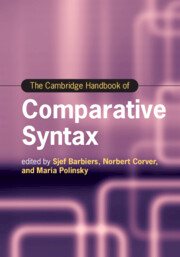
Bringing together a globally representative team of scholars, this Handbook provides a comprehensive overview of comparative syntax, the study of universal and variable properties of the structure of building blocks in natural language. Divided into four thematic parts, it covers the various theoretical and methodological approaches to syntactic variation; explores dependency relations and dependency marking; shows how the building blocks of syntax both vary and display universal properties across languages, and explores the interfaces between syntax and other aspects of language structure. It also includes examples from a typologically broad range of languages, as well as data from child language, sign language, language processing, and diachronic syntax, giving a clear picture of the ubiquity of cross-linguistic variation. It serves as a source of inspiration for future research, and forges a deeper understanding of the variant and invariant parts of language, making it essential reading for researchers and students in linguistics.
A comprehensive yet concise history of the English language, this accessible textbook helps those studying the subject to understand the formation of English. It tells the story of the language from its remote ancestry to the present day, especially the effects of globalisation and the spread of, and subsequent changes to, English. Now in its third edition, it has been substantially revised and updated in light of new research, with an extended chapter on World Englishes, and a completely updated final chapter, which concentrate on changes to English in the twenty-first century. It makes difficult concepts very easy to understand, and the chapters are set out to make the most of the wide range of topics covered, using dozens of familiar texts, including the English of King Alfred, Chaucer, Shakespeare, and Addison. It is accompanied by a website with exercises for each chapter, and a range of extra resources.
Building on the logical tradition of possible world semantics, this innovative book explores the rich and diverse empirical domain of modality in language, offering an ambitious theory of linguistic modality as indicative of uncertainty. It covers a wide variety of languages ranging from English, Greek, Italian and French, to Native American and Asian languages, and studies modals alongside evidentials, questions, and imperatives, to enable a deeper understanding of modality. The authors introduce a new analysis of linguistic necessity as conveying evidential bias, identifying new categories such as flexible necessity modals, and offering a framework for the linguistic category of evidentiality as a branch of epistemic modality. They also study the relationship between questions and modals through the concepts of nonveridical equilibrium, reflection, and evidential bias. Laying out the formal semantic tools step-by-step, it is essential reading for both scholars and students of semantics, philosophy, computational linguistics, typology and communication theory.
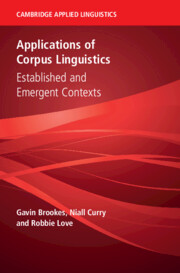
Bridging the gap between linguistic theory and practice, this timely book demonstrates the transformative potential of corpus linguistics research and methods across a wide range of contexts. With contributions from a diverse range of authors, this book provides contemporary reflections on both established applications in language education, as well as emergent contexts in which corpus methods are driving social change, such as the media and law. Each chapter provides case studies that clearly demonstrate pathways from theory and analysis to application and impact, making the theory accessible without assuming specialised knowledge of specific contexts. Featuring the development of innovative methods and tools, the book shows readers that corpus linguistics is a discipline attuned to both methodological and societal impact. Showcasing the cutting-edge contributions that corpus linguistics is making to contemporary applied linguistics, this book is essential reading for academics, professionals, and anyone interested in the practical application of language data.
The use of metaphors, whether linguistic or visual, has been shown to enhance advertisement effectiveness, and sensory marketing research highlights the positive effects of appealing to consumers’ sensory perception. Synaesthetic metaphors, which involve metaphor and sensory experiences, are ideal for studying the effects of both metaphor and (multi)sensory cues in advertisements. We experimentally tested the hypothesis that the presence of (linguistic and/or visual) metaphor and the evocation of multiple senses will enhance advertisement appreciation and the intention to purchase the advertised product. We manipulated eight print advertisements, each of which was presented in the following conditions: (1) visual and linguistic synaesthetic metaphor; (2) linguistic but no visual synaesthetic metaphor; (3) visual but no linguistic synaesthetic metaphor; and (4) neither visual nor linguistic synaesthetic metaphor. Each advertisement was also rated for its multisensoriality, that is, its association with the five basic senses. Results partly supported the hypothesis, showing that advertisements with both visual and linguistic synaesthetic metaphors and those perceived as more multisensory were most appreciated. However, purchase intentions were not influenced by either metaphor or multisensoriality. This indicates that higher aesthetic appreciation does not necessarily translate into higher purchase intentions, suggesting the need for further research into additional influencing factors.
This study examines the future temporal reference (FTR) system among Francophones and Anglophones speaking English in Kapuskasing, Ontario. Previous studies have shown that in Laurentian French, the go future is the preferred variant, and the strongest determinant of variant choice is polarity: negatives strongly favor the inflected future. In Canadian English, the go future has no polarity effect and there is robust variation with will, highlighting a key contrast in the underlying constraints between the French and English FTR systems. The results show that while older Anglophones pattern in tandem with known studies of English, Francophones, as well as young Anglophones, exhibit the polarity contrast of the French system, even though they are speaking English. We suggest that these results may stem from social alignment between Francophones and Anglophones driven by increasing linguistic and social symmetry in the community, as well as increasing positive affect toward French in Kapuskasing.
Being literate likely has consequences for learning a second language, but surprisingly little research has been devoted to how emergent literacy affects second-language acquisition processes. Using a word learning experiment, we aimed to tease apart two possible ways through which literacy could impact second-language acquisition: through literacy-induced restructuring and through using written input in addition to spoken input. Totally, 166 (L1 Arabic and L2 Dutch) participants of varying literacy levels (emergent readers and more experienced readers) had to acquire eight words as names of people and pet animals, of which some only varied in one phoneme. Half of the participants received only auditory input to learn these names, and the other half also received written input. Bayesian mixed-effects models indicate that experienced readers are better able to acquire words and a phonological contrast than emergent readers, pointing toward a benefit from literacy-induced restructured linguistic representations. We also obtained anecdotal evidence that, although experienced readers seemingly benefit more from written input than emergent readers, the latter group could still use written input to a small extent. Possibly, written input might be beneficial, even though it cannot be properly decoded yet—at the very least it does not harm providing such input.
As increasing numbers of students disclose mental health conditions, this study is the first to examine mental health status as a critical variable in foreign language anxiety research. Using a mixed-methods approach and drawing on data from 262 languages students at the Open University, it systematically compares foreign language speaking anxiety (FLSA) experiences between students with and without declared mental health conditions. Vocabulary retrieval emerged as the primary anxiety trigger common to all learners, however, significant distinctions emerged: students without mental health conditions expressed more academic-focused anxieties, whereas those with mental health conditions faced confidence and identity-based barriers. Students with mental health challenges are less likely to speak spontaneously and undertake spoken assessments, often opting to avoid online synchronous sessions entirely, requiring different coping strategies. The findings are analysed through a Universal Learning Design lens and reveal the need for tailored support and innovative pedagogical solutions, including AI-powered practice environments and self-compassion interventions specifically designed for online language learning contexts, to address the emotional barriers faced by students with mental health conditions. The study offers broader implications for inclusive (language) course design and learner engagement.