To save content items to your account,
please confirm that you agree to abide by our usage policies.
If this is the first time you use this feature, you will be asked to authorise Cambridge Core to connect with your account.
Find out more about saving content to .
To save content items to your Kindle, first ensure no-reply@cambridge.org
is added to your Approved Personal Document E-mail List under your Personal Document Settings
on the Manage Your Content and Devices page of your Amazon account. Then enter the ‘name’ part
of your Kindle email address below.
Find out more about saving to your Kindle.
Note you can select to save to either the @free.kindle.com or @kindle.com variations.
‘@free.kindle.com’ emails are free but can only be saved to your device when it is connected to wi-fi.
‘@kindle.com’ emails can be delivered even when you are not connected to wi-fi, but note that service fees apply.
How does a biologically-programmed language faculty interact with language experience in the acquisition of language across the world? Bringing together linguistic theory, language typology, and cross-linguistic experimental results from parallel studies of development in language acquisition, this book reports new research on the nature of the human competence for language acquisition. It investigates the acquisition of complex sentence formation through relativization -a fundamental component of language knowledge- through systematic, formally explicit, hypothesis-driven experimental studies from English, French and Tulu (in the US, Belgium and India). It demonstrates that across languages, the course of acquisition shares basic properties in keeping with universals of a language faculty, while at the same time, in all languages, specific relativization forms are achieved through development. The results show the power of an approach to the study of language acquisition which bridges linguistic theory of Universal Grammar with real-time creation of a specific language by the child.
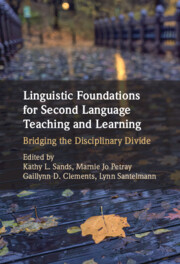
Bringing together an international team of scholars from various linguistic areas, theoretical viewpoints, and educational contexts, this book makes the case for strengthening the role of linguistics in second language (L2) teaching and learning. Seeing firsthand how the strengths and tools of the science of language contribute greatly to pedagogical effectiveness in the L2 classroom, the authors of each chapter lay out the strengths of linguistics for L2 teaching and learning with examples, case studies, research, anecdotal evidence, illustrations, and sample activities for the language classroom. The book argues as well for the place of L2 theory and data in linguistic inquiry and linguistics education. Bringing these disparate disciplines together around the shared reality of language itself has great promise of mutual benefit. Accessibly written with readers from both disciplines in mind, each chapter includes recommended readings and discussion questions intended to spark conversations across the disciplines.
A thorough introduction to formal syntactic typology by a leader in the field, Comparing Syntax systematically covers syntactic variation across languages. The textbook covers word-order parameters, null subjects, polysynthesis, verb-movement, ergativity, interrogatives and negation within a comparative framework, ensuring that readers are able to engage with the key topics in the most up-to-date primary research literature. The comprehensive glossary, end-of-chapter exercises and annotated further reading lists allow readers to consolidate and extend their knowledge as they progress through the book. A self-contained work ideal for intermediate and advanced-level students, Comparing Syntax also builds on the author's Beginning Syntax and Continuing Syntax.
Heritage languages are those spoken as a first language in immigrant communities where another language is dominant. This book provides a novel approach to heritage language research by focusing on German as it is spoken in a range of German-origin immigrant communities around the world. It demonstrates, using German as a unique example, how a language can develop under the influence of diverse replica languages on the one hand, and different sociolinguistic conditions on the other. It also includes a new theory of language contact, which combines cognitive approaches on multilingual language representation and language processing, with usage-based frameworks. The analyses cover processes of lexical and semantic transfer, morphosyntactic and syntactic changes and pragmatic aspects, and account for the influence of external factors on individual variation. In addition, the book analyzes socio-psychological aspects, namely attitudes towards language and language awareness, and their influence on individual language maintenance.
Through conceptual and empirical means, this timely volume looks at how critical realism, a specific approach to the philosophy of science, helps uncover and refine assumptions about what constitutes valid knowledge in applied linguistics, how scholars can create it, and how applied linguistics can improve as an interdisciplinary strand of the social sciences. With contributions from leading and up-and-coming scholars in the field, the book covers a range of topics, from language, language learning and teaching, language curriculum and programmes, evaluation and assessment, academic writing, discourse, beliefs, values, truth, resilience, ethnicity, social class, as well as ideologies and systems of social inequality including anthropocentrism, racism, linguicism, sexism, patriarchy, and neoliberalism. Exploring the philosophical basis of applied linguistics research, it is essential reading for academic scholars and graduate students in applied linguistics, as well as social scientists interested in language-related issues and social issues in which language plays a central role.
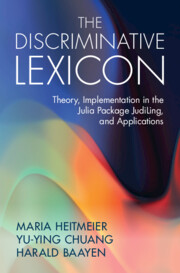
The 'Discriminative Lexicon Model' is a new theory of how we process words, which moves radically away from most standard theories of morphology. This book introduces the Discriminative Lexicon from both a practical and a theoretical perspective. The first half explains the basic theory and the main parts of 'JudiLing', the Julia package implementing the theory. This is complimented by theory boxes introducing the core concepts underlying the model, such as Matrix Multiplication and the Rescorla-Wagner learning rule. The second half provides a series of case studies spanning languages as diverse as Maltese, Biblical Hebrew, Dutch, Navajo, Estonian and French, as well as multilingual settings. It also shows how behavioural data like lexical decision reaction times, acoustic durations or tongue movements can be modelled. These are accompanied by practice exercises. It is essential reading for researchers and students in a wide range of linguistic fields, including phonetics and computational linguistics.
This chapter highlights work undertaken on behalf of the UK Police Force’s National Negotiation Group, which ultimately formed part of an impact case study submitted to the UK’s Research Excellence Framework (REF) 2021. The project was designed to showcase how ‘linguistics in action’ can inform and improve police crisis negotiation training, and explored forty-two crisis incidents representative of different crisis incidents using a combination of (quantitative) corpus linguistic techniques and (qualitative) pragmatic analysis. In addition to introducing the author’s argument for basing crisis negotiation (training) on the what, the why, and, very importantly, the linguistic how of conducting crisis negotiation (Archer & Stott, 2020: see also Archer & Smithson, 2015; Archer et al. 2018; Archer, 2020), the chapter reflects upon on the possibility of future applications and potential barriers to such continuing impact. This inspires a discussion, in turn, as to whether/the extent to which ‘practitioners’ perceive measurements of impact differently to processes like the REF (Anderson et al., 2017) and a potential need, in consequence, to (re)assess the notion of ‘impact’ within academia.
Doing useful research, or wanting to do research, or not having sufficient skills to do research are ongoing concerns for teachers, despite an increasing expectation that teacher research should be part of a teacher’s professional life. Cases in this chapter look at high school teacher-researchers in Vietnam, an MA student choosing a dissertation topic in the UK, and an ethical dilemma experienced by a student teacher while on a teaching practicum in the US.
This section describes the various components of the case, including keywords, pre-reading reflection, the case itself, discussion questions, research topics, and reading resources.
This chapter leverages the IdiomsTube project to illustrate how corpus linguistics enhances research and tool development for formulaic language acquisition. Formulaic language, encompassing idioms, proverbs, and sayings, is common in everyday communication. However, English as a foreign language (EFL) learners often struggle with these conventionalised expressions due to limited exposure to authentic spoken contexts. To address this challenge, the IdiomsTube project conducted corpus studies to uncover patterns in formulaic language use, including prosodic features and distribution across internet television genres. Corpus linguistic methods have also enabled the development of the IdiomsTube app, a specialised tool for computer-assisted formulaic language learning. Informed by corpus-derived frequency data and innovative concordancer design, the app uniquely prioritises user experience. Unlike conventional concordancers, the IdiomsTube app dynamically compiles a corpus from captions retrieved in real-time from YouTube videos based on the user’s search word, allowing users to read concordance lines from current, trending videos. This design makes concordancing engaging and motivating for learners. This chapter demonstrates how modernising concordancer designs with a focus on learner accessibility and real-time content can significantly advance formulaic language acquisition.
This opening chapter goes straight to the heart of what language teachers do – classroom teaching. It includes cases set in seven different countries and in primary, high, and private language schools, as well as college and university. It covers topics as diverse as teaching in large classes, translanguaging, and using AI in an academic writing class.
Some teachers and teacher educators take on quite significant leadership roles, such as serving as a new president of a teacher association in Thailand, but all teachers exhibit leadership in some way. It may be relatively small-scale, such as attempting to decolonize the curriculum in one program in Colombia or establishing a collaborative teacher research group in a school in Botswana. Diverse teacher leadership possibilities such as these are represented in the cases in this chapter.