To save content items to your account,
please confirm that you agree to abide by our usage policies.
If this is the first time you use this feature, you will be asked to authorise Cambridge Core to connect with your account.
Find out more about saving content to .
To save content items to your Kindle, first ensure no-reply@cambridge.org
is added to your Approved Personal Document E-mail List under your Personal Document Settings
on the Manage Your Content and Devices page of your Amazon account. Then enter the ‘name’ part
of your Kindle email address below.
Find out more about saving to your Kindle.
Note you can select to save to either the @free.kindle.com or @kindle.com variations.
‘@free.kindle.com’ emails are free but can only be saved to your device when it is connected to wi-fi.
‘@kindle.com’ emails can be delivered even when you are not connected to wi-fi, but note that service fees apply.
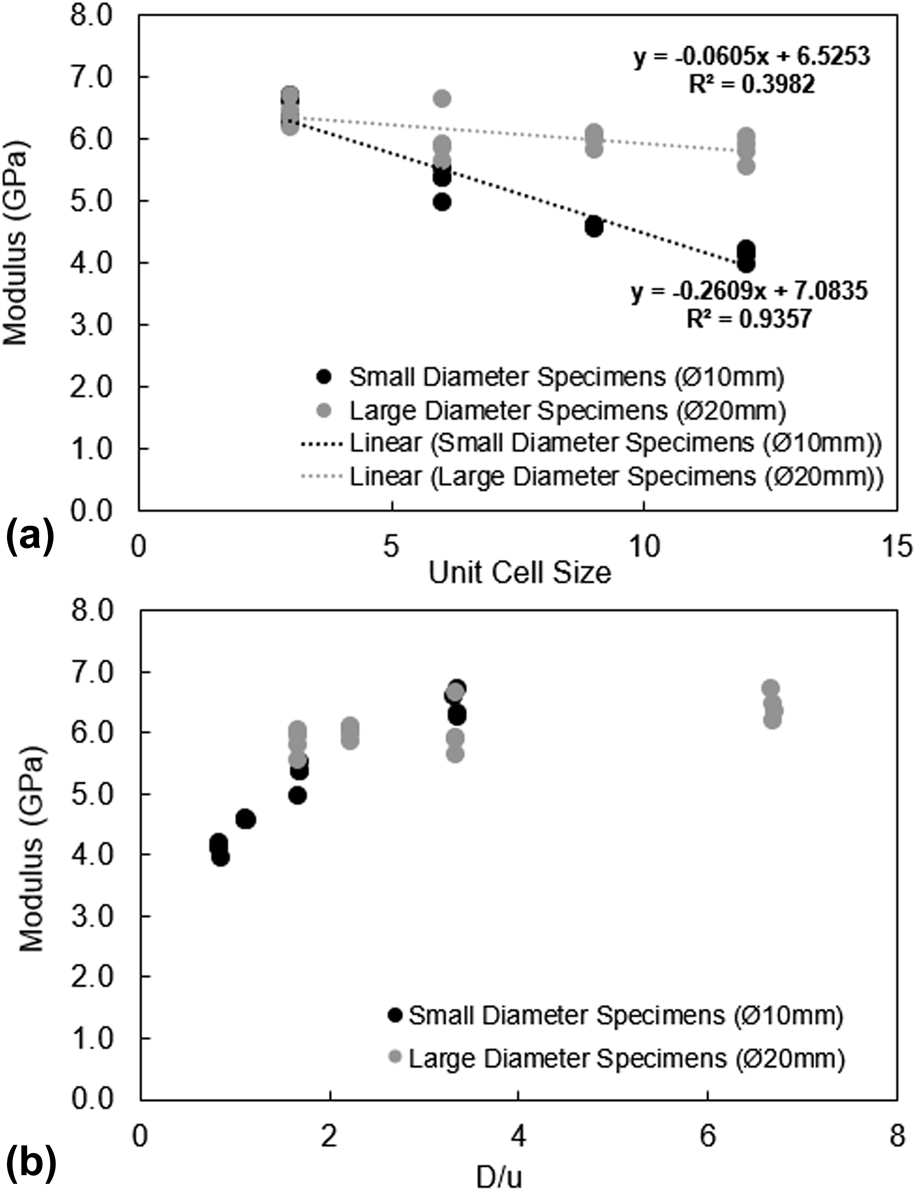
The adoption of selective laser melting (SLM) for fabrication of porous titanium has resulted in many new investigations into the complex design parameters associated with porous architecture of high spatial resolution. The development of meta-materials has included research into the effects of unit cell architecture (strut versus sheet), porosity, pore size, and other factors on the performance of metallic scaffolds. The current study examined the interactive effects of varying the gyroid sheet unit cell size and overall specimen size on the compressive behavior of Ti–6Al–4V ELI porous scaffolds manufactured via SLM. The increasing unit cell size relative to specimen geometry was found to decrease the compressive strength and stiffness of the overall structure and shift the material fracture mode. The understanding of the relationship between unit cell size and specimen geometry can be used to optimize mechanical properties of implants with constrained volumes and pore/wall size requirements to optimize properties of porous titanium implants for strength and osseointegration.
Leading graphene research theorist Mikhail I. Katsnelson systematically presents the basic concepts of graphene physics in this fully revised second edition. The author illustrates and explains basic concepts such as Berry phase, scaling, Zitterbewegung, Kubo, Landauer and Mori formalisms in quantum kinetics, chirality, plasmons, commensurate-incommensurate transitions and many others. Open issues and unsolved problems introduce the reader to the latest developments in the field. New achievements and topics presented include the basic concepts of Van der Waals heterostructures, many-body physics of graphene, electronic optics of Dirac electrons, hydrodynamics of electron liquid and the mechanical properties of one atom-thick membranes. Building on an undergraduate-level knowledge of quantum and statistical physics and solid-state theory, this is an important graduate textbook for students in nanoscience, nanotechnology and condensed matter. For physicists and material scientists working in related areas, this is an excellent introduction to the fast-growing field of graphene science.
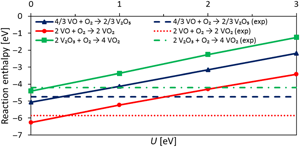
The generalized gradient approximation (GGA) often fails to correctly describe the electronic structure and thermochemistry of transition metal oxides and is commonly improved using an inexpensive correction term with a scaling parameter U. The authors tune U to reproduce experimental vanadium oxide redox energetics with a localized basis and a GGA functional. The value for U is found to be significantly lower than what is generally reported with plane-wave bases, with the uncorrected GGA results being already in reasonable agreement with experiments. This computational set-up is used to calculate interstitial and substitutional insertion energies of main group metals in vanadium pentoxide and interstitial doping is found to be thermodynamically favored.
Engineering of thermoelectric materials requires an understanding of thermal conduction by lattice and electronic degrees of freedom. Filled skutterudites denote a large family of materials suitable for thermoelectric applications where reduced lattice thermal conduction attributed to localized low-frequency vibrations (rattling) of filler cations inside large cages of the structure. In this work, a multi-wavelength method of exploiting x-ray dynamical diffraction in single crystals of CeFe4P12 is presented and applied to resolve the atomic amplitudes of vibrations. The results suggest that the vibrational dynamics of the whole filler-cage system is the actual active mechanism behind the optimization of thermoelectric properties.
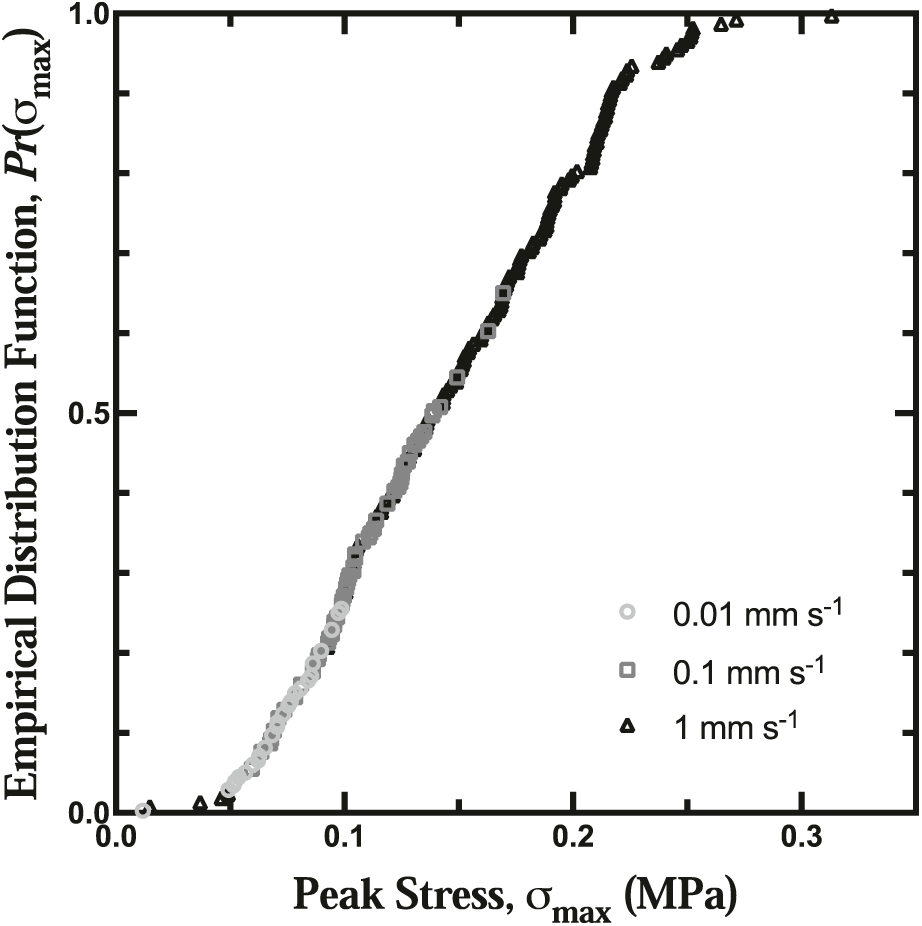
Hydrogels have gained recent attention for biomedical applications because of their large water content, which imparts biocompatibility. However, their mechanical properties can be limiting. There has been significant recent interest in the strength and fracture toughness of hydrogel materials in addition to their stiffness and time-dependent behavior. Hydrogels can fail in a brittle manner, although they are extremely compliant. In this work, the failure and fracture of hydrogels are examined using a compression test of spherical hydrogel particles. Spheres of commercially available polyacrylamide–potassium polyacrylate were hydrated and tested to failure in compression as a function of loading rate. The spheres exhibited little relaxation when compressed to small fixed displacements. The distributions of strength values obtained were examined in a particle fracture framework previously used for brittle ceramics. There was loading rate dependence apparent in the measured peak force and calculated peak strength values, but the data fell on a single empirical distribution function of strength for the hydrogels regardless of loading rate. Strength values for these hydrogels were mostly in the range of 0.05–0.3 MPa, illustrating the challenges using hydrogels for mechanically demanding applications such as tissue engineering.
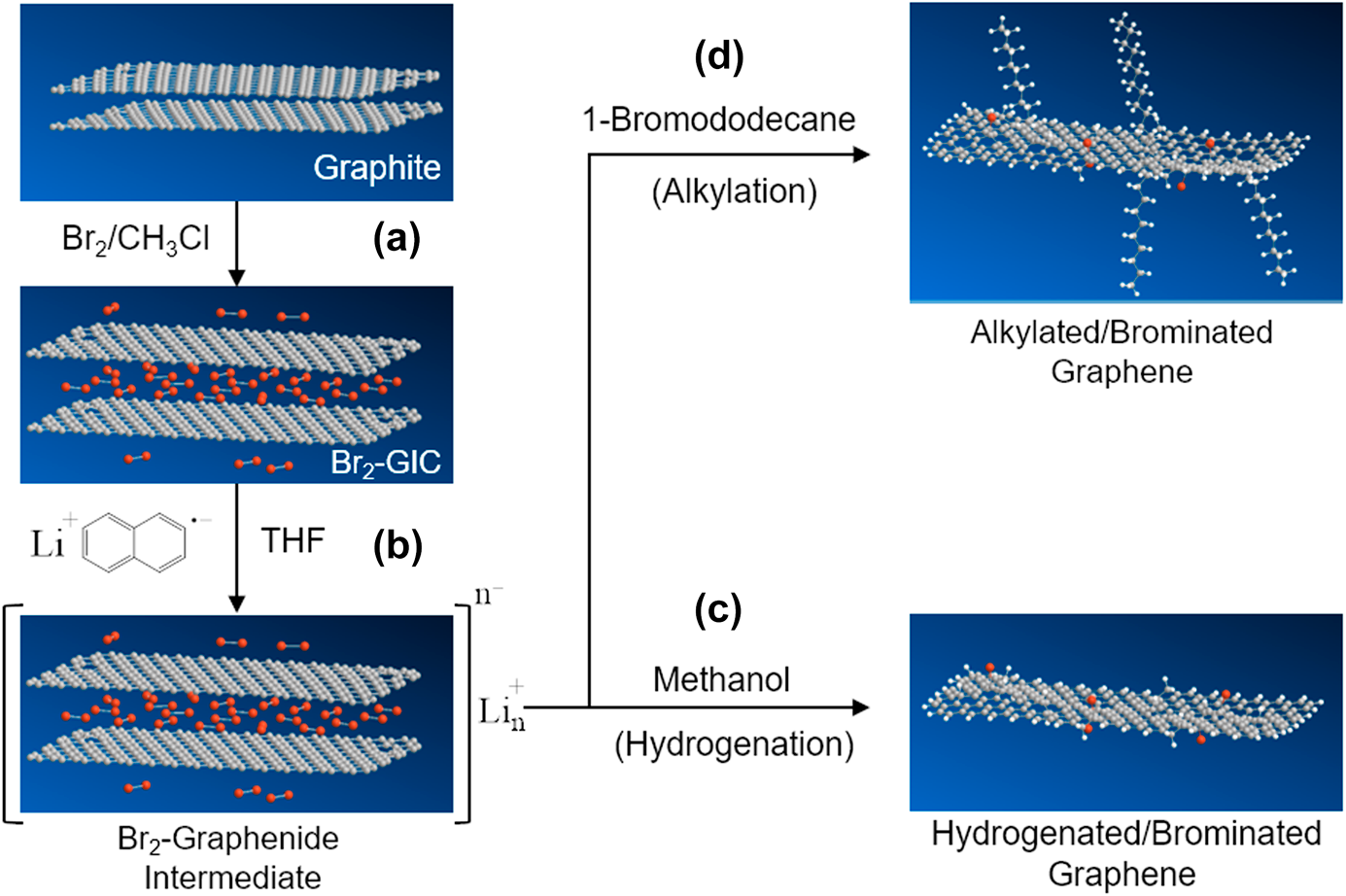
Developing easy and effective surface functionalization approaches has required to facilitate the processability of graphene while seeking novel application areas. Herein, an in situ single-step reductive covalent bromination of graphene has been reported for the first time. Highly brominated graphene flakes (>3% Br) were prepared by only subjecting the bromine-intercalated graphite flakes to a reduction reaction with reactive lithium naphthalide. The bromine-functionalized graphene was characterized by X-ray photoelectron spectroscopy and thermogravimetric analysis. Results revealed that Br2 molecules acted as both an intercalating agent for the graphite and a reactant for the surface functionalization of the graphene. After brominating, the remaining negative charges on the reduced graphene surface were further used for the dual surface functionalization of graphene with a long-chain alkyl group (~1% dodecyl group addition). The functionalized graphenes were also characterized by Fourier transform infrared and Raman spectroscopy.
The nitrogen-decorated CeO2/reduced graphene oxide nanocomposite (CeO2/N-rGO) was one-step synthesized by a facile hydrothermal technique and applied as counter electrode materials for dye-sensitized solar cells (DSSCs). For comparison, CeO2/rGO and rGO were also synthesized by adjusting corresponding reactants. It was found that the as-synthesized CeO2/N-rGO shows better electrocatalytic activity for triiodide/iodide reduction than that of pure rGO and CeO2/rGO, and a synergistic effect of nitrogen and CeO2 on the rGO sheets was observed. The photoelectric conversion efficiency of DSSCs based on CeO2/N-rGO counter electrode was 3.20%, which is higher than that of CeO2/rGO (2.45%) and rGO counter electrode (1.37%). Furthermore, the synergistic effect of nitrogen and CeO2 on the rGO sheets was also discussed in detail with different CeO2 amount levels. It is believed that this one-step synthetic method is a potential way to synthesize low-cost and efficient rGO-based multiple composited counter electrode materials to replace more expensive Pt.
Some interesting properties such as superelasticity, shape memory effect, kink resistance, good biocompatibility, biomechanical properties, and corrosion resistance made nitinol a popular biomaterial as stent and orthopedic implants. But surface modification is needed to control nickel leaching from its surface, making safe for human body. The aim of this study was to modify the nitinol surface by the silanization technique and electrophoretically deposited hydroxyapatite coating, and to conduct a detailed in vitro and in vivo investigation. Detailed in vitro investigation involved MTT assay with the human osteoblastic cells (MG63 cell) over a period of 5 days and confocal image study. In case of in vivo study, histological study, fluorochrome labeling study, and Micro-Ct study were conducted. The overall in vitro and in vivo results indicate that silanized nitinol samples are showing slightly better level of performance, but both the surface-modified samples are suitable as the potential bio-implant for orthopedic purpose.
A flexible surface-enhanced Raman scattering (SERS) substrate was prepared by vacuum evaporation of silver on the surface of woven nylon fabrics. SERS properties of the Ag-coated nylon fabrics varied as the thickness of silver coatings changed, relative to the morphologies and distribution of silver nanoparticles (NPs) on fiber. The SERS enhancement performance of Ag-coated nylon fabrics was evaluated by collecting Raman signals of different concentrations of p-aminothiophenol (PATP). The results suggested that the nylon fabrics coated with 10 nm thickness Ag NPs coatings possessed high SERS activity and its detection concentration for PATP is as low as 10−9 M. Furthermore, sensitive SERS signals with excellent reproducibility (Relative standard deviation = 8.25%) and stability (30 days) have been demonstrated. In addition, the SERS nylon fabrics have been applied to rapidly detect thiram pesticides on cucumber, which indicated a great potential for trace analysis.
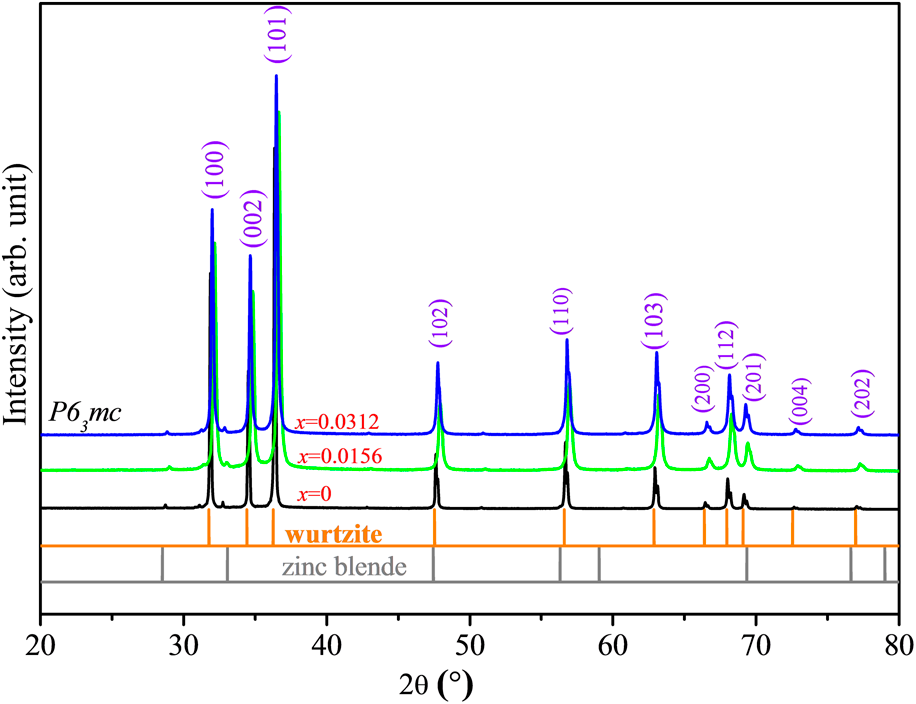
Zn1−xGax/2Fex/2O (x= 0, 0.0156, 0.0312) represents the polycrystalline hexagonal (wurtzite) phase with a space group P63mc synthesized using the sol–gel technique. A comparative study and investigation of structural, optical, and photo-sensing properties of these samples were performed. Structural and vibrational studies show enhancement in the crystallinity of the codoped samples. Optical band gap increases from ∼3.21 to 3.24 eV with substitution because of the improved crystallinity. The photoluminescence properties show modification from yellowish green for x= 0 to a more distinct green for x= 0.0156. The intensity of the luminescence decreases with doping, indicating an overall reduction of defects in the band gap helping the material to become more transparent to visible light. Photocurrent and photosensitivity are modified with the illumination wavelength (290, 450, 540 and 640 nm) with codoping. Sensitivity toward visible lights reduced with codoping. On the other hand, it is more sensitive to ultraviolet light. It indicates the material becomes more transparent for visible light and may be used as photostable device.
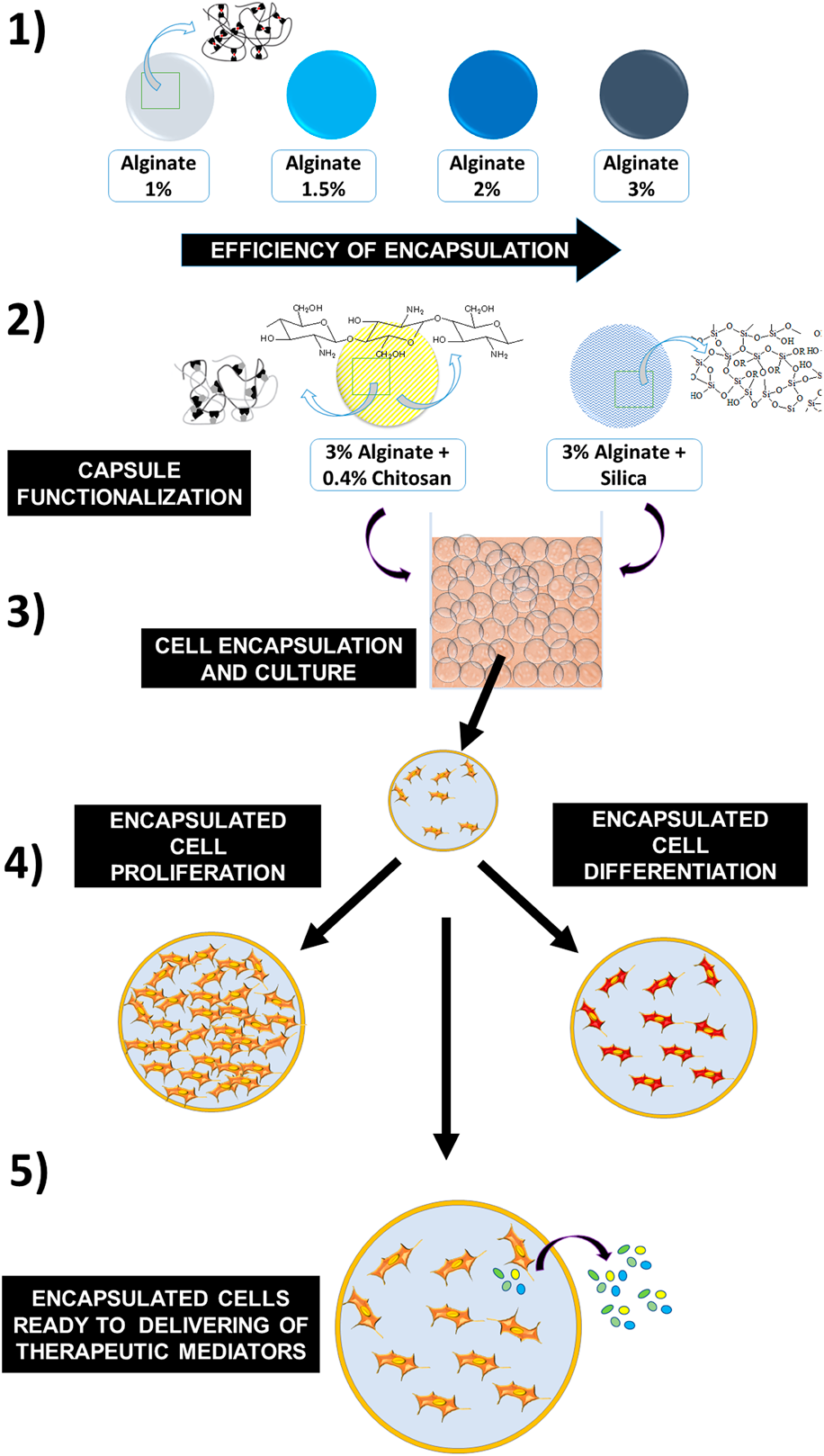
Microencapsulation of functioning cells for transplantation therapies is particularly promising, but the cells must retain their proper physiology and viability after being encapsulated. K-562 cells are multipotential and exhibit erythroid, megakaryocytic, or granulocytic properties that can be exploited by using an array of physiologically differentiating factors. The potential for cell differentiation makes it attractive the use of K-562 cells as functional model to the assessment of the effects of encapsulation on cell viability and physiology. Thus, alginate and hybrid alginate matrices were produced by extrusion technique for K-562 cell encapsulation. The produced systems were composed of bare alginate (1–3 wt%) and alginate in combination with chitosan or silica. The resulting materials were characterized by dynamic laser scattering, zeta potential measurements, small-angle X-ray scattering, and Fourier transform infrared spectroscopy. To assess viability, the encapsulated cells were subjected to the Trypan blue exclusion technique and NAD(P)H-dependent oxidoreductase (MTT) assays; hemin-induced erythroid differentiation capacity was also evaluated. The encapsulated alginate-based systems were shown to be monomodal and bimodal, depending on the nature of the capsule, with mean sizes in the range between 414 and 4.129 nm. Encapsulated cells exhibited viability ratios compatible with their use for prolonged cell cultures. Erythroid differentiation occurred in the range between 39 and 44%. The present results allow the consideration of the viability of therapeutic cells encapsulated in both bare alginate and in hybrid matrices.
One of the commonly used analytical approaches for measuring oxygen isotope ratios δ18O of solids (organic and inorganic) is to pyrolyze the samples to gaseous phases and then send the gas into an isotope ratio mass spectrometer system. Solid samples for δ18O measurements are usually stored in silver cups because of its low reactivity towards oxygen and other oxidants. Samples in silver cups can be dropped directly into the carbon column of the pyrolysis furnace. However, the silver cups can tarnish and then be oxidized over a prolonged storage period. We find that while a small amount of silver oxides does not affect measurements with appreciable sample sizes, it can skew isotope results of small samples. We thus recommend careful storage of samples in silver cups to minimize oxidation, such as under an air-isolated condition, and avoiding prolonged storage for accurate δ18O measurements.
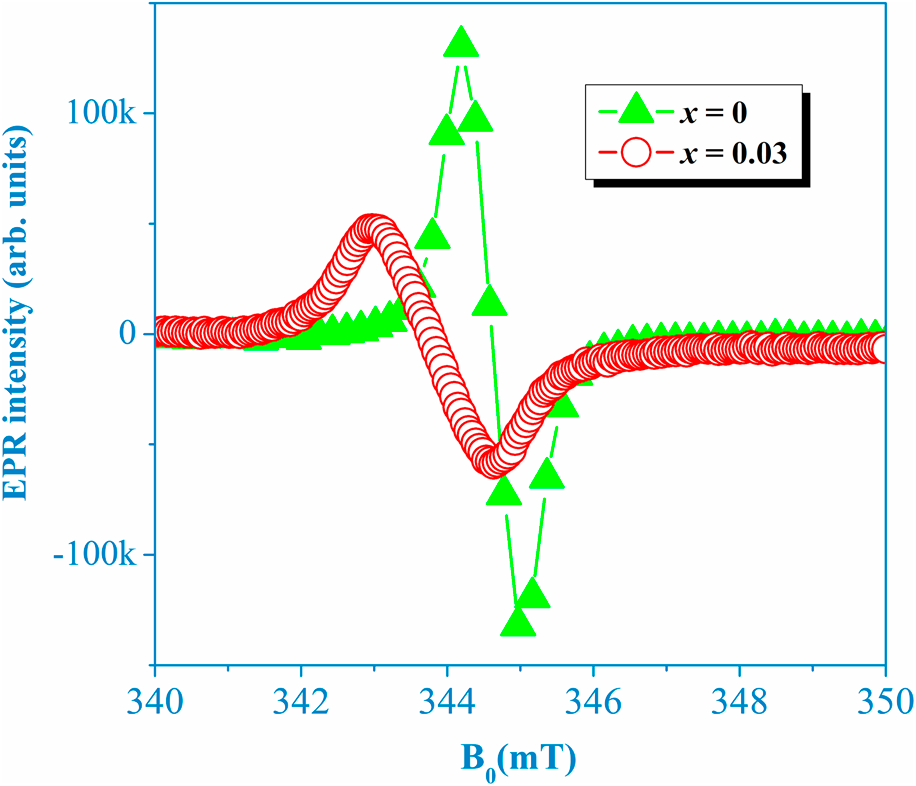
The structural, vibrational, and optoelectronic properties of sol–gel synthesized Zn1−x(Al0.5Si0.5)xO nanoparticles were investigated. The X-ray diffraction studies of the samples confirmed the hexagonal wurtzite phase with the space group P63mc. No significant changes were observed in the lattice parameters. The increase in the intensity of $E_{{\rm{high}}}^2$ Raman mode observed at 438 cm−1 indicates a decrease in the crystallite size. The reduction in the deep-level emission band with the introduction of Al/Si indicates a decrease in intrinsic defects for the codoped sample. A unique electron paramagnetic resonance signal at g= 1.96 follows the same trend as the green luminescence, and its evolution was shown to probe the oxygen vacancy concentrations. I–V characteristics curve confirm the increase in the conductivity for the codoped samples. To evaluate the role of surface defects, ultraviolet photoresponse behavior as a function of time was also studied, and an increase in the photocurrent was observed. The slow decay and rise in the photocurrent are because of multiple trapping by interstitial defects. A relatively faster response time was observed with the substitution of Al/Si. It has been observed that prepared nanomaterials are suitable for optoelectronic devices.
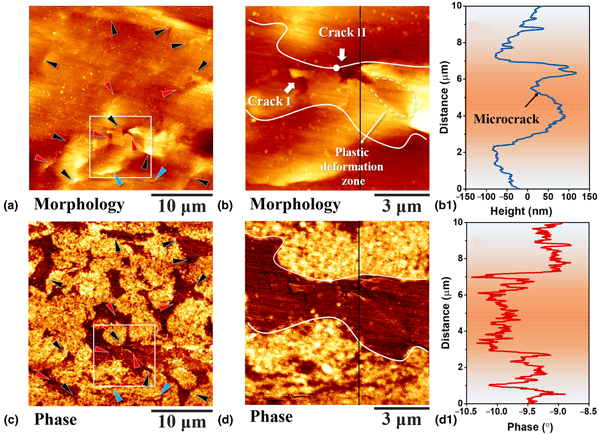
Heterogeneous magnesium matrix nanocomposites (Hetero-Mg-NCs) exhibited excellent strength–toughness synergy, but their damage behavior and toughness mechanism lacked of investigation. Here, atomic force microscopy was first employed to characterize the microstructure evolution and damage behavior of the Hetero-Mg-NCs after indentation. The heterogeneous structure comprised of pure Mg areas (soft phase) and Mg nanocomposite areas (hard phase) was revealed by the electrostatic force microscopy. Furthermore, the surface morphology and cracks of the deformed area were investigated with high resolution. The results indicated the soft phase undertook most of the deformation and played an important role in capturing and blunting the crack.
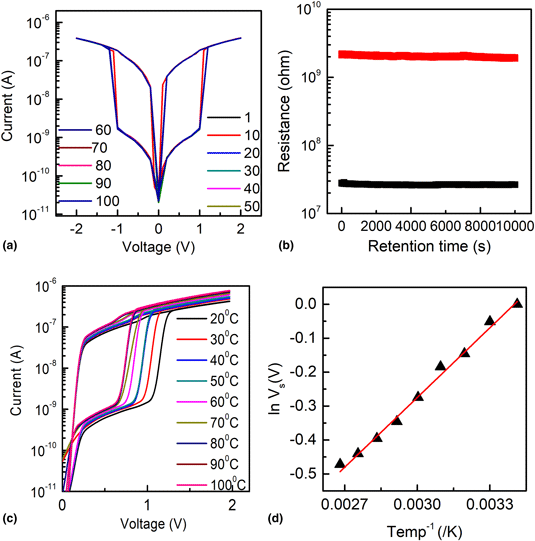
In this work, the authors developed SiC(10 nm)/Ag/SiC(10 nm) thin films showing an electroforming-free resistive switching (RS) effect with a switching ratio of 102. The observed RS effect is attributed to charging and discharging of Ag nanoparticles in the film layer. Further, SiC/Ag/SiC film shows an excellent endurance and retention as well as a good thermal stability of RS characteristics. It is also identified that the switching ratio is invariant but the switching voltage of the device greatly depends on the Ag nanoparticles concentration and the operation temperature of the device. Therefore, SiC/Ag/SiC thin films are attractive for next-generation memory devices with enhanced durability.
Phase field theory treats the phases in materials as fields inside a material, as opposed to tracking the motions of interfaces during phase transformations. The interface sharpness is determined by a balance between bulk free energies and the square gradients of the fields. Treating phases as fields has advantages for the computational materials science of microstructural evolution, and some kinetic mechanisms are described. The different equations for the evolution of a conserved order parameter (e.g., composition) and a nonconserved order parameter (e.g., spin orientation) are discussed. The structure of an interface, especially its width, is analyzed for the typical case of an antiphase domain boundary. The Ginzburg–Landau equation is presented, and the effects of curvature on interface stability are discussed. Some aspects of the dynamics of domain growth are described.
Chapter 6 covers the internal energy E, which is the first term in the free energy, F = E – TS. The internal energy originates from the quantum mechanics of chemical bonds between atoms. The bond between two atoms in a diatomic molecule is developed first to illustrate concepts of bonding, antibonding, electronegativity, covalency, and ionicity. The translational symmetry of crystals brings a new quantum number, k, for delocalized electrons. This k-vector is used to explain the concept of energy bands by extending the ideas of molecular bonding and antibonding to electron states spread over many atoms. An even simpler model of a gas of free electrons is also developed for electrons in metals. Fermi surfaces of metals are described. The strength of bonding depends on the distance between atoms. The interatomic potential of a chemical bond gives rise to elastic constants that characterize how a bulk material responds to small deformations. Chapter 6 ends with a discussion of the elastic energy generated when a particle of a new phase forms inside a parent phase, and the two phases differ in specific volume.
The physical origins of entropy are explained. Configurational entropy in the point approximation was used previously, but Chapter 7 shows how configurational entropy can be calculated more accurately with cluster expansion methods, and the pair approximation is developed in some detail. Atom vibrations are usually the largest source of entropy in materials, and the origin of vibrational entropy is explained in Section 7.4. Vibrational entropy is used in new calculations of the critical temperatures of ordering and unmixing, which were done in Chapter 2 with configurational entropy alone. For metals there is a heat capacity and entropy from thermal excitations of electrons near the Fermi surface, and this increases with temperature. At high temperatures, electron excitations can alter the vibrational modes, and there is some discussion about how the different types of entropy interact.
The quantum mechanical exchange interaction gives rise to magnetic moments and their interactions in materials, which give rise to patterns and structures in the orientations of magnetic moments at low temperatures. With increasing temperature, pressure, and magnetic field, magnetic structures are altered, and Chapter 21 describes several trends that can be understood by thermodynamics. The critical temperature of magnetic ordering, the Curie temperature TC, is calculated. Compared to chemical ordering, the strengths and alignments of magnetic moments have more degrees of freedom, allowing for diverse magnetic structures. These include ferrimagnetism, frustrated structures, and spin glasses. The vectorial character of spin interactions can give rise to localized spin structures such as skyrmions. An electromechanical phase transition can occur when the energy for a displacement of positive and negative ions in a unit cell is comparable to thermal energies. This ferroelectric transition has some similarities to the ferromagnetic transition, but is described by Landau theory. Domains in ferroelectric and ferromagnetic materials can reduce the energy in surrounding elastic and magnetic fields, andthe width of a boundary between two magnetic domains is estimated.
Most solid-to-solid phase transformations are much more interesting than just the growth of a small, homogeneous particle of the new phase. For reasons of both kinetics and thermodynamics, the new particles evolve in crystal structure, chemical composition, interface structures, defects, elastic energies, and shapes. Chapter 14 gives an overview of processes that occur during the nucleation and growth of a new phase from a parent phase. It covers essential features of precipitation in a solid, with a few traditional examples from steels, such as the pearlite transformation, and examples of precipitation sequences in aluminum alloys. Much of the content is central to physical metallurgy. The Kolmogorov-Johnson-Mehl-Avrami model of the rates of nucleation and growth transformations is presented. The late-stage coarsening process is also discussed in terms of the self-similarity of the microstructure.