To save content items to your account,
please confirm that you agree to abide by our usage policies.
If this is the first time you use this feature, you will be asked to authorise Cambridge Core to connect with your account.
Find out more about saving content to .
To save content items to your Kindle, first ensure no-reply@cambridge.org
is added to your Approved Personal Document E-mail List under your Personal Document Settings
on the Manage Your Content and Devices page of your Amazon account. Then enter the ‘name’ part
of your Kindle email address below.
Find out more about saving to your Kindle.
Note you can select to save to either the @free.kindle.com or @kindle.com variations.
‘@free.kindle.com’ emails are free but can only be saved to your device when it is connected to wi-fi.
‘@kindle.com’ emails can be delivered even when you are not connected to wi-fi, but note that service fees apply.
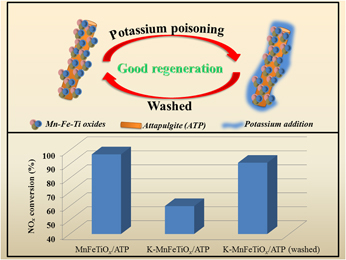
A series of metal oxides (MnFeOx, MnCrOx, MnTiOx, and MnFeTiOx) supported on attapulgite (ATP) were synthesized by coprecipitation for the low-temperature selective catalytic reduction (SCR) of NOx with NH3. Then, they were subjected to appropriate characterizations for their properties (XRD, TEM, BET, XPS, etc.). The catalytic activity of MnFeTiOx/ATP catalyst was over 95% NOx conversion within a wide temperature window between of 175 and 300 °C, and 88% N2 selectivity. Moreover, MnFeTiOx/ATP presented excellent potassium resistance relative to the traditional V–W–Ti catalyst, and its denitration performance was significantly improved. The NOx conversion rate could be restored to nearly 90% at 210 °C after removing potassium via washing of K–MnFeTiOx/ATP. In addition, the MnFeTiOx/ATP showed better SO2 resistance and stability than the traditional V–W–Ti catalyst. Therefore, the MnFeTiOx/ATP catalyst has been proved to have broad prospects in NH3-SCR.
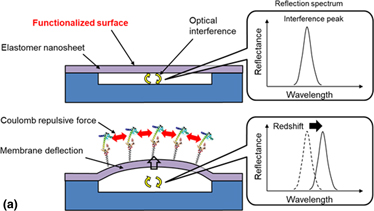
We developed a microelectromechanical-system optical interferometer based on an elastomer nanosheet using a polystyrene-polybutadiene-polystyrene (SBS) triblock copolymer for a suspended membrane as a way to improve the stress sensitivity for surface stress detection. The elastomeric SBS nanosheet provides a low Young's modulus of 28 ± 11 MPa, a large elastic strain of 24 ± 12%, and high adhesiveness, of which the surface charge and mechanical property are tunable by layer-by-layer (LbL) deposition of polysaccharides. A freestanding SBS nanosheet can be formed above a microcavity using a dry transfer technique without applying vacuum or high-temperature processes. The maximum deflection associated with molecular adsorption increased by sevenfold compared with a parylene-C-based optical interferometric transducer.
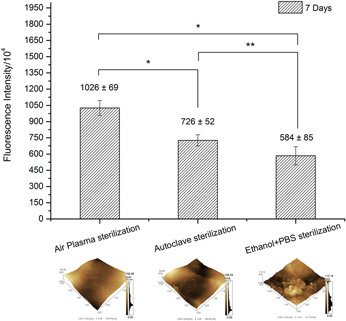
Electrochemical treatments, such as electropolishing on titanium alloys, are used to promote the formation of nanostructured surfaces, which can contribute to the bone regeneration process. However, sterilization methods can change the superficial and physicochemical properties of the biomaterials. The objective of this work was to evaluate the effect of three sterilization methods (air plasma, ethanol + PBS, and autoclave sterilizations) on nanostructured Ti6Al4V surfaces properties obtained by electrochemical treatment. These methods, especially the first two, have been widely used in literature, yet few studies in the literature highlight the changes on the surface of the samples. The nanostructures were obtained by electropolishing in a H2SO4/HF/glycerine solution, at 25 V and at 7 °C for 4 min. Samples were characterized by atomic force microscopy (AFM), profilometry, and wettability. Samples were seeded with hESC-MPs, and the cell number was measured. The air plasma sterilization did not promote changes in nanometric morphology and roughness of the Ti6Al4V nanostructured samples. Unlike air plasma sterilization, the ethanol + PBS and the autoclave sterilizations, which strongly affected the nanostructured surface morphology and properties, and, consequently, the cellular viability after 7 days of contact with human embryonic stem cell-derived mesenchymal progenitors (hESC-MPs).
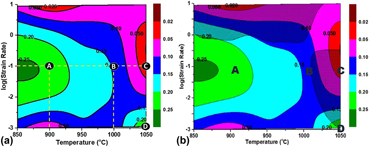
In the present study, hot deformation behavior of a FCC high-entropy alloy CoCuFeMnNi has been investigated to explore the stress–strain response for a wide range of temperatures and strain rates. The deformation response has been examined by plotting a processing map and examining the evolution of microstructure and texture in each of the temperature–strain rate domain. Hot compression tests were carried out in the temperature range 850–1050 °C at strain rates varying from 0.001 s−1 to 10 s−1. Stress–strain curves indicate characteristic softening behavior due to dynamic recrystallization (DRX). DRX has been observed along grain boundaries, shear bands, as well as in the interior of deformed grains. The size of dynamically recrystallized grains shows a strong dependence on deformation temperature and increases with temperature. A high degree of twin formation takes place in the DRX grains evolved inside the shear bands, and the extent of twinning decreases at high temperatures. The optimal processing window has been estimated based on strain rate sensitivity and has been validated with detailed analyses of microstructure and texture. The best region for thermo-mechanical processing has been identified as in the temperature range 850–950 °C at strain rate 10−1 s−1.
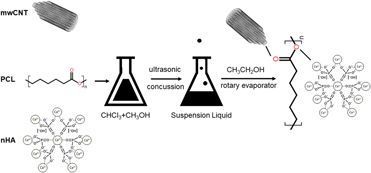
In this study, a three-phased multiwalled scaffold, composed of carbon nanotube (mwCNT), nanocrystalline hydroxyapatite (nHA), and polycaprolactone (PCL), was fabricated by the solvent evaporation technique. The structure character, mechanical properties, and degradation activity in simulated body fluid (SBF), along with osteoproductive ability in human osteosarcoma cell MG63, were investigated thoroughly. Results showed that the three phases in mwCNT/nHA/PCL composite presented excellent miscibility and stronger interfacial force when the weight content was 1/15/84 (wt%). Simultaneously, the composite had smaller porosity and slower degradation rate, and there was massive crystallized hydroxyapatite formed on the surface after being soaked in SBF. With regard to bioactivity, MG63s on this scaffolds presented good proliferation performance and differentiated into the osteogenic lineage by expressing high levels of ALP. It was concluded that mwCNTs/nHA/PCL composite scaffolds might be beneficial for bone tissue engineering at a relatively low concentration of mwCNTs and nHA.
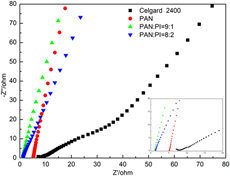
Compared with commercial polyolefin membranes, polyacrylonitrile (PAN) membrane prepared by electrostatic spinning has higher porosity, electrolyte uptake, thermal stability, and lithium-ion conductivity, etc. However, poor mechanical performance has largely limited the application of electrospun PAN separators. In this study, PAN/polyimide (PI) composite membrane is prepared by electrostatic spinning to improve the mechanical and electrochemical performances. Scanning electron microscopy, thermal analysis method, and electrochemical methods were used for evaluation of the electrospun composite membrane. The results show that the composite membrane possesses good thermal stability and exhibits better mechanical performance than pristine PAN membrane (increasing by 1.1 times in tension strength). The addition of PI can increase porosity and fluid absorption rate obviously. In addition, the composite membrane has high ionic conductivity (18.77 × 10⁻⁴ S/cm), wide electrochemical window (about 4.0 V), and excellent cycling performance. It can retain a discharge specific capacity of 153 mA h/g even after 50 cycles at 0.5 C. The electrospun PAN/PI membrane may be a promising candidate for lithium-ion battery separators.
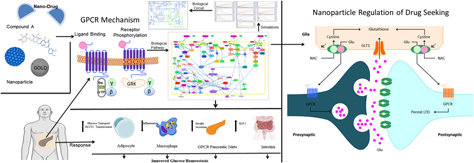
G-protein-coupled receptor 142 (GPR142) belongs to rhodopsin family. GPR142 and GPR119, both Gq-coupled receptors, are expressed in pancreatic β cells of pancreas; their activation eventually leads to triggering of insulin secretion. In this paper, through a systems and synthetic biology approach, the effect of a common hit compound has been investigated in GPR142 and GPR119 pathways. This hit that has the potential to be developed as a lead for nanodrug was obtained through high-throughput virtual screening. The hit compound was further docked with nanoparticles (GOLD, SPION, and CeO2). The probable effect of this potential hit on insulin secretion in type 2 diabetes and its dynamic behavior was explored. Kinetic simulation was performed for cross-validation of its role in both the pathways. This study opens up a probable avenue in therapy of type 2 diabetes through regulation of GPR142 and GPR119 receptors. The biological circuit constructed may further have an application as a modulator to control the up- and downregulation of the biochemical pathway and can be implemented as sensors or nanochips for therapy.
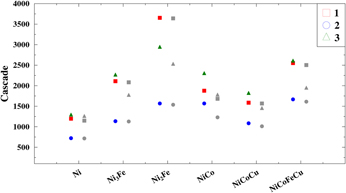
In search of materials with better properties, polycrystalline materials are often found to be superior to their respective single crystalline counterparts. Reduction of grain size in polycrystalline materials can drastically alter the properties of materials. When the grain sizes reach the nanometer scale, the improved mechanical response of the materials make them attractive in many applications. Multicomponent solid-solution alloys have shown to have a higher radiation tolerance compared with pure materials. Combining these advantages, we investigate the radiation tolerance of nanocrystalline multicomponent alloys. We find that these alloys withstand a much higher irradiation dose, compared with nanocrystalline Ni, before the nanocrystallinity is lost. Some of the investigated alloys managed to keep their nanocrystallinity for twice the irradiation dose as pure Ni.
Coatings with low friction coefficient and excellent anti-wear and anticorrosion performances are of great interest for fundamental research and practical applications. In the present study, Cobalt–nickel–phosphorus/graphene oxide (Co–Ni–P/GO) composite coating is prepared by a pulse electrodeposition method. Effect of the embedded GO sheets on the microstructures, microhardness, and electrochemical and tribological behaviors of the Co–Ni–P/GO composite coating are researched in detail. The results reveal that the co-deposition of GO sheets significantly improves the microhardness of the as-prepared Co–Ni–P/GO composite coating and changes the morphology of the Co–Ni–P coating from hemispheric structure to nodule structure with smaller globular particles for the Co–Ni–P/GO composite coating. In addition, friction and wear tests show that the incorporation of GO sheets endows the Co–Ni–P/GO composite coating with remarkable friction reduction and improved wear resistance. Electrochemical corrosion tests demonstrate that the Co–Ni–P/GO composite coating possesses better corrosion resistance than the Co–Ni–P coating.
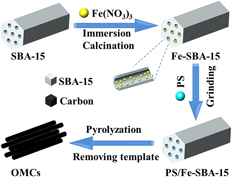
The excessive use of plastic, especially polystyrene (PS), has caused serious environmental pollution. The efficient utilization of plastics and the conversion of plastics into value-added carbon materials are the concerns of researchers. Herein, we propose novel “pyrolysis–deposition” method to convert one popular plastic substance, PS, into ordered mesoporous carbons (OMCs). During the synthesis process, PS is pyrolyzed into small organic gases under high temperature, which is then adsorbed through capillary adsorption into the mesoporous of SBA-15 in the presence of catalyst. The obtained OMCs have high specific surface area, uniform pore size, and ordered pore structure. The OMCs exhibit specific capacitance of 118 F/g at a current density of 0.2 A/g and electrochemical stability of 87.2% at a current density of 2 A/g after 5000 cycles. The pyrolysis–deposition strategy provides a new idea to convert waste plastics into high-performance carbon materials for electrochemical applications.
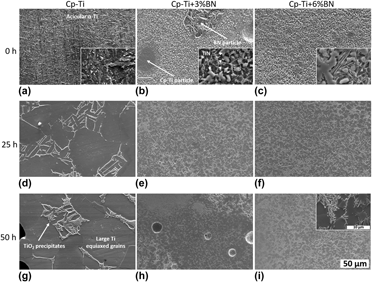
Influence of boron nitride (BN) addition in commercially pure titanium (Cp-Ti) was characterized for their microstructural variation, hardness, and oxidation kinetics. Feedstock powders, Cp-Ti with 3 wt% BN (3BN) and 6 wt% BN (6BN), were prepared by roller mill followed by additive manufacturing using laser engineered net shaping (LENS™). Rate of oxidation was measured from thermogravimetric analysis (TGA) at 1000 °C for 50 h. Average instantaneous parabolic constants (kp) for Cp-Ti, 3BN, and 6BN were 41.2 ± 12.0, 28.6 ± 2.8, and 18.2 ± 9.2 mg2/(cm4 h), respectively. Cp-Ti displayed acicular α-Ti microstructure. After TGA, large equiaxed grains along with TiO2 formation at the grain boundaries were observed, which increased the hardness. With BN addition, plate-like TiN and needle-like TiB secondary phases were also observed. Hardness for Cp-Ti, 3BN, and 6BN were 256.9 ± 7.7, 424.0 ± 33.6, and 548.3 ± 49.7 HV0.2, respectively. Overall, a small addition of BN was effective in improving the oxidation resistance of Cp-Ti.
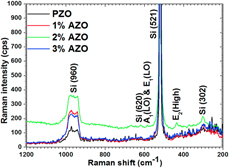
Sol–gel spin coating is applied to fabricate the pure and different concentrations of aluminum (Al)-doped ZnO films on high-quality silicon substrates. All films are showing high crystallinity in X-ray diffraction study, and lattice constants were obtained using PowderX software. The value of crystallite size was found in range of 20–40 nm. EDX/SEM mapping was performed for 2 wt% Al-doped ZnO film, which shows the presence of Al and its homogeneous distribution in the film. SEM investigation shows nanorods morphology all over the surface of films, and the dimension of nanorods is found to increase with Al doping. The E(g)dire. values were estimate in range of 3.25–3.29 eV for all films. Linear refractive index was found in range of 1.5–2.75. The χ1 value is found in range of 0.13–1.4 for all films. The χ3 values are found in range of 0.0053 × 10⁻¹⁰ to 6.24 × 10⁻¹⁰ esu for pure and doped films. The n2 values were also estimated. These studies clearly showed that the properties of ZnO have been enriched by Al doping, and hence doped films are more appropriate for optoelectronic applications.
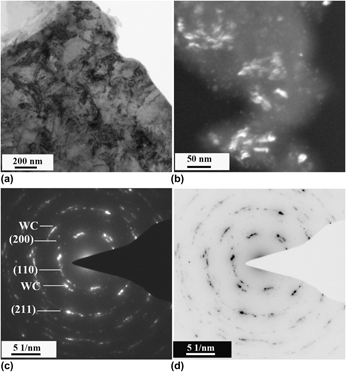
In this investigation, we have reported the alloying behavior, phase evolution, and thermal stability of equiatomic AlCoCrFeNiTi high-entropy alloy (HEA). The 40 h milled powder shows good chemical homogeneity with agglomerated particles varying in the range of ∼3–18 μm. The formation of a nanostructured single-phase BCC (a = 2.85 ± 0.01 Å) was observed along with the minor tungsten carbide (WC) phase that formed due to contamination during milling. Thermal stability of the alloy has been studied using dynamic differential scanning calorimetry (DSC) thermogram and in situ X-ray diffraction. It has been found that this HEA is stable up to 600 °C (873 K). Consolidated samples at 1000 °C (1273 K) showed the transformation of body centered cubic (BCC) phase into the B2 (a = 2.87 ± 0.03 Å) phase co-existing with minor hexagonal WC (a = 2.90 Å, c = 2.83 Å) phase.
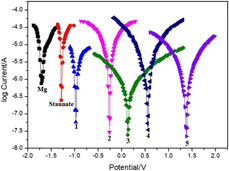
A kind of novel Ni–P gradient coating/stannate conversion film was deposited on AZ91D magnesium alloy (AZ91D alloy) by an integrative method involved stannate conversion and electroless plating. The results indicated that using sodium hypophosphite concentrations varied as 5, 10, 22, 46, and 60 g/L in the bath, the electroless Ni–P gradient coating with typical cell morphologies was successfully prepared, and the structures transited from crystalline → microcrystalline → amorphous were obtained as increasing P content from 3.31 to 12.58 wt%. Furthermore, the corrosion morphologies, polarization curves, and the electrochemical impedance spectroscopy result indicated that the corrosion resistance of AZ91D alloy substrate was significantly improved and the corrosion resistance of Ni–P gradient coating was superior than that of stannate conversion film, which might be attributed to the gradient structure and rising P content with unique function.
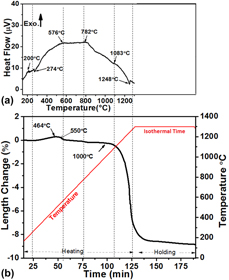
AlCoCrFeNi is among the promising high-entropy alloys (HEAs) that possess high strength with considerable ductility. Powder sintering is one of the competitive routes for the production of HEA powders. However, sintering of HEA powders under a pressureless condition is difficult. The present work aims to produce high-density components from mechanically alloyed AlCoCrFeNi HEA powders through the pressureless sintering method. Nearly full density was achieved at 1275 °C. Sintering was performed in the presence of a viscous phase in the temperature range of 1200–1250 °C, which was confirmed through differential scanning calorimetry and dilatometric measurements. This viscous phase was found have a Cr-rich composition, detected by interrupting the sintering and quenching of the sample. The powder initially contained the BCC phase with a small fraction of FCC and other phases. During sintering, a significant fraction of the FCC phase and nanosized B2 phase were formed. Sintered sample had a hardness of 679 ± 20 Hv.
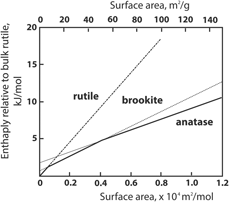
Surface water can affect the properties of metal oxide nanoparticles. Investigations on several systems revealed that nanoparticles have different thermodynamic properties than their bulk counterparts due to adsorbed water on their surfaces. Some thermodynamically metastable phases of bulk metal oxides become stable when reduced to the nanoscale, partially due to interactions between high energy surfaces and surface water. Water adsorption microcalorimetry and high-temperature oxide melt solution calorimetry, low-temperature specific heat calorimetry, and inelastic neutron scattering are used to understand the interactions of surface water with metal oxide nanoparticles. Computational methods, such as molecular dynamics simulations and density functional theory calculations, have been used to study these interactions. Investigations on titania, cassiterite, and alumina illustrate the insights gained by these measurements. The energetics of water on metal oxide surfaces are different from those of either liquid water or hexagonal ice, and there is substantial variation in water interactions on different metal oxide surfaces.
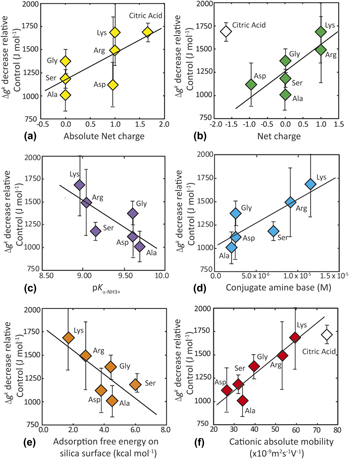
The kinetics of silica polymerization was measured in silicic acid solutions containing a suite of 0.1 M amino acids, 0.1 M citric acid, 0.7 M NaCl, and 0.10 M NaCl (Control). Fitting a modified classical rate model to measurements of induction time (τ) at 20 °C for a series of supersaturated solutions, we estimate the thermodynamic barrier (ΔGc), interfacial free energy (γ), and kinetic barrier (Δagk) for silica nucleation. For 0.10 M NaCl solutions, γControl = 54.9 ± 1.6 mJ/m2 and ΔagkControl = 2.29 × 10⁻¹⁹ J/mol. These values are consistent with previous reports for amorphous and fused silica materials. To facilitate comparisons with the treatments, ΔagkControl is converted to a molar basis and used as a reference datum, such that ΔagkControl = 0.0 J/mol. The effects of salt and organic acids on nucleation rate have thermodynamic and kinetic origins, respectively. Faster nucleation rates measured in 0.7 M NaCl solutions arise from a lower interfacial free energy, such that γ0.7 M NaCl = 51.4 ± 1.7 mJ/m2. Organic acids increase rate through biomolecule-specific reductions in Δagk. Catalytic effects are greatest for lysine (Δagklysine = −1685 ± 315) and citric acid (Δagkcitric = −1690 ± 96 J/mol). Reductions in the kinetic barrier correlate with net positive charge of the amino acids and dissociation of the amine $\left( {{K_{\alpha {\rm{ ‐ N}}{{\rm{H}}_3}^ {\bf{+}} }}} \right)$ group and thus the abundance of the conjugate base. Citric acid, lacking amine groups, promotes the greatest rate enhancement, thus demonstrating the role(s) of additional kinetic factors in promoting nucleation rate. Catalytic activity correlates with multiple physical and chemical properties of the organic acids.