To save content items to your account,
please confirm that you agree to abide by our usage policies.
If this is the first time you use this feature, you will be asked to authorise Cambridge Core to connect with your account.
Find out more about saving content to .
To save content items to your Kindle, first ensure no-reply@cambridge.org
is added to your Approved Personal Document E-mail List under your Personal Document Settings
on the Manage Your Content and Devices page of your Amazon account. Then enter the ‘name’ part
of your Kindle email address below.
Find out more about saving to your Kindle.
Note you can select to save to either the @free.kindle.com or @kindle.com variations.
‘@free.kindle.com’ emails are free but can only be saved to your device when it is connected to wi-fi.
‘@kindle.com’ emails can be delivered even when you are not connected to wi-fi, but note that service fees apply.
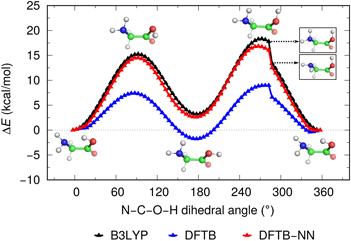
The authors developed a Behler–Parrinello-type neural network (NN) to improve the density-functional tight-binding (DFTB) energy and force prediction. The Δ-machine learning approach was adopted and the NN was designed to predict the energy differences between the density functional theory (DFT) quantum chemical potential and DFTB for a given molecular structure. Most notably, the DFTB-NN method is capable of improving the energetics of intramolecular hydrogen bonds and torsional potentials without modifying the framework of DFTB itself. This improvement enables considerably larger simulations of complex chemical systems that currently could not easily been accomplished using DFT or higher level ab initio quantum chemistry methods alone.
We report on the structural evolution of diamond-like carbon (DLC) films by the nanosecond pulsed laser annealing process. DLC film is coated on cemented carbide (WC-Co) by cathodic arc ion plating, which is then annealed by ArF laser (193 nm, 20 ns) at different laser fluences (0.9–1.7 J/cm2). Upon laser annealing, Raman spectra divulge higher sp3 fractions accompanied by a blue shift in the G-peak position, which indicates the changes of sp2 sites from rings to chains. At higher fluence (>1.2 J/cm2), the film converts into reduced graphene oxide confirmed by its Raman-active vibrational modes: D, G, and 2D.
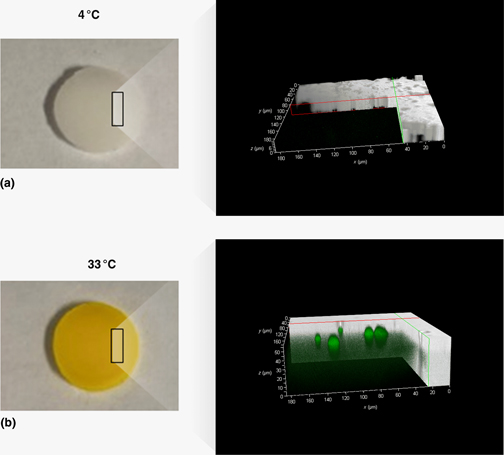
The authors prepared a micro-structured, thermosensitive hydrogel with N-isopropylacrylamide microgels with a lower critical solution temperature (LCST) of 32 °C dispersed on a matrix of N-isopropylacrylamide-co-dimethylacrylamide with an LCST at 40 °C. Incubation of the hydrogel at 33 °C in a solution of fluorescein-albumin induced loading of the protein. The protein was not loaded at a temperature below the LCST of the microgels (4 °C), suggesting that the shrinkage of the microgels followed by the formation of micropores within the hydrogel matrix is a prerequisite for protein loading. A sustained and complete release of the loaded protein was obtained at 37 °C.
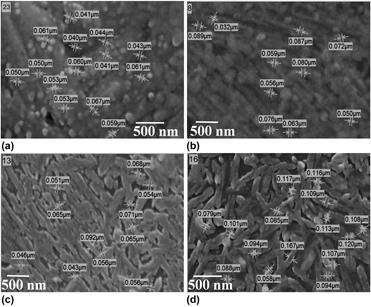
Herein, we present the fabrication and characterization of Gd:PbI2 thin films from low-cost material using a cost-effective spin-coating technique by taking the Gd content as 1.0, 2.0, and 3.0 wt% in PbI2. Single-phase and good crystallinity films oriented along the c-axis were confirmed by X-ray diffraction and FT-Raman spectroscopy. Size of crystallites increased with Gd concentration and was estimated to be in the range of 16–32 nm. Determination of morphology and size of grains (50–103 nm), and elemental confirmation were carried out by SEM/EDX analysis. Optical transparency of fabricated films was found to be in the range of 72–92%. The energy gap is reduced from 2.31 to 2.05 eV; this makes Gd:PbI2 films highly applicable in solar cells. The stable value of refractive index is estimated to be in the range of 1.85–2.3. Dielectric constant was observed to be reduced with doping and in the range of 2.5–35, and ac conductivity was also reduced by doping; however, both were enhanced with frequency. The values of χ(1), χ(3), and n(2) are found to be in the range of 0.15 to 2.5, 8 × 10⁻¹⁴ to 6.5 × 10⁻⁹, and 5 × 10⁻¹² to 4 × 10⁻⁸, respectively.
Powder X-ray diffraction patterns for three forms of MIL-53(Al), a metal organic framework (MOF) compound with breathing characteristics, were investigated using the Rietveld refinement method. These three samples are referred to as the MIL-53(Al)as-syn (the as synthesized sample), orthorhombic, Pnma, a = 17.064(2) Å, b = 6.6069(9) Å, c = 12.1636(13) Å, V = 1371.3(2) Å3, Z = 4), MIL-53(Al)LT-H (low-temperature hydrated phase, monoclinic P21/c, a = 19.4993(8) Å, b = 15.2347(6) Å, c = 6.5687(3) Å, β = 104.219(4) °, V = 1891.55(10) Å3, Z = 8), and MIL-53(Al)HT-D (high-temperature dehydrated phase, Imma, a = 6.6324(5) Å, b = 16.736(2) Å, c = 12.840(2), V = 1425.2(2) Å3, Z = 4). The crystal structures of the “as-syn” sample and the HT-D sample are confirmed to be the commonly adopted ones. However, the structure of the MIL-53(Al)LT-H phase is confirmed to be monoclinic with a space group of P21/c instead of the commonly accepted space group Cc, resulting in a cell volume double in size. The structure has two slightly different types of channel. The pore volumes and pore surface area were estimated to be 0.11766 (8) cm3/g and 1461.3(10) m2/g for MIL-53(Al)HT-D (high-temperature dehydrated phase), and 0.08628 (5) cm3/g and 1401.6 (10) m2/g for MIL-53(Al)as-syn phases, respectively. The powder patterns for the MIL-53(Al)as-syn and MIL-53(Al)HT-D phases are reported in this paper.
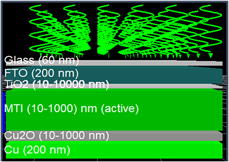
Using general-purpose photovoltaic device model, we have simulated the operation and functionality of a working Sn perovskite/Cu2O hole transport layer (HTL)/Cu back-contact device versus a standard Pb perovskite/Spiro HTL/Ag back-contact device. The results are extremely promising in that they showcase comparable cell efficiencies, with the Sn perovskite/Cu2O HTL/Cu back-contact device showing a highest 22.9% efficiency [Jsc of 353.4 A/m2, Voc of 0.84 V, fill factor (FF) of 0.77] at 427 nm active layer thickness compared with 24.6% of the standard Pb perovskite/Spiro HTL/Ag back-contact device (Jsc of 356.8 A/m2, Voc of 0.82 V, FF of 0.84) at the same active layer thickness. Jsc, Voc, and FF kinetics reveal that the Sn perovskite/Cu2O HTL/Cu back-contact device can perform better by reducing the recombination centers both within each layer matrix and in the interfacial contacts.
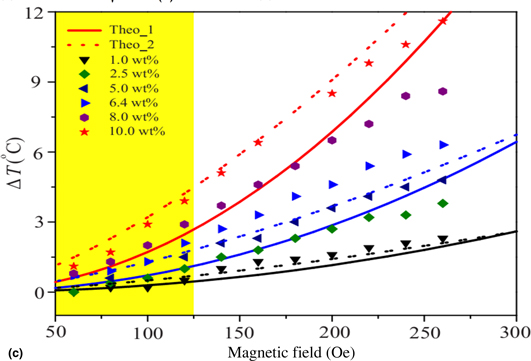
Magnetic nanoparticles have many potential applications in therapeutics and drug delivery. Heating by magnetic nanoparticles for hyperthermia application has gained tremendous popularity as a non-invasive treatment for tumor ablation. The heating effect of magnetic nanoparticles at different concentrations (1–10 wt%) in the fluid is investigated by varying the alternating magnetic field (60–260 Oe). The observed temperature rise (ΔT) shows an unusual increase with applied field in a higher nanoparticle concentration. In contrast to the previous model, the present study shows that temperature rise is more rapid in the higher particle concentration (~10 wt%) and low applied field (<125 Oe), and ΔT varies as H3/2 instead of H2.
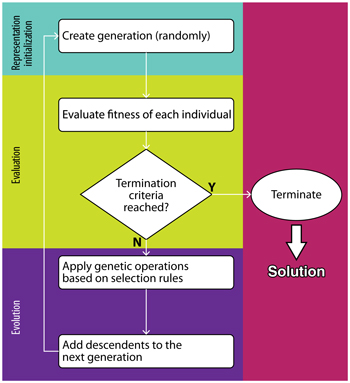
The authors showcase the potential of symbolic regression as an analytic method for use in materials research. First, the authors briefly describe the current state-of-the-art method, genetic programming-based symbolic regression (GPSR), and recent advances in symbolic regression techniques. Next, the authors discuss industrial applications of symbolic regression and its potential applications in materials science. The authors then present two GPSR use-cases: formulating a transformation kinetics law and showing the learning scheme discovers the well-known Johnson–Mehl–Avrami–Kolmogorov form, and learning the Landau free energy functional form for the displacive tilt transition in perovskite LaNiO3. Finally, the authors propose that symbolic regression techniques should be considered by materials scientists as an alternative to other machine learning-based regression models for learning from data.
Crystallization is an extremely important process with extensive industrial applications including, but not limited to, the manufacture of electronics, explosives, fine chemicals, and pharmaceuticals. As such, controlling both crystal shape and crystal structure is vital for the production of high-quality products with desirable properties. However, the processes that govern crystallization, crystal growth, and crystal nucleation are not well understood at present. This is due in part to the limitations of experimental techniques in studying such processes because of the small number of molecules, often tens or hundreds, involved. Furthermore, experimental strategies for identifying and analyzing crystal structures (which may have serious implications in terms of intellectual property rights) and controlling crystal shape are not always successful in yielding the optimal product and often can be costly and time consuming.
Melt crystallization is an important separation, purification, and concentration technique used in the chemical, pharmaceutical, and food industries. Crystallization from melt is a very powerful separation process for the purification of organic compounds up to very high purities of 99.99 percent. Therefore, the objectives of melt crystallization (i.e., purity, separation, or concentration) are quite often different from crystallization from solution (i.e., purity and defined crystal size distribution). Good background information about the theory of melt crystallization can be found, for example, in Arkenbout (1995), Atwood (1972), Jansens and van Rosmalen (1994), Matsuoka (1991), Matz (1969), Molinari (1967), Mullin (2001), Özoğuz (1992), Rittner and Steiner (1985), Sloan and McGhie (1988), Toyokura and Hirasawa (2001), Ulrich and Bierwirth (1995), Ulrich and Kallies (1994), Ulrich and Nordhoff (2006), Ulrich and Stelzer (2011), Verdoes et al. (1997), and Wintermantel and Wellinghoff (2001). In the following sections, the basics and design examples of plants for melt crystallization will be given.
Biochar conversion from corn stover was evaluated under various process conditions, and the absorption capacity of biochar was investigated for the removal of oxytetracycline in wastewater. Biochar was prepared at lower carbonization temperatures (200–500 °C) and was used in three different concentrations of chemical oxygen wastewater. The results showed that the biochar prepared at the temperature range of 200–500 °C had a faster sorption rate and shorter sorption equilibrium time compared to biochar produced at higher temperatures. The longest time to reach sorption equilibrium was 9 h for biochar obtained at 200 °C. However, the biochar prepared at 500 °C required only 0.5 h to reach the sorption equilibrium. The corn stover-biochar had the highest sorption capacity of 246.3 mg/g for oxytetracycline at 30 °C. The adsorption kinetics was consistent with pseudo–second-order kinetics. This study provides a theoretical basis for the conversion of corn stover into biochar as efficient sorbents.
Protein crystals are of interest for several fields of science and technology. Their formation underlies several human pathological conditions. An example is the crystallization of hemoglobin C and the polymerization of hemoglobin S that cause, respectively, the CC and sickle cell diseases (Charache et al. 1967; Hirsch et al. 1985; Eaton and Hofrichter 1990; Vekilov 2007). The formation of crystals and other protein condensed phases of the so-called crystallines in the eye lens underlies the pathology of cataract formation (Berland et al. 1992; Asherie et al. 2001). A unique example of benign protein crystallization in humans and other mammals is the formation of rhombohedral crystals of insulin in the islets of Langerhans in the pancreas. The suggested function of crystal formation is to protect the insulin from the proteases present in the islets of Langerhans and to increase the degree of conversion of the soluble proinsulin (Dodson and Steiner 1998).
Crystallization from solutions is a complex process completed in several stages. The first stage is the formation of supersaturated solution because the spontaneous appearance of a new phase can occur only when a system is in a nonequilibrium condition. In the next stage, molecules dissolved in solution begin to aggregate to relieve the supersaturation and move the system toward equilibrium. The molecular aggregation process eventually leads to the formation of nuclei that can act as centers of crystallization. A nucleus can be defined as the minimum amount of a new phase capable of independent existence (Khamskii 1969). The nature of nuclei (i.e., whether they are amorphous particles or tiny crystals) is still unknown. The birth of these small nuclei in an initially metastable phase is called nucleation, which is a major mechanism of first-order phase transition. Kashchiev and van Rosmalen (2003) describe nucleation as the process of fluctuational appearance of nanoscopically small clusters of the new crystalline phase, which can grow spontaneously to macroscopic sizes. The growth stage, which immediately follows nucleation, is governed by the diffusion of particles, called growth units, to the surface of the existing nuclei and their incorporation into the structure of the crystal lattice (Khamskii 1969). This stage continues until all the solute in excess of saturation is consumed for the development of mature crystals. The initial stages of crystallization, which can be defined as the period between the achievement of supersaturation and the formation of nuclei, plays a decisive role in determining properties of the resulting solid phase, such as purity, crystal structure, and particle size. Thus higher levels of control over crystallization cannot be achieved without understanding the fundamentals of nucleation.
Mixing determines the environment in which crystals nucleate and grow and is therefore intrinsic to industrial crystallization. Individual nucleating and growing crystals respond directly to their microenvironment and not in a simple way to the macroenvironment, often thought of as the bulk or average environment. Because the growing crystal removes solute from solution and the dissolving crystal releases it, the solute concentration and therefore the supersaturation is in general different at the crystal surface than in the bulk. Crystals grow when the microenvironment is supersaturated, stop when it is just saturated, and dissolve when it is undersaturated. In most cases, impurities are rejected by growing crystals; therefore, each growing crystal face creates a zone of locally higher impurity concentration immediately adjacent to it. The growth rate and amount of impurity taken up by the growing crystal are functions of the impurity concentration where growth is occurring – at the crystal face itself. Mixing is the family of processes that links this local microenvironment to the macroscopic scale of the crystallizer by affecting the mass transfer between crystal and the larger environment and the dynamics of crystal suspension flow in the crystallizer. Mixing, therefore, to a large extent creates the crystal microenvironments. Furthermore, it determines the homogeneity of the macroenvironment, both temporally and spatially. Inhomogeneity in the macroenvironment affects the microenvironments around crystals, causing temporal variations as the crystals circulate from one zone to another inside the crystallizer. This is particularly important because local values of key variables such as supersaturation and solids concentration are often much more important in crystallization than the bulk or global averages of these quantities, as discussed below.
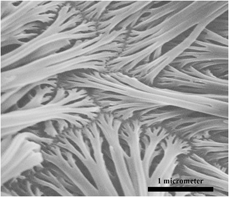
Nowadays, hierarchical materials have received tremendous interests because of their unique physical and chemical properties. In this article, a novel and facile particle aggregation method was used to fabricate vertically aligned diamondoid nanowires and hierarchical branched nanowire cluster array by using an electrophoresis template method. Triamantane, a three-cage diamondoid, was applied as raw material in current research. Diamondoids are nanometer-sized, hydrogen-terminated diamond-like, saturated hydrocarbons, which process great potential in nanotechnology due to biocompatibility and ultrahard nature. By electrophoresis template method, triamantane molecules dissolved in toluene were transferred into a porous alumina template by electric field and form the one-dimensional (1D) nanostructure with high aspect ratio. After that, a two-step thermal treatment was applied to the nanowires to achieve hierarchical branched nanowires. The surface morphologies of triamantane nanowire array with different treatments were characterized by scanning electron microscopy. This approach opens a new avenue for mass production of the vertically aligned diamondoid nanowires and hierarchical branched nanowire cluster arrays.
There are many components in foods that crystallize, either partially or completely (Hartel 2001). Most important are sugars (i.e., sucrose, lactose, glucose, and fructose), ice, lipids and starches, although crystallization of salts, sugar alcohols, organic acids, proteins, and emulsifiers may be important in certain applications. Crystallization in the food industry differs to some extent from that in other fields in that, for the most part, the crystals form an integral part of the food. Although separation of crystals is important in certain food applications, crystalline structures within the food itself often define the characteristics of that product.
Crystallization is a separation and purification technique employed to produce a wide variety of materials. Crystallization may be defined as a phase change in which a crystalline product is obtained from a solution. A solution is a mixture of two or more species that form a homogeneous single phase. Solutions are normally thought of in terms of liquids, but solutions may include solids and even gases. Typically, the term solution has come to mean a liquid solution consisting of a solvent, which is a liquid, and a solute, which is a solid, at the conditions of interest. The term melt is used to describe a material that is solid at normal conditions and is heated until it becomes a molten liquid. Melts may be pure materials, such as molten silicon used for wafers in semiconductors, or they may be mixtures of materials. In that sense, a homogeneous melt with more than one component is also a solution, but it is normally referred to as a melt. A solution can also be gaseous; an example of this is a solution of a solid in a supercritical fluid.