To save content items to your account,
please confirm that you agree to abide by our usage policies.
If this is the first time you use this feature, you will be asked to authorise Cambridge Core to connect with your account.
Find out more about saving content to .
To save content items to your Kindle, first ensure no-reply@cambridge.org
is added to your Approved Personal Document E-mail List under your Personal Document Settings
on the Manage Your Content and Devices page of your Amazon account. Then enter the ‘name’ part
of your Kindle email address below.
Find out more about saving to your Kindle.
Note you can select to save to either the @free.kindle.com or @kindle.com variations.
‘@free.kindle.com’ emails are free but can only be saved to your device when it is connected to wi-fi.
‘@kindle.com’ emails can be delivered even when you are not connected to wi-fi, but note that service fees apply.
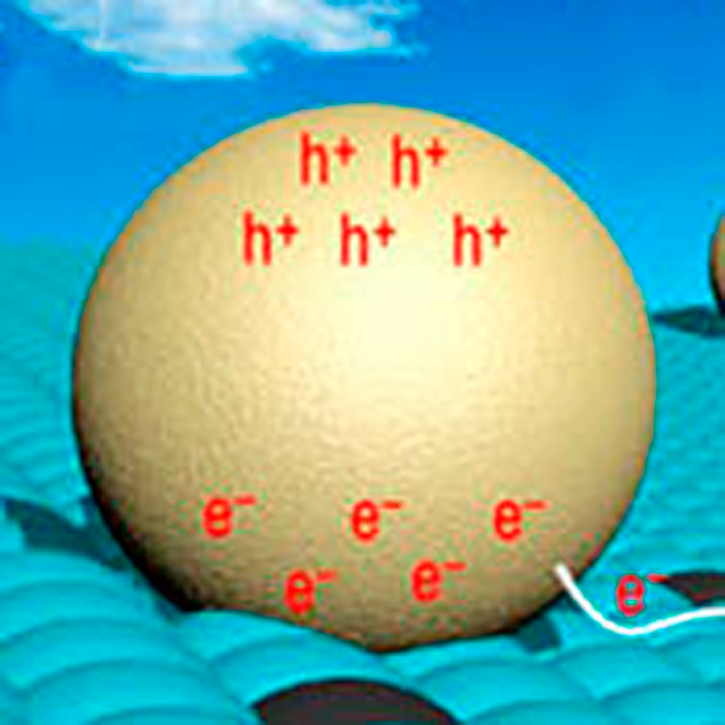
Understanding fundamental mechanisms for surface electronic excitation is of great importance in surface chemistry. Charge transport through metal–oxide interfaces plays a significant role in heterogeneous catalysis. Over the last several decades, a number of experimental and theoretical results suggest that this charge flow through metal–support interfaces leads to catalytic enhancement often observed in mixed catalysts. Direct measurement of charge flow on actual catalysts is a rather challenging task because it requires the use of an electronic circuit. This approach has been enabled by a catalytic nanodiode that is mainly composed of a catalytic metal and semiconducting oxides that form a Schottky contact. In this article, we describe the advances in this approach. We show that there is close connection between the phenomena of hot-electron creation and chemical reaction that occur at both gas–solid and liquid–solid interfaces. The intensity of hot-electron flow is well correlated with the turnover rates of corresponding reactions, which opens the possibility for developing new operando methodologies to monitor catalytic reactions as well as a novel scheme for the electronic control of chemical reactions.
Lack of data on available agriwaste by type of source, local variations in agricultural consumption, and the uncertain feasibility of industrial scaling, all contribute to the challenges of developing commercially viable agriwaste-to-resource building products. Materials Passports linked to Building Management Information systems are tools that can improve regional planning efforts and the coordination of sustainable supply chains focused on new product development and product stewardship.
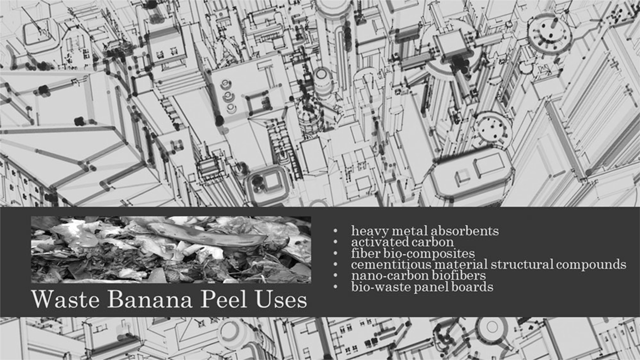
Globally, an estimated 3.5 kg per capita of daily agricultural waste is transferred to municipal landfills. Stated differently, 7.8 billion people generate 26.25 billion kg of daily agriwaste. Numerous studies established linkages between leachates from solid waste landfills, bioaccumulation of toxic chemicals, and greenhouse gas emissions that are a leading cause of climate change. Furthermore, raw material scarcity threatens to constrain economic growth and productivity. Sustainable circular economy practices focus on increased efficiency and a decoupling of wasted natural resource consumption from economic growth. Academic and industry researchers are focused on developing circular economy solutions that increase resource efficiency while decoupling wasted natural resource consumption from economic growth. Human acceptance and adaptation of technology are ideologically, culturally, and socio-technically dependent. Waste banana peels are used as an analytical scenario of how BIM modeling can improve the production of localized, affordable, and culturally appropriate building materials. Ideological and cultural norms are a precursor for socio-technical acceptance. Building material selection is examined from the perspective of complex factors creating uncertain economic valuations, and socio-cultural variations in the definition of waste. The objective of the research is to open multidisciplinary examination of the practices and choices that determine affordably safe building materials.
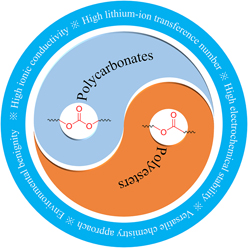
Solid polymer electrolytes are a crucial class of compounds in the next-generation solid-state lithium batteries featured by high safety and extraordinary energy density. This review highlights the importance of carbonyl-coordinating polymer-based solid polymer electrolytes in next-generation safe and high–energy density lithium metal batteries, unraveling their synthesis, sustainability, and electrochemical performance.
With the massive consumption of fossil fuel in vehicles nowadays, the resulted air pollution and greenhouse gases issue have now aroused the global interest on the replacement of the internal combustion engines with engine systems using renewable energy. Thus, the commercial electric vehicle market is growing fast. As the requirement for longer driving distances and higher safety in commercial electric vehicles becomes more demanding, great endeavors have been devoted to developing the next-generation solid-state lithium metal batteries using high-voltage cathode materials, e.g., high nickel (Ni) ternary active materials, LiCoO2, and spinel LiNi0.5Mn1.5O4. However, the most extensively investigated solid polymer electrolytes (SPEs) are based on polyether-based polymers, especially the archetypal poly(ethylene oxide), which are still suffering from low ionic conductivity (10−7 to 10−6 S/cm at room temperature), limited lithium ion transference number (<0.2), and narrow electrochemical stability window (<3.9 V), restricting this type of SPEs from realizing their full potential for the next-generation lithium-based energy storage technologies. As a promising class of alternative polymer hosts for SPEs, carbonyl-coordinating polymers have been extensively researched, exhibiting unique and promising electrochemical properties. Herein, the synthesis, sustainability, and electrochemical performance of carbonyl-coordinating SPEs for high-voltage solid-state lithium batteries will be reviewed.
Plasmonic nanostructures possess broadly tunable optical properties with catalytically active surfaces. They offer new opportunities for achieving efficient solar-to-chemical energy conversion. Plasmonic metal–semiconductor heterostructures have attracted heightened interest due to their capability of generating energetic hot electrons that can be collected to facilitate chemical reactions. In this article, we present a detailed survey of recent examples of plasmonic metal–semiconductor heterostructures for hot-electron-driven photochemistry, including plasmonic metal–oxide, plasmonic metal–two-dimensional materials, and plasmonic metal–metal–organic frameworks. We conclude with a discussion on the remaining challenges in the field and an outlook regarding future opportunities for designing high-performance plasmonic metal–semiconductor heterostructures for photochemistry.
Placing a large storage project at one transmission node influences the transmission flows in the model. Hence, planners need an approach that estimates future storage services and logically places storage at multiple transmission nodes.
In planning models, it is hard to forecast which service storage might provide at any given hour because storage provides a wide variety of services such as capacity benefit, peaker replacement, reduction in renewable energy curtailment, and ancillary services. But transmission planning models are required to address North American Electric Reliability Corporation (NERC) reliability standards and criteria, with assumptions for planned additions of generation, transmission, and demand response resources. Hence, planners must assume a basic set of services for storage resources.
And this paper outlines a suggested approach to site storage resources in planning models by focusing on the generator interconnection queue for utility-scale storage and energy-intensive industries for commercial and industrial customers.
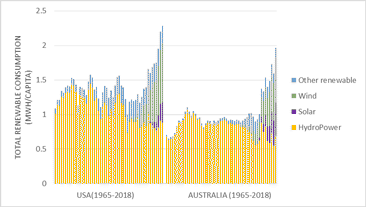
The electric industry is transitioning to higher penetrations of renewables. Hundred per cent renewable penetration is no longer a pipe dream. Rather than by doubling down on existing renewable technologies, we can achieve it by cohesively focusing on the ‘needs’ and working on regulation (regulation should focus on holistic grid needs), operations (e.g., markets and balancing authority products), and innovation (e.g., newer technologies like hydrogen).
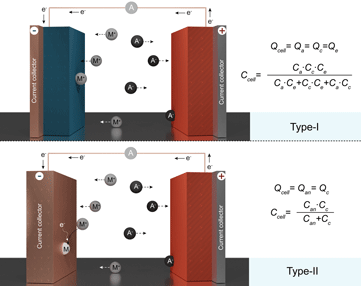
This perspective article summarizes the operational principles of dual-ion batteries and highlights the main issues in the interpretation and reporting of their electrochemical performance.
Secondary dual-ion batteries (DIBs) are emerging stationary energy storage systems that have been actively explored in view of their low cost, high energy efficiency, power density, and long cycling life. Nevertheless, a critical assessment of the literature in this field points to numerous inaccuracies and inconsistencies in reported performance, primarily caused by the exclusion of the capacity of used electrolytes and the use of non-charge-balanced batteries. Ultimately, these omissions have a direct impact on the assessment of the energy and power density of DIBs. Aiming to secure further advancement of DIBs, in this work, we critically review current research pursuits and summarize the operational mechanisms of such batteries. The particular focus of this perspective is put on highlighting the main issues in the interpretation and reporting of the electrochemical performance of DIBs. To this end, we survey the prospects of these stationary storage systems, emphasizing the practical hurdles that remain to be addressed.
In the rural areas of the eastern Amhara region where livelihoods are predominantly based on agriculture with almost all the rural people earning their income from agriculture, awareness toward clean energy, and efficient appliances is at a very infant stage. As an indication, the research comes up with energy utilization is mainly of biomass-based with traditional stoves of very low efficiency. However, the future demand of the community toward the clean and improved efficient appliances has got a better preference over other energy technologies. Regarding the factor in determining the energy and energy appliance type choice, accessibility is found as the major reason.
The type of energy sources and energy technologies utilized for cooking and lighting have their own effect on health, environmental degradation, and overall economic development. Therefore, the primary objective of this study was to analyze the general trend of household energy source and energy technology utilization in rural areas of the Eastern Amhara region. The study utilized primary and secondary data collected over stratified systematically sampled households and from energy experts in the area. The study examined the utilization of various forms of energy and energy technology for the most common household energy-intensive processes (injera baking and stew cooking) as well as lighting. The development of different estimates across the whole population of the study region to indicate the relations among different factors was done through different statistical approaches; and the finding of the analysis revealed that 57.7% of the energy share is biomass-based firewood from which 99.5% of this source was used only for food preparation. The two main determinant factors of the community in selecting the energy types are found to be accessibility and health impact.
The technology around generating efficient and sustainable energy is rapidly evolving; hydrogen and fuel cells are versatile examples within a portfolio of options. This article provides an overview of the early-stage materials R&D in hydrogen and fuel cells at the US Department of Energy (DOE) Fuel Cell Technologies Office within the Office of Energy Efficiency & Renewable Energy. The article highlights technology status and progress toward achieving DOE targets, discusses R&D needs and challenges, and provides specific examples where advanced materials research is relevant to addressing those challenges. For broader context, materials R&D advances are discussed in the context of DOE’s H2@Scale initiative, which is enabling innovations to generate cost-competitive hydrogen as an energy carrier, enabling renewables, as well as nuclear, fossil fuels, and the grid, to enhance the economics of both baseload power plants and intermittent solar and wind, enhancing resiliency and avoiding curtailment.
Energy, water, and food shortages, along with irreversible environmental damage and climate changes, are bound to happen within a decade if the current course of action is maintained, preparing the “perfect storm” – a chain of interrelated events that could lead to major stress on the global system.
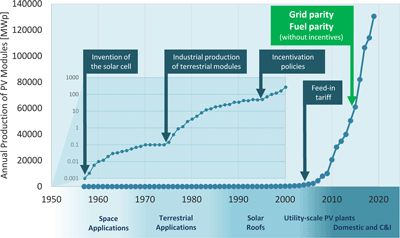
Energy plays a central role in the complex balance between humankind and the planet: poor strategies for the energy system will lead to disaster; but immediate, radical action can still mitigate what will otherwise be an unprecedented crisis. Reduction of the carbon intensity at the level of primary energy demand is one of the most impactful strategies. Current actions toward this goal, however, including the Nationally Determined Contributions (i.e., the climate actions pledged by the countries that ratified the Paris Agreements), are far from being adequate, and a much stronger effort is required. In this perspective, we draw inspiration from a visionary scientist of the past century, who pioneered the idea of a society powered by solar energy, and show, by a critical presentation of energy and carbon emission data, how this vision is now coming true. We focus our attention in particular to photovoltaics and analyze the factors that make it one of the key energy sources for the short and for the long term: economical convenience, the opening of very large markets, and the push by key players of the energy system.
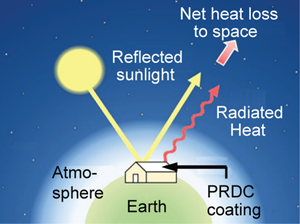
Passive daytime radiative cooling (PDRC) is an electricity-free method for cooling terrestrial entities. In PDRC, a surface has a solar reflectance of nearly 1 to avoid solar heating and a high emittance close to 1 in the long-wavelength infrared (LWIR) transparent window of the atmosphere (wavelength λ = 8–13 μm) for radiating heat to the cold sky. This allows the surface to passively achieve sub-ambient cooling. PDRC requires careful tuning of optical reflectance in the wide optical spectrum, and various strategies have been proposed in the last decade, some of which are under commercialization. PDRC can be used in a variety of applications, such as building envelopes, containers, and vehicles. This perspective describes the principle and applications of various PDRC strategies and analyzes the cost, and economic and environmental consequences. Potential challenges and possible future directions are also discussed.
The sustainable integration of human activities into the global ecosystem is discussed, pointing out fatal anthropogenic heat as a major ecological problem and proposing global technical and economical solutions.
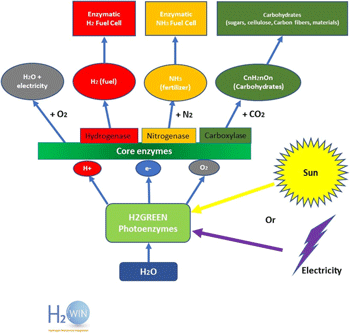
For human sake, we must get out of the “thermal age” and implement the “electroprotonic era” as soon as possible. Contrary to thermal power, electroprotonic is sustainable and can be produced by photoenzymatic systems, a cheap way to produce hydrogen (H2) or ammonia (NH3). We can accelerate the advent of this new era if we re-integrate external costs generated by thermal energies into their final prices. The author is leading the H2GREEN project in Belgium as an entrepreneur for more than a decade, which develops the photoenzymatic production of dihydrogen from water. The aim of the H2GREEN project is to contribute to the launch of a low-cost, renewable Hydrogen-based local economy as an energy carrier. Among the difficulties of this launch, the most important is certainly the lack of competitiveness due to the unfair competition of carbon products that externalizes their costs (CO2, oil spills, lethal pollution, armed conflicts, political oppression, foreign dependence, etc.).
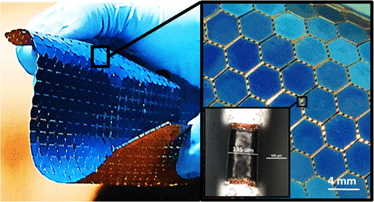
This review focuses on state-of-the-art research and development in the areas of flexible and stretchable inorganic solar cells, explains the principles behind the main technologies, highlights their key applications, and discusses future challenges.
Flexible and stretchable solar cells have gained a growing attention in the last decade due to their ever-expanding range of applications from foldable electronics and robotics to wearables, transportation, and buildings. In this review, we discuss the different absorber and substrate materials in addition to the techniques that have been developed to achieve conformal and elastic inorganic solar cells which show improved efficiencies and enhanced reliabilities compared with their organic counterparts. The reviewed absorber materials range from thin films, including a-Si, copper indium gallium selenide, cadmium telluride, SiGe/III–V, and inorganic perovskite to low-dimensional and bulk materials. The development techniques are generally based on either the transfer-printing of thin cells onto various flexible substrates (e.g., metal foils, polymers, and thin glass) with or without shape engineering, the direct deposition of thin films on flexible substrates, or the etch-based corrugation technique applied on originally rigid cells. The advantages and disadvantages of each of these approaches are analyzed in terms of achieved efficiency, thermal and mechanical reliability, flexibility/stretchability, and economical sustainability.