To save content items to your account,
please confirm that you agree to abide by our usage policies.
If this is the first time you use this feature, you will be asked to authorise Cambridge Core to connect with your account.
Find out more about saving content to .
To save content items to your Kindle, first ensure no-reply@cambridge.org
is added to your Approved Personal Document E-mail List under your Personal Document Settings
on the Manage Your Content and Devices page of your Amazon account. Then enter the ‘name’ part
of your Kindle email address below.
Find out more about saving to your Kindle.
Note you can select to save to either the @free.kindle.com or @kindle.com variations.
‘@free.kindle.com’ emails are free but can only be saved to your device when it is connected to wi-fi.
‘@kindle.com’ emails can be delivered even when you are not connected to wi-fi, but note that service fees apply.
Navigating the Souring Seas explores how ocean acidification (OA)-a significant yet under-governed environmental threat-is being addressed on the global stage. Bridging science, law, and international policy, this interdisciplinary book introduces global experimentalist governance as an innovative and adaptable framework for tackling complex and uncertain issues like OA. It provides a clear overview of the scientific background of OA and maps the international governance landscape, identifying it as a regime complex. Through detailed interview-based case studies of the Ocean Acidification Alliance and the International Maritime Organization, the book evaluates real-world efforts to govern OA and highlights how experimentalist features, such as flexibility, learning, and multilevel collaboration, can enhance their effectiveness. Accessible and timely, this book is essential reading for scholars, students, policymakers, and environmental practitioners seeking practical, forward-looking governance strategies for ocean and climate challenges. It offers both theoretical insight and concrete recommendations for improving global environmental governance.
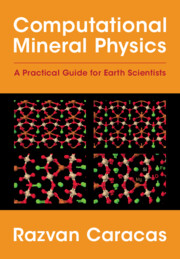
Computational mineralogy is fast becoming the most effective and quantitatively accurate method for successfully determining structures, properties and processes at the extreme pressure and temperature conditions that exist within the Earth's deep interior. It is now possible to simulate complex mineral phases using a variety of theoretical computational techniques that probe the microscopic nature of matter at both the atomic and sub-atomic levels. This introductory guide is for geoscientists as well as researchers performing measurements and experiments in a lab, those seeking to identify minerals remotely or in the field, and those seeking specific numerical values of particular physical properties. Written in a user- and property-oriented way, and illustrated with calculation examples for different mineral properties, it explains how property values are produced, how to tell if they are meaningful or not, and how they can be used alongside experimental results to unlock the secrets of the Earth.
This Element presents a case study of the authors' partnership with the Pintada community in their excavation of a pre-Columbian site known as 'Huaca Pintada', a pyramidal mound located in the Lambayeque region on the north coast of Peru. The site, which gained recognition after the fortuitous discovery by looters in 1916 of an exceptional polychrome mural, was somehow 'forgotten' by the scientific community after irreversible damage. However, this was not the case for the local inhabitants, families like the Inoñán or the Chapoñán descendants of ancient muchic traditions, who founded a village named after their illustrious elder. The authors will describe how local actors like shamans or workers were indispensable in finding solutions that led not only to the rediscovery of the treasures of the Huaca Pintada but also to the reconnection of the community with its past.
In a time when the role of science in society is under threat, this book provides a timely and accessible text that can be used to learn or teach both the theory and practices of science, and how they are interconnected. The first chapters introduce the major approaches to the philosophy of science using simple language and examples that are easy to understand. The chapters that follow build on philosophy of science to explain science practices such as publication, bibliometrics, experiments, the use of statistics, research ethics, and the academic career. The book emphasizes how and why science is the most reliable source of knowledge and how society is dependent on science to make informed decisions. It primarily targets science students but is also accessible to general readers interested in understanding how science works. It is ideal as a textbook for intermediate-advanced students majoring in any science (or engineering) subject.
Attunement to Others explores how contemporary Indian fiction engages with the crises of the Anthropocene through narrative practices of relationality and care. Reading the works of Arundhati Roy, Nilanjana Roy, Amitav Ghosh, Vandana Singh, Avinuo Kire, and Janice Pariat, Amit R. Baishya shows how these texts register the Anthropocene not as a singular rupture, but as a 'polycrisis' marked by ecological, political, and affective entanglements. Drawing on postcolonial ecocriticism, affect theory, and the environmental humanities, the book examines how acts of attunement-moments of listening to and sensing nonhuman others—shape ethical imaginaries and alternative ways of being. Rather than offering escapist or utopian visions, these fictions reveal how attunement emerges through grounded, affective practices of cohabitation, survival, and resistance on a damaged planet. In doing so, Attunement to Others contributes to interdisciplinary conversations on literary form, planetary crisis, and the nonhuman turn in postcolonial studies.
Climate Justice: Resisting Marginalisation examines the impact of climate change on marginalized communities across the globe and the different ways of resisting these impacts. The book underlines the imbalanced consequences of climate change, driven by the power disparities between the global North and South. It investigates how climate change aggravates structural inequalities, focusing on the intersectionality of gender, race, technology, and politics. Through a study of resistance and marginalization, the book analyses how these systemic injustices are perpetuated, while offering understandings into the struggles and strategies to build a justice oriented approach to combating climate change. This title is also available as open access on Cambridge Core.
Environmental economics is growing rapidly. It is simply not sufficient to consider consumption, production, and welfare in isolation from the natural environment. Integrating ecological systems in economic analysis requires to take the possible occurrence of tipping points or regime shifts into account. This Element focuses on two recent developments in environmental economics theory. One is economic management of ecological systems with tipping points, with the lake as the classical example. The other one is investigating the consequences of uncertain possible shocks to parameters in economic models, with the carrying capacity in a fishery and total factor productivity (due to climate tipping) in Ramsey growth as examples. This Element provides a precise account of the concepts, techniques, and results in the analysis of these models, which shows the effects of tipping and allows for other applications. This Element starts with a broader list of examples and management options.
The National Park System encompasses geological exposures that preserve globally significant paleobotanical resources. These paleobotanical resources represent a broad temporal, geographic, stratigraphic, and taxonomic distribution and pose a variety of management, research, and curation concerns. In this Element, the authors present a baseline inventory of the Cenozoic paleobotany of the National Park System as a first step in stimulating new research, curation, and outreach projects that utilize these resources. The authors describe the stratigraphic, taxonomic, spatial, and temporal distribution of Cenozoic paleobotanical resources in 74 National Park Units and show that these resources vary widely in their significance and management needs. Their baseline inventory elucidates what resources need intensified management protocols and celebrates the success stories of NPS paleontological resource management that make NPS lands an essential archive of North American paleobotanical history.
Since the United States hosted the Leaders' Summit on Climate in 2021, numerous countries have committed to net-zero emission targets. Given the size of their economies, populations, and greenhouse gas emissions, emerging markets and developing economies in South, East, and Southeast Asia will play a key role in determining whether or not these targets are achieved. The Net-Zero Transitions in Energy and Finance focuses on the net-zero transition in Southeast Asia and applies the lessons learned to other major emerging markets and developing economies. It argues that net-zero emission targets require not only synchronised changes of the complementary elements in energy systems but also in the financial institutions that fund and invest in facilitating system transitions. Proposing novel frameworks for analysing electricity system transitions with empirical evidence, this book identifies enabling factors, drivers, and barriers, and offers solutions for overcoming the challenges of multi-sector transitions.
By exploring the dynamic relationships between politics, policymaking, and policy over time, this book aims to explain why climate change mitigation is so political, and why politics is also indispensable in enacting real change. It argues that politics is poorly understood and often sidelined in research and policy circles, which is an omission that must be rectified, because the policies that we rely on to drive down greenhouse gas emissions are deeply inter-connected with political and social contexts. Incorporating insights from political economy, socio-technical transitions, and public policy, this book provides a framework for understanding the role of specific ideas, interests, and institutions in shaping and driving sustainable change. The chapters present examples at global, national, and local scales, spanning from the 1990s to 2020s. This volume will prove valuable for graduate students, researchers, and policymakers interested in the politics and policy of climate change. This title is also available as Open Access on Cambridge Core.
The chapter describes the basic terminology used in the book, the composition of the Earth system and the principles of climate dynamics. It details the main components of the Earth system (atmosphere, ocean, hydrosphere, cryosphere, biosphere and solid Earth) and processes relevant to understanding climate dynamics. The concepts of climate, climate variability and climate change are discussed in the context of Quaternary climate dynamics. The global cycles of energy, water and carbon and their importance for climate evolution and variability are presented. The chapter introduces the mechanisms behind different types of radiative forcing, climate feedbacks and climate sensitivity. The difference between equilibrium and transient climate responses to different climate forcings is specified. The frameworks of stability and instability are introduced and discussed in application to climate. The relationship between the stochasticity of the Earth system and the predictability of climate change is presented.
The chapter outlines the primary methods used in empirical paleoclimatology, beginning with an overview of key paleoclimate proxies (stable oxygen and carbon isotopes, atmospheric composition, ice-rafted debris, aeolian dust and pollen) and the past environmental conditions they help reconstruct. The applicability and potential limitations of different proxies are discussed. It then describes the main paleoclimate archives, such as marine sediments and ice cores, speleothems, tree rings and others, in relation to paleoclimate proxies. The main dating techniques used in Quaternary paleoclimatology, such as the radiocarbon method, paleomagnetism and orbital tuning, are briefly examined. Several important paleoclimatological stacked records are presented, such as the Lisiecki-Raymo benthic stack. Finally, the main applications of paleoclimate proxies for reconstructing paleoenvironments and understanding past climate change and data-model comparison are reviewed.
The Quaternary period, which began 2.58 million years ago and continues to the present day, is distinctive for its significant climate variability. Understanding the mechanisms of climate change during this period and the relationship between carbon dioxide levels and temperature is hugely important in improving our ability to develop models to predict future climate change. This book discusses the main methods of empirical climatology and the models used to address different aspects of Quaternary climate dynamics, offering a multidisciplinary view of past and future climate changes. It examines the proposed mechanisms of Quaternary climate variability, including glacial cycles and abrupt climate changes, and their relationship to the intrinsic instability of ocean circulation and ice sheets. Including a final chapter on the Anthropocene, it provides a comprehensive overview of Quaternary and modern climate dynamics for graduate students and researchers working in paleoclimatology and climate change science.
The chapter explores millennial-scale climate variability during glacial periods and abrupt climate changes known as Dansgaard–Oeschger and Heinrich events. It begins with a description of the classification of abrupt climate changes, detailing their timing, typical periodicities and manifestations in different paleoclimate proxies and geographical locations. Progress in modeling the Dansgaard–Oeschger and Heinrich events is reviewed, starting from the early attempts to model millennial-scale climate variability to recent results from comprehensive Earth system models. This is followed by a discussion of the current state of understanding of the mechanism of Dansgaard–Oeschger and Heinrich events. It is shown that both types of millennial-scale climate variability are likely to represent spontaneous, self-sustained oscillations in different components of the Earth system, although it is possible that some interactions between these types of variabilities could lead to synchronization.