To save content items to your account,
please confirm that you agree to abide by our usage policies.
If this is the first time you use this feature, you will be asked to authorise Cambridge Core to connect with your account.
Find out more about saving content to .
To save content items to your Kindle, first ensure no-reply@cambridge.org
is added to your Approved Personal Document E-mail List under your Personal Document Settings
on the Manage Your Content and Devices page of your Amazon account. Then enter the ‘name’ part
of your Kindle email address below.
Find out more about saving to your Kindle.
Note you can select to save to either the @free.kindle.com or @kindle.com variations.
‘@free.kindle.com’ emails are free but can only be saved to your device when it is connected to wi-fi.
‘@kindle.com’ emails can be delivered even when you are not connected to wi-fi, but note that service fees apply.
In the early treatise Ennead V.9, Plotinus discusses whether the arts are there in the intelligible realm, and concludes that they are at least partly. The chapter’s first part discusses a number of questions that arise. What is exactly the principle of division for which arts or which parts of an art are in the intelligible realm? What is the status of the arts in the intelligible world? Are there Platonic Forms of the arts? In a later treatise, V.8., Plotinus argues that rather than imitating sensible objects, some artists concerned with producing beautiful sensible objects imitate the intelligible paradigm of beauty. Emilsson discusses this claim, which seems a clear deviation from the account of mimetic art in Plato’s Republic. In the latter half of the chapter, Emilsson addresses Plotinus’ demythologisation of Plato’s Timaeus. Plotinus replaces the Demiurge of the Timaeus with the universal intellect and the World-Soul, which do not deliberate. However, Plotinus does not reject entirely any craftsman model, for he appeals to performance arts, which do not involve deliberation, in explaining how natural processes flow from higher principles. Emilsson then discusses what sort of conception of the arts lies behind this view.
These two chapters form a conceptual unity. Their aim is, first, to present and, then, to compare the concepts of technê (art, craft, discipline, expertise) used, respectively, by the Stoics and the Epicureans in different philosophical domains – notably, in cosmology, epistemology and ethics. The main issues to be discussed include the definition of a technê; the criteria determining a technê, the importance of rules and method, the role of experience and practice, the structure of every technê in so far as it is directed towards a goal, the necessary and sufficient conditions for the transmissibility of different sorts of technai and the common assumption that the technai are beneficial for life. Moreover, Tsouna argues that the notions of technê occurring in Stoic and Epicurean texts differ, and she explains how they differ. She suggests that one reason for that fact is that these two schools react in different ways to Plato’s rationalism about technê. On the one hand, the Stoics’ creative appropriation of Plato leads them to formulate a principally rationalistic notion of technê, which is manifest, for example, in their cosmological creationism (cf. the notion of technikon pur), the epistemological distinction between first-order technai and the epistêmê of the wise man, and their ethical conception of the art of living. On the other hand, the Epicureans react to the Platonic heritage in a more negative way and appear to modify their views about technê accordingly. Vis-à-vis the Stoics, they exhibit greater flexibility regarding the criteria of ‘technicity’ and attribute more value to common experience than many Stoics do. Their physical theory precludes any idea of divine craftsmanship. As for Epicurean epistemology and ethics, both involve uses of technê consistent with Epicurean empiricism and the ethical view that pleasure or the absence of pain is the supreme good.
The Introduction sets the scene by addressing first the problems involved with translating the term technê and related issues with circumscribing the Greek concept. The social context of craft and craftsmen is briefly discussed. Criteria for technê are outlined, with the importance of the Hippocratic writings for Plato and Aristotle highlighted. The central role of technê as a model of knowledge is introduced, and its applications to a range of disciplines, including ethics, politics and cosmology.
This chapter discusses the use of technê to characterize the creator god in Plato’s Timaeus. Timaeus explains how a divine craftsman, the Demiurge, made the whole cosmos as a living being. He created the heavenly bodies, but left the creation of human and other mortal beings to these ‘lesser’ gods. But if the Demiurge was the best of all craftsmen, seeking to make the finest cosmos possible, why did he not make the mortal beings too? Having outlined Plato’s conception of craft, Johansen explains how this problem, which he calls the ‘technodicy’, arises for Timaeus, contrasting it with the classical theodicy. The Demiurge’s creation is limited by his craft. Timaeus therefore assigns another craft to the lesser gods to produce mortal beings. However, even this craft prevents the lesser gods from directly producing non-human animals, and so the problem is reiterated. The issue is sought to be resolved by making humans themselves responsible for their own reincarnation as lower animals. Timaeus’ position is comparable to the view in Laws X: the lesser gods, consistent with their role as craftsmen, have overall responsibility for the organization of lower kinds of living being, without causing any particular beings to belong to particular kinds.
In the course of discussing the nature of justice in the first book of the Republic, a number of claims are made concerning the nature of technê and what it is to be skilful or to have an ability. Nawar shows how three of these claims, which do significant conceptual work in both Plato and Aristotle, can be explained and defended. The first claim, by Socrates, concerns the ‘two-way’ nature of certain skills. For instance, the person who is skilful at hitting is not only proficient at hitting well, but also proficient at avoiding being hit. The second claim, by Thrasymachus, is that the practitioner of a technê is, in a certain way, infallible and cannot fail to bring about what they intend. The third claim, made by Socrates, is that technai are not value-neutral, but rather are directed at the good of their object. Namar examines these claims, clarifies them, and attempts to explain them (so far as possible). Furthermore, he shows that these claims play an important role in Aristotle’s thought and examines how Aristotle aims to incorporate or adapt these claims in his own discussion of the modal and teleological aspects of skills and rational capacities.
How far is it possible to reconstruct the content of the ‘art of citizenship’ (politikê technê) professed by Protagoras in the dialogue Protagoras? Some commentators have claimed that Protagoras’ statements about the technê are incoherent. Examining this claim, Hussey argues that, while Protagoras can be defended on the charge of incoherence, his exposition of the nature and content of the technê he professes to possess and teach is radically incomplete in several ways. The question then arises whether the Theaetetus can be used to fill in the gaps that Protagoras of the Protagoras left for good practical reasons. If Protagoras’ remarks on truth and wisdom and the ‘changing of perceptions’ in the Theaetetus are taken in a pragmatist way, they imply a conception of a ‘technê of citizenship’ that is capable of improving/transforming human nature, and creating a public political consensus and a stable democratic society. There are many illuminating parallels to be drawn throughout, between the claims of Plato’s Protagoras for his ‘political art’ and the description of the medical art given in the pseudo-Hippocratic essay On Ancient Medicine. (It is assumed, but not argued, that Plato’s Protagoras is a substantially faithful portrait of the historical Protagoras.)
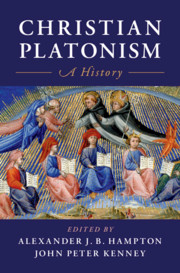
Platonism has played a central role in Christianity and is essential to a deep understanding of the Christian theological tradition. At times, Platonism has constituted an essential philosophical and theological resource, furnishing Christianity with an intellectual framework that has played a key role in its early development, and in subsequent periods of renewal. Alternatively, it has been considered a compromising influence, conflicting with the faith's revelatory foundations and distorting its inherent message. In both cases the fundamental importance of Platonism, as a force which Christianity defined itself by and against, is clear. Written by an international team of scholars, this landmark volume examines the history of Christian Platonism from antiquity to the present day, covers key concepts, and engages issues such as the environment, natural science and materialism.
This study of Plato's Phaedo promotes better understanding of its arguments for the soul's immortality by showing how Plato intended them, not as proofs, but as properly dialectical arguments functioning in accordance with the method of hypothesis. Unlike the argument for the soul's immortality in the Phaedrus, which does seem intended as a proof, the Phaedo arguments are proceeding toward the first principles that could serve as the basis for a proof - the most important being an account of the soul's own essential nature. This study attends to the substantial progress the Phaedo makes toward such an account. It also considers Socrates' epistemic situation in the dialogue and the problem of whether his confidence in the face of death is misplaced if his arguments have not been proofs before considering how the concluding myth draws together several of the dialogue's main themes.
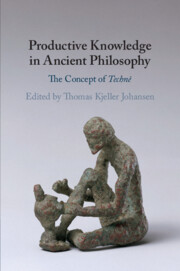
This work investigates how ancient philosophers understood productive knowledge or technê and used it to explain ethics, rhetoric, politics and cosmology. In eleven chapters leading scholars set out the ancient debates about technê from the Presocratic and Hippocratic writers, through Plato and Aristotle and the Hellenistic age (Stoics, Epicureans and Sceptics), ending in the Neoplatonism of Plotinus and Proclus. Amongst the many themes that come into focus are: the model status of ancient medicine in defining the political art, the similarities between the Platonic and Aristotelian conceptions of technê, the use of technê as a paradigm for virtue and practical rationality, technê´s determining role in Platonic conceptions of cosmology, technê´s relationship to experience and theoretical knowledge, virtue as an 'art of living', the adaptability of the criteria of technê to suit different skills, including philosophy itself, the use in productive knowledge of models, deliberation, conjecture and imagination.
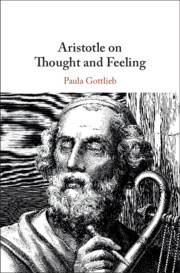
Aristotle's discussion of the motivation of the good person is both complicated and cryptic. Depending on which passages are emphasized, he may seem to be presenting a Kantian style view according to which the good person is and ought to be motivated primarily by reason, or a Humean style view according to which desires and feelings are or ought to be in charge. In this book, Paula Gottlieb argues that Aristotle sees the thought, desires and feelings of the good person as interdependent in a way that is sui generis, and she explains how Aristotle's concept of choice (prohairesis) is an innovative and pivotal element in his account. Gottlieb's interpretation casts light on Aristotle's account of moral education, on the psychology of good, bad and half-bad (akratic) people, and on the aesthetic and even musical side to being a good person.
The conclusion sums up the work, indicating the core elements shared by (Hellenic) theories of daimonification along with (Jewish and Christian) theories of angelification. One common element is the link of virtue (ethical transformation) with physical and cognitive transformation. It is this persistent link that allows ancient theories of posthuman transformation to serve as correctives for current Transhumanist visions of posthuman enhancement. Transhumanists often speak of cognitive and physical improvements with no robust reflection on ethical or moral improvement. Posthuman enhancement must never be defined apart from morality, but in terms of it. Morality cannot simply be programmed from without, nor can it be governed by the overall value of personal autonomy.
Philo of Alexandria (about 20 BCE–50 CE) applied the logic of Platonic daimonification to the Jewish lawgiver Moses. Philo is important for three reasons: he did theoretical work identifying angels, daimones, and pure human souls. He also discussed why an angelic soul such as the pre-incarnate Moses would arrive on earth in flesh. Finally, Philo’s depiction of Moses as a living law in complete control of his emotions reinforced the ethical emphasis of the tradition. Philo's portrayal of Moses as a king descended from heaven best resembles the thought of the Hermetic Kore Kosmou.
One of Plato’s successors, Xenocrates (395–314 BCE), envisioned the human soul as daimonic after death but still subject to fluctuating emotions. He proposed a kind of purgatory in the region below the moon. Daimones who became pure from negative affections traveled from moon to sun to become daimonic minds, ideas more fully developed by Plutarch, Apuleius of Madauros (about 124–190 CE), and Maximus of Tyre (about 180 CE).