To save content items to your account,
please confirm that you agree to abide by our usage policies.
If this is the first time you use this feature, you will be asked to authorise Cambridge Core to connect with your account.
Find out more about saving content to .
To save content items to your Kindle, first ensure no-reply@cambridge.org
is added to your Approved Personal Document E-mail List under your Personal Document Settings
on the Manage Your Content and Devices page of your Amazon account. Then enter the ‘name’ part
of your Kindle email address below.
Find out more about saving to your Kindle.
Note you can select to save to either the @free.kindle.com or @kindle.com variations.
‘@free.kindle.com’ emails are free but can only be saved to your device when it is connected to wi-fi.
‘@kindle.com’ emails can be delivered even when you are not connected to wi-fi, but note that service fees apply.
But how can you look at something and set your own ego aside? Whose eyes are doing the looking? As a rule, you think of the ego as one who is peering out of your own eyes as if leaning on a window sill, looking at the world stretching out before him in all its immensity. So, then: a window looks out on the world. The world is out there; and in here, what do we have? The world still – what else could there be? With a little effort of concentration, Mr. Palomar manages to shift the world from in front of him and set it on the sill, looking out. Now, beyond the windows, what do we have? The world is also there, and for the occasion has been split into a looking world and a world looked at. And what about him, also known as “I,” namely Mr. Palomar? Is he not a piece of the world that is looking at another piece of the world? Or else, given that there is world that side of the window and world this side, perhaps the “I,” the ego, is simply the window through which the world looks at the world. To look at itself the world needs the eyes (and the eyeglasses) of Mr. Palomar.
As his biological time ticks away, Socrates describes the everlasting life of his soul. His friends keep their eyes on the clock: Cebes reminds everyone to speak up now while Socrates is still alive (107a), and Crito urges Socrates to delay drinking the poison, since “the sun is on the mountains and has not yet set” (116e). But Socrates looks beyond the present to the future life of his soul. He presents four arguments for the immortality of the soul. In one argument, he says that the soul acquired knowledge of the Forms before it entered a body. As he claims: “souls existed previously … apart from bodies, before they took on human form, and they had intelligence” (76c).1 By pointing to a period of existence before incarnation, Socrates locates the soul outside of biological and historical time.
In Plato’s Symposium, a group of intellectuals and artists give speeches in praise of the god Eros. The speakers engage in a playful competition with one another, showing off their wit, cultivation, and eloquence. Each articulates a different conception of Eros and his role in the human, divine, and cosmic realms. In Socrates’ speech, philosophic desire takes center stage. Socrates focuses on two key desires: the desire for immortality and the metaphysical desire for the Forms. Both aim at something beyond the human, but they differ in key ways. I will examine both of these desires and show how they work together in the life of the philosopher.
In its most basic sense, the desire for immortality is a desire for an everlasting self. The Greeks understood immortality in terms of living like the gods.
The ancient Greeks conceived of the gods as having knowledge of the past and the future. Humans, mere “creatures of a day,” had finite and limited minds. Some early Greek philosophers, however, claimed to have gained the wisdom of the gods, having received this in a divine revelation or by aligning their thoughts with the divine mind. Indeed, thinkers such as Xenophanes, Parmenides, Heraclitus, Empedocles, and Diogenes of Apollonia presented rich and varied ideas about god and the human grasp of the divine.1 Plato follows in this tradition by granting the human soul the divine capacity to apprehend the divine realm of the Forms.
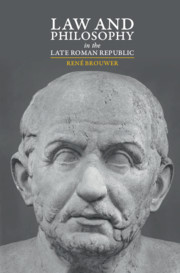
The middle of the second until the middle of the first century BCE is one of the most creative periods in the history of human thought, and an important part of this was the interaction between Roman jurists and Hellenistic philosophers. In this highly original book, René Brouwer shows how jurists transformed the study of law into a science with the help of philosophical methods and concepts, such as division, rules and persons, and also how philosophers came to share the jurists' preoccupations with cases and private property. The relevance of this cross-fertilization for present-day law and philosophy cannot be overestimated: in law, its legacy includes the academic study of law and the Western models of dispute resolution, while in philosophy, the method of casuistry and the concept of just property.
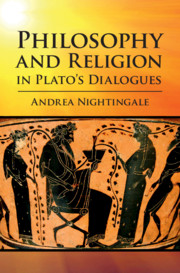
In ancient Greece, philosophers developed new and dazzling ideas about divinity, drawing on the deep well of poetry, myth, and religious practices even as they set out to construct new theological ideas. Andrea Nightingale argues that Plato shared in this culture and appropriates specific Greek religious discourses and practices to present his metaphysical philosophy. In particular, he uses the Greek conception of divine epiphany - a god appearing to humans - to claim that the Forms manifest their divinity epiphanically to the philosopher, with the result that the human soul becomes divine by contemplating these Forms and the cosmos. Nightingale also offers a detailed discussion of the Eleusinian Mysteries and the Orphic Mysteries and shows how these mystery religions influenced Plato's thinking. This book offers a robust challenge to the idea that Plato is a secular thinker.
Edited by
Michael Erler, Julius-Maximilians-Universität Würzburg, Germany,Jan Erik Heßler, Julius-Maximilians-Universität Würzburg, Germany,Federico M. Petrucci, Università degli Studi di Torino, Italy
Edited by
Michael Erler, Julius-Maximilians-Universität Würzburg, Germany,Jan Erik Heßler, Julius-Maximilians-Universität Würzburg, Germany,Federico M. Petrucci, Università degli Studi di Torino, Italy
Edited by
Michael Erler, Julius-Maximilians-Universität Würzburg, Germany,Jan Erik Heßler, Julius-Maximilians-Universität Würzburg, Germany,Federico M. Petrucci, Università degli Studi di Torino, Italy
Edited by
Michael Erler, Julius-Maximilians-Universität Würzburg, Germany,Jan Erik Heßler, Julius-Maximilians-Universität Würzburg, Germany,Federico M. Petrucci, Università degli Studi di Torino, Italy
After some decades of transition, in the first half of the first century bc, (almost) everything changed. This happened in the Stoa, where non-Athenian scholarchs felt the need for new perspectives, and for a clearer integration of Plato’s doctrine.1 This happened in the Garden, which found new life in Italy with Philodemus’ ‘adaptation’.2 This happened in the Peripatos, where both the recovery of Aristotle’s esoteric writings (in whatever form this may have occurred) and the introduction of a new approach to Aristotle’s philosophy ushered in a new era.3 More generally, the so-called decentralisation of philosophy strongly affected all schools, and determined the need for new ways of thinking and new approaches to authoritative texts.
Edited by
Michael Erler, Julius-Maximilians-Universität Würzburg, Germany,Jan Erik Heßler, Julius-Maximilians-Universität Würzburg, Germany,Federico M. Petrucci, Università degli Studi di Torino, Italy
Edited by
Michael Erler, Julius-Maximilians-Universität Würzburg, Germany,Jan Erik Heßler, Julius-Maximilians-Universität Würzburg, Germany,Federico M. Petrucci, Università degli Studi di Torino, Italy
Edited by
Michael Erler, Julius-Maximilians-Universität Würzburg, Germany,Jan Erik Heßler, Julius-Maximilians-Universität Würzburg, Germany,Federico M. Petrucci, Università degli Studi di Torino, Italy
From Plato’s generation onwards it became the practice among leading philosophers to set up a school within one’s own lifetime, and upon one’s own death either to bequeath its headship to one’s own chosen successor, or to entrust to the school’s members the task of electing the next head. It was only with that succession, when the school’s intellectual legacy needed to be defined and secured, that the founder’s authoritative status was likely to come to the fore. The process is nowhere better illustrated than in the Early Academy.
Edited by
Michael Erler, Julius-Maximilians-Universität Würzburg, Germany,Jan Erik Heßler, Julius-Maximilians-Universität Würzburg, Germany,Federico M. Petrucci, Università degli Studi di Torino, Italy
In a recent article, George Boys-Stones (2018b) offered an interesting definition of the Imperial Platonist conception of authority. According to him, contrary to the members of the other Hellenistic schools, the Middle Platonists do not aim to acquire a sum of propositional knowledge to be preserved within the school. Plato’s authority was for them not that of a founder of a school, but that of a man who had seen the intelligible Forms and discovered a truth to which all subsequent Platonists aspired. According to Boys-Stones, this conception of authority goes hand in hand with a certain epistemological perspective, the traces of which we can find in the fragments of Numenius, most notably in how he thinks of the relation between the second and the third God (fr. 11 des Places). The perspective of this paper is slightly different.
Edited by
Michael Erler, Julius-Maximilians-Universität Würzburg, Germany,Jan Erik Heßler, Julius-Maximilians-Universität Würzburg, Germany,Federico M. Petrucci, Università degli Studi di Torino, Italy
It is a well-known feature of the later Neoplatonist writings from the fifth century ad onwards that the authors frequently refer to their own philosophical teachers. The standard formula, which is almost invariably used on these occasions, is ho hēmeteros kathēgemōn (ὁ ἡμέτερος καθηγεμών, ‘our teacher’); it is attested about thirty times in Proclus, ten times in Simplicius and, with a lower frequency, in Damascius and others. The custom is not wholly unprecedented. Philosophers and medical writers from earlier in the Imperial age, such as Plutarch and Galen, sometimes use similar commemorative formulas, and there may even have been precedents in Hellenistic Epicureanism.
Edited by
Michael Erler, Julius-Maximilians-Universität Würzburg, Germany,Jan Erik Heßler, Julius-Maximilians-Universität Würzburg, Germany,Federico M. Petrucci, Università degli Studi di Torino, Italy
If one had to provide a formal account of what ‘being a Platonist’ means, it would be tempting to refer to the broad idea that a Platonist is, in general, a follower of Plato, which implies a commitment to Plato’s authority. After all, this would be a reasonable description for all heirs of Plato, from the Academics – the scholarchs of the Academy were in any case the successors of Plato, and claimed for themselves the privilege of this relationship – to late-antique Platonists, who regarded themselves as exegetes and interpreters of Plato’s thought. Things are not that easy, however, for once one examines such a general account in detail a series of serious questions emerge. A first – and clearer – puzzle is related to the discontinuity of the tradition: while on the one hand one can say that there is a continuous stream of heirs of Plato from the Early Academy to late Neoplatonism, on the other it is quite obvious that, even admitting a strong continuity between Middle Platonism and Neoplatonism, the philosophical history of the ‘Platonist tradition’ from the Early Academy to the early Imperial Age hardly constitutes a unified whole. As a consequence, just stating that all followers of Plato were committed to his authority would amount to an empty and uninformative statement: the more one generalises the notion in order to make it comprehensive, the less it is specific and able to really include the distinguishing features of each stage of the tradition.
Edited by
Michael Erler, Julius-Maximilians-Universität Würzburg, Germany,Jan Erik Heßler, Julius-Maximilians-Universität Würzburg, Germany,Federico M. Petrucci, Università degli Studi di Torino, Italy
Edited by
Michael Erler, Julius-Maximilians-Universität Würzburg, Germany,Jan Erik Heßler, Julius-Maximilians-Universität Würzburg, Germany,Federico M. Petrucci, Università degli Studi di Torino, Italy
The distinction between Middle Platonism and Neoplatonism is controversial, but it remains helpful in that it makes it clear that there are important differences in the philosophical background of Platonist philosophers before and after Plotinus.1 One of these differences resides in their knowledge of Aristotle’s treatises. It can plausibly be argued that Platonist philosophers, from at least Eudorus of Alexandria onward (first century bc), regarded Aristotle as an authority, though not unqualifiedly so, and though his status was clearly inferior to that of Plato.2 Eudorus of Alexandria was certainly involved in the early debates on Aristotle’s Categories, and we know from Alexander of Aphrodisias (in Metaph. 58.25–59.8) that Eudorus proposed an emendation to Aristotle’s report on Plato’s theory of principles at Metaph.