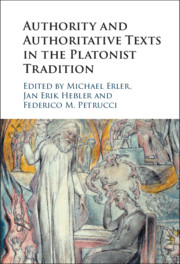

All disciplines can count on a noble founder, and the representation of this founder as an authority is key in order to construe a discipline's identity. This book sheds light on how Plato and other authorities were represented in one of the most long-lasting traditions of all time. It leads the reader through exegesis and polemics, recovery of the past and construction of a philosophical identity. From Xenocrates to Proclus, from the sceptical shift to the re-establishment of dogmatism, from the Mosaic of the Philosophers to the Neoplatonist Commentaries, the construction of authority emerges as a way of access to the core of the Platonist tradition.
‘The volume is a success. It addresses problems about conceptions of authority, a topic that is rightly seeing growing interest by historians of philosophy, in the diverse yet cognate contexts of the Platonic tradition. Its contributions are engaging and provoke thought on a wide range of material.’
Peter Osorio Source: Bryn Mawr Classical Review
‘The importance of this volume goes far beyond the field of Platonic studies.’
Olga Alieva Source: Méthexis
Loading metrics...
* Views captured on Cambridge Core between #date#. This data will be updated every 24 hours.
Usage data cannot currently be displayed.
This section outlines the accessibility features of this content - including support for screen readers, full keyboard navigation and high-contrast display options. This may not be relevant for you.
Accessibility compliance for the PDF of this book is currently unknown and may be updated in the future.
