To save content items to your account,
please confirm that you agree to abide by our usage policies.
If this is the first time you use this feature, you will be asked to authorise Cambridge Core to connect with your account.
Find out more about saving content to .
To save content items to your Kindle, first ensure no-reply@cambridge.org
is added to your Approved Personal Document E-mail List under your Personal Document Settings
on the Manage Your Content and Devices page of your Amazon account. Then enter the ‘name’ part
of your Kindle email address below.
Find out more about saving to your Kindle.
Note you can select to save to either the @free.kindle.com or @kindle.com variations.
‘@free.kindle.com’ emails are free but can only be saved to your device when it is connected to wi-fi.
‘@kindle.com’ emails can be delivered even when you are not connected to wi-fi, but note that service fees apply.
The author checks the firmness of the foundations of the negative appraisal of the historian Ephorus. Topics include Ephorus’ Isocratean apprenticeship, the concept of rhetorical historiography, Ephorus and Diodorus, ancient judgements questioning Ephorus’ reliability as a historian, Ephorus’ ‘Cymocentrism’.
Our analysis of Ephorus’ fragments has led to a very different portrait of the historian and his Histories from that which has been offered by Jacoby, Schwartz and many modern critics following their path. Ephorus, we have argued, was not an erudite compiler of previous histories merely interested in ethics, but a professional historian who had a strong interest in politics, and also in both the theory and the practice of research. His advanced historiographical thinking was clearly aware of that of the best fifth-century predecessors, such as Thucydides, and it in turn became a model for later historians such as Polybius. If not the first, Ephorus was among the first who provided a definition of historiography as a discipline, emphasizing, on the basis of both his predecessors’ and his own experience, the differences between historical inquiry and other disciplines.
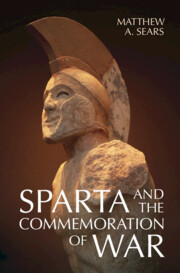
The tough Spartan soldier is one of the most enduring images from antiquity. Yet Spartans too fell in battle – so how did ancient Sparta memorialise its wars and war dead? From the poet Tyrtaeus inspiring soldiers with rousing verse in the seventh century BCE to inscriptions celebrating the 300's last stand at Thermopylae, and from Spartan imperialists posing as liberators during the Peloponnesian War to the modern reception of the Spartan as a brave warrior defending the “West”, Sparta has had an outsized role in how warfare is framed and remembered. This image has also been distorted by the Spartans themselves and their later interpreters. While debates continue to rage about the appropriateness of monuments to supposed war heroes in our civic squares, this authoritative and engaging book suggests that how the Spartans commemorated their military past, and how this shaped their military future, has perhaps never been more pertinent.
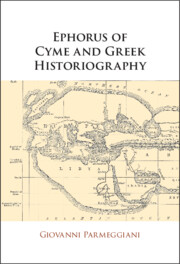
Ephorus of Cyme, who lived in the fourth century BC, is one of the most important historians of antiquity whose work has not survived and, according to Polybius, was the first to have written a universal history. His lost Histories are known from numerous 'fragments', that is, quotations by later authors such as Polybius, Diodorus, Strabo and Plutarch, among others. Through a study of these 'fragments' within their broader context, Giovanni Parmeggiani throws new light on the methodology of Ephorus and both the contents and the purpose of his work. By changing our perspective on a major Greek historian between Thucydides and Polybius, this book fills a significant gap in the field, and sets the basis for a new conception of the history of ancient Greek historiography and the Greek intellectual development in general.
The chapter begins by looking at Beck’s theory of a Risk Society and how this has denied that risk is a term that can be applied to the ancient world. There is a survey of relevant work that has been carried out on uncertainty in antiquity, before the chapter examines how the term risk emerged and the various ways of defining the term. The chapter argues for a broader, cultural approach that sees risk as more than a modern numerical concept and the development of ideas concerning risk as a historical process.
In the last chapter, I discussed the three means of divine communication enumerated by Posidonius: the personal appearance of a god, the mediation of daimons, and the innate capacity of the soul. Of these, the most direct way that a god can communicate is by appearing in person to a human being, either in a dream or a waking vision. Paul claims to have received knowledge through such means on at least two specific occasions (Gal 1:11–12; 2 Cor 12:1–10), and displays a certain ambivalence about how these fit into the mechanics he works out elsewhere (2 Cor 12:2–3).
Scholarship is divided over how to view the place of visionary experiences in Paul’s life. Some fully embrace the image of Paul as mystic and visionary.A more common approach is to sharply distinguish Paul’s initial encounter with the risen Christ from any subsequent visionary experiences – the former being a pivotal moment of objective revelation and the latter being private and subjective spiritual experiences to which he attaches little importance.Among those who compare Paul’s claims to visionary experience with his broader Graeco-Roman environment, the tendency is to view Paul’s visions not as a method of divination – a means through which to acquire divine knowledge – but as a means through which to assert divine authority. Such experiences are important for his rhetoric, but less so for his thought and practice.
In this chapter, I will assess the nature and functions of Paul’s visionary experiences in comparison with the divinatory functions of dreams and visions in the Graeco-Roman world. Such visions did indeed play a pivotal role in establishing Paul’s authority as an apostle, but this is inextricably intertwined with their role as conveyors of divine knowledge, and they thus form an important part of Paul’s divinatory repertoire.
Dreams, Visions, and Experience: Preliminary Issues
The mode of divination in which “the gods in person converse with men” (Cicero, Div. 1.64) at first sight appears the most straightforward, but it presents particular challenges to historical analysis and classification. Before proceeding, two particular questions must be dealt with. First is how to distinguish and classify dreams, epiphanies, and waking visions in the context of divination. Second is how to treat the relation of dream and vision reports to actual experience.
Dreams
Dreams are a ubiquitous source of divine communication in ancient literature.
Kingship was central to speculative thought and prestige in the pyramid age. It was vital for temple ritual, as shown in the previous chapter, and also indirectly for funerary culture via the Osiris myth. It is tempting to see kingship as the essence of ancient Egypt, a condensed version of the key ideas permeating society and culture, but so much is extraordinary about pharaohs – their relationships with the gods, the realm of their afterlife, their separation from other people – that kingship almost appears as an eccentric anomaly in Egyptian society. This dichotomy is perhaps not surprising from a comparative perspective, where holders of a royal office – mostly male – embody such tensions in many societies.
If the sizes of buildings reflect the relevance of the institutions they embody, then the modern capitalist world would appear to revolve around finance, state administration, public leisure and consumption, and a few super-rich individuals. The picture changes markedly when we look back in time, as churches were the most significant landmarks of the urban landscape in medieval Europe, and buildings for ritual purposes stand out in the archaeological record of early complex societies. Control of ritual was perhaps the most important source of political authority in early states.
This chapter examines areas of knowledge where the Romans displayed expertise and consciously sought to develop techniques and systems that enabled them to better understand and control future uncertainties. It begins by looking at architecture, military logistics and law, before moving on to aspects of financial management, such as maritime loans, interest rates and annuities; it then finishes by looking at the probabilistic thinking involved in the religious practices of oracle and dream interpretation. It argues that the ancients did not rely solely on religion to deal with uncertainty. The Romans thought systematically and creatively about many areas where future uncertainty could be assessed and managed. These approaches were not statistical but all show an awareness of a range of likelihoods and possibilities. The Romans did not have statistical models, nor had they worked out how to calculate probabilities, but they did develop a range of sophisticated ways of dealing with the many unknowns they faced.
In the previous chapter, I argued that visionary experiences play a key role in Paul’s reception of divine knowledge. It also became clear that in the ancient world such visions were not limited to sight alone, but could also convey verbal, oracular instruction. Paul’s healing oracle in 2 Cor 12:9 is one such example in which Paul can report the words of the Lord in a context which presupposes a visionary experience. This chapter is concerned with similar instances of Paul reporting divine speech.
Chapter 1 highlighted the prominence of pneuma, and “words taught by pneuma” (1 Cor 2:13) in Paul’s reception of divinatory knowledge. Part one of the present chapter examines the words Paul says are spoken by pneuma, which, perhaps surprisingly, fail to provide any divinatory knowledge at all. Instead, each time Paul makes pneuma the subject of a verb of communication the speech is always directed from humans to God, and is always in a language unintelligible to the speaker. Part two of this chapter turns to the topic of prophecy as the sort of speech that does communicate divinatory knowledge for Paul. This is speech ἐν πνεῦμα, which involves the anthropological partnering of the mind (νοῦς). Paul’s letters provide glimpses of his own prophetic speech, and of his oracular role in general, such as when he makes short-term predictions of his own suffering, when he gives commands from the Lord and his own pneumatic judgement on certain topics, and when he provides details of more expansive eschatological scenarios.
The Audible Pneuma
Wordless Prayers (Romans 8:26)
In Rom 8:26, Paul says that when believers do not know what to pray the pneuma petitions God on their behalf with wordless groans (στεναγμοῖς ἀλαλήτοις). In this way the pneuma aids believers in their weakness. God knows the intentions of the pneuma because it can petition God in the right way.A στεναγμός is a groan or sigh often used in conjunction with γόος, “weeping” or “wailing,” to denote audible sorrow (Sophocles, Oed. tyr. 30; Euripides, Orest. 959; Plato, Resp. 578a).
The conclusion compares Roman ideas about risk with their ideas about the future. It argues that they displayed a mixture of both basic and relatively sophisticated understanding. The areas where the greatest development can be found – in the military, financial and legal spheres – reflect a militaristic, legalistic and strongly hierarchical society where what mattered most were keeping control of great areas of territory, maintaining the social order that controlled the population and upholding the property rights of the few. There was no perceived need to develop the notion of risk outside of these areas.