To save content items to your account,
please confirm that you agree to abide by our usage policies.
If this is the first time you use this feature, you will be asked to authorise Cambridge Core to connect with your account.
Find out more about saving content to .
To save content items to your Kindle, first ensure no-reply@cambridge.org
is added to your Approved Personal Document E-mail List under your Personal Document Settings
on the Manage Your Content and Devices page of your Amazon account. Then enter the ‘name’ part
of your Kindle email address below.
Find out more about saving to your Kindle.
Note you can select to save to either the @free.kindle.com or @kindle.com variations.
‘@free.kindle.com’ emails are free but can only be saved to your device when it is connected to wi-fi.
‘@kindle.com’ emails can be delivered even when you are not connected to wi-fi, but note that service fees apply.
The Roman world was a rural world. Most of the Roman population lived in the countryside and had their immediate rural surroundings as their social and economic frame of reference. For much of the Roman period, rural property provided the basis for political power and urban development, and it was in rural areas that the agricultural crops that sustained an expanding empire were grown and many of the most important Roman industries were situated. Rural areas witnessed the presence of some of the most durable symbols of Roman imperial hegemony, such as aqueducts and paved roads. It was mainly here that native and Roman traditions collided and were negotiated. This volume, containing 30 chapters by leading scholars, leverages recent methodological advancements and new interpretative frameworks to provide a holistic view, with an empire-wide reach, of the importance of Roman rural areas in the success of ancient Rome.
Appropriation, 'making something one's own', is a modern way of thinking about social practices. This volume highlights the potential of this critical concept for the investigation of everyday religious practice – and more generally, everyday social practice – in Antiquity. Appropriation foregrounds the agency of the social actors against the strictures imposed by the dominant culture's social order, whose ideas and practices they make their own, altering them in multiple, often subtle ways. How does appropriation transform pre-existing, traditional practices? What are the dominant structures against which the actors operate? Which tactics do they use? These are only some of the questions this volume seeks to address. The critical term 'appropriation' has yet to be fully discovered by classicists; the case studies in this volume, ranging from classical Greece to Late Antique Egypt, endeavour to demonstrate its pertinence to the study of religion in Antiquity.
For the Greeks and Romans, the world was full of gods, but this fundamental aspect of their experience poses major challenges to modern understanding. The concept of belief has been central to meeting those challenges but has itself been hotly debated, and has at times even been rejected as a supposedly Christianising anachronism. Others, meanwhile, have argued that a culture-neutral model of belief is both possible and essential, while the advent of the cognitive science of religion has offered new possibilities for understanding ancient religious worlds. The essays in this volume trace the historical development of the modern concept of belief, examine ancient debates about the nature of human knowledge of the divine, and draw on perspectives from anthropology, cognitive science and early modern history as well as classical studies to explore the nature and role of belief in Greek and Roman religion in ancient literature, society, experience and practice.
The ancient neighborhood of the Subura in Rome was held together by the shape of its terrain and the urban thoroughfares that connected the city's center and periphery. In this study, Margaret Andrews traces the Subura's urban development from the Iron Age through the Early Middle Ages. Using both written and material evidence, she argues that the valley was imbued with a social ideology that focused on the virtuous woman. This ideology was reconstituted and refocused over the centuries by Rome's most powerful leaders – senators, emperors, and bishops – and the Subura's residents themselves. The neighborhood's physical fabric was transformed in each period, as monumental and mundane structures were recombined in ways that blended past and present. Andrews demonstrates how the Subura serves as a compelling case study of urban evolution. She shows how socially constructed concepts are inscribed into urban environments and how the social processes through which these concepts were embedded evolved over time.
The western tradition of coinage began in Asia Minor around 650 BCE and from there the idea spread quite rapidly to other parts of the Mediterranean. This book describes and evaluates developments in coinage down to the period of the Persian Wars, ending in 479. Early coinage was not monolithic. The new medium of exchange proved attractive to a variety of rulers and societies – kings, dynasts, tribes, city–states with varying forms of governance. The physical characteristics of the coins produced were another source of difference. Initially there was no fixed idea of what a coin should look like, and there were several experiments before a consensus emerged around a small, circular metal object with a design, or type, on both sides. This book provides students with an authoritative introduction, with all technical terms and methodologies explained, as well as illustrations of over 200 important coins with detailed captions.
Classical Athenian democracy is rightly famous but democracy flourished in other parts of the Greek world as well. In this clear and fascinating book, Matthew Simonton traces the emergence, growth, consolidation and decline of democratic city-states over the millennium down to the fifth century CE. He argues for the widespread and highly participatory nature of democratic constitutions across the Greek world, particularly in the fourth, third, and second centuries BCE. Readers will also learn to appreciate the characteristic ideological, institutional, and material-cultural features of democratic poleis. The evidence marshalled includes literary texts, inscriptions, coins, archaeological remains, and monumental art. The book does not shy away from the fact that ancient Greek democracies both empowered lower-class men but also rested on a series of exclusions (of women, enslaved people, and foreigners). Nevertheless, dēmokratia emerges as a major facet of ancient Greek culture and society.
Literary and archaeological evidence suggests that the Roman world was profoundly unequal. What did this mean in material terms for people at the bottom of the social hierarchy? Astrid Van Oyen here investigates the lived experiences of non-elite people in the Roman world through qualitative analysis of archaeological data. Supported by theoretical insights from the material turn, development economics, and feminist studies, her study of precarity cuts across the experiences of workers, the enslaved, women, and conquered populations. Van Oyen considers how precarity shaped these people's relation to production, consumption, time, place, and community. Drawing on empirically rich archaeological data from Roman Italy, Britain, Gaul, and the Iberian Peninsula, Van Oyen challenges long-held assumptions and generates new insights into the lives of the non-elite population. Her novel approaches will inspire future studies, enabling archaeologists, historians, and anthropologists to retrieve the unheard voices of the past.
Diodoros of Sicily (c.90–c.30 BC) spent thirty years producing an encyclopedic compendium of world history from its mythical beginnings to his own day. His is the only surviving, connected account of Greek affairs from 480/79 to 302/1. The books translated in this volume offer the best account of the career of Philip II of Macedon, his conquest of Greece and his assassination, as well as the earliest extant history of the career of Alexander the Great. Book 16 is also the main source for the Persian re-conquest of Egypt by Artaxerxes III (Okhos), the seizure of Delphi by the Phokians in the Third Sacred War, and Athens' defeat by a coalition of her allies in the Social War. The translation is supported by extensive notes, and the Introduction examines Diodoros' moral and educational purpose in writing, the plan of his work, his sources, and his qualities as a historian.
In Late Bronze Age Greece, Mycenaean authorities commissioned impressive funerary monuments, fortifications, and palatial complexes, reflecting their advanced engineering and architectural skills. Yet the degree of connectivity among Mycenaean administrative centers remains contested. In this book, Nicholas Blackwell explores craft relationships by analyzing artisan mobility and technological transfer across certain sites. These labor networks offer an underexplored perspective for interpreting the period's geopolitical dynamics. Focusing on iconic monuments like the Lion Gate relief, the refurbished Grave Circle A, and the Treasury of Atreus, Blackwell reconsiders the topographical and political evolution of Mycenae and the Argolid in the 14th-13th centuries BCE. Notable stone-working links between the Argolid and northern Boeotia also imply broader state-level relationships. His analysis contributes fresh ideas to ongoing research into the organization of the Mycenaean world.
Race as a concept has had a fraught role in the history of Classics, woven into its formation as an academic discipline. While the texts and artefacts of the ancient Mediterranean world provide complex understandings of what race might mean and how it might operate, they have also provided fodder for modern racial ideologies. This Companion offers a wide-ranging and groundbreaking overview of 'race' and 'racism' in ancient Mediterranean cultures and as well as in the formation of Classics as a discipline. Through twenty-four chapters written by a team of international scholars, it clarifies the terms and concepts that are central to contemporary theories of race and explores the extent to which they can be applied to the study of the ancient Mediterranean world, in and beyond Greece and Rome. It also showcases various concrete examples of how Classics has been shaped by the intertwined histories of race and colonialism.
Once considered a period of poverty and isolation, devoid of impressive material culture, the Iron Age is now regarded as a pivotal era. It witnessed how the ancient Greeks lost and regained literacy, created lifelike figural representations and monumental architecture, and eventually established new and complex civic polities. The Companion to the Greek Iron Age offers an up to date account of this critical epoch of Greek antiquity. Including archaeological surveys of different regions, it presents focused discussions of the Early Iron Age cultures and states with which Greek regions had contacts and which are integral for understanding cultural developments in this formative period. They include Cyprus, Syro-Anatolia, Italy, and Egypt, regions in which, as in Greece, the Early Iron Age is diverse and unevenly documented. Offering a synthesis of the key developments, The Companion to the Greek Iron Age also demonstrates how new archaeological and theoretical approaches have enlarged and clarified our understanding of this seminal period.
This book is about the power of story-telling and the place of myth in the cultural memory of ancient Mesopotamia. Rather than reducing mythology to an archaic state of the mind, this study redefines myth as a system of knowledge (episteme) and part of cognitive and cultural experience serving as an explanatory system. It demonstrates how among the multiple ways of world-making (Nelson Goodman) myth not only reflects experiences and reality but also constitutes reality in text and image alike. Drawing on cognitive semiotics, visual studies, and cognitive narratology, it explores the power of the image in showing and revealing something that is absent (deixis). Thus, it demonstrates the contribution of the image to knowledge production. The book calls for re-introducing meaning when dealing with the imagery and iconology of ancient Mesopotamia and introduces an innovative approach to the art history of the ancient Near East.
In the Roman Republic, elite women were legally permitted to control substantial assets – and many demonstrably were in direct control of their wealth. They were also the mothers, wives and daughters of the politicians who built Rome's empire and, in a time of high mortality, could find themselves running households that did not contain adult men. This volume explores the political and social consequences of elite female wealth. It combines case studies of individual women, such as Licinia, wife of C. Gracchus, Mucia Tertia and Octavia Minor, with broader surveys of the institutional frameworks and social conventions that constrained and enabled women's wealth and its consequences. The book contributes to the recent upsurge of interest in re-evaluating the role of women in Republican Rome and will be invaluable for scholars and students alike.
Roman law is justly famous, but what was its relationship to governing an empire? In this book, Ari Z. Bryen argues that law, as the learned practice that we know today, emerged from the challenge of governing a diverse and fractious set of imperial subjects. Through analysis of these subjects' political and legal ideologies, Bryen reveals how law became the central topic of political contest in the Roman Empire. Law offered a means of testing legitimacy and evaluating government, as well as a language for asking fundamental political questions. But these political claims did not go unchallenged. Elites resisted them, and jurists, in collaboration with emperors, reimagined law as a system that excluded the voices of the governed. The result was to separate, for the first time, 'law' from 'society' more broadly, and to define law as a primarily literate and learned practice, rather than the stuff of everyday life.
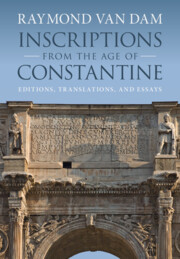
The reign of Constantine, Roman emperor from 306 to 337, was one of the most important periods in world history. Although literary texts often represented him as the first Christian emperor, the inscriptions engraved on monuments, statue bases, and milestones offer alternative perspectives. Inscriptions highlight the influence of the other emperors, the prominence of senators at Rome, the civic traditions for praising benefactors in provincial cities, the logistics of the economy, and the abiding importance of traditional cults. This book includes the Greek and Latin texts of over 800 inscriptions from the early fourth century, with translations and critical annotations. An extended Introduction and almost 200 short essays provide context by explaining the issues and problems, correlating the literary texts, and comparing the legends and images of coins. Without the emperor as the constant focus, the Age of Constantine becomes all the more fascinating.
Previous studies of Greek oracles have largely studied their social and political connections. In contrast, this pioneering volume explores the experience of visiting the oracle of Zeus at Dodona in NW Greece, focusing on the role of the senses and embodied cognition. Building on the unique corpus of oracular question tablets found at the site, it investigates how this experience made new ways of knowing and new forms of knowledge available. Combining traditional treatments of evidence with more recent theoretical approaches, including from psychology, narratology and environmental humanities, the chapters explore the role of nature, sound, touch, and stories in the experience of consultation. By evoking the details of this experience, they help the reader understand more deeply what it was like for ancient men and women to visit the oracle and ask the god for help. This title is also available as open access on Cambridge Core.
The narrative art of Herodotus' Histories has always been greatly admired, but it has never received an in-depth and systematic analysis. This commentary lays bare the role of the narrator and his effective handling of time, focalization, and speech in all the famous and much-loved episodes, from Croesus, via the Ionian Revolt, to the climax of Xerxes' expedition against Greece. In paying close attention to the various ways in which Herodotus structures his story, it offers crucial help to get a grip on the at first sight bewildering structure of this long text. The detailed analysis of Herodotus' narration shows how his masterful adoption and expansion of the epic toolbox endowed the new genre of historiography with the same authority as its illustrious predecessor. The commentary is suitable for all readers of Herodotus' Greek text: students, teachers, and scholars.
This textbook offers students who have no prior background in biblical studies an understanding of the lasting contribution of Israel's scriptures. Bringing a literary approach to the topic, it strikes a balance between historical reconstructions, comparative religions, and theology. Among several distinctive features, It traces the legacy of monotheism first emerging in the pages of Israel's scriptures as an enduring contribution for twenty-first century readers. Monotheism gives the volume an immediate relevance because the so-called Abrahamic religions are rooted in this concept. Whether one is Jewish, Christian, Muslim, or secularist, students will gain a new understanding of the origins of monotheism as their common heritage. The Second Edition of this textbook includes expanded discussions within the text and in sidebars, notably on the history of biblical scholarship, modern methods of interpretation, and wisdom literature.
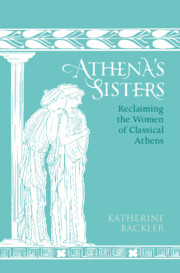
Athena's Sisters transforms our understanding of Classical Athenian culture and society by approaching its institutions—kinship, slavery, the economy, social organisation—from women's perspectives. It argues that texts on dedications and tombstones set up by women were frequently authored by those women. This significant body of women's writing offers direct insights into their experiences, values, and emotions. With men often absent, women redefined the boundaries of the family in dialogue with patriarchal legal frameworks. Beyond male social and political structures, women defined their identities and relationships through their own institutions. By focusing on women's engagement with other women, rather than their relationships to men, this timely and necessary book reveals the richness and dynamism of women's lives and their remarkable capacity to shape Athenian society and history.