To save content items to your account,
please confirm that you agree to abide by our usage policies.
If this is the first time you use this feature, you will be asked to authorise Cambridge Core to connect with your account.
Find out more about saving content to .
To save content items to your Kindle, first ensure no-reply@cambridge.org
is added to your Approved Personal Document E-mail List under your Personal Document Settings
on the Manage Your Content and Devices page of your Amazon account. Then enter the ‘name’ part
of your Kindle email address below.
Find out more about saving to your Kindle.
Note you can select to save to either the @free.kindle.com or @kindle.com variations.
‘@free.kindle.com’ emails are free but can only be saved to your device when it is connected to wi-fi.
‘@kindle.com’ emails can be delivered even when you are not connected to wi-fi, but note that service fees apply.
This chapter attempts to reconstruct the textual history of the Latin–Greek glossary known as Hermeneumata Celtis, from antiquity to the year 1495, when the Humanist Conrad Celtis transcribed the work from a medieval antigraph that was subsequently lost. The thematic glossary of Hermeneumata Celtis is unique among other extant bilingual glossaries because it was supplemented, at some time in Late Antiquity, with the inclusion of Greek words and definitions culled from a Greek alphabetical lexicon similar to Hesychius (but possibly earlier). Other increments came from contamination with other thematic glossaries; the most recognisable points of contact are with what modern scholars call the Hermeneumata Montepessulana.
The initial editions and, more importantly, the first reproductions of the few extant Latin papyri introduced a novel approach to our understanding of writing and provided new interpretative tools that generally remain relevant well beyond the Roman period. This brief reflection discusses several technical terms used to describe significant graphic features from the Roman era. The author maintains that a specialised vocabulary – essential in any discipline aspiring to scientific rigour, such as palaeography – is both a fundamental tool and a product of a systematic methodology and critical analysis.
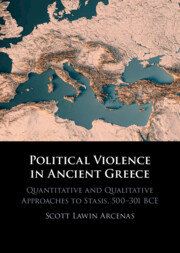
Political violence, which the ancient Greeks called stasis, was a fundamental aspect of Greek society. In this book, Scott Arcenas reshapes our understanding of this important phenomenon. He argues that it differed fundamentally from its analogues in both ancient and modern societies and that in most poleis it occurred with high frequency but very low levels of violence. Stasis therefore promoted economic growth, institutional innovation, and cultural creativity in a variety of important and surprising ways. In order to undertake this study, Dr Arcenas introduces new methods and tools to confront some of the greatest methodological challenges that face scholars of the ancient world: evidentiary scarcity, evidentiary bias, epistemic uncertainty, and lack of clarity regarding the explanatory value of our sources' silence. The book is therefore required reading for a wide range of scholars and students of ancient history.
Rome's calendar often falls into the background in studies of republican political, legal, and religious practices. Its relationship to celestial phenomena is usually unexamined and modernizing assumptions are made about its regularity of operations and the advantages of Caesar's reform. In this book, Daniel Gargola clarifies its relationship to celestial phenomena and reveals the extent to which celestial references permeated public cult; he also demonstrates that the competent authorities often intervened in its operations in order to accommodate other concerns. The calendar also provided the temporal framework for the regulation of public and cultic activities and thus had a central role in Roman law. Roman writers attempted to bring clarity to the norms involving the calendar, and their efforts have often influenced modern attempts to study it. Nevertheless, the complexity of public and cultic life undermined these attempts and Romans always had to navigate between competing norms.
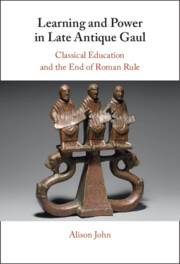
This book traces the changing political and social roles of classical education in late antique Gaul. It argues that the collapse of Roman political power in Gaul changed the way education was practiced and perceived by Gallo-Romans. Neither the barbarian kingdoms nor the Church directly caused the decline of classical schools, but these new structures of power did not encourage or support a cultural and political climate in which classical education mattered; while Latin remained the language of the Church, and literacy and knowledge of law were valued by barbarian courts, training in classical grammar and rhetoric was no longer seen as a prerequisite for political power and cultural prestige. This study demonstrates that these fundamental shifts in what education meant to individuals and power brokers resulted in the eventual end of the classical schools of grammar and rhetoric that had once defined Roman aristocratic public and private life.
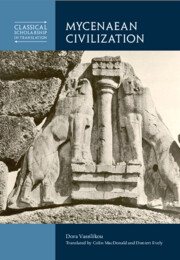
The Bronze Age of Greece was unknown until the end of the 19th century, when Heinrich Schliemann's excavations stunned the world by bringing to light the glamour of Mycenaean elite society. This book, by one of Greece's most distinguished archaeologists, provides a complete introduction to Mycenaean life and archaeology. Through both chronological and thematic chapters, it examines the main Mycenaean centres, the palaces and kingship, the social structure, writing, religion and its political implications, and the contacts and relations of the Mycenaeans with neighbouring countries, especially Asia Minor, Egypt, the coast of Syria-Palestine and Italy. Attention is paid to the distinctive Mycenaean art, including monumental architecture, gold and silver metalwork and jewellery, and the book is supported by over 300 illustrations. Dora Vassilikou concludes by examining the simultaneous catastrophes that brought the Bronze Age of the Eastern Aegean to its end and opened up a new era.
Ancient Greek terminology continues to shape contemporary discourse; hubris is a case in point. Typically seen as the catastrophic yet common tendency to reach too high, only to fall, it remains a fixture in the contemporary discourse of business and politics. But hubris has also become a term of art for researchers in a number of academic disciplines; and it remains a hotly contested topic in Classics. This unique volume of essays explores the connections, continuities and differences between ancient hubris and its modern counterparts. Its distinguished multidisciplinary cast of experts in Classics, Business and Management Studies and Psychology explores what modern researchers can learn from the theorisation and deployment of hubris in ancient sources and how modern approaches to hubris can help us understand the ancient concept.
Paul’s first letter to the Corinthians contains instruction for women to veil their heads when praying or prophesying in the assembly (ekklēsia). In this chapter, I argue that, like other women in the first-century Mediterranean world, Corinthian women most likely veiled and unveiled for a variety of reasons having to do with beauty, comfort, status, virtue, and piety, not solely for theological, exegetical, or liberative purposes.
The third-century Christian writer Origen of Alexandria used the image of the veil to describe the relation between the “letter” of the biblical text and its hidden, spiritual meaning. Origen constructed an allegorical theory of biblical interpretation that relied on the imagery of the veil to illustrate the hiddenness of truth. His biblical interpretations consistently privileged the unveiled Christian “spirit” of the text over what he called the Jewish “letter” – the veiled “flesh” of the text.
Jacques Derrida’s contribution to the book Veils, jointly authored with his friend Hélène Cixous, is, in part, a meditation on his tallit – the Jewish prayer shawl – that was given to him as a boy. Derrida turns to the tallit as a contrast to the veil. The tallit opens an avenue for him to critique the traditional and widespread trope of truth as that which is veiled and that which calls out for unveiling. This epilogue focuses on Derrida‘s affectionate description of his tallit–the yellowing, familiar, soft, singular tallit that resists knowing.
This chapter examines the representation of textiles, curtains, drapery, and other architectural veils in early Christian art from the earliest Christian frescoes to the catacombs and sarcophagi of the fourth and fifth centuries, to the mosaic programs of sixth-century Ravenna and Rome. I argue that one of the ways that veiling increasingly signified in late antiquity and early Byzantium was to intimate mystery, sacrality, and hiddenness while hinting at the promise of revelation and discovery.
For fourth-century theologian Gregory of Nyssa, veils became part of the way to describe the soul’s pursuit of divine love and union. This chapter examines how the numerous veils of the biblical book known as the Song of Songs become the threads with which Gregory weaves not only his mystical reflections on the soul’s unrelenting desire for God but also his description of the allegorist’s pursuit.