To save content items to your account,
please confirm that you agree to abide by our usage policies.
If this is the first time you use this feature, you will be asked to authorise Cambridge Core to connect with your account.
Find out more about saving content to .
To save content items to your Kindle, first ensure no-reply@cambridge.org
is added to your Approved Personal Document E-mail List under your Personal Document Settings
on the Manage Your Content and Devices page of your Amazon account. Then enter the ‘name’ part
of your Kindle email address below.
Find out more about saving to your Kindle.
Note you can select to save to either the @free.kindle.com or @kindle.com variations.
‘@free.kindle.com’ emails are free but can only be saved to your device when it is connected to wi-fi.
‘@kindle.com’ emails can be delivered even when you are not connected to wi-fi, but note that service fees apply.
The so-called Alexander Romance is the most widely read text about Alexander from the ancient world. An unknown author composed this fantastical piece of Greek historical fiction, which narrates Alexander’s entire life, deeds, and death in an extraordinary fashion. The three books of inventive prose narrative, embedded with about 280 lines of verse, are bookended by stories of the king’s conception (1.1–14) and funeral (3.34). Here the text is appreciated in its ancient context, with the provision of an overview of its central issues, potential solutions to them, and possible future directions for study. Several significant matters are focused on: the constitution of the original Greek text of the Alexander Romance; its problematic dating; its contents and structure; its various sources; its characterization of Alexander; its generic classification; and the possible contexts for its original composition.
This chapter deals with the main issues bearing upon Clitarchus and his work, moving beyond the usual division between Testimonia and Fragmenta and giving attention to the context and the agenda of each writer that mentioned him. Attention is given to his popularity as an Alexander historian and as a fine writer, as well as to the real significance of the narrative material attributed to him. This evidence can be combined with his few known biographical details in the evaluation of his chronology, which remains uncertain. The last two sections, dealing with his chronology and with the presentation of Alexander in his work, end with a question mark and invite the reader’s own reflections.
The Alexander most visible to us today is one who was created and recreated in the Roman period. While Alexander’s presence in literature is strong enough that we can reasonably describe the trajectory of intellectual interest in Alexander during the Roman period, more difficult to pin down is the degree to which powerful Romans engaged in conscious imitatio or aemulatio Alexandri, which generally involves squaring literary hints with material evidence that does not always speak to us as directly as we would like it to. Without dismissing the world of ways in which various aspects of Alexander-myth may have been subtly exploited by powerful Romans, this paper charts a path between overly credulous and overly sceptical conclusions concerning individual Romans by taking an overview approach of imperial interest and tightening our definitions of ‘imitation’ or ‘emulation’ in the context of Romans and Alexander. I conclude that both imitatio and aemulatio look quite different at Rome than they do in the provincial east.
The chapter considers Egyptian personal names recorded in cuneiform Babylonian texts. In first-millennium BCE Babylonia people bearing Egyptian names appear in the Murašû archive and temple ration lists as well as in other (minor) sources, in various capacities. People with Egyptian names were predominantly ethnic Egyptians or at least of Egyptian descent, while on rare occasions non-Egyptians took on an Egyptian name or name element. Identifying Egyptian names in cuneiform texts can be tricky – one reason being that the cuneiform script records vowels while Egyptian scripts generally do not, making name identification more dependent on consonants. Another is that Assyriological and Egyptological transcription methods differ substantially, which makes the process of finding a name parallel in Egyptological literature more difficult for the non-Egyptologist. This chapter gives an overview of common Egyptian names, naming patterns and name elements of the period, and instructions on how to identify Egyptian names in Babylonian texts and how to link these names to Egyptological name collections.
This chapter reviews the fragmentary evidence for the five first historians and histories of Alexander: Callisthenes of Olynthus, Chares of Mytilene, Nearchus of Crete, Onesicritus of Astypalea and the royal diaries of the king, perhaps compiled by Eumenes of Cardia. These Greek authors took part of the Asiatic expedition and enjoyed a unique vantage point from which to report on the central events of the campaign. Nevertheless, they often resort to literary convention or even invention along the lines of other great Greek literature, especially Homer and Herodotus. Moreover, they all purport to have had some kind of personal access to the king, and the evidence suggests that they sought to magnify that link in various ways during Alexander’s lifetime and after his death. The chapter is structured around a biographical sketch of each author or, in the case of the Royal Journal, text, and a guide to the content, form and function of each history is supplied.
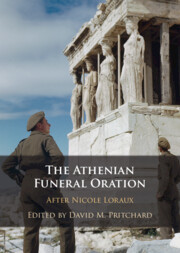
In classical Athens, a funeral speech was delivered for dead combatants almost every year, the most famous being that by Pericles in 430 BC. In 1981, Nicole Loraux transformed our understanding of this genre. Her The Invention of Athens showed how it reminded the Athenians who they were as a people. Loraux demonstrated how each speech helped them to maintain the same self-identity for two centuries. But The Invention of Athens was far from complete. This volume brings together top-ranked experts to finish Loraux's book. It answers the important questions about the numerous surviving funeral speeches that she ignored. It also undertakes a comparison of the funeral oration with other genres that is missing in her famous book. What emerges is a speech that had a much greater political impact than Loraux thought. This volume puts the study of war in Athenian culture on a completely new footing.
This chapter investigates the peculiar human habit of attributing political qualities to honeybees. It shows that by distinguishing a ‘queen bee’ from ‘workers’ we continue a tradition that has its roots in classical antiquity and in Aristotle’s inclusion of honeybees among the zōa politika (the ‘political animals’). The chapter asks why honeybees ‘need’ politics and why human politics ‘needs’ honeybees. The answer to these questions in the context of the ancient world shows what is at stake in current attempts to draw lines between humans and other social animals. The chapter shows that for the purpose of theorizing about human politics as well as in the scientific study of the natural world itself, to naturalize often means to normalize. The chapter shows that this frequently occurs in ways that resonate with what has been called ‘the naturalist fallacy’: the idea that because something occurs in nature it is by definition good.
This chapter explores metamorphosis by focusing on the so-called ‘shearwaters of Diomedea’ – a group of seabirds whose odd behaviour recalls their previous existence as humans. It puts these birds in conversation with other humans-turned-animals both ancient and modern and investigates how they reflect on the experience of transformation. The chapter reveals that both ancient and modern tales of metamorphosis draw on the notion of hybridity in so far as many of the creatures undergoing such a transformation are, in effect, hybrids: they retain part of their human identity while also sporting the body of an animal. At the same time the chapter points to an important difference between ancient and modern ways of thinking the human. It shows that modern tales of metamorphosis tend to explore the dissolution of the boundary that separates the human from all other animals. The ancient conversation, by contrast, returns to – and ultimately affirms – the positions of some of the Greek philosophers arguing for an essential human difference.
This chapter focuses on the figure of the Cyclops and the use of ‘the animal’ in thinking human difference. It presents the animalizing of certain humans (the attribution of animal features to them) as a potent strategy to dehumanize and thus marginalize certain ways of being human. In the ethnographic imagination of Homer’s Odyssey, the margins of the known world are shown to coincide with the margins of the human. The chapter further illustrates that this spatial concept of the human did not remain restricted to the ancient world but carries on into the modern: The figure of the Cyclops, whose problematic humanity is in sharp contrast to the enlightened, educated, and cunning Odysseus, in many ways anticipates that of ‘the savage’ as the quintessential ‘other’ in the modern Western ethnographic literature. And yet the question arises as to whether the ancient story does not already expose the kind of hubris at play when we normalize certain ways of being human while dismissing others.
We have (nearly) reached the end. Our way through this book has brought us face to face with many weird and wonderful creatures: from the humanized lion of Androclus, to the questionable humanity of the Cyclops. From Achilles’ speaking horse Xanthus to the peculiar cries of the searwaters of Diomedea. From monarchic bees to their democratic counterparts. In the course of exploring these and other creatures in their select ancient and modern habitats, the journey has taken us to many fascinating places: the gates of Troy, the labyrinth of Knossos, a dinner party on the gulf of Naples, Sigmund Freud’s consulting rooms, the political philosophy of Hannah Arendt, and the works of Pablo Picasso. I hope you enjoyed the ride.
This chapter explores hybridity by exploring the figure of the Minotaur in the context of a number of similar ancient creatures, such as the centaurs and satyrs, and of the god of shepherds, flocks, and the wild: Pan. It illustrates that the peculiar hybridity of the Minotaur and the ancient story explaining his genesis raise questions about the scope and limits of human intervention into the realm of nature. It shows that, rather than exploring the limits of the human in positive ways, the figure of the Minotaur manifests the monstrous consequences of human transgression.
The second chapter touches more firmly on the philosophical debate and the arguments for human exceptionalism put forward over its course. The chapter puts Xanthus (the prophetic horse from Homer’s Iliad) as the first and prototypical speaking animal in the Western tradition in conversation with other famous speaking animals, including Plutarch’s speaking pig Grunter (Gryllus), a speaking rooster who claims to be a re-incarnation of the philosopher Pythagoras, and Kafka’s Red Peter. The chapter shows that the figure of the speaking animal is central to Western conceptions of the human. In classical antiquity, it features in stories that confirm the vertical relationship between humans (at the top) and animals (below). And yet, at the same time, right from the start of the conversation in the ancient world, the apparent anthropomorphism of the speaking animal was also used to critique the very idea of human exceptionalism. There is a direct line between how some modern animal fables point to man’s animal nature and the concept of the human explored in parts of the ancient evidence.