To save content items to your account,
please confirm that you agree to abide by our usage policies.
If this is the first time you use this feature, you will be asked to authorise Cambridge Core to connect with your account.
Find out more about saving content to .
To save content items to your Kindle, first ensure no-reply@cambridge.org
is added to your Approved Personal Document E-mail List under your Personal Document Settings
on the Manage Your Content and Devices page of your Amazon account. Then enter the ‘name’ part
of your Kindle email address below.
Find out more about saving to your Kindle.
Note you can select to save to either the @free.kindle.com or @kindle.com variations.
‘@free.kindle.com’ emails are free but can only be saved to your device when it is connected to wi-fi.
‘@kindle.com’ emails can be delivered even when you are not connected to wi-fi, but note that service fees apply.
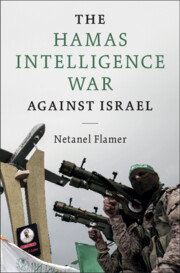
Since its founding in 1987, the political and ideological dimensions of the terror organisation Hamas have been well discussed by scholars. In contrast, this innovative study takes a new approach by exploring the entire scope of Hamas's intelligence activity against its state adversary, Israel. Using primary sources in Arabic, Hebrew and English, Netanel Flamer analyzes the development of Hamas's various methods for gathering information, its use of this information for operational needs and strategic analysis, and its counterintelligence activity against the Israeli intelligence apparatus. The Hamas Intelligence War against Israel explores how Hamas's activity has gradually become more sophisticated as its institutions have become more established and the nature of the conflict has changed. As the first full-length study to analyze the intelligence efforts of a violent non-state actor, this book sheds new light on the activities and operations of Hamas, and opens new avenues for intelligence research in the wider field.
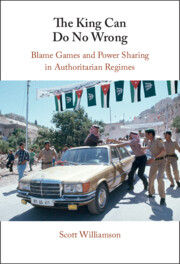
Why are some autocrats more effective than others at retaining popular support even when their governments perform poorly? To develop insights into popular politics and governance across authoritarian regimes, this book stresses the importance of understanding autocratic blame games. Scott Williamson argues that how autocrats share power affects their ability to shift blame, so that they are less vulnerable to the public's grievances when they delegate decision-making powers to other political elites. He shows that this benefit of power-sharing influences when autocrats limit their control over decision-making, how much they repress, and whether their regimes provide accountability. He also argues that ruling monarchs are particularly well positioned among autocrats to protect their reputations by sharing power, which contributes to their surprising durability in the modern world. Drawing on extensive fieldwork in Jordan and cross-national analysis of autocracies, the book illustrates the important role of blame in the politics of authoritarian regimes.
I offer an overview and analysis of charitable giving in Kuwait, Qatar, Oman and Saudi Arabia, and explore its linkages to politics. I study giving at home and abroad, by governments, non-governmental organizations, ruling elites, and private actors, and doctrinally connected giving. I examine how these entities give, to whom they give and why they give as they do. I highlight several key findings: First, in three of the four countries, the most active and best endowed foundations have been created by (members of) ruling families or prominent politico-religious associations; second, private giving tends to concentrate on family, tribe, ethnic community; third, religious precepts are routinely modified to appease a particular social category; fourth, with few exceptions, migrant workers are excluded from access to charity. These findings suggest that charitable giving, while intrinsic to the practice of Islam, may be instrumentalized to advance secular interests: 1) gather information about society, 2) assert relationships of authority and control, 3) shore up allegiance (to a ruler and/or an ideology), 4) consolidate a definition of community.
I build upon the earlier discussion – in Chapter 3 – of internal forms of social "tiering" and exclusion to further interrogate the politics of belonging in Gulf monarchies, this time through the employment of foreign labor. I disentangle the ways in which foreign labor plays a role in the shaping and consolidation of the national community, and I distinguish among European "expats," non-GCC Arabs, Asian and African laborers. I argue that labor from the three different categories play similar but also distinct roles in the delineation of national community: While they are differentially incorporated in ways that protect the "nation" and appease the citizen-subject, varying degrees of marginality reflect Gulf society’s perceptions or aspirations of the difference between itself and "the other(s)." Additionally, I examine some of the peculiarities of the importation, organization and incorporation of foreign labor, connect them to the normative tradition, and consider how they serve the ruler’s objective to manage and control society.
The conclusion situates this volume in its wider historical context and assesses the gains derived from the methodology it employs. Unlike its situation after 1948, during the last decades of Ottoman rule Gaza was in no way an anomaly but rather an integral part of the Ottoman Empire. This contrast helps better understand depictions of Gaza in current day discourse: it was never integrated into any modern nation-state, and more closely resembles a relic of the pre-nation-state period. Countering the widespread fallacy that Gaza does not fit into any meaningful historical narrative, this work reimagines Gaza without the cumulative effects of the successive catastrophic events since WWI and the strictures of the Gaza Strip, but rather in terms of its multiple connections in time and space as they evolved over the centuries. Its reliance on an empirical, source-driven GIS-supported methodology constitutes a major advance that highlights the centrality of political factionalism for the city and its region and sheds light on the lifeworlds of Gaza’s commoner population. Overall, this work provides a rich terrain for formulating new hypotheses on social strategies in Gaza’s society and examining the strategic constructedness of claims found in contemporary texts.
This chapter delves into the politics of factionalism in Gaza, its causes, development, the impact of external factors, and its effects. It surveys the main bones of contention within the Gazan elite, presents portraits of elite families and political personalities, and discusses the relationships between the Gazan elite and outside forces. It focuses on the rise of the Shawwa family and its allies the Busaysus, erstwhile supporters of the Husaynis, who at some point in the mid-1890s turned against them for unknown reasons and eventually were able to oust them from control over the city’s politics in 1898, when the leadership of the Husayni family was exiled by the Ottoman government to Ankara. The rise of the Shawwa–Busaysu coalition, whose source of power was the newly created municipality, was accompanied by a spatial divide of the city between the neighborhood of Daraj where most of the elite families, including the Husaynis, resided, and the relatively poor neighborhood of Shajaʿiyya, the stronghold of the opposition. This led to what here is termed “spatialized factionalism,” a new concept that is discussed at length. Gaza’s factionalism is then analyzed in comparison to late Ottoman cities in Bilad al-Sham.
Provides a brief overview of elements of the Islamic normative tradition. I consider three key concepts – justice, the common good and community – and ambiguities of their contemporary application. The primary focus of the discussion concerns resources (including wealth and property) – their attribution and distribution. To whom do wealth, property and resources belong, and what are their responsibilities? How, by whom, and for what purposes are wealth and resources to be distributed, and who has the authority to make such determinations? In broad strokes, I outline how, according to religious norms, resources ought to be utilized and managed for the sake of the "common good." The purpose of this discussion is to provide a framework that facilitates a deeper understanding of the extent to which religious norms have been instrumentalized and at times, reformulated in the conduct of the four oil-financed institutionalized practices explored in subsequent chapters.
I conclude with a review of my findings in Chapters 3–7. I elucidate the relationship between “oil” and “Islam” and what that relationship teaches us about politics in Gulf monarchies. The overwhelming message is that with their abundant wealth, Gulf rulers have been exploiting not only oil rents but also religious doctrine and its (re-)formulations to function as tools of social management and social control. Their aim is to bolster their authoritarian ambitions: ruling families’ capacity to both dominate and shape their societies and retain their monopoly over resources. For the sake of maintaining – and enriching – dynastic states and constructing the nation, oil and Islam are their principal tools.
I introduce the topic, theme, central argument of the study, and its setting in Gulf petro-monarchies. I discuss the relevant scholarly literature, especially as it concerns ways in which religion (and specifically, Islam) has been used by political actors to advance particular interests. I provide a detailed elaboration of the argument and its various parts, as well as the method of analysis and justification for the choice of cases. I then discuss the context and cases in greater detail, with attention to key features of the historical development of the petro-monarchies from their pre-oil contact with the British imperial power, the arrival of oil companies, the importation of labor, the definition of borders and emergence of “modern” states. I illustrate noteworthy structural peculiarities of each of the four states. Finally, I outline the architecture of the manuscript, with an overview of each chapter.