To save content items to your account,
please confirm that you agree to abide by our usage policies.
If this is the first time you use this feature, you will be asked to authorise Cambridge Core to connect with your account.
Find out more about saving content to .
To save content items to your Kindle, first ensure no-reply@cambridge.org
is added to your Approved Personal Document E-mail List under your Personal Document Settings
on the Manage Your Content and Devices page of your Amazon account. Then enter the ‘name’ part
of your Kindle email address below.
Find out more about saving to your Kindle.
Note you can select to save to either the @free.kindle.com or @kindle.com variations.
‘@free.kindle.com’ emails are free but can only be saved to your device when it is connected to wi-fi.
‘@kindle.com’ emails can be delivered even when you are not connected to wi-fi, but note that service fees apply.
After the 1952 revolution, the Egyptian state became an ideological project promoted by national cultural and media institutions. Focusing particularly on the years under the leadership of Gamal Abdel Nasser (1954–1970), Chihab El Khachab uses official written and visual sources produced by different governmental departments to show how low- and mid-ranking bureaucrats represented and embodied the Egyptian state through a praxis of 'achievement' (ingāz, pl. ingazāt). This study demonstrates how a successful anti-colonial nationalist movement built its own state apparatus. El Khachab argues that the state's 'achievements' are neither the tangible outcome of governmental work nor the self-evident metrics needed to evaluate national progress, but an ideological category deployed by bureaucrats. Conceiving achievements in this way allows us to understand how everyday bureaucratic work represents and embodies 'the state', and why this idea remains an important force in contemporary Egypt.
Through vibrant ethnographic storytelling, this study reveals how young women capitalise on uncertainty in Calabar, southeastern Nigeria, to realise respectable futures. Exploring young women's daily activities across different sites from the house to church, sewing shops and beauty salons, Fashioning Futures examines the complex ways in which various forms of uncertainty permeate life in a city shaped by Pentecostal fervour and patriarchal conservatism. Juliet Gilbert demonstrates how young women actively engage with forms of uncertainty such as illusion, dissimulation and fakery to present themselves as respectable urbanites and work towards marriage. Revealing young women's centrality in the construction of urban lifeworlds in contemporary Nigeria, Gilbert re-casts youthhood in Africa, both as an analytical category and as a time of experience.
This global archival collaboration documents the history of Latin American evangelicalism through the translation of carefully selected primary sources, providing readers with direct access to the perspectives and deliberations of the first generations of evangelicals in Latin America. The documents are framed by substantive introductions from leading scholars within the region, situating local stories and voices within the wider demographic and conceptual transformations reshaping Christianity worldwide. The volume shifts the focus of mission and belief studies away from English-language centered narratives and highlights the complex interplay of local and global forces as they unfold in the lives of the movement's newest members. From accounts of the Pentecostal revival in Chile; to shifting notions of religious liberty in nineteenth-century Nicaragua; evangelization efforts among Indigenous groups in Ecuador; and the first Spanish-language evangelical newspaper in Argentina; this work offers a deeper look at the nascent effervescence of Latin America's growing religious minority.
In a region known for its export of oil, Monarchies of Extraction explores how the Gulf states are simultaneously defined by the importation of food. Charting the economics and politics of the Gulf through an examination of its food system, Christian Henderson demonstrates how these states constitute a distinct social metabolism. Starting with the pre-oil phase, this book examines the politics of agrarian change in the Gulf. In the contemporary period, Henderson considers the way that the Gulf states represent 'inverted farms', where the import of prodigious quantities of agricultural commodities has enabled these economies to overcome their lack of arable land. As a result of this trade, states such as the UAE and Saudi Arabia have developed their own agribusiness sectors. Henderson further shows how food and consumption in the Gulf states constitute political questions of diet, sustainability, and boycott.
Drawing together decades of research, Steve Smith explores the survival and adaptation of folk beliefs in Mao's China in the face of seismic social change and growing political repression. Bringing an often-neglected aspect of modern Chinese history to the fore, he shows how folk religion maintained a vital presence in everyday life. In myriad ways, through Buddhism, Daoism and Confucianism, spirit mediums and spirit healing, divination, geomancy, and the reform of traditional marriage and funeral rites, rituals and beliefs provided resources for adaptation and resistance to the regime. This unique history gives readers a vivid sense of life under Mao Zedong as vibrant, contentious and resilient – a far cry from stereotypes of a secular, regimented and monochrome society.
In this landmark contribution to the study of modern China, Steve Smith examines the paradox of 'supernatural politics'. He shows that we cannot understand the meaning of the Communist revolution to the Han Chinese without exploring their belief in gods, ghosts and ancestors. China was a religious society when the Communist Party took power in 1949, and it sought to erode the influence of the minority religions of Buddhism, Daoism, Catholicism and Protestantism. However, it was the folk religion of the great majority that seemed to symbolize China's backwardness. Smith explores the Party's efforts to eliminate belief in supernatural entities and cosmic forces through propaganda campaigns and popularizing science. Yet he also shows how the Party engaged in 'supernatural politics' to expand its support, utilizing imagery, metaphors and values that resonated with folk religion and Confucianism. Folk religion is thus essential to understanding the transformative experience of revolution.
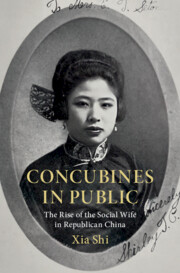
Moving beyond familiar narratives of abolition, Xia Shi introduces the contentious public presence of concubines in Republican China. Drawing on a rich variety of historical sources, Shi highlights the shifting social and educational backgrounds of concubines, showing how some served as public companions of elite men in China and on the international stage from the late nineteenth to the mid-twentieth century. Shi also demonstrates how concubines' membership in progressive women's institutions was fiercely contested by China's early feminists, keen to liberate women from oppression, but uneasy with associating with women with such degraded social status. Bringing the largely forgotten stories of these women's lives to light, Shi argues for recognition of the pioneering roles concubines played as social wives, their impact on the development of gender politics, and on the changing relationship between the domestic and public for women during a transformative period of modern Chinese history.
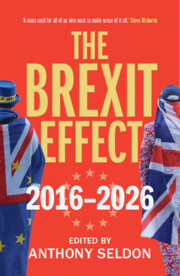
Britain's decision to leave the European Union was perhaps the most divisive and consequential event of modern British politics. To assess its impact on the tenth anniversary of the referendum, Anthony Seldon assembles an unparalleled list of writers from all sides of the debate – including Brexit MP Steve Baker, ex-Cabinet Secretary Simon Case, election guru John Curtice, economist Paul Johnson, ex-Foreign Secretary David Miliband, ex-Cabinet minister Emily Thornberry, leading lawyers Marina Wheeler and Jonathan Sumption and ex-Archbishop of Canterbury Rowan Williams. They analyse why the referendum happened, how Brexit became law and its impact on every corner of British life, concluding with a range of perspectives on how Britain might make the most of the opportunities now available to it. As the dust continues to settle, The Brexit Effect delivers a vital and timely analysis for all who wish to understand Britain's past, present and future.
This book examines a wide sweep of prominent Black and Asian British poets, from Linton Kwesi Johnson and Jean 'Binta' Breeze through David Dabydeen, Bernardine Evaristo, and Jason Allen-Paisant. Throughout, Omaar Hena demonstrates how these poets engage with urgent crises surrounding race and social inequality over the past fifty years, spanning policing and racial violence in the 1970s and 1980s, through poetry's cultural recognition in the 1990s and 2000s by museums, the 2012 London Olympics, the publishing scene, and awards and prizes, as well as continuing social realities of riots and uprisings. In dub poetry, dramatic monologues, ekphrasis, and lyric, Hena argues that British Black and Asian poets perform racial politics in conditions of spiraling crisis. Engaged and insightful, this book argues that poetry remains a vital art form in twenty-first-century global Britain. This title is also available as open access on Cambridge Core.
European integration has many origins, although its history goes back less far than is often assumed. This study offers an accessible and engaging overview of the past and present of today's European Union, from the postwar era to the present day. Beginning with the foundational treaties of the 1950s, the book examines how the EU became an increasingly global actor through the 1980s and 1990s. Focusing particularly on recent developments, Kiran Klaus Patel explores how the EU's current role was far from a given and remains fragile. Looking beyond public discourse fixated on crisis, Patel highlights the adaptability and resilience of the EU and how it has turned challenges into opportunities and expanded its own role in the process. This book sheds new light on the past in order to understand the present – and possible options for the future. In the process, it challenges conventional wisdoms of Europhiles and Eurosceptics alike.
Aurangzeb 'Alamgir (r. 1658–1707) was the last of the so-called 'great' Mughal emperors. He remains a controversial historical figure: castigated for religious intolerance and placed at the centre of a narrative of Mughal decline by some; considered a great Muslim hero by others. In this richly researched exploration of Aurangzeb 'Alamgir's life and times, Munis D. Faruqui contests such simplistic understandings to unearth a more nuanced picture of the emperor and his reign. Drawing on a large and varied archive, Faruqui provides new insights into the emperor's rise to power, his administrative and religious policies, and the role of the imperial eunuchate and harem. By unpicking the complex dynamics of a long reign, from Aurangzeb 'Alamgir's accession to the last weeks of his life and his eighteenth-century memorialisation, this remarkable new history cuts through the many myths that have obscured the extraordinary life story of Emperor Aurangzeb 'Alamgir.
Alejo Carpentier in Context examines one of the greatest novelists of Latin American literature in the 20th century. The Cuban Carpentier was one of the regions firmest supporters of the Cuban Revolution yet was revealed later to have hidden important details of his biography. A polymath of encyclopedic knowledge, contributions to this book showcase his influence, not only as a novelist but also as a musicologist, writer of ballet scenarios, radio broadcaster, opera aficionado and expert in modernist architecture. This volume offers perspectives on Carpentier's concept of the marvelous real, which later morphed into magical realism, as well as on the baroque as a defining characteristic of Latin American culture. Debates focus on Carpentier's role as a public intellectual in Cuba and abroad, on new revelations about his biography and readings of his major novels, introducing ecocritical perspectives, theories of intermediality and recent philosophies of history.
Why do governments get overthrown? Why are many political systems chronically unstable? The Coup Trap in Latin America answers these questions by looking to the origins and dynamics of the military coup d'état that, since the late nineteenth century, have turned several Latin American political systems into some of the most unstable in the world. The book also explores how others escaped from chronic instability, either by constructing constitutional democracy (in Chile, Costa Rica, and Uruguay) or by establishing durable autocracies, (in Mexico and Nicaragua). The Coup Trap in Latin America pioneers the use of statistical predictions to explain when military coups do and do not occur – and uses historical narratives to illustrate and develop these findings. The book provides an innovative explanation of the unconstitutional seizure of power, making it a valuable resource for political scientists, historians, sociologists, and readers interested in Latin American politics and history.
This is the first book to place the autobiographical projects of canonical comics authors Art Spiegelman and Alison Bechdel alongside each other, focusing on new and neglected works (and with an epilogue on the Pulitzer Prize-winning tour-de-force debut of Tessa Hulls). The book offers a lively cast of five formal tropes-boxes, spirals, tic-tac-toe, mirrors, and webs-through which to model fundamental elements of the comics grammar and its material processes. Built around rich close readings, it shows what makes the comics form particularly suited to negotiate complex familial and creative inheritances and manage layered, relational identities. Interweaving accounts of Jewish identity, female embodiment, legacies of modernism, and feminist practice, the book traces how contemporary graphic memoirists visually work and rework their filiations and affiliations through form, situating the medium as a privileged site and staging ground for arguments about the enabling possibilities of form now.
This is a study of the financial system that sustained the sixteenth-century empire of Philip II of Spain. Detailing the links between royal revenue sources, trade fairs, credit market, long-term debt, and contracts with Genoese bankers, it reveals how Philip's financial and military strategy complemented each other. Central to the narrative is Philip's struggle with the Cortes, which, under Castile's implicit constitution, imposed limits on public debt, forcing repeated renegotiations as military expenses and debt escalated. In this first analytical study of Philip's financial policies, Carlos Álvarez-Nogal and Christophe Chamley draw on extensive archival research and secondary sources to show that Philip's main challenge was not the bankers but the Cortes. He used temporary payment suspensions and financial crises as tools to pressure the Cortes for additional taxation. The book highlights the interplay between debt, political power, and state formation in early modern Europe.
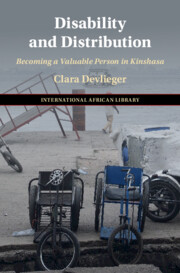
Set in the postcolonial city of Kinshasa (DR Congo), this ethnography explores how people with disabilities navigate debates about the just distribution of resources where there is little state organised welfare, and public perception of disability swings between the 'deserving' and 'undeserving'. Tracing a historic increase of disability due to polio and its long-term effects, this book examines two controversial livelihood activities that serve as informal alternatives to state support: a specialized form of international border brokerage across the Congo River, and a unique practice of bureaucratized begging that imitates state tax collection and humanitarian fundraising. Clara Devlieger examines how such activities shape ways that disabled people conceive the idea of becoming 'valuable people' in local terms: by supporting loved ones, many achieve high esteem against expectations, while adapting exclusionary models of urban personhood to include disability. Devlieger offers a new understanding of the complex dynamic between the imagined role of the state, international discourses of rights, and local experiences of disability.
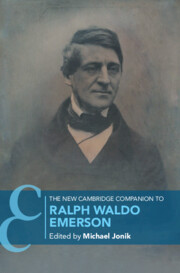
While Emerson's place in American literary history has remained secure, the New Cambridge Companion to Ralph Waldo Emerson draws on a wealth of recent Emerson scholarship which has highlighted his contemporary relevance for questions of philosophy and politics, ecology and science, poetics and aesthetics, or identity and race, and connects these to the key formal and interpretive issues at stake in understanding his work. The volume's contributors engage the full breadth of Emerson's writing, developing novel approaches to canonical works like Nature, the essays 'Self-Reliance' 'Experience,' or to his poetry and journals, and bringing critical attention to his lectures and to the long-overlooked texts of his later period. This New Cambridge Companion to Ralph Waldo Emerson thus both bears witness to the new Emersons that have emerged in the past decades, and draws a new circle in Emerson's reception.
In the wake of Iran's revolution in 1978–79, a fundamentalist Islamic theocracy took control of the country. These dramatic changes impacted all sectors of society including a vast array of diverse peoples and cultures. In this book, Lois Beck provides an anthropological and historical account of Iran's many minorities. She focuses on the aftermath of the revolution, declaration of an Islamic republic, and Iraq-Iran war. Drawing on six decades of anthropological research, Beck provides frameworks for understanding how each of Iran's linguistic, religious, ethnic, ethno-national, and tribal minorities fashioned unique identities. These identities stem from factors relating to history, location, socioeconomic patterns, and sociocultural traits. They reflect the people's interactions with Iran's rulers and governments as they changed over time. A modern nation-state cannot be fully understood without knowing the extent of its reach in the peripheries and border regions and among its diverse peoples. This landmark study challenges existing scholarly accounts by offering broad and detailed perspectives on Iran's many distinct languages, religions, ethnicities, ethno-nations, and tribes.
Allen Ginsberg's life and career can only be described as exceptional. Fond of pushing limits and challenging boundaries, Ginsberg produced a staggering body of work that garnered attention not just for its innovative style and personal candor, but for its range of theme and willingness to meaningfully engage the world in a bid to change it. Ginsberg is essential to an understanding of 20th century poetry. But Ginsberg was not just a poet. He was an icon, instantly recognizable to his legions of fans in underground circles, and it is impossible to overstate the importance of Ginsberg as a countercultural figure. Taking a broadly chronological approach, this volume provides a comprehensive overview of the major issues, themes, and moments essential to understanding Ginsberg, his work, and his outsized influence on the cultural politics of the postwar both in the US and globally.