To save content items to your account,
please confirm that you agree to abide by our usage policies.
If this is the first time you use this feature, you will be asked to authorise Cambridge Core to connect with your account.
Find out more about saving content to .
To save content items to your Kindle, first ensure no-reply@cambridge.org
is added to your Approved Personal Document E-mail List under your Personal Document Settings
on the Manage Your Content and Devices page of your Amazon account. Then enter the ‘name’ part
of your Kindle email address below.
Find out more about saving to your Kindle.
Note you can select to save to either the @free.kindle.com or @kindle.com variations.
‘@free.kindle.com’ emails are free but can only be saved to your device when it is connected to wi-fi.
‘@kindle.com’ emails can be delivered even when you are not connected to wi-fi, but note that service fees apply.
Accountability Shock presents the first systematic explanation of why some 'Third Wave' democracies developed peacefully while others became the world's most violent. The book demonstrates how robust transitional justice processes – combining truth commissions with prosecution of autocratic-era atrocities – prevent criminal violence in new democracies. By holding authoritarian specialists in violence accountable, new democracies can break state impunity, preventing them from becoming key actors in the production of large-scale criminal violence and reshaping the logic of state coercion in democracy. With in-depth analyses of six Latin American cases, the work illuminates why transitional justice is crucial for addressing state-criminal collusion in hybrid contexts. Forged out of a close collaboration between transitional justice scholars and practitioners, Accountability Shock strengthens existing connections while offering practical insights for countries still grappling with authoritarian legacies and violence.
Grounded in descriptive linguistics, this textbook introduces the basics of the major subfields of linguistics, as well as the Chinese writing system, for students with no prior linguistic training. It presents the Chinese language from the perspective of both modern linguistics and its longstanding philological legacy, as well as providing historical and sociolinguistic context. Chapters cover phonology and phonetics, morphology, lexicon, lexical semantics, syntax, sign language and braille. Authentic, real-world examples are drawn from Chinese newspapers, websites, and social media to facilitate meaningful linguistic analysis, while other examples contrast English and Chinese to help students grasp key concepts. Students will also benefit from the robust pedagogical approach, which includes learning objectives, guiding questions, checkpoint summaries, discussion questions, exercises, further readings, and bilingual glossaries. Supplementary resources provide answers to exercises, sample course syllabi, links to resources, and recordings of sounds.
The key argument of the volume is that post-1989 transformation deeply affected states and societies on both sides of the former Iron Curtain and was mutually constitutive. While post-communist Europe had to re-invent itself to be 'admitted' to the EU, the old member states and the EU changed too – less visibly, but no less profoundly. This volume examines these transformations from a new perspective, defined by scholars from post-communist Europe, who set the agenda of the volume in a series of workshops. Their colleagues from the 'West' were invited to reflect on the experience of their countries in the light of the questions and concerns defined in those workshops. The authors include scholars from a variety of backgrounds: established and young, coming from all parts of the continent and having different views on the politics of European integration. This title is also available as open access on Cambridge Core.
The traumatic Spanish invasion of Mesoamerica, and the Ibero-Catholic colonialism that followed, truly transformed Indigenous political, economic, and socio-cultural practices. Confronted by dogmatic European literary regimes, strident indoctrination, and acts of structural violence, how could 'Aztec' education have survived in colonial times? An Unholy Pedagogy rethinks education studies by centering discussions on Indigenous visions of learning that shaped schooling throughout the sixteenth century. Joshua Jacob Fitzgerald tracks education systems before the Spanish-Catholic invasion, examining the writings, art, and architecture of Nahua communities. He analyses Nahuatl primary sources and historical art and archaeological sources, focusing especially on materials produced by Indigenous and Indigenous-Christian artists and scribes. This fascinating interdisciplinary study reveals the ways that Nahua students transformed pedagogy, shaped learning, and preserved local knowledge.
The regular public transmission of news was one of the great inventions of the Renaissance. This Element, while offering a general account of news in the period, will convey the latest research results concerning the dynamics and significance of this major development. Drivers of change, apart from sheer curiosity, included state officials seeking opportunities, merchants seeking markets, writers seeking jobs. Traditional oral settings for news exchange, in homes, at court, and in public squares, from this period onward would have a constant supply of new topics of conversation originating not only from local occurrences but from far away, and not only from books, pamphlets and private letters, but also from regularly produced news sheets – first handwritten, then printed –covering what were thought to be the major events of the day, with significant effects on widespread ways of thinking and behaving.
In Illiberal Law and Development, Susan H. Whiting advances institutional economic theory with original survey and fieldwork data, addressing two puzzles in Chinese political economy: how economic development has occurred despite insecure property rights and weak rule of law; and how the Chinese state has maintained political control amid unrest. Whiting answers these questions by focusing on the role of illiberal law in reassigning property rights and redirecting grievances. The book reveals that, in the context of technological change, a legal system that facilitates reassignment of land rights to higher-value uses plays an important and under-theorized role in promoting economic development. This system simultaneously represses conflict and asserts legitimacy. Comparing China to post-Glorious Revolution England and contemporary India, Whiting presents an exciting new argument that brings the Chinese case more directly into debates in comparative politics about the role of the state in specifying property rights and maintaining authoritarian rule.
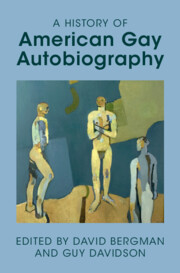
Telling one's own story has always been central to American gay culture. Yet until now there has been no extensive history of gay American autobiography. This volume provides the first comprehensive study of this crucial genre in all its complexity and diversity. Its lively and insightful analyses of a wealth of gay American autobiographical texts attend both to their historical significance and to the qualities that make them worth reading. Covering works produced over the past 200 years, the book vividly conveys how the identities of same-sex-attracted men have shifted over time and intersected with class, race, ethnicity, and occupation. Taken together, the essays in this volume demonstrate how gay life writing has contributed invaluably to the historical struggles against the subordination and persecution of same-sex sexuality and to its establishment as a legitimate form of self-expression.
Order, Authority, Nation develops a sociological account of political conversion from left to right through an examination of the historical case of Marcel Déat and the French neo-socialists. Déat and the neo-socialists began their careers in the 1920s as democratic socialists but became fascists and Nazi collaborators by the end of World War II. While existing accounts of this shift emphasize the ideological continuity underlying neo-socialism and fascism, this book centers the fundamentally discontinuous and relational character of political conversion in its analysis. Highlighting the active part played by Déat and the neo-socialists in their own reinvention at different moments of their trajectory, it argues that political conversion is a phenomenon defined not just by a change in belief, but at its core, by how political actors respond to changing political circumstances. This sociological account of a phenomenon often treated polemically offers a unique contribution to the sociology and history of socialism and fascism.
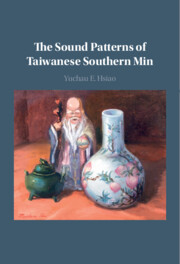
Southern Min – the most commonly spoken variant of Taiwanese – has over 100 million speakers. This book provides the first comprehensive analysis of Taiwanese Southern Min (TSM) phonology, filling a critical gap in linguistic research. It demonstrates how the language's sound patterns have evolved over time, and explores its key phonological and tonal features. Beginning with an overview of the language's phonological system, it progresses to specialized topics, including segmental and tonal mutations, tonal domains, and metrical structures. Grounded in three purpose-built corpora, it integrates empirical data and statistical analyses to illuminate phonological processes and patterns. It also explores rarely addressed topics, including phonological interfaces, the rhythms of poetry and folk ballads, and the iGeneration dialectal variety, providing analytical clarity on complex phenomena. Serving as both a detailed reference for researchers and a supplementary text for phonology and Asian linguistics courses, its illuminating insights will inspire further research into this intricate linguistic system.
In this rich study of early modern Würzburg, Jan de Vries reconstructs the demographic life of a pre-industrial city. Utilising modern demographic techniques, he analyses data about thousands of families between 1696–1711 and examines every stage of the life course from infancy, leaving home, marriage and fertility, to widowhood, remarriage, and mortality. Close study of a single German city allows for special attention to be paid to differences of social class and migrant status, and de Vries emphasises the critical role of migrants to the make-up of the urban community. This new interpretation allows for the Sharlin theory and other questions concerning marriage choice, fertility control, and mortality risks to be tested. At every stage, de Vries compares the findings for Würzburg to those of other cities in Germany and Europe, developing existing generalisations, and contributing to a better understanding of urban historical demography.
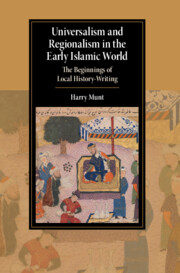
What was the role of local history-writing in the early Islamic World, and why was it such a popular way of thinking about the past? In this innovative study, Harry Munt explores this understudied phenomenon. Examining primary sources in both Arabic and Persian, Munt argues that local history-writing must be situated within its appropriate historical contexts to explain why it was such a popular way of thinking about the past, more popular than most other contemporary forms of history-writing. The period until the end of the eleventh century CE saw many significant developments in ideas about community, about elite groups and about social authority. This study demonstrates how local history-writing played a key role in these developments, forming part of the way that Muslim scholars negotiated the dialogues between more universalist and more particularist approaches to the understanding of communities. Munt further demonstrates that local historians were participating in debates that ranged into disciplines far beyond history-writing.
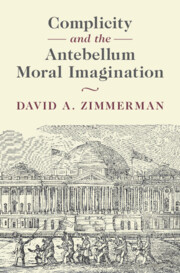
By what routes and on what grounds do moral blame and shame for social wrongs fall on individuals, groups, and institutions? To answer this question is necessarily to excite the moral imagination, to envision our moral connection to social, economic, and political harms that may appear remote or opaque. Between 1830 and 1860, American religious authorities, novelists, abolitionists, market activists, and political insiders trained this imagining. They delineated how moral complicity radiated across urban social networks, criminal conspiracies, political structures, and economic systems. In this original study, Zimmerman illuminates how new conceptions of moral complicity and participatory sin emboldened activists, animated new literary forms, sparked political controversy, and seeded a plan to racially transfigure the Atlantic economy. In media ranging from gothic convent tales to imperial trade proposals, complicity critics conjured not only the dangers but also the responsive duties and opportunities raised by new forms of sociomoral enmeshment.
For centuries, Western scholars portrayed China either as a land of superior morality, economy, and governance or as a formidable country of pagans that posed a global threat to Western values. Idealized images of China were used to shame rulers for their incompetence, while China was demonized as an external threat to cover up domestic political failures. In the twentieth century, the geopolitics of global capitalism have facilitated more nuanced perspectives, but the diversifying of knowledge about China is far from complete. In this thought-provoking study, Ho-fung Hung finds that both Western elites and China's authoritarian regime today continue to promote many Orientalist stereotypes to advance their economic interests and political projects. He shows how big-picture historical, social, and economic changes are inextricably linked to fluctuations in the realm of ideas. Only open debate can overcome extremes of fantasy and fear.
Dante's Divina Commedia/Divine Comedy (completed c. 1321) is considered one of the greatest works in Western literature, and its three canticles – Inferno, Purgatorio, and Paradiso – have had a powerful influence on subsequent literature and thought. Dante shares the classical idea that political philosophy aims to defend the philosophic life, and in Paradiso he does just that, defending philosophy, understood as a way of life, against its subordination to Christianity. Paul Stern shows the contribution Dante's reflection on political life makes to his theoretical defense of the philosophic life, a life whose character and goodness are conveyed by his intensely self-reflective poetry. On his account, Dante's approach can guide our judgment of any proposal for the comprehensive transformation of human existence. It enables us, in short, to think more clearly about just what we should mean by paradise.
Amidst calls for a return to the high tax rates of the 1950s and 60s, this book examines the tax dodging that accompanied it. Lacking political will to lower the rate, Congress riddled the laws with loopholes, exemptions, and preferences, while largely accepting income tax chiseling's rise in American culture. The rich and famous openly invested in tax shelters and de-camped to exotic tax havens, executives revamped the compensation and retirement schemes of their corporations to suit their tax needs, and an industry of tax advisers developed to help the general public engage in their own form of tax dodging through exaggerated expense accounts, luxurious business travel on the taxpayer's dime, and self-help books on 'how the insider's get rich on tax-wise' investments. Tax dodging was a part of almost every restaurant bill, feature film, and savings account. It was literally woven into the fabric of society.
The Iron Curtain remains an iconic representation of the Cold War. But what was it really on the ground? Fortified borders to prevent citizens from leaving emerged first in the interwar USSR and then in socialist post-WW II Europe. Fortifications occurred both at borders between socialist states and at their external boundaries to the non-socialist world, but not in all cases. The most well-known case – the Berlin Wall – was both an extreme example as well as a latecomer. But since 1947, Yugoslavia, Hungary, and Czechoslovakia had fortified their borders to prevent exit. When East Germany started to build walls around West Berlin and at its borders to West Germany in the 1960s, Yugoslavia was already dismantling its border regime and Hungary was granting passports and exit visas to its citizens. Fortified borders also appeared at external borders in northern and southeastern Europe, in the Caucasus, and in Asia.
Rice is the foremost foodstuff in terms of caloric intake for Southeast Asians and for bolstering national food security, yet writings on the region's politics have overlooked the crucial role rice production programs have played in shaping signal political and development outcomes. In this comparative historical analysis, Jamie S. Davidson argues that the performance legitimacy stemming from the Green Revolution of the 1960s and 1970s, along with the formation of rice import regimes, best explain durable rice protectionism in the Philippines, Malaysia, and Indonesia, the region's large rice importers. Even though the direct effects of the Green Revolution eventually faded, he demonstrates that past policy success can inform policymaking for decades after remarkable sectoral performance subsides. This innovative account and its conclusions will be of interest to scholars and students of development studies, comparative political economy and Asian studies.
This book follows the rise of the public trust doctrine – which obligates government to protect critical natural resources – from its ancient Roman origins to a modern force of environmental law. Focusing on California's enchanting Mono Lake, it tells the story of a group of everyday people who used the law to save it, spawning a legal revolution that reverberates globally. Their case pitted local advocates against thirsty Angelenos hundreds of miles away, in a dispute that stretches back to the dawn of Western water woes. Their story exemplifies the challenges of balancing legitimate needs for public infrastructure with competing environmental values, within systems of law still evolving to manage conflicting public and private rights in natural resources. Today, public trust principles infuse both common and constitutional law to protect water, wildlife, ecosystems, and climate – marrying sovereign obligations with environmental rights and raising open questions of legal theory, strategy, and meaning.
In the wake of the 2011 uprising in Syria, a number of Syrian intellectuals were forced into exile. Many of these intellectuals played a crucial role in mobilising people in the early days of the movement, but once in exile an irreconcilable tension emerged between their revolutionary narratives and the violent reality on the ground. Zeina Al Azmeh explores this tension, shedding light on whether and how exile influenced narratives, strategies, and political agency. Drawing on extensive ethnographic fieldwork and interviews in Paris and Berlin, Al Azmeh examines how writers and artists work to reconcile revolutionary ideals with the realities of war and displacement. Bringing together insights from cultural sociology, postcolonial thought, and migration studies, Syrian Intellectuals in Exile provides new analytical tools for understanding the intersection of intellectual work and social movements. This study blends empirical research with personal narratives, offering a timely reflection on exile, memory, and the limits of intellectual activism.
In the wake of the 2016 national elections in Ghana, the issue of cross-border voting triggered a nation-wide debate. But who exactly constitutes the electorate? Who is a national, who is a foreigner, and how are these distinctions identified in the Ghana-Togo borderlands? This study analyses how political belonging is constructed and how it interacts with the nation-state in the region, especially where communities lie across borders, or at another level than the nation-state. Based on archival research, interviews, oral tradition and newspaper analysis, Nathalie Raunet discusses a pattern based on legitimating narratives of indigeneity at local, regional and transnational scales. In doing so, this study offers a new interpretation of the relationship between the Ewe-speaking people (located across the south of the Ghana-Togo border), the Ghanaian and Togolese Republics, and their colonial predecessor states. Adopting an interdisciplinary approach, Nathalie Raunet connects the history of the region with contemporary power struggles and issues of belonging and citizenship since the turn of the twentieth century.