To save content items to your account,
please confirm that you agree to abide by our usage policies.
If this is the first time you use this feature, you will be asked to authorise Cambridge Core to connect with your account.
Find out more about saving content to .
To save content items to your Kindle, first ensure no-reply@cambridge.org
is added to your Approved Personal Document E-mail List under your Personal Document Settings
on the Manage Your Content and Devices page of your Amazon account. Then enter the ‘name’ part
of your Kindle email address below.
Find out more about saving to your Kindle.
Note you can select to save to either the @free.kindle.com or @kindle.com variations.
‘@free.kindle.com’ emails are free but can only be saved to your device when it is connected to wi-fi.
‘@kindle.com’ emails can be delivered even when you are not connected to wi-fi, but note that service fees apply.
Wood is, and always has been, one of the most common and versatile materials for creating structures and art. It is therefore also a ubiquitous element of the archaeological record. This discussion of the study of archaeological wood introduces a number of approaches to the analysis of these organic remains, including a brief overview of wood science, factors that impact the survival of wood materials, wood anatomy, and dendrochronology. These sections are intended to help archaeologists and other interested non-specialists prepare to encounter archaeological woods, and to understand the potential scientific data that these remains could contribute to our understanding of the human past. This is followed by additional approaches from the social sciences. The study of woodworking techniques and toolmarks, combined with ethnoarchaeology and experimental archaeology, can push wood analyses further. A combination of these approaches can help to create a more holistic view of humankind's relationship to wood.
Known as a place, a people, and a kingdom at various points in the second and first millennia BCE, Moab has long sustained the attention of archaeologists, philologists, and historians, in part because of its adjacent location to ancient Israel. The past 150 years of research in what is today west-central Jordan has proffered a significant corpus of evidence from the region's archaeological sites. However, a critical analysis of this evidence reveals significant gaps in knowledge that challenge attempts to narrate Moab's political, economic, and social history. This Element examines the evidence as well as the debates surrounding Moab's development and decline. This title is also available as open access on Cambridge Core.
Highly precise and reproducible radiocarbon (14C) measurements are regularly performed at the Heidelberg Institute for Environmental Physics, Heidelberg, Germany, in collaboration with the radiocarbon laboratory of the Curt-Engelhorn-Center Archaeometry in Mannheim, Germany. Here, we report an update of the technical details, focusing on the analysis of cold-water corals (CWC), and present an improved long-term blank value with a mean of (0.190 ± 0.064) pMC (n = 138) and excellent reproducibility of the IAEA-C2 standard with a mean of (41.15 ± 0.16) pMC (n = 75), consistent with its certified consensus value. Furthermore, 33 duplicates of the CWC 14C measurements agree within 2σ, 85% even within the 1σ range. This provides excellent conditions for accurate 14C measurements. As an application example, we present combined 230Th/U and 14C ages of a coral-bearing sediment core from the upper Mauritanian slope. The resulting ventilation age record confirms decreasing ventilation between 30 and 25 kyr BP, most likely reflecting a northward propagation of a water mass originating from the south. During the LGM, we confirm a previously hypothesized southward displacement of the Cap Verde Frontal Zone. With the onset of the deglaciation, our record documents again an advance of a southern-sourced water mass into the subtropical North Atlantic. During the Bølling-Allerød warm period, strong ventilation fluctuations possibly indicate temporal influence of southern-sourced water.
Earthworm biospheroids are a useful alternative to radiocarbon (14C) soil dating. In this study, we undertook a series of measurements to test the 14C dating potential/performance of recent earthworm biospheroid granules. A novel sample preparation protocol for 14C in biospheroids was developed and elaborated at Atomki (Institute for Nuclear Research) and tested on IAEA reference materials. 24 natural biospheroid samples were extracted from five different location/environment-eight topsoils (A-horizon soils). Bomb-peak-based, high-resolution 14C dating show very uniform 14C results at 105.6 ± 2.6 pMC (1σ) and none of the biospheroids are older than 30 yr. It also shows that no biospheroid with a 14C bomb-peak as high as that observed in the 1960s and 1990s were observed. The results confirmed that earthworms do indeed consume almost exclusively recent biogenic carbon, not other organic compounds or inorganic carbonates previously bound in the soil. The calendar age of their biospheroids were extremely close to the real (zero) age of the surface. Thus, no “reservoir effect” is seen for these macrofossils. We conclude that a biospheroid-based 14C age determination method may be suitable to measure the burial time as long as earthworm biospheroids can be found in the soil.
Integral to the fabric of human technology, knots have shaped survival strategies since their first invention. As the ties that bind, their evolution and diversity have afforded human cultural change and expression. This study examines knotting traditions over time and space. We analyse a sample of 338 knots from 86 ethnographically or archaeologically documented societies over 12 millennia. Utilizing a novel approach that combines knot theory with computational string matching, we show that knotted structures can be precisely represented and compared across cultures. This methodology reveals a staple set of knots that occur cross-culturally, and our analysis offers insights into their cultural transmission and the reasons behind their ubiquity. We discuss knots in the context of cultural evolution, illustrating how the ethnographic and archaeological records suggest considerable know-how in knot-tying across societies spanning from the deep past to contemporary times. The study also highlights the potential of this methodology to extend beyond knots, proposing its applicability to a broader range of string and fibre technologies.
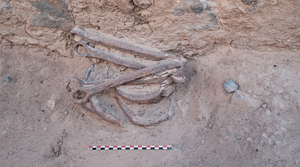
Since 1994, the French Archaeological Mission at the Eastern Desert has excavated more than 20 sites in Egypt, focusing on Roman forts and Ptolemaic mining sites. Rich in natural resources, the region was heavily exploited in the Hellenistic Period (332–30 BC). Recent excavations at Ghozza reveal the harsh reality of mining.
This study explores the emergence and dispersal of grog-tempered pottery in south-eastern Europe, particularly southern Romania. During the second half of the sixth millennium bc, a dynamic zone emerged between the Danube and the Carpathians, facilitating the spread of innovations through multiple communication routes. Among these innovations, grog-tempered pottery began to appear around 5300/5000 bc and became prevalent during the fifth millennium. Despite being frequent, its origins, dispersal, and intensity remain poorly understood. This article aims to trace and explain the emergence and distribution of grog-tempered pottery in southern Romania. By integrating data from existing literature with new results from macroscopic and archaeometric analyses of twelve pottery assemblages from Middle Neolithic, Early, and Middle Chalcolithic sites, the author seeks to provide insights into the significance of the first grog-tempered pottery in a south-eastern European context.
Radiocarbon (14C) measurements play important roles in dating and tracing applications where the isotopic concentration can differ from 0.1 to 106 pMC (percent modern carbon). A liquid scintillation counter cannot provide enough sensitivity when dealing with low-concentration samples of limited amounts over a reasonable time period. Accelerator mass spectroscopy (AMS) measures low-concentrations well but must first do dilution for high-concentration samples, and suffers from high instrument and maintenance costs. Saturated absorption CAvity Ring-down spectroscopy (SCAR) has now been developed into a practical technique with performances close to AMS but at much lower costs. The dynamic range covers 1–105 pMC, and the measurement uncertainties in the range of 0.4–1 pMC can be achieved within 0.5–2.5 hr of operation time. SCAR measures CO2 gases directly without graphitization in sample preparation. The typical sample consumption is ∼1 mg of carbon mass and the time for sample preparation can be as short as 15 min. Applications of SCAR to Suess-effect evaluation, biogenic-component analysis, ancient- and modern-sample dating, food-fraud detection and medicine-metabolism study have all been demonstrated by employing a close-to-automatic sample preparation system.
Ever since the first discovery of urn burials in eastern Serbia during the 1980s, their dating has been uncertain and based on distant analogies and typological parallels. In this paper, we present radiocarbon dates from five urn cemeteries and three associated settlement sites, showing that the initial dating (Late Bronze Age; 14th–11th BCE) is highly questionable. Instead, radiocarbon dating and modeling presented here connect the urn cemeteries—characterized by a specific grave architecture and associated with settlements that display evidence of copper production—to a period between the 20th and 16th centuries BC. The fact that many of our dates come from cremated bones requires a discussion with regard to the circumstances of carbon exchange during cremation. The absolute dates thus far available for most urn cemeteries from the neighboring regions of the Balkans are all markedly younger (15th–11th century BC) than the data presented here and fall in the frame of the overall expansion of cremation in Europe during the Urnfield period. The new absolute dates from eastern Serbia provide a possibility to change our understanding of the Bronze Age dynamics of the 2nd millennium in the broader area of southeastern Europe and indicate a much earlier acceptance of cremation among certain groups than previously thought.
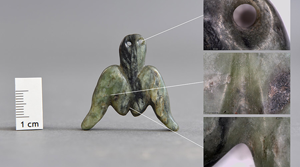
Analysis of the particulate and chemical composition of a red pigment discovered in grave 155 (burial 2) at Chervony Mayak in the Kherson Region of Ukraine identified the substance as cinnabar. This is the first definitive identification of this mineral in a Late Scythian context.
In 2021, the 44th session of the World Heritage Committee Meeting voted to list the Kaeng Krachan Forest Complex as a Natural World Heritage Site, seven years after it was first nominated for consideration by Thailand. A central point to the debate was concerns raised over human rights abuses relating to the Indigenous Karen people living inside the park boundaries. This paper undertakes an analysis of the World Heritage Committee discussion, unpacking key themes of Outstanding Universal Value, human rights, and the role of local communities to illustrate the impact that World Heritage – and the subsequent Authorized Heritage Discourse (AHD) it creates – can have on Indigenous communities.
Presentamos la caracterización tecnológica y composicional de cerámica de estilo Molinos hallada en la localidad de Punta de la Peña en Antofagasta de la Sierra (puna meridional argentina) y en sitios de la cuenca del río Molinos, valle Calchaquí Medio (Salta). Desde una perspectiva arqueométrica y un acercamiento comparativo aportamos a la interacción entre sus habitantes para una cronología entre 800 y 1200 dC. Concluimos que los ejemplares recuperados en este sector puneño fueron elaborados con las mismas materias primas y elecciones técnicas que los del valle Calchaquí medio. Además, los antiplásticos presentes en la alfarería coinciden con los afloramientos del entorno de la cuenca de Molinos. A partir de ello, proponemos que los recipientes circularon desde el valle, posiblemente como parte de vínculos establecidos con familias que habitaron en Punta de la Peña.
Searching for the Neolithic along the Vardar-Morava River corridor revealed several new sites in a previously underexplored region. Multidisciplinary investigations at Svinjarička Čuka identified Neolithic and Bronze Age occupation. Highlights presented here demonstrate the potential of this new key site for enriching our understanding of the prehistory of the Balkans.
This article is a preliminary discussion of the scientific value of archival lithics kept in museum collections and storage based on a small sample of Late Mesolithic flint artefacts from the site of Tomaszów II in south-eastern Poland, which was subjected to organic residue analysis. The aim of the trial study was to investigate and assess the preservation potential of organic residues on stone tools from sites located in areas not favourable to the survival of organic material and subsequently handled during post-excavation (especially those kept in museum collections). While the authors initially assumed that the chances of discovering residues indicating human use were slight and expected a general absence of organic material, the analysis of the lithics from Tomaszów II indicated that a small amount of ancient plant residues can survive on archival flint artefacts even in such unfavourable circumstances.
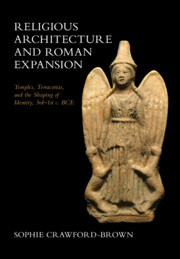
Religious Architecture and Roman Expansion uses architectural terracottas as a lens for examining the changing landscape of central Italy during the period of Roman military expansion, and for asking how local communities reacted to this new political reality. It emphasizes the role of local networks and exchange in the creation of communal identity, as well as the power of visual expression in the formulation and promotion of local history. Through detailed analyses of temple terracottas, Sophie Crawford-Brown sheds new light on 'Romanization' and colonization processes between the 3rd and 1st centuries BCE. She investigates the interactions between colonies and indigenous communities, asking why conquerors might visually emulate the conquered, and what this can mean for power relations in colonial situations. Finally, Crawford-Brown explores the role of objects in creating cultural memory and the intensity of our need for collective history-even when that 'history' has been largely invented.
Exploring and using remote segments of complex karst systems represents the incorporation of one of the wildest and most demanding natural environments into the cultural fabric of Neolithic-Chalcolithic village-based communities in the Levant. The unique preservation of an early fifth-millennium bce activity phase in Har Sifsof Cave in northern Israel allows for a detailed investigation of an early case of human interaction with the deep underground in this region. The study of archaeological assemblages, environmental and speleological data and spatial distribution of cultural remains form the basis for interpreting the activity inside the cave in the context of fertility cults. The rituals conducted in Har Sifsof Cave revolve around the agricultural cycle of cereal grains and include the interment of multiple individuals, some of whom were buried in remote cul-de-sac passages. The emergence of complex caves as favourable off-settlement arenas dedicated to ritual activity during the later stages of Neolithization marks a conscious effort of ‘domestication’ of these unique wildscapes, while sowing the seeds for the enduring connection observed in later Levantine societies between mortuary rituals, fertility and the underground.