To save content items to your account,
please confirm that you agree to abide by our usage policies.
If this is the first time you use this feature, you will be asked to authorise Cambridge Core to connect with your account.
Find out more about saving content to .
To save content items to your Kindle, first ensure no-reply@cambridge.org
is added to your Approved Personal Document E-mail List under your Personal Document Settings
on the Manage Your Content and Devices page of your Amazon account. Then enter the ‘name’ part
of your Kindle email address below.
Find out more about saving to your Kindle.
Note you can select to save to either the @free.kindle.com or @kindle.com variations.
‘@free.kindle.com’ emails are free but can only be saved to your device when it is connected to wi-fi.
‘@kindle.com’ emails can be delivered even when you are not connected to wi-fi, but note that service fees apply.
Chapter 2, Workshops: Models versus Practice, relates the archaeological evidence of pottery workshops from the eastern Mediterranean within several well-established socioeconomic models of production organization. Then, drawing on more recent theoretical approaches, it considers alternative arrangements as reflecting important cultural practices.
Chapter 6, Socially Embedded Technologies and Local Technological Styles, looks at the technologies of production, particularly pottery wheels and kilns, in order to contextualize the technological choices and innovations made in the workshops of the eastern provinces.
This paper re-evaluates recent kinship studies in Neolithic Ireland through a close analysis of biomolecular and fine-grained archaeological data. It outlines the rich possibilities these datasets offer when interwoven to enhance our understanding of diverse webs of social relationships. We synthesize a range of archaeological and scientific data to form a new model of kinship and its relationship to shifting traditions of megalith building and funerary and cosmological practices. This model is put in dialogue with recently published genetic data and used to test a variety of explanations for the patterns of biological relatedness revealed using these methods. We argue that the detected genetic patterning is best interpreted as reflecting a reconfiguration of social relations after 3600 bc linked to the consolidation of emergent social and religious communities.
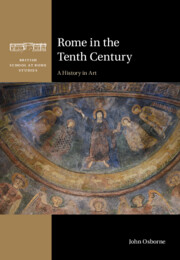
This is the third and final volume in a series examining the history of Rome in the early Middle Ages (700–1000 CE) through the primary lens of the city's material culture. The previous volumes examined the eighth and the ninth centuries respectively. John Osborne uses buildings (both religious and domestic), their decorations, other works of painting and sculpture, inscriptions, manuscripts, ceramics, metalwork, and coins as 'documents' to supplement what can be gleaned from more traditional written sources such as the Liber pontificalis. The overall approach is particularly appropriate for tenth-century Rome, which has traditionally been considered a 'dark age', given recent research on standing monuments and the large amount of new material brought to light in archaeological excavations undertaken over the last four decades. This magnificent and beautifully illustrated volume provides a triumphant conclusion to a series which will be indispensable for all those interested in early medieval Rome.
Understanding the development and use of musical instruments in prehistory is often hampered by poor preservation of perishable materials and the relative rarity of durable examples. Here, the authors present a pair of third-millennium BC copper cymbals, excavated at Dahwa, Oman. Although they are the only well-contextualised examples from Arabia, the Dahwa cymbals are paralleled by contemporaneous examples from the Indus Valley and images in Mesopotamian iconography. Not only do the cymbals add to the body of evidence interpreted in terms of Indus migrants in Early Bronze Age Oman, they also suggest shared musical and potentially ritual practices around the Arabian Gulf at that time.
Migration played a significant role in shaping the Native populations of the southwest United States and northwest Mexico. Large-scale migrations into and across the region were underlain by small-scale (intraregional) population shifts affected by environmental fluctuations (declines and improvements) and social phenomena such as aggregation and the spread of sociopolitical spheres of influence within the region. We compare projectile point types, mortuary patterns, and biodistance information from Early Agricultural period (2100 BC–AD 50) sites to identify subtle differences in population composition associated with the arrival and spread of maize across the region. Small-scale migrations occurring around the foundation of farming communities in the Sonoran Desert may have established the basis of broad regional connectivity, shared historical ties, and subsequent migration patterns and practices. Rooted in early farming traditions and a shared language family, we argue that farmers expanded north and east from the borderlands, then eventually returned to ancestral homelands when environmental and incursive pressures pushed them back south.
Domestic cats have lived alongside human communities for thousands of years, hunting rats, mice, and other pests and serving as pets and a source of pelts and meat. Cats have received limited archaeological attention because their independence limits direct insight into human societies. An adult and juvenile cat recovered from the Emanuel Point wreck 2 (EP2) reflect what are, most likely, the earliest cats in what is now the United States. Zooarchaeological analyses of these and other archaeological cats in the Americas demonstrate that cats ranged substantially in size: some were comparable to modern house cats, and others were much smaller. Isotopic analyses of the adult cat from EP2 provides insight into early shipboard cat behavior and their diet, which appears to have focused on consumption of fish and possibly domestic meat. Cats accompanied sailors on ships where they were relied on to hunt rats and mice that were infesting ships’ holds. Interestingly, based on these isotopic results, the adult cat from EP2 does not seem to have relied heavily on rats as a source of food. These pests were unintentionally introduced to the New World, and cats would have followed, hunting both native and invasive pests.
The past decade saw the proliferation of projects that use 3D and related technologies to engage with Indigenous heritage through museum collections and cultural heritage site digitization projects involving the documentation and sometimes physical replication of objects and landscapes; some of these projects involved Indigenous origin communities. Although 3D technologies have become more widespread and accessible, ethical considerations in practice lag behind. The “Ethical Considerations in Three-Dimensional Digitization of Indigenous Heritage” project unites researchers, members of Indigenous communities, and 3D heritage specialists to develop a set of best practices for the responsible conduct of research (RCR). These practices promote ethical cultures in science, technology, engineering, and math (STEM) fields, recognizing Indigenous heritage 3D modeling as a critical part of the broader conversation around decolonization and core methodologies. This article proposes incorporating best practices developed from the RCR findings for 3D digitization projects of Indigenous cultural heritage. We suggest utilizing Collective benefit, Authority to control, Responsibility, and Ethics (CARE) principles, Indigenous Data Sovereignty, and a co-production of knowledge (CPK) framework.
The concept of projectile point series was first developed in California and the Great Basin in the 1950s and 1960s. In 1981, applying the Monitor Valley projectile point key, Thomas (1981) assigned chronological ranges to five projectile point series for the Great Basin, the Gatecliff Series, the Humboldt Series, the Elko Series, the Rosegate Series, and the Desert Series, which were based on the Berkeley projectile point naming conventions. Each of these series, which are still in use today, include different morphological point forms that—although sharing the same primary designator—do not share the same temporal spans or geographic distributions. Morphologically different projectile points do not share a priori temporal, geographic, or cultural associations simply by virtue of sharing a series label. The use of the series concept and chronology in projectile point analyses in the West should be discontinued and replaced with analyses of morphological forms, geographic distributions, and temporal spans of individual point types.
Paleoindians buried Spirit Cave Man in a Nevada cave, and archaeologists excavated these remains in 1940. Radiocarbon testing in 1996 dated the burial and associated grave goods as older than 10,700 years. Living just 10 miles from Spirit Cave, the Fallon Paiute-Shoshone Tribe filed a NAGPRA claim in 1997 requesting the repatriation of the Spirit Cave ancestor they call “The Storyteller.” This claim ignited a 20-year legal dispute that led the Fallon Paiute-Shoshone Tribe to make the gut-wrenching decision to permit DNA testing. This article documents a 10,000-year genetic continuity firmly linking Paleoindians at Spirit Cave to the Lovelock culture and that strongly suggests continuities to modern Paiutes living there today with no population replacement. We explore the associated radiocarbon record of these dynamics to understand the syncopated population movements that responded to shifting resource distributions. Resilience theory provides an operational way to understand this extraordinary continuity through key concepts, including tipping points, early warning signals, sunk-cost effects, and loss-of-resilience hypotheses. The Spirit Cave case also underscores the moribund concepts and assumptions underlying a century of Great Basin anthropological study that misread this long-term episode of Indigenous resilience and survivance.
Chipped stone tools termed perforators and gravers are characterized by projections. Although the implied function of these tool types differs, there are no guidelines for classifying perforators and gravers based on their morphology. Consequently, researchers classify these tools differently, which precludes meaningful comparisons of the frequencies of these types between assemblages. A use-wear study confirmed the hypothesis that specimens with a thin projection and a sharp distal angle often had perforation use wear. Specimens with graver use wear were characterized by a range of projection perimeters and distal angles. We recommend that specimens with a projection perimeter of 20 mm or less and a distal angle of 40 degrees or less be classified as perforators and those with greater dimensions as gravers. This will achieve a consistent classification system for perforators and gravers, although it must be recognized that these type names may not be indicative of the function of individual specimens.
The nature and extent of interactions between the distant regions and cultures of Mesoamerica remain open to much debate. Close economic and political ties developed between Teotihuacan and the lowland Maya during the Early Classic period (AD 250–550), yet the relationship between these cultures continues to perplex scholars. This article presents an elaborately painted altar from an elite residential group at the lowland Maya centre of Tikal, Guatemala. Dating to the fifth century AD, the altar is unique in its display of Teotihuacan architectural and artistic forms, adding to evidence not only for cultural influence during this period, but also for an active Teotihuacan presence at Tikal.
In this article we present the results of two geophysical surveys conducted at Cahokia Mounds State Historic Site. The goal was to reveal neighborhood settlement patterns at two locales located on the periphery of “Downtown” Cahokia—the densely populated administrative core—and to further understand the type and chronological affiliation of these settlements. We compared structure length and width ratios from Rattlesnake West and the Rouch Mound Group with datasets from the Cahokia and East St. Louis precincts as a proxy for chronological affiliation to understand changes to neighborhood density over time. Using noninvasive techniques to illuminate population density and neighborhood configurations, we gained a more detailed understanding of how Cahokia's communities and neighborhoods chose to adopt the building style and infrastructure of Cahokia's Downtown Precinct.