To save content items to your account,
please confirm that you agree to abide by our usage policies.
If this is the first time you use this feature, you will be asked to authorise Cambridge Core to connect with your account.
Find out more about saving content to .
To save content items to your Kindle, first ensure no-reply@cambridge.org
is added to your Approved Personal Document E-mail List under your Personal Document Settings
on the Manage Your Content and Devices page of your Amazon account. Then enter the ‘name’ part
of your Kindle email address below.
Find out more about saving to your Kindle.
Note you can select to save to either the @free.kindle.com or @kindle.com variations.
‘@free.kindle.com’ emails are free but can only be saved to your device when it is connected to wi-fi.
‘@kindle.com’ emails can be delivered even when you are not connected to wi-fi, but note that service fees apply.
Chapter 7 offers concluding thoughts on the afterlives of architectural terracottas and on their lingering symbolic power even after they had fallen from use in Italic temple architecture.
Chapter 4 explores the case-studies of Cosa and Minturnae in detail and assesses the ways in which 3rd–1st century Italic towns sought to emphasize a specifically local identity through their temple roofs. Each site is examined within its regional context to show how colonists and other inhabitants made use of local networks in order to create a distinctive visual identity that was nevertheless readable for a broad spectrum of viewers.
Chapter 2 addresses one of the primary impediments to the study of 3rd–1st century Italic architectural terracottas: questions regarding their chronology and the problematic ways in which they have traditionally been bound up in assumptions regarding so-called “Romanization.” Terracottas from Cosa and Rome are discussed in particular, in order to argue that there is no evidence for a “Roman” point of origin for most terracotta types and that the field must shed the lingering baggage derived from “Romanization” theory.
A shift towards constructing large circular monuments, including henges, during the Middle Neolithic of Britain and Ireland is exemplified in the monumental landscape of south-west England. Seventeen new radiocarbon dates for the Flagstones circular enclosure and the adjacent long enclosure of Alington Avenue, presented here, provide a chronology that is earlier than expected. Comparison with similar sites demonstrates that Flagstones was part of a broader tradition of round enclosures but was also distinctly innovative, particularly in terms of its size. These findings reinforce the value in developing precise chronologies for refining understanding of monument forms and associated practices.
Chapter 6 examines the legacy of architectural terracottas during the period of the Augustan Principate and the rise of the so-called “Campana” reliefs. While architectural terracottas had long been used to define and assert specific local identities, they were now employed to express an idealized Augustan vision of a unified, pious Italic past.
Chapter 1 introduces the scope and organization of the study. It traces the history of scholarship on Italic architectural terracottas and highlights a number of lingering problems and uncertainties that will be taken up in the subsequent chapters.
We present a synthesis of treatment of the dead from before 700 b.c. to the fifteenth century a.d. in the lower Ulúa River Valley of northern Honduras. Building on evidence of burial alignments to a prominent mountain first identified for the Classic period, we argue that mortuary rituals served to integrate politically independent communities within a shared cosmological landscape. We identify alignment of burials toward the same mountain beginning in the Middle Formative period. At this time, a cycle of mortuary treatment resulted in bodies of some of the dead being commingled in shared secondary burial sites in caves, significant locations in the cosmological landscape. During the Classic period, secondary mortuary treatment continued, now performed within settlements again united by orientation to a shared cosmological landscape. The addition of solar alignments may be evidence of adoption by some families of Lowland Maya cosmological beliefs. This impression is solidified in Postclassic burial practices that align closely with those of specific Lowland Maya societies. We argue that the afterlife cycles through which the living interacted with the dead, in a tension between individualization and communal belonging, included strategies through which social relations, community histories, and ties among communities were created.
Chapter 5 asks why new colonies turned so invariably to old-fashioned motifs and to the visual culture of their conquered enemies. This phenomenon is discussed in terms of the heterogenous makeup of colonial populations, which had no single visual culture to import, and is then related to broader issues of collective memory, identity formation, and the invention of tradition.
Chapter 3 examines the five most widespread decorative roofing elements in 3rd–1st century central Italy, which are referred to collectively as the “standard temple kit.” Each type is shown to derive from earlier models, suggesting a conscious act of archaizing in their use which likely relates to notions of antiquity and deeply rooted religious authority.
Repatriation of human remains and associated funerary objects under NAGPRA and the increased use of culturally informed curation practices for sacred, religious, and ceremonial objects are important steps toward restoring control over cultural patrimony to Native Nations in the United States. Many museums holding Indigenous belongings have begun a collaborative care approach involving Indigenous community voices and improving access to collections. However, this framework has not been applied to many animal remains curated in American archaeology museums, which remain broadly beyond the care or administrative purview of Native people. Because many Indigenous worldviews do not hold a clear separation between the human and animal spheres, common practices applied to animal remains are not congruent with the idea of respectful or culturally informed care. Here we outline steps to shift the treatment of animals through the application of Indigenous knowledge to museum collections.
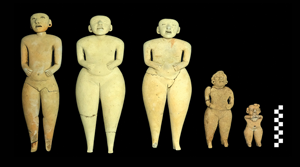
Representations of the human body are ubiquitous in cultures across the world. Beyond the aesthetic, figurines transmit deeper meanings that were readily decodable by their intended audience and may still offer sociocultural insights despite the loss of this coding through time. The discovery of a rare tableau of ‘Bolinas’-type clay figurines dating to 410–380 BC at San Isidro, El Salvador, now permits the theoretical reconstruction of a less stratified Preclassic society in south-east Mesoamerica and the exploration of its spheres of interaction, which may have stretched along the coast from Guatemala to Costa Rica.
People experience heritage at historic sites as landscapes that include both environmental and cultural meaning. Heritage as social action overcomes the dichotomies of nature versus culture and past versus present, which are obstacles to resiliency and sustainability in this era of rising sea levels. That insight is exemplified by a program addressing climate change on the Florida Gulf Coast. The program includes community conversations on climate change and initial steps at multiscalar research using techniques from archaeology, environmental studies, and biology. At the broadest scales, the approach reconstructs the distribution of coastal heritage locations from the decades preceding human-caused sea-level rise to the present. At finer levels of temporal and spatial resolution, research documents vegetation, marine invertebrates, and material changes. At the finest scales, studies of microorganisms that inhabit historic and archaeological sites are inventoried. Integrating those scales through community-based archaeology offers the social meanings for coastal heritage under threat of rising sea levels, both to motivate actions to preserve the past and to prepare the public for the coming landscape transformations as an avenue for community conversations.
The articles compiled here offer examples of how the impacts of anthropogenic climate change in coastal settings are monitored and measured, how the broader public can be involved in these efforts, and how planning for mitigation can come about. The case studies are drawn from the southeastern United States and the British Isles, and they indicate the great potential that cooperating communities of practice can offer for addressing climate-change impacts on cultural heritage.
At coastal archaeological sites, measuring erosion rates and assessing artifact loss are vital to understanding the timescale(s) and spatial magnitude of past and future site loss. We describe a straightforward low-tech methodology for documenting shoreline erosion developed by professionals and volunteers over seven years at Calusa Island Midden (8LL45), one of the few remaining sites with an Archaic component in the Pine Island Sound region of coastal Southwest Florida. We outline the evolution of the methodology since its launch in 2016 and describe issues encountered and solutions implemented. We also describe the use of the data to guide archaeological research and document the impacts of major storms at the site. The response to Hurricane Ian in 2022 is one example of how simply collected data can inform site management. This methodology can be implemented easily at other coastal sites at low cost and in collaboration with communities, volunteers, and heritage site managers.