Refine search
Actions for selected content:
128 results
Propagation dynamics of time-dependent reaction-diffusion equations under climate change in an infinite cylinder
- Part of
-
- Journal:
- European Journal of Applied Mathematics , First View
- Published online by Cambridge University Press:
- 19 December 2025, pp. 1-22
-
- Article
-
- You have access
- Open access
- HTML
- Export citation
-
In this paper, we consider a reaction-diffusion equation that models the time-almost periodic response to climate change within a straight, infinite cylindrical domain. The shifting edge of the habitat is characterised by a time-almost periodic function, reflecting the varying pace of environmental changes. Note that the principal spectral theory is an important role to study the dynamics of reaction-diffusion equations in time heterogeneous environment. Initially, for time-almost periodic parabolic equations in finite cylindrical domains, we develop the principal spectral theory of such equations with mixed Dirichlet–Neumann boundary conditions. Subsequently, we demonstrate that the approximate principal Lyapunov exponent serves as a definitive threshold for species persistence versus extinction. Then, the existence, exponential decay and stability of the forced wave solutions $U(t,x_{1},y)=V\left (t,x_{1}-\int ^{t}_{0}c(s)ds,y\right )$ are established. Additionally, we analyse how fluctuations in the shifting speed affect the approximate top Lyapunov exponent.

On the Γ-limit of weighted fractional energies
- Part of
-
- Journal:
- Proceedings of the Royal Society of Edinburgh. Section A: Mathematics , First View
- Published online by Cambridge University Press:
- 01 December 2025, pp. 1-22
-
- Article
-
- You have access
- Open access
- HTML
- Export citation
-
Given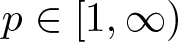 $p\in[1,\infty)$ and a bounded open set $\Omega\subset\mathbb{R}^d$ with Lipschitz boundary, we study the $\Gamma$-convergence of the weighted fractional seminorm
 \begin{equation*}[u]_{s,p,f}^p=\int_{\mathbb{R}^d} \int_{\mathbb{R}^d} \frac{|\tilde u(x)- \tilde u(y)|^p}{\|x-y\|^{d+sp}}\,f(x)\,f(y)\,\mathrm{d} x\,\mathrm{d} y,\end{equation*}
as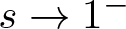 $s\to1^-$ for $u\in L^p(\Omega)$, where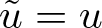 $\tilde u=u$ on $\Omega$ and $\tilde u=0$ on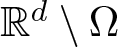 $\mathbb{R}^d\setminus\Omega$. Assuming that $(f_s)_{s\in(0,1)}\subset L^\infty(\mathbb{R}^d;[0,\infty))$ and $f\in\mathrm{Lip}_b(\mathbb{R}^d;(0,\infty))$ are such that $f_s\to f$ in $L^\infty(\mathbb{R}^d)$ as $s\to1^-$, we show that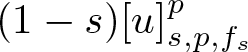 $(1-s)[u]_{s,p,f_s}^p$ $\Gamma$-converges to the Dirichlet $p$-energy weighted by $f^2$. In the case $p=2$, we also prove the convergence of the corresponding gradient flows.


General rogue waves of infinite order: exact properties, asymptotic behaviour, and effective numerical computation
- Part of
-
- Journal:
- Journal of Nonlinear Waves / Volume 1 / 2025
- Published online by Cambridge University Press:
- 13 November 2025, e19
-
- Article
-
- You have access
- Open access
- HTML
- Export citation
-
This paper is devoted to a comprehensive analysis of a family of solutions of the focusing nonlinear Schrödinger equation called general rogue waves of infinite order. These solutions have recently been shown to describe various limit processes involving large-amplitude waves, and they have also appeared in some physical models not directly connected with nonlinear Schrödinger equations. We establish the following key property of these solutions: they are all in $L^2(\mathbb{R})$ with respect to the spatial variable but they exhibit anomalously slow temporal decay. In this paper, we define general rogue waves of infinite order, establish their basic exact and asymptotic properties, and provide computational tools for calculating them accurately.

Concentration behavior of normalized ground states for mass critical Kirchhoff equations in bounded domains
- Part of
-
- Journal:
- Proceedings of the Royal Society of Edinburgh. Section A: Mathematics , First View
- Published online by Cambridge University Press:
- 03 November 2025, pp. 1-44
-
- Article
- Export citation
-
In present paper, we study the limit behavior of normalized ground states for the following mass critical Kirchhoff equation
where \begin{align*}\left\{\begin{array}{ll}-(a+b\int_{\Omega}|\nabla u|^2\mathrm{d}x)\Delta u+V(x)u=\mu u+\beta^*|u|^{\frac{8}{3}}u &\text{in}\ {\Omega}, \\[0.1cm]u=0&\text{on}\ {\partial\Omega}, \\[0.1cm]\int_{\Omega}|u|^2\mathrm{d}x=1, \\[0.1cm]\end{array}\right.\end{align*} $a\geq 0$, b > 0, the function V(x) is a trapping potential in a bounded domain $\Omega\subset\mathbb R^3$, $\beta^*:=\frac{b}{2}|Q|_2^{\frac{8}{3}}$ and Q is the unique positive radially symmetric solution of equation $-2\Delta u+\frac{1}{3}u-|u|^{\frac{8}{3}}u=0$ in $\mathbb R^3.$ We consider the existence of constraint minimizers for the associated energy functional involving the parameter a. The minimizer corresponds to the normalized ground state of above problem, and it exists if and only if a > 0. Moreover, when V(x) attains its flattest global minimum at an inner point or only at the boundary of Ω, we analyze the fine limit profiles of the minimizers as $a\searrow 0$, including mass concentration at an inner point or near the boundary of Ω. In particular, we further establish the local uniqueness of the minimizer if it is concentrated at a unique inner point.


DYNAMICS OF NONLOCAL KURAMOTO–SIVASHINSHY EQUATIONS WITH MULTIPLICATIVE WHITE NOISE
- Part of
-
- Journal:
- The ANZIAM Journal / Volume 67 / 2025
- Published online by Cambridge University Press:
- 23 October 2025, e34
-
- Article
- Export citation
Impact of birth pulse and environment shift on population survival and propagation
- Part of
-
- Journal:
- Canadian Journal of Mathematics , First View
- Published online by Cambridge University Press:
- 17 October 2025, pp. 1-27
-
- Article
- Export citation
A remark on the long-time asymptotics of global-in-time solutions for semilinear parabolic equations in ${\mathbb {R}^N}$
- Part of
-
- Journal:
- Canadian Journal of Mathematics , First View
- Published online by Cambridge University Press:
- 10 October 2025, pp. 1-21
-
- Article
- Export citation
-
We consider the asymptotics of long-time behavior of a solution u of the semilinear parabolic problem $\partial _tu=\Delta u-u+u|u|^{p-2}$ in ${\mathbb {R}^N}\times (0,\infty )$, $u(0)=u_0\in H^1({\mathbb {R}^N})\cap L^\infty ({\mathbb {R}^N})$. Since the spatial domain on which the problem is posed is noncompact, we cannot expect the relative compactness of the solution orbit, e.g., in $H^1({\mathbb {R}^N})$ in general. In this article, we prove that the compactness of the orbit holds up to the ground state energy level, namely, if $\lim _{t\to \infty }I(u(t))\leq d_\infty $, where I is the energy functional associated with (P) and $d_\infty $ its ground state energy, then the orbit of $u(t)$ is compact in $H^1({\mathbb {R}^N})$. Our result includes the previous results in [4, 5].


Pullback measure attractors for stochastic p-Laplacian parabolic equations on thin domains
- Part of
-
- Journal:
- Proceedings of the Royal Society of Edinburgh. Section A: Mathematics , First View
- Published online by Cambridge University Press:
- 05 August 2025, pp. 1-28
-
- Article
- Export citation
-
We investigate the pullback measure attractors for non-autonomous stochastic p-Laplacian equations driven by nonlinear noise on thin domains. The concept of complete orbits for such systems is presented to establish the structures of pullback measure attractors. We first present some essential uniform estimates, as well as the existence and uniqueness of pullback measure attractors. A novel technical proof method is shown to overcome the difficulty of the estimates of the solutions in $W^{1,p}$ on thin domains. Then, we prove the upper semicontinuity of these measure attractors as the $(n + 1)$-dimensional thin domains collapse onto the lower n-dimensional space.


Concentration and oscillation analysis of positive solutions to semilinear elliptic equations with exponential growth in a disc. II
- Part of
-
- Journal:
- Proceedings of the Royal Society of Edinburgh. Section A: Mathematics , First View
- Published online by Cambridge University Press:
- 31 July 2025, pp. 1-28
-
- Article
- Export citation
-
This paper is the latter part of a series of our studies on the concentration and oscillation analysis of semilinear elliptic equations with exponential growth $e^{u^p}$. In the first one [17], we completed the concentration analysis of blow-up positive solutions in the supercritical case p > 2 via a scaling approach. As a result, we detected infinite sequences of concentrating parts with precise quantification. In the present paper, we proceed to our second aim, the oscillation analysis. Especially, we deduce an infinite oscillation estimate directly from the previous infinite concentration ones. This allows us to investigate intersection properties between blow-up solutions and singular functions. Consequently, we show that the intersection number between blow-up and singular solutions diverges to infinity. This leads to a proof of infinite oscillations of bifurcation diagrams, which ensures the existence of infinitely many solutions. Finally, we also remark on infinite concentration and oscillation phenomena in the limit cases $p\to2^+$ and $p\to \infty$.


Timelike asymptotics for global solutions to a scalar quasilinear wave equation satisfying the weak null condition
- Part of
-
- Journal:
- Forum of Mathematics, Sigma / Volume 13 / 2025
- Published online by Cambridge University Press:
- 07 July 2025, e108
-
- Article
-
- You have access
- Open access
- HTML
- Export citation
-
We study the timelike asymptotics for global solutions to a scalar quasilinear wave equation satisfying the weak null condition. Given a global solution u to the scalar wave equation with sufficiently small $C_c^\infty $ initial data, we derive an asymptotic formula for this global solution inside the light cone (i.e. for $|x|<t$). It involves the scattering data obtained in the author’s asymptotic completeness result in [75]. Using this asymptotic formula, we prove that u must vanish under some decaying assumptions on u or its scattering data, provided that the wave equation violates the null condition.


A free boundary problem of competition-diffusion system with Dirichlet boundary condition
- Part of
-
- Journal:
- Canadian Mathematical Bulletin , First View
- Published online by Cambridge University Press:
- 07 July 2025, pp. 1-20
-
- Article
- Export citation
-
In this article, we investigate a free boundary problem for the Lotka–Volterra model consisting of an invasive species with density u and a native species with density v in one dimension. We assume that v undergoes diffusion and growth in $[0,+\infty )$, and u invades into the environment with spreading front $x=h(t)$ satisfying free boundary condition $h'(t)=-u_x(t,h(t))-\alpha $ for some decay rate $\alpha>0$, this is caused by the bad environment at the boundary. When u is an inferior competitor, $u(t,x)$ and $h(t)$ tend to 0 within a finite time, while another specie $v(t,x)$ tends to a stationary $\Lambda (x)$ defined on the half-line. When u is a superior competitor, we have a trichotomy result: spreading of u and vanishing of v (i.e., as $t \to +\infty $, $h(t)$ goes to $+\infty $ and $(u,v)\to (\Lambda ,0)$); the transition case (i.e., as $t \to +\infty $, $(u,v)\to (w_\alpha , \eta _\alpha )$, $h(t)$ tends to a finite point); vanishing of u and spreading of v (i.e., $u(t,x)$ and $h(t)$ tends to 0 within a finite time, $v(t,x)$ converges to $\Lambda (x)$). Additionally, we show that this trichotomy result depends on the initial data $u(0,x)$.


Global dynamics for the generalised chemotaxis-Navier–Stokes system in $\mathbb{R}^3$
- Part of
-
- Journal:
- European Journal of Applied Mathematics , First View
- Published online by Cambridge University Press:
- 22 April 2025, pp. 1-38
-
- Article
-
- You have access
- Open access
- HTML
- Export citation
-
We consider the chemotaxis-Navier–Stokes system with generalised fluid dissipation in $\mathbb{R}^3$:which models the motion of swimming bacteria in water flows. First, we prove blow-up criteria of strong solutions to the Cauchy problem, including the Prodi-Serrin-type criterion for
 \begin{eqnarray*} \begin{cases} \partial _t n+u\cdot \nabla n=\Delta n- \nabla \cdot (\chi (c)n \nabla c),\\[5pt] \partial _t c+u \cdot \nabla c=\Delta c-nf(c),\\[5pt] \partial _t u +u \cdot \nabla u+\nabla P=-(\!-\Delta )^\alpha u-n\nabla \phi, \\[5pt] \nabla \cdot u=0, \end{cases} \end{eqnarray*} $\alpha \gt \frac {3}{4}$ and the Beir $\tilde {\textrm {a}}$o da Veiga-type criterion for $\alpha \gt \frac {1}{2}$. Then, we verify the global existence and uniqueness of strong solutions for arbitrarily large initial fluid velocity and bacteria density for $\alpha \geq \frac {5}{4}$. Furthermore, in the scenario of $\frac {3}{4}\lt \alpha \lt \frac {5}{4}$, we establish uniform regularity estimates and optimal time-decay rates of global solutions if only the $L^2$-norm of initial data is small. To our knowledge, this work provides the first result concerning the global existence and large-time behaviour of strong solutions for the chemotaxis-Navier–Stokes equations with possibly large oscillations.


3D Navier–Stokes–Voigt equations with damping and double delays on unbounded domains: Well-posedness, pullback attractors, and limit measures
- Part of
-
- Journal:
- Proceedings of the Royal Society of Edinburgh. Section A: Mathematics , First View
- Published online by Cambridge University Press:
- 18 March 2025, pp. 1-39
-
- Article
- Export citation
Analysis of a model describing bacterial colony expansion in radial geometry driven by chemotaxis
- Part of
-
- Journal:
- European Journal of Applied Mathematics / Volume 36 / Issue 5 / October 2025
- Published online by Cambridge University Press:
- 02 December 2024, pp. 910-947
-
- Article
-
- You have access
- Open access
- HTML
- Export citation
Well-posedness of quasilinear parabolic equations in time-weighted spaces
- Part of
-
- Journal:
- Proceedings of the Royal Society of Edinburgh. Section A: Mathematics , First View
- Published online by Cambridge University Press:
- 26 November 2024, pp. 1-33
-
- Article
- Export citation
-
Well-posedness in time-weighted spaces of certain quasilinear (and semilinear) parabolic evolution equations $u'=A(u)u+f(u)$ is established. The focus lies on the case of strict inclusions $\mathrm{dom}(f)\subsetneq \mathrm{dom}(A)$ of the domains of the nonlinearities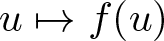 $u\mapsto f(u)$ and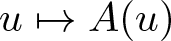 $u\mapsto A(u)$. Based on regularizing effects of parabolic equations it is shown that a semiflow is generated in intermediate spaces. In applications this allows one to derive global existence from weaker a priori estimates. The result is illustrated by examples of chemotaxis systems.
Asymptotic estimate of solutions in a 4th-order parabolic equation with the Frobenius norm of a Hessian matrix
- Part of
-
- Journal:
- Canadian Mathematical Bulletin / Volume 68 / Issue 1 / March 2025
- Published online by Cambridge University Press:
- 25 November 2024, pp. 91-108
- Print publication:
- March 2025
-
- Article
- Export citation
Dynamical behaviour of a logarithmically sensitive chemotaxis model under time-dependent boundary conditions
- Part of
-
- Journal:
- European Journal of Applied Mathematics / Volume 36 / Issue 3 / June 2025
- Published online by Cambridge University Press:
- 04 November 2024, pp. 638-664
-
- Article
-
- You have access
- Open access
- HTML
- Export citation
-
This article studies the dynamical behaviour of classical solutions of a hyperbolic system of balance laws, derived from a chemotaxis model with logarithmic sensitivity, with time-dependent boundary conditions. It is shown that under suitable assumptions on the boundary data, solutions starting in the $H^2$-space exist globally in time and the differences between the solutions and their corresponding boundary data converge to zero as time goes to infinity. There is no smallness restriction on the magnitude of the initial perturbations. Moreover, numerical simulations show that the assumptions on the boundary data are necessary for the above-mentioned results to hold true. In addition, numerical results indicate that the solutions converge asymptotically to time-periodic states if the boundary data are time-periodic.

Travelling wavefronts for the Belousov–Zhabotinsky system with non-local delayed interaction
- Part of
-
- Journal:
- European Journal of Applied Mathematics / Volume 36 / Issue 4 / August 2025
- Published online by Cambridge University Press:
- 10 October 2024, pp. 738-774
-
- Article
-
- You have access
- Open access
- HTML
- Export citation
EMBED IN ENSEMBLE TO RIGOROUSLY AND ACCURATELY HOMOGENIZE QUASI-PERIODIC MULTI-SCALE HETEROGENEOUS MATERIAL
- Part of
-
- Journal:
- The ANZIAM Journal / Volume 66 / Issue 1 / January 2024
- Published online by Cambridge University Press:
- 19 September 2024, pp. 1-34
-
- Article
-
- You have access
- Open access
- HTML
- Export citation
Stabilization in a chemotaxis system modelling T-cell dynamics with simultaneous production and consumption of signals
- Part of
-
- Journal:
- European Journal of Applied Mathematics / Volume 36 / Issue 3 / June 2025
- Published online by Cambridge University Press:
- 18 September 2024, pp. 570-583
-
- Article
-
- You have access
- Open access
- HTML
- Export citation
-
In a smoothly bounded domain $\Omega \subset \mathbb{R}^n$, $n\ge 1$, this manuscript considers the homogeneous Neumann boundary problem for the chemotaxis systemwith parameter
 \begin{eqnarray*} \left \{ \begin{array}{l} u_t = \Delta u - \nabla \cdot (u\nabla v), \\[5pt] v_t = \Delta v + u - \alpha uv, \end{array} \right . \end{eqnarray*} $\alpha \gt 0$ and with coincident production and uptake of attractants, as recently emphasized by Dallaston et al. as relevant for the understanding of T-cell dynamics.
It is shown that there exists $\delta _\star =\delta _\star (n)\gt 0$ such that for any given $\alpha \ge \frac{1}{\delta _\star }$ and for any suitably regular initial data satisfying $v(\cdot, 0)\le \delta _\star$, this problem admits a unique classical solution that stabilizes to the constant equilibrium $(\frac{1}{|\Omega |}\int _\Omega u(\cdot, 0), \, \frac{1}{\alpha })$ in the large time limit.


