To save content items to your account,
please confirm that you agree to abide by our usage policies.
If this is the first time you use this feature, you will be asked to authorise Cambridge Core to connect with your account.
Find out more about saving content to .
To save content items to your Kindle, first ensure no-reply@cambridge.org
is added to your Approved Personal Document E-mail List under your Personal Document Settings
on the Manage Your Content and Devices page of your Amazon account. Then enter the ‘name’ part
of your Kindle email address below.
Find out more about saving to your Kindle.
Note you can select to save to either the @free.kindle.com or @kindle.com variations.
‘@free.kindle.com’ emails are free but can only be saved to your device when it is connected to wi-fi.
‘@kindle.com’ emails can be delivered even when you are not connected to wi-fi, but note that service fees apply.
This book presents an economic history of Bangkok, the Central Region, the North, the South, and Northeastern Regions from the signing of the Bowring Treaty in 1855 to the present. Most research has focused on Bangkok as the centre of change affecting other regions and has neglected other regions that had an influence on Bangkok. This book however looks at the changes not only in Bangkok, but also in the other regions, and emphasizes the ways in which Bangkok had an impact on the other regions, and how changes in the other regions affected Bangkok. It also looks, in turn, at each of the principal regions, and concentrates on the long-term economic and social changes and the various forces which promoted the changes.
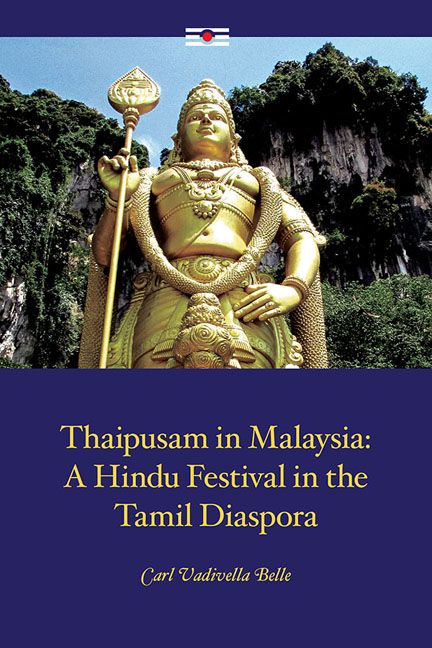
"This is an important book by Carl Vadivella Belle which argues that Hinduism and its manifestations in the diaspora has important significance in binding not only the Hindus but also encourages 'others' to revisit Hinduism, especially in a multicultural society like Malaysia which is dominated by communally infused discourses structured upon race and religion." — Ajaya K. Sahoo, Journal of South Asian Diaspora
"Dr Belle weaves his magical journey over nearly half a century, offering poignant and potent insights into the socio economic and spiritual realities of Hindus in Malaysia. Numerous books may be available on Tamil Traditions and Hinduism in Malaysia, but none seem to have succinctly and encapsulated the very essence and heart of these veritable subjects. I would unreservedly recommend this book, to all those interested in matters pertaining to Indians and Hinduism in Malaysia." — Professor Bala Shanmugam, Federation University
"This is a work of immense inspiration. Combining personal pilgrimage with ethnographic perseverance, it is at once a document of ritual power and cultural change and a biography of religious encounter. By becoming the religious Other, Carl Belle creates a new dimension in the understanding of Thaipusam as both ethnic and individual experience. Dauntlessly frank and insightful, it is without doubt a rare achievement." — Raymond Lee, Universiti Malaya (retired)
This volume seeks to foreground a "borderless" history and geography of South, Southeast, and East Asian littoral zones that would be maritime-focused, and thereby explore the ancient connections and dynamics of interaction that favoured the encounters among the cultures found throughout the region stretching from the Indian Ocean littorals to the Western Pacific, from the early historical period to the present. Transcending the artificial boundaries of macro-regions and nation-states, and trying to bridge the arbitrary divide between (inherently cosmopolitan) "high" cultures (e.g. Sanskritic, Sinitic, or Islamicate) and "local" or "indigenous" cultures, this multidisciplinary volume explores the metaphor of Monsoon Asia as a vast geo-environmental area inhabited by speakers of numerous language phyla, which for millennia has formed an integrated system of littorals where crops, goods, ideas, cosmologies, and ritual practices circulated on the sea-routes governed by the seasonal monsoon winds. The collective body of work presented in the volume describes Monsoon Asia as an ideal theatre for circulatory dynamics of cultural transfer, interaction, acceptance, selection, and avoidance, and argues that, despite the rich ethnic, linguistic and sociocultural diversity, a shared pattern of values, norms, and cultural models is discernible throughout the region.
From grassroots conflicts to great power relations, this book explores some of the key concepts, methodologies, and dilemmas of researching Asia-Pacific affairs. The book deals with key questions about the Asia Pacific: Why should we study policy from the "ground up"? What are the human considerations for societies in conflict? Why is regionalism important and how do global powers play a role? Should Asia-Pacific researchers embrace the design-based revolution in the social sciences? Muddy Boots and Smart Suits is for students, scholars, and policymakers in the region looking for a new way to understand local, regional, and global security challenges.
"We owe much of our knowledge of legal diversity in Asia to the work of Barry Hooker, who appears early on to have appreciated its intrinsic interest and potentially global significance. His work in the field is, as the French say, incontournable; a nice combination of the unavoidable, the controlling and the greatly respected." — H.P. Glenn
To honour this great scholar, this book gathers essays from admirers and friends who add their own contributions on legal pluralism, transnationalism and culture in Asia. The book opens with an account of M.B. Hooker colourful and prolific career. The authors then approach legal pluralism through legal theory, legal anthropology, comparative law, law and religion, constitutional law, even Islamic art, thus reflecting the broad approaches of Professor Hooker's scholarship. While most of the book focuses mainly on Southeast Asia, it also reaches out to all of Asia up to Israel, and even includes a chapter comparing Indonesia and Egypt.
Prior to the era of globalization, education in Southeast Asia was viewed in the context of the national state and it was deployed in the service of state and nation-building and national economic development. States monopolized education, and public-funded centralized education systems were established to teach literacy, transmit national cultures and promote social cohesion, and to produce literate workers. Globalization forces, however, dramatically impacted in varying ways and degrees the national education systems across the region. As states begun to see their citizens as resources to enhance the countries' competitiveness in the global market, it, among other things, led to the increasing demand for highly skilled and qualified human capital. The accompanying neoliberal ideology led to varying degrees of decentralization, privatization and internationalization of education, especially of higher education, in Southeast Asia. The chapters in this volume focus on a number of issues and challenges confronting the education sector in Southeast Asia, including: (i) the contrasting language in education policy in Singapore and Malaysia; (ii) the introduction of an English-medium private education sector in Malaysia; (iii) the internationalization of Thai higher education; (iv) access and quality issues in the massification of Malaysian higher education; (v) secondary school quality and higher education participation in Indonesia;(vi) equity, access and retention in primary school education in Malaysia; and(vii) reforms in the primary and secondary education in Myanmar.
'At a time when China-Southeast Asia relationships are undergoing profound changes, it is pleasing to have a volume which examines the interactions between China and the polities and societies to the south through time. With multiple aims of exploring the relations between northern Chinese cultures and those of the south, examining the cultural plurality of areas which are today parts of Southern China, and illuminating the relations between Sinitic and non-Sinitic societies, the volume is broad in concept and content. Within these extensive rubrics, this edited collection further interrogates the nature of Asian polities and their historiography, the constitution of Chineseness, imperial China's southern expansions, cultural hybridity, economic relations, regional systems and ethnic interactions across East Asia. The editors Victor H. Mair and Liam C. Kelley are to be congratulated for bringing together such a wealth of contributions offering nascent interpretations and broad overviews, set within the overarching historical and contemporary contexts provided through Wang Gungwu's introduction.' - Dr Geoffrey Wade, ANU College of Asia and the Pacific, Australian National University
Hamengku Buwono IX, the late Sultan of Yogyakarta Special Province, is revered by Indonesians as one of the great founders of the modern Indonesian state. He leaves a positive but in some ways ambiguous legacy in political terms. His most conspicuous achievement was the survival of hereditary Yogyakartan kingship, and he provided rare stability and continuity in Indonesia's highly fractured modern history. Under the New Order, Hamengku Buwono also helped to launch the Indonesian economy on a much stronger growth path. Although remembered as the epitome of 'political decency', he faded from power and influence as Vice President in the 1970s, and the repressive and anti-democratic features of Suharto's New Order seemed to contradict much of what Hamengku Buwono originally stood for. This biography seeks to explain his political standpoint, motivations, and achievements, and set his career in the context of his times.
'Robert Taylor, one of the most prominent scholars in Myanmar studies, has written an illuminating study of Ne Win, the most enigmatic and controversial of the first generation of post-independence Southeast Asian leaders, and how he steered a then largely unknown country, Burma (now Myanmar), through the Cold War years. This book, by perhaps the only foreign political analyst to live in Burma under Ne Win, is a significant contribution to the historiography of Myanmar and its unnoticed role in the Cold War in Asia.' - Associate Professor Ang Cheng Guan, Head of Graduate Studies, S. Rajaratnam School of International Studies, Nanyang Technological University, Singapore. 'This book fills a major gap in the literature of Myanmar by providing the first scholarly account of the life of General Ne Win, its enigmatic ruler for over 25 years. It will be of interest not only to professional Myanmar watchers, who have log awaited a detailed and comprehensive study of this important historical figure, but to anyone who wants to learn more about this troubled Southeast Asian country, where Ne Win's legacy is still being felt today.' - Andrew Selth, Adjunct Associate Professor, Griffith Asia Institute.'The Colonel Ne Win of World War II and General Ne Win of post-independent Myanmar was not the same as Chairman Ne Win of the BSPP. Nor was the context of those days similar to the context by which he is normally judged today. The present work (and Taylor's scholarship in general) is acutely aware of such anachronistic projections backward, made to commensurate with certain desired academic and political consequences. Taylor examines Ne Win's life and career in the context of when it occurred. This book returns Ne Win to the period to which he belonged.' - Michael Aung-Thwin, Professor of South East Asian History University of Hawaii.'It is difficult to imagine that this study of Ne Win, the dominant figure in the politics of Burma through most of the second half of the twentieth century, will ever be surpassed. Immensely detailed, insightful, and impressively understanding, this is an outstanding work of scholarship.' - Ian Brown, Emeritus Professor of the Economic History of South East Asia School of Oriental and African Studies (London).
The ten Southeast Asian economies reached a milestone on 31 December 2015, when they announced the formation of an ASEAN Community. Although this includes three pillars - ASEAN Political-Security Community, ASEAN Economic Community (AEC) and the ASEAN Socio-Cultural Community - it is the economic pillar that generates immense debate, due to its expected quantifiable benefits to member countries. This book, thus, focuses on the ASEAN Economic Community and seeks to explain the need for building domestic consensus within the member countries. It starts with an overview chapter describing the current achievements of the AEC. It then explores possible explanations for the achievements/non-achievements and offers a hypothesis on conflicting economic interests in a country as one possible explanation for gaps in implementation. This is because any form of economic liberalisation brings with it the winners and losers, thereby raising resistance to liberalization measures and slowing down the implementation process.The book includes six country chapters - Indonesia, Malaysia, the Philippines, Singapore, Thailand and Vietnam - that examine sources of domestic conflict/s in greater detail and depth. It also includes a regional chapter, co-authored by the ex-Secretary General of ASEAN, Mr Rodolfo Severino, that brings out the political nature of ASEAN economic cooperation since its inception in 1976. For ASEAN beyond 2015, the book articulates the need to obtain a strong domestic consensus that supports the integration initiatives of the AEC. This can be viewed as a way forward to accelerate and deepen integration within ASEAN. The book concludes with some suggestions on how each country can move towards achieving domestic consensus, based on the respective country level analysis.
This book examines how the interaction between political and economic factors under Doi Moi has shaped Vietnam's China policy and bilateral relations since the late 1980s.After providing a historical background, the book examines the conflicting effects that Doi Moi has generated on bilateral relations. It demonstrates that Vietnam's economic considerations following the adoption of Doi Moi contributed decidedly to the Sino-Vietnamese normalization in 1991 as well as the continuous improvements in bilateral ties ever since. At the same time, Vietnam's economic activities in the South China Sea and China's responses have intensified bilateral rivalry and put their ties under considerable strains.The book goes on to argue that Doi Moi has indeed brought Vietnam newfound opportunities to develop a multi-level Omni-directional hedging strategy against China. Finally, the book concludes by looking at the prospects of democratization in both countries and assessing the future trajectory of their relations under such circumstances. As the most comprehensive and up-to-date survey of Vietnam's relations with China over the past thirty years, the book is a useful reference source for academics, policymakers, students, and anyone interested in contemporary Vietnam foreign policy in general and Vietnam-China relations in particular.
This volume is based on papers from the second in a series of three conferences that deal with the multi-scalar processes of heritage-making, ranging from the local to the national and international levels, involving different players with different degrees of agency and interests. These players include citizens and civil society, the state, and international organizations and actors. The current volume focuses on the role of citizens and civil society in the politics of heritage-making, looking at how these players at the grass-roots level make sense of the past in the present. Who are these local players that seek to define the meaning of heritage in their everyday lives? How do they negotiate with the state, or contest the influence of the state, in determining what their heritage is? These and other questions will be taken up in various Asian contexts in this volume to foreground the local dynamics of heritage politics.
‘Asia has benefitted greatly from its integration into the world economy. But globalization has its challenges, including those that are the subject of this excellent new study: how to manage the interface with global capital markets, especially in the current, highly unusual monetary policy settings in the major economies. Dr Juthathip Jongwanich has been researching these issues for several years. In this volume she writes with great authority, providing a comprehensively, succinct and accessible examination of the many complex issues. A must-read volume for policymakers and academics alike.’ - Hal Hill, H.W. Arndt Professor of Southeast Asian Economies, Australian National University.
’A very timely and excellent book on capital volatility. Jongwanich provides a superb analysis on the impact of capital flows on home country, exchange rates and the capital account policies. A very important book, especially for academia and policymakers.’ - Muhamad Chatib Basri, Former Finance Minister of Indonesia.
’This timely book presents outstanding research on the determinants and effects of capital flows as well as the effectiveness of capital control policies in dealing with volatile capital flows in emerging Asian countries. It will be a useful and valuable reading for researchers and policymakers to understand the nature of cross-border capital movement and design the policies conducive to more stable and sustainable economic growth.’ - Jong-Wha Lee, Professor of Economics and Director of Asiatic Research Institute, Korea University.
’This is an important book. Ever since the East Asian financial crisis, it has been recognized that emerging market economies are vulnerable to both excessive inflows of capital and sudden outflows. But up until now there have been few detailed empirical studies of this issue. This book looks at the key factors determining capital mobility, considers the impact of capital flows, especially on real exchange rates, and examines the possibility of effective capital controls. Jongwanich draws two key conclusions: shifting the mix of inflows towards FDI is possible and desirable, and well-functioning domestic financial markets are essential if capital inflows are to be well used.’ - David Vines, Professor of Economics and Fellow of Balliol College, University of Oxford.
Ethnic minorities historically comprised a solid majority of Bangkok's population. They played a dominant role in the city's exuberant economic and social development. In the shadow of Siam's prideful, flamboyant Thai ruling class, the city's diverse minorities flourished quietly. The Thai-Portuguese; the Mon; the Lao; the Cham, Persian, Indian, Malay, and Indonesian Muslims; and the Taechiu, Hokkien, Hakka, Hainanese, and Cantonese Chinese speech groups were particularly important. Others, such as the Khmer, Vietnamese, Thai Yuan, Sikhs, and Westerners, were smaller in numbers but no less significant in their influence on the city's growth and prosperity.
In tracing the social, political, and spatial dynamics of Bangkok's ethnic pluralism through the two-and-a-half centuries of the city's history, this book calls attention to a long-neglected mainspring of Thai urban development. While the book's primary focus is on the first five reigns of the Chakri dynasty (1782–1910), the account extends backward and forward to reveal the continuing impact of Bangkok's ethnic minorities on Thai culture change, within the broader context of Thai development studies. It provides an exciting perspective and unique resource for anyone interested in exploring Bangkok's evolving cultural milieu or Thailand's modern history.
The economic, political, strategic and cultural dynamism in Southeast Asia has gained added relevance in recent years with the spectacular rise of giant economies in East and South Asia. This has drawn greater attention to the region and to the enhanced role it now plays in international relations and global economics.
The sustained effort made by Southeast Asian nations since 1967 towards a peaceful and gradual integration of their economies has had indubitable success, and perhaps as a consequence of this, most of these countries are undergoing deep political and social changes domestically and are constructing innovative solutions to meet new international challenges. Big Power tensions continue to be played out in the neighbourhood despite the tradition of neutrality exercised by the Association of Southeast Asian Nations (ASEAN).
The Trends in Southeast Asia series acts as a platform for serious analyses by selected authors who are experts in their fields. It is aimed at encouraging policy makers and scholars to contemplate the diversity and dynamism of this exciting region.
• Political parties in Indonesia's Kepri (Kepulauan Riau, or Riau Islands) Province suffer from low organizational capacity. The set-up of their branch offices is barely adequate, with cadres and volunteers acting as the main administrators, while activities, funding and recruitment remain erratic, insufficient and disorganized.
• Rather uniquely, the province's capital Tanjungpinang is not its commercial centre, resulting in discrepancies in the organizational priorities of political parties present there. Instead, it is Batam, the commercial capital, that receives greater attention and is more attractive as a location for crowd-intensive events.
• Electoral trends and the parties’ lack of organizational capacity have allowed for local figures to exercise greater influence, particularly during elections. In contrast, the parties themselves take a back seat during elections while their ground teams take charge.
• The parties’ organizational incapacity in Kepri Province also translates into failure at the local level, and not much change can be expected in the near future.