To save content items to your account,
please confirm that you agree to abide by our usage policies.
If this is the first time you use this feature, you will be asked to authorise Cambridge Core to connect with your account.
Find out more about saving content to .
To save content items to your Kindle, first ensure no-reply@cambridge.org
is added to your Approved Personal Document E-mail List under your Personal Document Settings
on the Manage Your Content and Devices page of your Amazon account. Then enter the ‘name’ part
of your Kindle email address below.
Find out more about saving to your Kindle.
Note you can select to save to either the @free.kindle.com or @kindle.com variations.
‘@free.kindle.com’ emails are free but can only be saved to your device when it is connected to wi-fi.
‘@kindle.com’ emails can be delivered even when you are not connected to wi-fi, but note that service fees apply.
"Southeast Asian Affairs, first published in 1974, continues today to be required reading for not only scholars but the general public interested in in-depth analysis of critical cultural, economic and political issues in Southeast Asia. In this annual review of the region, renowned academics provide comprehensive and stimulating commentary that furthers understanding of not only the region's dynamism but also of its tensions and conflicts. It is a must read." — Suchit Bunbongkarn, Emeritus Professor, Chulalongkorn University "Now in its forty-seventh edition, Southeast Asian Affairs offers an indispensable guide to this fascinating region. Lively, analytical, authoritative, and accessible, there is nothing comparable in quality or range to this series. It is a must read for academics, government officials, the business community, the media, and anybody with an interest in contemporary Southeast Asia. Drawing on its unparalleled network of researchers and commentators, ISEAS is to be congratulated for producing this major contribution to our understanding of this diverse and fast-changing region, to a consistently high standard and in a timely manner." — Hal Hill, H.W. Arndt Professor of Southeast Asian Economies, Australian National University
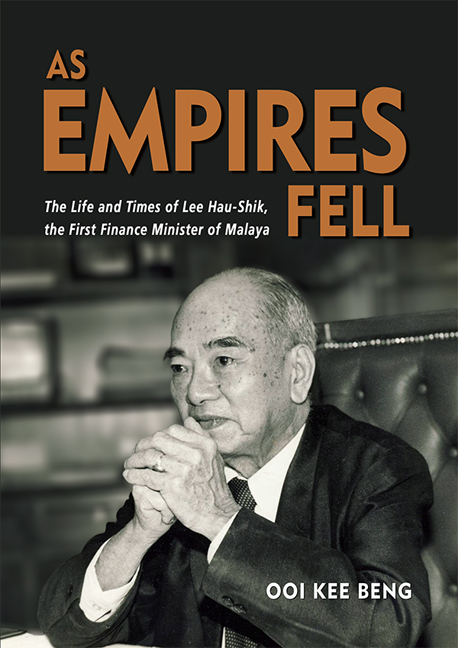
To understand how independence was gained for a politically complex country such as Malaysia, and how its structure took form requires familiarity with the key players involved. More importantly, only by locating these actors within the changing socio-political context in which they specifically lived does their influence both before and after the birth of the country become clear. Having written potent biographies about Malaysian and Singapore leaders such as Ismail Abdul Rahman, the Deputy Prime Minister of Malaysia who died in 1973, Goh Keng Swee, the economic architect and one of the founding fathers of the Republic of Singapore, and Lim Kit Siang, the unwavering opposition leader of Malaysia, Ooi Kee Beng now tells the story of Lee Hau-Shik, based on the latter's extensive private papers housed at ISEAS Library, Singapore. Born in Hong Kong to a highly prominent family at a time when the Qing Dynasty was falling, Hau-Shik received degrees in Law and Economics in Cambridge and became a successful tin miner in British Malaya and an influential member of Kuala Lumpur's colonial society. After the Second World War, his influence in elite circles in China, Britain and Malaya allowed him to play a key role in the gaining of independence for Malaysia. He was one of the founders of the Malayan Chinese Association, and served as the country's first Minister of Finance."Ooi Kee Beng's new book on H.S. Lee provides a remarkable picture of an "unlikely politician" who made major contributions to the formation of the early Malayan state. It adds another dimension of study to the formidable task of nation building in a multi-communal society and is an excellent follow-up to his widely praised study of Tun Ismail as the 'reluctant politician'." -- Wang Gungwu, National University of Singapore"Set against the global turbulence that marks the birth of modern Malaysia, Ooi Kee Beng has given us a compelling account of Sir Henry Lee Hau Shik's personal life and political career, his role in the move to independence and the indelible imprint he left on the country's history. In highlighting and contextualizing H.S. Lee's own papers, As Empires Fell should be read by all those interested in how Malaysia came to be." -- Barbara Watson Andaya, University of Hawaii
Born with motor impairment, Sarwono Kusumaatmadja grew up with low self-esteem. Yet, within this awkward, shy boy lay a steely resolve to overcome his weaknesses. It was this same resolve that propelled him to study at high school in the United Kingdom, thousands of miles from his native land. Navigating life on his own in the UK forged Sarwono into an independent and resilient individual; one who never flinched in the face of challenges, but also one who never wanted to play the hero either. His unique character and integrity acted like a magnet for opportunities back home in Indonesia. He was chosen to be Chairman of the University Student Council of the Bandung Institute of Technology even though he did not campaign for it. And when he made it into the national parliament, it was at the behest of the military. He then became Secretary General of Golkar, the country's ruling party, without having to pull any strings. In taking on all the opportunities that came his way, Sarwono remained true to himself, which later meant saying no to President Soeharto when the latter tried to recruit him to be part of his inner circle.
The economic, political, strategic and cultural dynamism in Southeast Asia has gained added relevance in recent years with the spectacular rise of giant economies in East and South Asia. This has drawn greater attention to the region and to the enhanced role it now plays in international relations and global economics.
The sustained effort made by Southeast Asian nations since 1967 towards a peaceful and gradual integration of their economies has had indubitable success, and perhaps as a consequence of this, most of these countries are undergoing deep political and social changes domestically and are constructing innovative solutions to meet new international challenges. Big Power tensions continue to be played out in the neighbourhood despite the tradition of neutrality exercised by the Association of Southeast Asian Nations (ASEAN).
The Trends in Southeast Asia series acts as a platform for serious analyses by selected authors who are experts in their fields. It is aimed at encouraging policymakers and scholars to contemplate the diversity and dynamism of this exciting region.
Indonesia is the most populous Muslim country in the world, with 87.18 per cent of its 260 million population embracing Islam. It is not a theocratic state, however. It should not be considered a secular state either because religion does continue to influence its policies and legislations. A more accurate description is that it is a Pancasila state. Pancasila is a Sanskrit meaning “Five Principles”, and in Indonesia, these five principles are: belief in the Almighty God; sovereignty of the people; national unity; social justice, and; humanity (Norshahril 2018, p. 40). But what makes Indonesia a Pancasila state is that it has a ministry that oversees the affairs of Indonesia's six official religions: Islam, Catholicism, Protestantism, Hinduism, Buddhism, and Confucianism.
Already in 1946, the Indonesian government had established the Ministry of Religious Affairs (MORA). It was formed not to cater only to the Muslim community, but to all major religious communities in the country.
Its origins served as a compromise between competing groups in the immediate post-independent Indonesia. The declarators of Indonesia independence had backtracked on the Jakarta Charter, which spelt out the role of shariah. Indonesia's founding fathers were divided into two camps on the issue: on the one hand were those who wanted Indonesia to be an Islamic state with the Jakarta Charter as its ideological foundation; and on the other hand were those who envisioned Indonesia as a secular state (Anshari 1979). These two reached agreement on forming a Pancasila state as the middle path, and to make up for the deletion of shariah from the Constitution, they concurred that a ministry overseeing religious affairs be formed (Bowen 2013).
Today, MORA's existence is driven by the assumption that Indonesia's founding fathers agreed to its formation. MORA's main task since independence has always been to provide services for all religious groups and to uphold the freedom to believe and practise their faith. MORA does not interfere with the doctrinal aspects of any of the religions involved. However, in the last decade, there are some Indonesians who have expressed the wish to extend MORA's current position as a religiously neutral institution to one more inclined towards Islam.
•Indonesia is the most populous Muslim country in the world, with 87.18 per cent of its 260 million population embracing the Islamic faith. However, Indonesia is neither an Islamic state nor a secular one. It adopts Pancasila as the state ideology but has a Ministry of Religious Affairs (MORA) overseeing six official religions.
•MORA has its genesis in Dutch colonial rule (1602–1942). It was strengthened during the Japanese occupation (1942–45) and then sustained by the post-independence Indonesian government (after 1945). The decision to keep MORA was to compensate those who had aspired for the enactment of the Jakarta Charter in the era of Sukarno but failed.
•MORA has always been the arena for contestation betweenthe traditionalist Nahdlatul Ulama (NU) and the modernist Muhammadiyah. Both organizations eye not only the minister post, or leadership positions in the bureaucracy, but also lower ranking positions.
•This article examines how MORA has been managed under President Joko Widodo (Jokowi) from 2014 till the present. It highlights similarities and differences in Jokowi's control of the influential ministry compared to his predecessors. In 2014, even though Jokowi was elected on a reform agenda, he left MORA untouched.
•After the 2019 election, Jokowi appointed Fachrul Razi, a retired general as Minister of Religious Affairs, departing from past practices of naming a religious scholar (ulama) or a religiously trained person (santri) to that position. This demonstrates a wish on the part of the President to shake up the ministry and to exert control over the institution. This decision, however, has alienated core supporters in NU who helped him get re-elected in 2019.
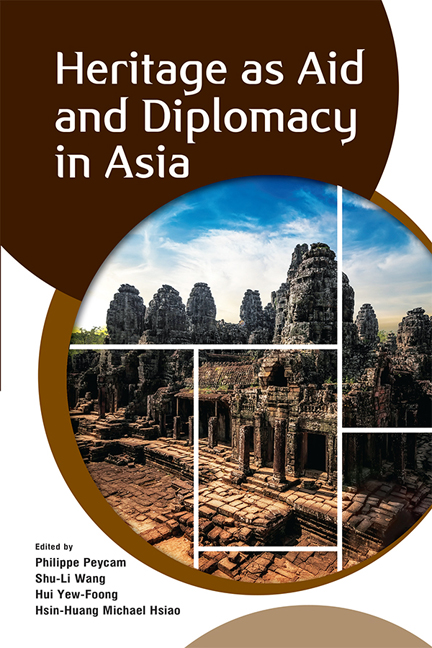
Drawing from eleven rich case studies in Asia, this book is the first to explore how heritage is used as aid and diplomacy by various agencies to produce knowledge, power, values and geopolitics in the global heritage regime. It represents an interdisciplinary endeavour to feature a diversity of situations where cultural heritage is invoked or promoted to serve interests or visions that supposedly transcend local or national paradigms. This collection of articles thus not only considers processes of "UNESCO-ization" of heritage (or their equivalents when conducted by other international or national actors) by exploring the diplomatic and developmentalist politics of heritage-making at play and its transformational impact on societies. It also describes how local and outside states often collude with international mechanisms to further their interests at the expense of local communities and of citizens' rights.Heritage as Aid and Diplomacy in Asia explores the following questions: Under the current international heritage regime, what are the mechanisms of-and the manipulations that take place within-ideological, political and cultural transmissions? What is heritage diplomacy and how can we conceptualize it? How do the complicated history and colonial past of Asia constitute the current practices of heritage diplomacy and shape heritage discourse in Asia? How do international organizations, nation-states, NGOs, heritage brokers and experts contribute to the history of the global heritage discourse? How has the flow of global knowledge been transferred and transformed? And how does the global hierarchy of cultural values function?
This book attempts to analyse the concept of religious expression vis-à-vis freedom of speech in Malaysia from the philosophical, political and theoretical perspectives. It begins by discussing the major sources of religious expression that are firmly rooted in the societal and religious beliefs, constitution and legislation of the country. It also examines multiple facets of the Islamization policy in the country and to what extent such policy affects the exercise of domestic religious expression. The problems and challenges of domestic religious expression, theoretically and practically, will also be examined including the issues of radicalization and terrorism. After a change of power from the Barisan Nasional (BN) to Pakatan Harapan (PH) in 2018, this book attempts to explain PH's approach in dealing with the issue of Islam and religious expression in Malaysia. Lastly, this book intends to identify and observe how Malaysian society and the state react to the issue of religious expression.
Singapore, an island city-state with a population of 5.6 million, reports some of the highest percentage of social media users in Southeast Asia. According to a report on digital users by We Are Social (Kemp 2020), 88 per cent of Singaporeans are online and 79 per cent are active on social media. With fast internet speeds, a highly educated population and a burgeoning digital economy, Singapore's socio-political landscape is really like no other in the Southeast Asian region. While other countries are characterized by highly diverse national versus regional dynamics, structures and institutions, Singapore's one-party led city-state allows for a far more controlled and top-down approach to shaping social media discourse. Singapore's place as a geopolitical powerhouse too is a factor; not just in the region and as a key member of ASEAN, but in terms of its strong relationship with larger powers like China and the United States. This international outlook is especially important for Singapore, which has significant and important diplomatic ties with other countries and a large English-speaking population. Big tech companies like Facebook and Google maintain their large and growing Southeast Asian offices in Singapore, and numerous international dignitaries, academic and business conferences and delegations flow through Singapore which debate the nature of social media discourse and disinformation. To give one example, in 2020 Reuters and Facebook announced an Asia-wide media verification programme and Third- Party Fact-Checking Program based in Singapore, focusing on English language content (Reuters 2020).
Nevertheless, the local context remains key to understanding how social media discourse has evolved in Singapore. This chapter will analyse how key events in Singapore's socio-political history shaped the use of social media for civic and political engagement. In the context of Singapore, events that have engaged citizens on a massive scale in terms of civic and political engagements have been elections. For this reason, the analysis undertaken in this chapter is through the lens of elections in shaping how social media has been used in the country. This chapter argues that the internet, largely through bloggers, was originally a burgeoning tool for alternative news and views in Singapore. It was in this context that social media was adopted.
Disinformation production has become a prominent fixture in recent electoral campaigns in Indonesia, leading to fears of “divisive” political discourse that affect not only online debates, but also have real-life consequences for violence (Heriyanto 2019). Social media platforms are often blamed both for the spread of disinformation and for “polarizing” the nation. This article argues that social media disinformation is an extension of the expanding political campaign industry, whose significance increased, and is being used by political elites to maintain their power. The rise of disinformation via social media is new, but is part of a long history of engineering consent and manipulation by elite political and economy forces in the country.
My research in Indonesia has shown that the production of disinformation via social media campaign teams could be observed since as early as the 2012 Jakarta gubernatorial election, an election which saw the victory for Joko Widodo (hereafter Jokowi), who would become Indonesia's president two years later. The 2012 election witnessed for the first time the extensive and professional use of social media campaigning, although much of this activity went unnoticed by scholars and the mainstream media. The industry continued to develop in the 2014 Indonesian presidential election, grew substantially in the 2017 Jakarta gubernatorial election, and grew even more in the 2019 presidential election. During these elections, social media was increasingly used for disinformation production, pitting supporters of candidates against each other. It was driven by the emergence of increasing campaign funds directed towards social media management, production and manipulation of social media discourse.
This chapter will examine the political-economic context which allowed for the growth of disinformation production in Indonesia. It will begin by examining the early use of social media campaigning, examine a “tipping point”, and identify the growing players behind the disinformation production in the social media sphere. In doing so, it highlights a Gramscian argument that the power holders control the masses (particularly in democracy) through committing repression but also by gaining their consent.
EARLY USE OF SOCIAL MEDIA IN INDONESIA
Social media engagement in Indonesia began positively for reformists, and was largely seen as activities considered to be supportive of democracy.
Malaysia's adoption of disinformation was part of a gradual response by the Barisan Nasional (BN) government to an online space perceived to be dominated by pro-opposition forces. The ruling Barisan Nasional coalition—and by extension, the state—adopted social media as part of its communication strategy in the late 2000s. But it realized that those efforts were not sufficient to win over online sentiment in what was considered the “opposition's playground” (Leong 2019). This turn to disinformation was most evident in the 2013 General Election (GE13) campaign. In the previous general election of 2008, the pervasiveness of new communication technologies, such as online news sites and blogs, was credited as having contributed to Barisan Nasional's loss of its two-thirds majority in Parliament, only the second time this had occurred since the country gained independence in 1957 (Hah 2012; Ndoma and Tumin 2011). As GE13 approached, Barisan Nasional feared similar results, and was fending off strong sentiments of distrust at the establishment pushed by the Bersih social movement calling for free and fair elections.
The wave of anti-Barisan Nasional sentiment among many urban, Peninsula social media users, alongside years of efforts by opposition parties and civil society groups to target the ruling coalition on internet platforms, led to more concerted measures from the state, including turning to disinformation practices (Ding, Koh and Surin 2013; Johns and Cheong 2019; Muhamad 2015). The BN state thus increasingly tried to control the flow of information and communicative practices on the internet, including tightening up media regulation and introduction of new laws, surveillance and threats, and censorship. Furthermore, this period saw the establishment of government-linked “cybertroopers” to counter opposition sentiment. Despite the emergence of cybertroopers, the anti-Barisan Nasional sentiment on social media continued towards the end of the 2010s, amplified by the domestic and international accusation of corruption associated with Prime Minister Najib Razak. At the next general election in 2018 (GE14), Barisan Nasional would lose power for the first time in the nation's history.
Barisan Nasional's disinformation campaigns could not hold up against two decades of the “opposition playground”, bucking the trend in the Southeast Asian region where many elite ruling regimes have remained firmly in power.
A sharp rise in the use of new technologies and social media in Southeast Asia has triggered a debate about the possible effects on the political architecture in the region. Is social media leading to increased political participation? Can social media boost democratization in authoritarian states in Southeast Asia? How are Facebook, YouTube and Twitter changing political communication? This chapter uses Southeast Asia as a laboratory to test certain hypothesis of the impact of social media on democratization and authoritarian resilience. While social media were seen as instruments of liberation a decade ago, they are today considered a major threat to democracy and human freedom (Diamond 2019). Digital media are regarded as providing fertile ground for the rise of authoritarian strongmen and right-wing groups, accelerating and deepening the current wave of autocratization. Autocratization is used here as an umbrella term to cover the diverse processes of democratic backsliding (which means the loss of democratic quality in a democracy), the breakdown of an existing democracy and the worsening conditions in electoral authoritarian regimes. In electoral authoritarian regimes elections are not competitive and fair and incumbents often use various strategies of manipulation to stay in power.
In this chapter I argue that authoritarian regimes in Southeast Asia have adapted to new technologies and are increasingly using social media and the internet for their own ends. They have enhanced censorship and online repression and are employing the internet to co-opt certain social groups, repress critics and legitimize their rule. The young democracies in the region are unstable and weakly institutionalized. Social media is furthering polarization and distrust in Southeast Asian societies, often based on disinformation campaigns and growing sectarianism. Here, elections have become virtual battlegrounds between contestants and internet and social media are actively used to misinform and intimidate.
The chapter is structured as follows: first, I compare political developments in Southeast Asia with global developments. I show that the region has not experienced a region-wide wave of democratization seen elsewhere and authoritarian regimes are more or less resilient towards political change. I then briefly discuss causes of democratic instability and authoritarian resilience in Southeast Asia. In the last chapter I discuss the effects of digital media for authoritarian resilience and democratic backsliding and identify the main mechanisms how social media is influencing regime developments.
Social media entered Myanmar during its most monumental political transition from decades-long and repressive military dictatorship to a burgeoning electoral democracy. During this seismic political shift, Myanmar has been plagued by optimism for a more open and wealthier society coupled with fear of uncertainties that naturally accompany any significant societal and political change. Social media has become the arena where such tension plays out in the most toxic way: it gives rise to nationalist right-wing activism, polarization and disinformation that accompanied offline communal violence with devastating results. Despite the initial high hopes that the expansion of internet and social media connectivity would positively contribute to the country's democratic transition, today Myanmar is the site of one of the world's worst humanitarian crises—dubbed the world's first “Facebook genocide”—as more than 700,000 Rohingya minorities have been displaced and thousands feared dead (Mozur 2018). Facebook was forced to admit it failed to stop the use of its platform to perpetuate hate speech and violence in Myanmar, particularly against the Rohingyas (Hatmaker 2018).
Yet there was initial hope among activists and opposition groups in the late 2000s that social media could be a force for progressive change. Many of the pro-democracy networks and civil society groups were established overseas, particularly in neighbouring Thailand, and had access to internet and social media long before it became widely available in Myanmar. They understood firsthand the power of digital media in facilitating social and political change—they had used these tools to help facilitate the “Saffron Revolution” in 2007. The “revolution” was sparked by a YouTube video of the former leader General Than Shwe's daughter's lavish wedding, among other factors.
As internet access expanded, social media became a space of toxicity rather than civility as the right-wing nationalist voices became influential, subverting much of the critical, more progressive voices. What makes Myanmar so vulnerable to online falsehoods and hate speech? Entrenched political polarization and systemic state violence against the Rohingya minorities may have provided structural conditions that facilitate communal violence. I argue in this chapter that social media has become a readily available tool for mobilization of radical voices in Myanmar partly because there was little state intervention to stymie such radicalization, and partly because the nascent activist groups that emerged online were deeply divided over the issue.
“Patient zero” was how Facebook executive Katie Harbath (2018) described the Philippines in a public talk in Germany, on the topic of “protecting electoral integrity on Facebook”. “That was the beginning”, she argued, referring to the election of Philippine President Rodrigo Duterte in a country that prided itself to be one of Asia's oldest democracies. “A month later it was Brexit, and then Trump got the nomination, and then the US elections”, she added. Describing the Philippines as “patient zero” both illuminates and obscures the role of digital technologies in shaping democratic politics. It is illuminating insofar as it exposes the pathologies associated to strategies of digital campaigning that brought illiberal strongmen to power. In 2016, journalists, academics, civil society groups and even the Roman Catholic Church of the Philippines called out the toxic incivility and proliferation of fake news on Facebook. The Philippines’ Commission on Human Rights was alarmed with the growing extent of cyberbullying and harassment of citizens who posted critical views of President Duterte on social media. Female journalists were often targeted, particularly those who published unsavoury reports about the Duterte campaign (Rodriguez 2016). Meanwhile, 81 per cent of Filipinos reported having read fake news on social media according to a recent national survey (Pulse Asia Research Inc. 2018). These trends have led to international headlines about Duterte's “paid trolls” or “keyboard armies” who spread disinformation and amplify hate speech (Palatino 2017; Syjuco 2017; Williams 2017). For Rappler founder and CEO Maria Ressa (2016)—Time Magazine's Person of the Year for her work on press freedom—the “weaponization” of social media spells the death of democracy in the Philippines. The contagion of fake news and hate speech resulted in a series of proposed “cures” of patient zero. These include fact checking, promoting digital literacy, and anti-fake news laws.
The spread of digital disinformation is indeed a pathology that compromises the integrity of democratic politics. However, describing the Philippines as “patient zero” obscures the longer history of inequalities in economic and political power that created conditions for the proliferation of digital disinformation.
When the Hanoi city administration announced a plan to cut some 6,700 trees from the city's boulevards in 2015, the authorities did not anticipate it would trigger a large-scale grassroots movement online. A Facebook page “6,700 people for 6,700 trees” quickly gathered more than 55,000 likes. Protests in the capital city subsequently ensued as civil society groups and ordinary citizens hit the streets. Within days, the central government immediately halted the plan to cut the trees, and launched a further investigation. In a one-party Communist state like Vietnam, whose regime has a tight grip on traditional media and criticism of the government is largely repressed and frequently punished, that an online movement could trigger a widespread backlash and force authorities to scrap its plan was extraordinary. As one of the most repressive regimes in the world, grassroots online activism was rising in Vietnam and a more politically engaged citizenry seemed to be an inevitable result.
Elsewhere in Southeast Asia, social media's positive impact on promoting grassroots issues seemed similar. In Indonesia, Joko Widodo was elected as president in 2014 partly through a powerful social media presence as a “new” kind of grassroots-driven politician, supported by much of Indonesia's civil society and pro-democracy activists. In Malaysia, the Bersih “Clean Elections” movement used social media to coalesce reformists, and enabled mass street protests against a corrupt semi-authoritarian regime. In Myanmar, one of Southeast Asia's most conservative societies, LGBT communities flourished on Facebook when Colours Rainbow Yangon was established to advocate for gay rights. Even in Thailand, reformists were making important gains. The Thai government planned to consolidate internet traffic through the creation of a single gateway, causing internet rights and media civil society groups to fight back. Internet advocacy groups created online petitions on change.org that elicited more than 500,000 signatures and heated conversations across a number of Thai web board communities.