To save content items to your account,
please confirm that you agree to abide by our usage policies.
If this is the first time you use this feature, you will be asked to authorise Cambridge Core to connect with your account.
Find out more about saving content to .
To save content items to your Kindle, first ensure no-reply@cambridge.org
is added to your Approved Personal Document E-mail List under your Personal Document Settings
on the Manage Your Content and Devices page of your Amazon account. Then enter the ‘name’ part
of your Kindle email address below.
Find out more about saving to your Kindle.
Note you can select to save to either the @free.kindle.com or @kindle.com variations.
‘@free.kindle.com’ emails are free but can only be saved to your device when it is connected to wi-fi.
‘@kindle.com’ emails can be delivered even when you are not connected to wi-fi, but note that service fees apply.
• In late February 2020, the Mahathir Mohamad-led Pakatan Harapan (Harapan, or Pact of Hope) government ended abruptly. Amidst ensuing confusion, Muhyiddin Yassin led defecting Harapan Members of Parliament, joined by UMNO and PAS, in an ad hoc Perikatan Nasional (PN, or National Alliance) coalition to form a “backdoor government”.
• The PN protagonists cast themselves as a “Malay-Muslim front” for preserving Malay dominance. Yet they unwittingly exposed the parlous state of their “Malay politics”, as shown by an absence of “Malay unity”, strongly contested claims to represent the Malays, intense party factionalism, and subverted leadership transitions.
• The parlousness of Malay politics emerged from the failure of the Malay political class to meet many challenges between 1997 and 2018. As the New Economic Policy and Vision 2020 political orders shed their combined twenty-five-year hegemony, Malay politics could not recover its declining popular support and legitimacy, or craft a fresh, broadly supported settlement.
• The present is an unsettled conjuncture: the old order is passing while Harapan's experimental regime has been subverted. Yet Malay politics is unable to reform or tackle current issues authoritatively. Instead Malay politics has turned inwards and precipitated a disorder of the political system.
The economic, political, strategic and cultural dynamism in Southeast Asia has gained added relevance in recent years with the spectacular rise of giant economies in East and South Asia. This has drawn greater attention to the region and to the enhanced role it now plays in international relations and global economics.
The sustained effort made by Southeast Asian nations since 1967 towards a peaceful and gradual integration of their economies has had indubitable success, and perhaps as a consequence of this, most of these countries are undergoing deep political and social changes domestically and are constructing innovative solutions to meet new international challenges. Big Power tensions continue to be played out in the neighbourhood despite the tradition of neutrality exercised by the Association of Southeast Asian Nations (ASEAN).
The Trends in Southeast Asia series acts as a platform for serious analyses by selected authors who are experts in their fields. It is aimed at encouraging policymakers and scholars to contemplate the diversity and dynamism of this exciting region.
In contemporary diplomacy, the governments are not the sole actors in bilateral ties; the business sector and people to people contacts are indispensable to the process. Where Indonesia and China are concerned, much progress has been demonstrated in the managing of relations over the last seventy years.
Beijing perceives Indonesia as a resource-rich nation with considerable regional clout. On the other hand, Jakarta considers China an economic juggernaut with global and regional power which offers plenty of opportunities for cooperation. Beijing is aiming for collaboration that benefits its strategic interests. It is now the leading player in the steel industry. This also means that it is the world's largest stainless steel producer and top importer of nickel ore. Meanwhile, Indonesia has the world's largest reserves of nickel, a key component in stainless steel. In August 2020, China's nickel ore import from Indonesia surged 26.5 per cent year-on-year. This mutual interest does not however necessarily lead to smooth cooperation. The COVID-19 pandemic and the Indonesian people's reservations about China presented obstructions.
In the Natuna waters, shortly, before the identification of the first case of the coronavirus by Chinese authorities in Wuhan, both countries were involved in a stand-off following the violation of the Indonesian Exclusive Economic Zone (EEZ) by Chinese fishing vessels escorted by the Chinese Coast Guard. This unfortunate incident deepened grassroots perception of China as a hegemonic power that threatens the territorial rights of Indonesia.
During the pandemic, however, both countries have been standing shoulder-to-shoulder in battling the novel coronavirus. The cooperation in this area involves many stakeholders ranging from the government to the business sector to people-to-people contacts. It remains to be seen if this close cooperation in the fight against the coronavirus—which has become both governments’ priorities—will foster better bilateral ties in the long term.
On 29 August 2020, Median, a Jakarta-based survey institution published a study demonstrating the that Indonesian people see China as the biggest threat (31.5 per cent), followed by the US (10.8 per cent) and Malaysia (4.3 per cent).
• The 70th anniversary of Sino-Indonesia bilateral relations is marked by issues alongside the coronavirus pandemic, such as medical cooperation, the import of Chinese workers, and confrontation in the Natuna waters.
• Since the first case of coronavirus was identified in Wuhan in late December 2019, Indonesia has been generously assisting China in coping with the pandemic. In return, when the outbreak occurred in Indonesia, China also rendered support to its strategic partner.
• The collaboration occurred at government-to-government (G-to-G) level (Ministry of Foreign Affairs, Ministry of Defence), business-to-business (B-to-B) level (state-owned companies and private companies), and people-to-people (P-to-P) level (ethnic Chinese associations, philanthropic institution). However, both Indonesia and China have not optimized on the P-to-P or grassroots interaction.
• China's “vaccine diplomacy” is not unconditional, and Beijing may use its vaccine donations to advance its regional agenda, particularly on sensitive issues such as its claims in the South China Sea.
• The import of Chinese workers into certain Indonesian regions has met with local opposition. This has been resolved with the central and the regional governments reaching an understanding that the Chinese projects will eventually benefit the local economy.
• In the Natuna waters, Jakarta shows a shift in tone from confrontation (during Jokowi's first term) to moderation. Although Chinese fishing vessels are likely to continue fishing there, the Jokowi administration is likely to deliver business-as-usual responses in order to maintain cordial relations with China while not compromising on its own territorial claims.
• Overall, bilateral relations on the G-to-G level are amicable and even facilitate B-to-B contacts. However, on the P-to-P level, Indonesians remain suspicious of China. Both governments need to make the common Indonesians key beneficiaries of bilateral cooperation, for example, by providing reliable vaccines to them.
The economic, political, strategic and cultural dynamism in Southeast Asia has gained added relevance in recent years with the spectacular rise of giant economies in East and South Asia. This has drawn greater attention to the region and to the enhanced role it now plays in international relations and global economics.
The sustained effort made by Southeast Asian nations since 1967 towards a peaceful and gradual integration of their economies has had indubitable success, and perhaps as a consequence of this, most of these countries are undergoing deep political and social changes domestically and are constructing innovative solutions to meet new international challenges. Big Power tensions continue to be played out in the neighbourhood despite the tradition of neutrality exercised by the Association of Southeast Asian Nations (ASEAN).
The Trends in Southeast Asia series acts as a platform for serious analyses by selected authors who are experts in their fields. It is aimed at encouraging policymakers and scholars to contemplate the diversity and dynamism of this exciting region.
• In his second term (2019–24), President Joko Widodo remains committed in combating radicalism. Anti-radicalism measures such as the banning of radical organization Hizbut Tahrir Indonesia (HTI), anti-radicalism policies at schools and universities and the deradicalization of terrorists have been expanded to include the Indonesian civil service that currently employs over 4.2 million people across the archipelago.
• In November 2019, a joint decree was signed by eleven government and state institutions to formalize the new anti-radicalism policy.
• This paper argues that some challenges arose during the process of implementing the policy including the lack of cooperation from Personnel Development Officers (PPK) in imposing disciplinary actions recommended by the task force.
• The spread of COVID-19 further impedes policy coordination and has hampered efforts to effectively implement the policy.
The economic, political, strategic and cultural dynamism in Southeast Asia has gained added relevance in recent years with the spectacular rise of giant economies in East and South Asia. This has drawn greater attention to the region and to the enhanced role it now plays in international relations and global economics.
The sustained effort made by Southeast Asian nations since 1967 towards a peaceful and gradual integration of their economies has had indubitable success, and perhaps as a consequence of this, most of these countries are undergoing deep political and social changes domestically and are constructing innovative solutions to meet new international challenges. Big Power tensions continue to be played out in the neighbourhood despite the tradition of neutrality exercised by the Association of Southeast Asian Nations (ASEAN).
The Trends in Southeast Asia series acts as a platform for serious analyses by selected authors who are experts in their fields. It is aimed at encouraging policymakers and scholars to contemplate the diversity and dynamism of this exciting region.
The Islamic Party of Malaysia (PAS) traces its history to 1951, when it was set up by a group of religious scholars many of whom were from the United Malays National Organization (UMNO). Since its establishment, the party has developed a rich history both in government and in opposition. In Malay-majority states such as Kelantan, Terengganu and Kedah, PAS has a strong support base. Indeed, they are currently the lead party in these states’ administration, with a comfortable majority in the legislative assemblies. In Kelantan and Terengganu, PAS can rule without the need for support from any other party. Additionally, as part of a coalition, PAS also has experience in governing richer and more cosmopolitan states such as Penang and Selangor.
At the federal level today, PAS has eighteen MPs with unquestioned loyalty to the party. There is virtually no popular discussion about the possibility of any PAS MP crossing over to another party. In 2019, PAS formed a partnership with UMNO under the banner of Muafakat Nasional. It then agreed to join the Perikatan Nasional (PN) coalition with eleven other parties, to form a new government following the resignation of Prime Minister Mahathir Mohamad in February 2020. The support of PAS MPs was instrumental in the downfall of the Pakatan Harapan (PH) government and the formation of the PN government. And their continued participation in the government is crucial, for without them the government would fall.
The approach taken in this study is to explain the subject by using PAS’ own views to justify and explain its actions and strategies. The aim is not to assess or judge the party, but to capture and document its stance in a coherent fashion. Since there has been so much movement in Malaysian politics of late, it is important to keep in mind that this study covers the period up to the end of September 2020 only.
The next section provides a brief background of the party. The essay will then explore some of the major decisions made by the party in recent years, focusing in depth on its attitude towards political partnerships with other parties. PAS’ participation in both Muafakat Nasional and PN will be discussed.
The economic, political, strategic and cultural dynamism in Southeast Asia has gained added relevance in recent years with the spectacular rise of giant economies in East and South Asia. This has drawn greater attention to the region and to the enhanced role it now plays in international relations and global economics.
The sustained effort made by Southeast Asian nations since 1967 towards a peaceful and gradual integration of their economies has had indubitable success, and perhaps as a consequence of this, most of these countries are undergoing deep political and social changes domestically and are constructing innovative solutions to meet new international challenges. Big Power tensions continue to be played out in the neighbourhood despite the tradition of neutrality exercised by the Association of Southeast Asian Nations (ASEAN).
The Trends in Southeast Asia series acts as a platform for serious analyses by selected authors who are experts in their fields. It is aimed at encouraging policymakers and scholars to contemplate the diversity and dynamism of this exciting region.
Tackling religious extremism continues to be a priority for President Joko Widodo (Jokowi) during his second term which began in October 2019. Within a month of his return to the presidency, eleven state and government bodies issued a joint decree to curb radicalism among civil servants (see Table 1 for the list of institutions). The joint decree is the latest anti-radicalism policy implemented by the Joko Widodo administration following the banning of pan-Islamist and Muslim fundamentalist group, Hizbut Tahrir Indonesia (HTI), in 2017 through presidential regulation in lieu of the 2013 Law on Mass Organization. The government argued that HTI was banned mainly because the organization had failed to play a positive role in supporting national objectives. Activities conducted by the group were also seen to go against Pancasila and the Indonesian Constitution and had caused clashes between communities. This threatened security and order and potentially endangered the unity of the Indonesian state (Bambang Prasetyo 2019, p. 259).
This set of anti-radicalism policies ultimately seek to fulfil the President's aspiration to enhance pluralism in Indonesia based on Bhinneka Tunggal Ika (Unity in Diversity). This aspiration was proclaimed in Joko Widodo's campaign when he was running for the 2014 presidential election. His campaign platform, known as Nawacita, consisted of nine areas of development that Joko Widodo would realize if elected as president. His aspiration for a plural Indonesia has continued into his second term, under another political platform titled Indonesia Maju (Indonesia Moving Forward).
This article examines the part of President Joko Widodo's anti-radicalism policy that targets Indonesian civil servants. It outlines the process and progress in implementing the policy, sheds light on challenges in policy-implementation and evaluates the effectiveness of the policy. This article argues that the Joko Widodo administration has been facing a daunting task in implementing the policy. The implementation has lost momentum due to the COVID-19 pandemic that altered the government's priorities and subsequently reduced the morale of the joint task force.
• The Islamic Party of Malaysia (PAS) is no stranger to coalition politics. It has a long history of working with others, both in government and in opposition. Up until 2018, it used the framework of tahaluf siyasi as the guide to forming coalitions.
• Under the pretext of tahaluf siyasi or political coalition, PAS joined the Barisan Nasional (BN) government in 1974. It was also a key player in the Angkatan Perpaduan Ummah (APU), Barisan Alternatif (BA) and Pakatan Rakyat (PR) opposition coalitions.
• But in the lead up to GE14, PAS decided to form the Gagasan Sejahtera coalition with much smaller parties—Berjasa and Ikatan. It dominated this coalition and the two partners were largely insignificant.
• After GE14, PAS decided to partner with UMNO in Muafakat Nasional, under the pretext of a new strategy called ta’awun siyasi or political cooperation. This is a looser partnership arrangement, in which the partners are not strictly bound to each other.
• The formation of Muafakat Nasional is a historic development, as it brings together the two biggest and oldest Malay political parties for the time in an exclusive manner. Bersatu joined the pact in 2020, making Muafakat Nasional the biggest Malay political force in Malaysia today.
• PAS sees its role as a unifier of the Muslim ummah, holding and keeping the peace between UMNO and Bersatu. For PAS, creating Malay Muslim unity is not just an effective political strategy but also a religious obligation.
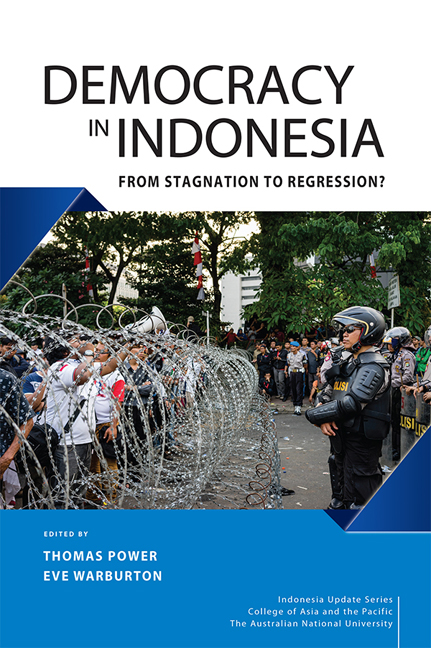
Indonesia has long been hailed as a rare case of democratic transition and persistence in an era of global democratic setbacks. But as the country enters its third decade of democracy, such laudatory assessments have become increasingly untenable. The stagnation that characterized Susilo Bambang Yudhoyono's second presidential term has given way to a more far-reaching pattern of democratic regression under his successor, Joko Widodo. This volume is the first comprehensive study of Indonesia's contemporary democratic decline. Its contributors identify, explain and debate the signs of regression, including arbitrary state crackdowns on freedom of speech and organization, the rise of vigilantism, deepening political polarization, populist mobilization, the dysfunction of key democratic institutions, and the erosion of checks and balances on executive power. They ask why Indonesia, until recently considered a beacon of democratic exceptionalism, increasingly conforms to the global pattern of democracy in retreat.
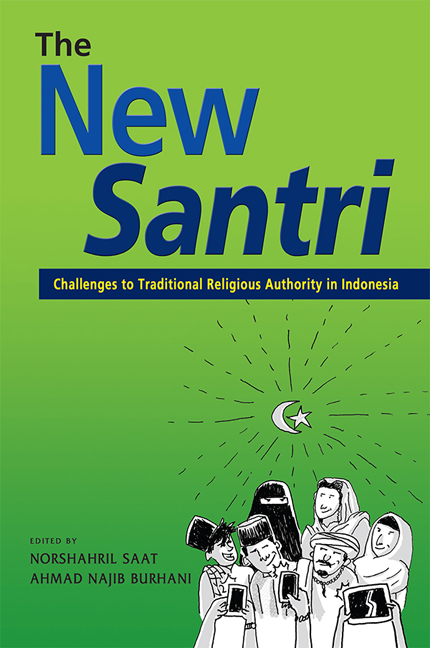
Just like the Gutenberg revolution in the fifteenth century, which led to the emergence of non-conventional religious authority in the Christian world, the current information technology revolution, particularly through mediums such as Facebook, Instagram, YouTube, and Twitter, has triggered the re-construction and decentralization of religious authority in Islam. New santri (pious individuals) and preachers emerged from the non-conventional religious educational system. They not only challenged the traditional authorities, but also redefine and re-conceptualize old religious terminologies, such as hijra and wasatiyya. This book explores the dynamics of religious authority in Indonesia with special attention to the challenges from the "new santri". It is a rich and important book on religion. I recommend students of religion in Indonesia and other countries to read it.Ahmad Syafi'i Maarif, Professor Emeritus of History at Yogyakarta State UniversityAn important and timely volume that addresses the changing nature of Islamic leadership in the world's most popular Muslim country. This book debunks many (mis)perceptions that Indonesia Islam is monolithic. It also redefines dominant characterization of Islam by Orientalist scholars, such as santri and abangan Muslims.Haedar NashirChairman of MuhammadiyahThis edited volume evaluates the new development of Islamic scholarship and authority in Indonesia. Things have changed significantly in recent times that make many observers and researchers wondering: has Indonesia moved from traditional authorities, mainstream Islamic organizations, and the established scholarship to the new actors, movements and platforms? Has the change occurs owing to the democratization and political reforms that took place in the last twenty years or are there other factors we need to take into account? The contributors in this book provide possible answers from many different areas and perspectives. It's a must-read!Nadirsyah HosenMonash University, Australia
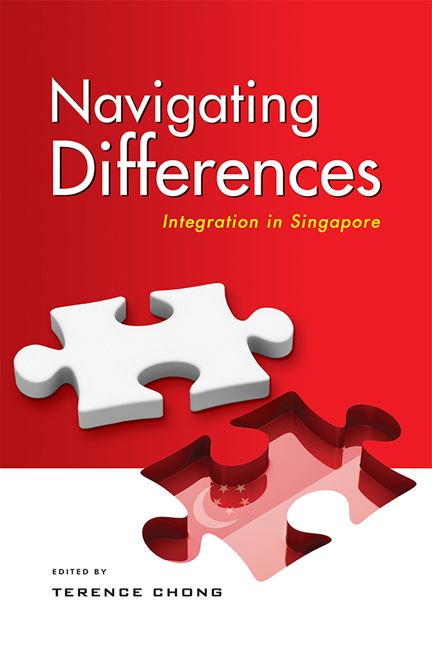
Ethnic and religious differences, a widening socio-economic divide, tension between foreigners and locals. These are some of the contemporary challenges to integration in Singapore. How we navigate them will determine the type of society we become. This book gathers the best social scientists in Singapore to examine issues of ethnicity, religion, class, and culture in order to understand the many different fault lines that run across the multicultural city-state. These essays are written in an engaging manner and are designed to present the authors' expertise to a wider audience.
Non-Traditional Security Issues in ASEAN examines the current state of governance of non-traditional security challenges confronting the ASEAN region. The book takes an issue-specific approach to investigating how ASEAN states and societies govern many of the pressing non-traditional security issues, such as climate change, food security, environmental protection, humanitarian assistance and disaster response, health security, nuclear security, and human trafficking and forced displacement. With non-traditional security as an established concept in the policy and scholarly communities in ASEAN, this book moves beyond securitization and focuses on capacity-building, regional cooperation and institutions for dealing with non-traditional security challenges in the region. Through the development of a comprehensive analytical framework that examines the processes of governing non-traditional security problems, the editors put together chapters that identify some of the major gaps and challenges in managing many of the pressing security issues in Southeast Asia. Non-Traditional Security Issues in ASEAN provides a systemic assessment of the state of governance of the most pressing challenges in the region. The authors analyse the ways in which particular issues are addressed at national and regional levels and by different stakeholders. In spite of the differences among various non-traditional security issues, the analysis of the chapters converge on three core themes for enhancing governance, which include engagement of multiple actors, effective enforcement of national and regional laws and regulations, and better coordination between different actors. As such, Non-Traditional Security Issues in ASEAN contributes to policy making by highlighting the key agendas that call for national action and promoting and deepening regional cooperation in governing non-traditional security.
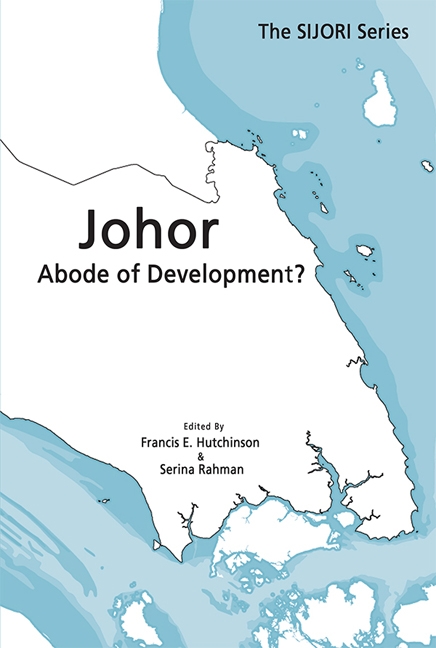
In 1990, the Malaysian state of Johor—along with Singapore and the Indonesian island of Batam—launched the Growth Triangle to attract foreign direct investment. For Johor, this drive was very successful, transforming its economy and driving up income levels. Today, Johor is one of Malaysia's "developed" states, housing large clusters of electrical and electronics, food processing, and furniture producing firms. While welcome, this structural transformation has also entailed important challenges and strategic choices. After three decades, Johor's manufacture-for-export model is under question, as it faces increasing competition and flat-lining technological capabilities. In response, the state has sought to diversify its economy through strategic investments in new, mostly service-based activities. Yet, Johor retains pockets of excellence in traditional sectors that also require support and policy attention. The state's economic transformation has also been accompanied by far-reaching political, social, and environmental change. Not least, Johor's growing population has generated demand for affordable housing and put pressure on public services. The strain has been exacerbated by workers from other states and overseas. These demographic factors and large-scale projects have, in turn, put stress on the environment. Building on earlier work by the ISEAS – Yusof Ishak Institute on the Singapore-Johor-Riau Islands Cross-border Region, this book focuses on this important Malaysian state, as it deals with important domestic challenges on one hand and strives to engage with international markets on the other.