To save content items to your account,
please confirm that you agree to abide by our usage policies.
If this is the first time you use this feature, you will be asked to authorise Cambridge Core to connect with your account.
Find out more about saving content to .
To save content items to your Kindle, first ensure no-reply@cambridge.org
is added to your Approved Personal Document E-mail List under your Personal Document Settings
on the Manage Your Content and Devices page of your Amazon account. Then enter the ‘name’ part
of your Kindle email address below.
Find out more about saving to your Kindle.
Note you can select to save to either the @free.kindle.com or @kindle.com variations.
‘@free.kindle.com’ emails are free but can only be saved to your device when it is connected to wi-fi.
‘@kindle.com’ emails can be delivered even when you are not connected to wi-fi, but note that service fees apply.
Since the nineteenth-century, Arab migration from the Ottoman Empire to Latin America and Latin American travel to the Arab world has created transcontinental routes - and in the late twentieth-century, the translation of Latin American classics into Arabic flourished in the Arab world. Drawing on Latin American and Arabic novels, travelogues, memoirs, short stories and chronicles from Cuba, Colombia, Mexico, Guatemala, Egypt, Lebanon and Iraq, Tahia Abdel Nasser shows how cultural exchange between Latin America and the Arab world cemented historical and diplomatic ties. She also explores how a new cadre of men of letters - poets, writers and intellectuals - shaped Arab Latin American encounters in the late twentieth-century.
Ken Russell was among the most provocative, creative, original and important directors in British film and television history but his career and legacy have long suffered under the media clichés of 'Madman' or 'Enfant Terrible' of British cinema - nicknames which have tended to delegitimise his status and pioneering role in post-war film and television culture.
This scholarly edited collection refuses these terms and aims to not only reflect and further current critical research into Russell's work but to see Russell as the Renaissance man of British cinema. It brings together the work of new and established scholars as well as the reflections of those who knew and worked with Russell. ReFocus: The Films of Ken Russell offers new perspectives across the breadth of Russell's extensive career in television, film and other mediums, and seeks to better understand not only his reception, but the importance of collaboration to his practice, and the legacy of the man himself.
Arthur Conan Doyle is best known as the author of the Sherlock Holmes stories. However, his works are far more extensive than these familiar works. They include historical novels, political pamphlets, historical studies, science fiction novels and, last but not least, numerous publications on spiritualism. Photography plays a central role in his work and gives rise to a highly peculiar world of imagination. The photographs allow us to take a look at the world in around 1900 with all its oddities. For Conan Doyle's contemporaries, Sherlock Holmes was a real figure. To Conan Doyle, photographs of elves, the dead and ghosts testified to their existence. This book collects these images, along with the imaginarium that surrounds them.
Australian International Pictures examines the concept and definition of Australian film in relation to a range of local, international and global practices and trends that blur neat categorisations of national cinema. Although international co-production is particularly acute in the present day, this book examines the porous nature of Australian International filmmaking, and the intriguing transnational and cross-cultural formations created by globally targeted but locally focused films made in Australia in the period 1946-75. Case Studies: The Overlanders (1946) and Ealing Down Under; Kangaroo (1952); On the Beach (1959); The Sundowners (1960); The Drifting Avenger (1968); Age of Consent (1969); Color Me Dead (1970); Ned Kelly (1970); Walkabout (1971); Wake in Fright (1971); The Man from Hong Kong (1975).
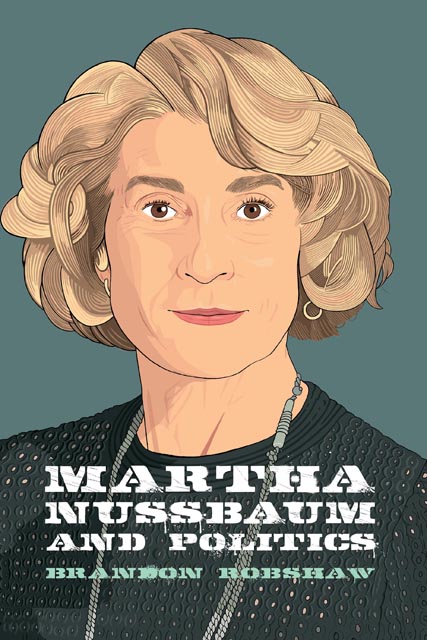
Providing an overview of the political and ethical philosophy of Martha Nussbaum, this book presents the ideas of this significant philosopher and shows how her thought, while rooted in the traditions of classical philosophy, illuminates a number of current, controversial issues. The book takes a chronological approach and aims to show how Nussbaum's thought has continually grown and developed. It takes the reader through her views on ethics, political philosophy, feminism and women's rights, LGBT issues, animal rights, religious tolerance and accommodation, contemporary politics, and global justice. It also explores contested areas of her thought, such as the extent to which she is a perfectionist liberal, challenges to her view that religion merits special accommodations, utilitarian objections to the capabilities approach, criticisms of her brand of liberal feminism, and cosmopolitan objections to her nation-state-based liberal conception of global justice. Each chapter focuses on a book from a different stage of her career, starting with her first book, The Fragility of Goodness and ending with her most recent, The Cosmopolitan Tradition.
1 The Political Project of Autonomy as Absolute Sovereignty and/or the Collective Body's ‘Absolutely Absolute’ Affirmation
Because it is a power (puissance) of affirmation and resistance in every sphere, virtue is struggle. Like his ethics, Spinoza's political thought is primarily combative. And this struggle has its own (philosophical-political) strategy, adapted to time. This is the explicit approach of the TTP, which expands and accompanies the problems raised in the scholia, prefaces and appendices of the Ethics. The declared opponent is the theologian and, in his wake, the tyrant. Beyond the concepts that Spinoza attacks, the true enemy of the philosopher is the shared universe of meaning and the structures of political domination that these doctrines entail. The universe of meaning separates societies, peoples and individuals from their own political activity and constituting power, the only true guarantors of their freedom.
The Spinozist struggle for autonomy, both political and ethical, develops on the metaphysical basis of a conception of the organisation of reality that is itself conceived as strategic in its singular modal actualisation. The concept of a strategy of the conatus of the collective body, or the multitudinis potentia (the multitude as a specific modality of political reality in its tendency to constitute itself as ‘nation’, ‘people’ or ‘State’) places us at the centre of Spinoza's political thought as we find it in its most innovative form in the TP. We find a perfect analogy in the TP between the individual body and the collective body: their common pursuit of preservation and affirmation follows the logic of causality inherent in singular beings. The analogy has implications that make this unfinished work the most radical theory of the strategy of the conatus. Thus, reading the TP confirms and clarifies the innovative theoretical consequences of the historical study of the TTP.
Spinoza's political thought is first, as we said, struggle. To say that this struggle is a fight for freedom would be correct. However, it is somewhat trivial if we do not add to Spinoza's definition of freedom a dynamic of ‘free necessity’, which, we know, corresponds to the absolute affirmation of an existence, its infinity in act.
Film stars must continuously negotiate their stardom status as they grow older in a highly mediated world where youth is considered a prime value – particularly in Western cultures. Whether a star is able to ‘age successfully’ has been a growing area of investigation in Film and Media Studies, under the banner of what has become known as ‘Ageing Studies’ (Basting 1998; Gullette 2004; Harrington, Bielby and Bardo 2014). Early scholars in the field have drawn from theories on feminism and gender to move away from a biological approach to ageing – gerontology – and instead to emphasise how we learn to act one's age. In other words, age, like gender and other markers of identity, is understood as a cultural construction (Gullette 2004; Lipscomb and Marshall 2010: 2; Swinnen 2012: 7). Mark McKenna's analysis of Sylvester Stallone for the Celebrity Studies journal, for example, explores how certain stars, like Stallone, have a rare level of iconicity that is indicative of a significant moment of cultural resonance which ‘often brings with it a refusal in popular culture to allow the iconic image to change, grow or evolve’ (2019: 501). Since that image inevitably does change, there is a perception that stars become redundant. However, some artists, like Stallone, have been able to capitalise on this narrative of redundancy and reconceptualise ageing as transition (McKenna 2019: 501). Even though Darín has never reached that level of iconicity in the public sphere, the typecasting he experienced at particular points in his career – mainly the galancito and the chanta imagery explored in previous chapters – have threatened him with an expiration date. In light of these realities, the following pages will explore whether he has also been able to reconceptualise his ageing as career transition.
Sabrina Qiong Yu states in her introduction to Revisiting Star Studies that ‘there is a common perception that ageing is less an issue for male stars than female stars, since appearance weighs much more in a female star's career. This explains why researchers focus heavily on ageing and female stars […]’ (2017: 5).
This work is the revised edition of a thesis published for the first time in 1997 with Éditions Kimé – a thesis that Jean-Marie Beyssade directed with a kindness, attention and dedication for which I am deeply grateful. I want to once more warmly thank both Alexandre Matheron, who was kind enough to review this work and generously enlightened me with his remarks, as well as Pierre-François Moreau, whose precious advice, trust and friendship constantly sustained me throughout the course of this research.
Apart from updating the bibliography on the subject and adding some notes and corrections, this new edition reproduces the previous text in its entirety.
In the political as well as in the ethical spheres, the philosophical project of Spinozism is to bring us ever closer to the real movement of the self-production of the Real. As a naturalist philosophy of causa sui, Spinozism is also the philosophy par excellence of the real movement through its radical immanentism: which is to say, it is a philosophy of substance. For ‘substance’ is the self-normative, self-organising, self-constituting movement ‘without principle or end’ that takes place in infinitely many ways in (and according to) an infinity of things. This dynamic reality (in its causal complexity), for both individuals and nations, bodies and ideas, is freedom, because freedom is movement.
Prior to the question of the factual finitude of the human landscape and the systems of order in and through which they are necessarily established and maintained, it is a question of grasping the real movement of the self-production of substance in its substantial infinity; before life, refracted in the theatre of passive affections, becomes a dream. The Spinozist imperative, in ethics as well as in politics, is therefore Machiavellian: it is a ‘return to the principle’. It is certainly not a conservative return to a putative ‘natural order’, or to a life that would organise its materiality prior to modality. Rather, it is a return to the principle as a self-normative, self-organising movement, a law of nature that we find as much in the power (puissance) of ideas as we do in the power of bodies and the power of the multitude. Substance is a model of autonomy for ideas, humans and peoples.
The Ethics ends with a clear contrast between the vera animi acquiescentia of the wise, which exists according to the inner logic of their ‘free necessity’, and the ‘restlessness’ of the ignorant, which is tossed about by external causes. This opposition is neither that of motion and rest, nor that (in some ways closer to the truth) of the productive affluence of desire and its opposite, impotence and unproductivity. The real opposition is between a happy and balanced productivity (in and through ‘the power of God’) of the real movement of the Real in its autonomy (in which the philosopher in her becoming participates, with all her unique causal power in the alignment that has taken place between her essence and her existence) and the heteronomous movements of the ignorant.
If there is one country in which Darín's stardom and popularity reached the same dimension as in Argentina, that country is Spain. Darín appeared for the first time in Spanish film theatres in 1994 with Perdido por perdido [Nothing to Lose] directed by Alberto Lecchi. At that time, Argentine films were slowly starting to gain more attention, thanks to the success of Un lugar en el mundo [A Place in the World] (1992), a film directed by Adolfo Aristarain which attracted the outstanding number of half a million spectators in commercial theatres (Colmena 1994; Elena 2011: 42). Inspired by those figures, and given that Lecchi was one of the script-writers of Aristarain's film, Perdido was destined to be one of only two Argentine films that made it to the Spanish big screen that year. Although Darín's presence in this film was not singled out by the critics at the time, who preferred to focus on the plot and the connections between Lecchi and Aristarain, the seed of Darín's Spanish stardom was being sown in many positive reviews of the film's performances (such as Torreiro's in 1994). Moreover, his character, an ordinary middle-class fellow in crisis who cleverly manages to run away with the money and the girl, marked a precedent for his lovable future characters.
Four years later, a co-production with Spain, El faro del sur [The Lighthouse] (1998), brought Darín back to Spanish shores. On that occasion, the 1997 Goya Award-winning director Eduardo Mignogna and the promising young Spanish actress Ingrid Rubio caught the press's attention (Villena 1998; Rivera 1998; Torreiro 1998). Highly favoured by the presence of renowned cast and crew from both countries, El faro increased the number of spectators of Perdido by almost sevenfold and in 1999 won what was Mignogna's second Goya Award for Best Foreign Film in Spanish. Overshadowed by the presence of Norma Aleandro and the popularity of Rubio, Darín's work eluded the headlines once again.
George Eliot's Felix Holt, the Radical (1866) opens with a coachman and a traveller passing through districts of the English Midlands by stagecoach. Seated on the box next to the coachman, the ‘happy outside passenger’ revels in the driver's stories of ‘English labours in town and country’ and in his detailed knowledge of the landscape. The narrator notes that as the traveller's journey unfolds, he passes from ‘one phase of English life to another’: from ‘a village dingy with coal-dust, noisy with the shaking of looms’, quickly followed by ‘a parish all of fields, high hedges, and deep rutted lanes’, to a ‘manufacturing town, the scenes of riots and trades-union meetings’, and within ‘ten minutes’ to a ‘neighbourhood of the town’ whose inhabitants care nothing for politics (1871: 10). It would be ‘easy’, the narrator avers, for the ‘traveller to conceive that town and country had no pulse in common’ (1871: 10). But should Eliot's readers?
Reflecting on this scene, Raymond Williams once remarked that the introduction to Felix Holt engages in a mystification. In comparison to the ‘busy scenes of the shuttle and the wheel, of the roaring furnace, of the shaft and the pulley’, to say nothing of the violence of rioters in the manufacturing regions, the peacefulness of the countryside – with its ‘low gray sky’ that seems to effect ‘an unchanging stillness as if Time itself were pausing’ – would be experienced by the traveller as a welcome relief (Eliot 1871: 10). Because the journey takes place thirty-five years before the novel was written, Williams suggests that Eliot – who directs the reader to view the Midlands through the eyes of the traveller (Williams 1973: 178) – engenders in readers a nostalgia for the past.
Yet throughout the novel, Eliot, in fact, shows that both town and country are fundamentally interconnected and share the same ‘pulse’. In Our Village, Mitford's narrator insists that her village had ‘a trick of standing still, of remaining stationary, unchanged and unimproved in this most changeable and improving world’ (Mitford 1826a: 1). The narrative itself, however, reveals not only changes but significant changes. Similarly, in Gaskell's Cranford, Mary Smith's statement that nothing has happened between her visits to the village from the industrial town of Drumble may conjure in one's mind a timeless world. But her narrative, too, documents all sorts of change.
The complex relationship between acting and stardom depends, according to Barry King, on the mediation of the labour market (1985: 27). Acting as a discursive practice in film and television produces a particular kind of performance strategy that must continually ‘negotiate a way through the forcefield of other practices’ (King 1985: 27). In Richard Dyer's words, in order to become a star those other practices are located ‘at the point of intersection of public demand (the star as a phenomenon of consumption) and producer initiative (the star as a phenomenon of production)’ (1998: 10). While the applicability of the term ‘star’ to both stage and screen performers is contested, it is widely accepted among actors that ‘stage acting provides a yardstick against which to evaluate acting on screen’ (King 1985: 28). Darín himself is of this opinion. For him, ‘theatre is the place of resistance for the actor. It provides time to experiment, research, to make mistakes, and it is there where great things are created’ [‘El teatro es un lugar de resistencia del actor. Aquí hay tiempo para experimentar, investigar, para la equivocación, donde nacen cosas muy buenas’] (quoted in Paredes 2019).
King further explored this assumption that it is on the stage that the actor is best placed to realise her/his creative potential as a result of multiple factors, including the performer's desire to be associated with an ‘elite institution’ – the ‘great’ tradition of the stage – and the claim of the profession's autonomy (1985: 28). With respect to this he said that ‘it is in the theatre that actors have the greatest degree of direct control over the signifying direction and grain of their performance – even if this control is only unevenly realised in practice’ (1985: 33). Darín also praises the power of self-control granted by a live performance in front of an audience when he explained that ‘in cinema, in television and in other formats you have the possibility of cutting and doing it again; in theatre you can’t.
’ To put the events of these days into a newspaper chronicle is like trying to gather lava from a volcano into a coffee cup.’
José Martí, in ‘Correspondencia particular del Partido Liberal’ (19)
‘When realism becomes false to itself, when it heaps up facts merely, and maps life instead of picturing it, realism will perish …’
William Dean Howells, Criticism and Fiction
On 4 May 1886, an anonymous individual threw a dynamite bomb at advancing police who had begun to violently disperse a crowd of labourers in Haymarket Square on Chicago's West Side. The group had assembled to protest police brutality in response to a recent strike at McCormick's Reaper Factory, a large producer of agricultural machinery for the Mid-West. The strike had been part of a far-larger campaign by a variety of trade union and workers’ societies in Chicago for fairer pay and conditions, called the Eight-Hour Movement. The bomb killed one policeman, Mattias Degan, instantly and twenty-three officers were injured enough to disable them. Six policeman died of injuries in the following weeks and months – though it is not known whether these were sustained from the bomb or friendly fire in the chaos following the explosion. The police response to the bomb was panicked and disorganised. They shot into the crowd with live ammunition, failed to identify participants from by-standers, and reports exist suggesting they even fired into their own lines. Accounts vary quite widely as to the number of civilians killed, as no official count was taken by police or the newspaper syndicates, although the historian Timothy Messer-Kruse suggests ‘three civilians were killed near Haymarket that night of May the Fourth’ and ‘several dozen’ sustained bullet wounds (3). The lack of an accurate headcount was likely because the workingmen and women involved were unwilling to reveal themselves as present at the time and so face a potential death penalty for conspiracy or other forms of extrajudicial violence that were promoted in the press as legitimate responses to what was framed as, but did not always refer to itself as, ‘anarchism’.
1 Conatus as Imitation and the Ambition for Domination
If we imagine a thing like us, toward which we have had no affect, to be affected with some affect, we are thereby affected with a like affect.
When we imagine the joy or sadness of those like us, the succession of images of their affections (induced by Habit) in (and through) our body is immediately ‘our’ joy or sadness, by virtue of the vitalising or depleting movement of active power (puissance) it provokes in us. Imitation is a real identification through which we immediately feel what we perceive in a quasi-osmotic way:
If someone flees because he sees others flee or is timid because he sees others timid, or, because he sees that someone else has burned his hand, withdraws his own hand and moves his body as if his hand were burned, we shall say that he imitates the other's affect.
We participate naturally (according to a true law of nature) in the feelings of others like us. Our body, by attuning to the nature of the thing it imagines, is spontaneously in unison with all its affective fluctuations, and thus becomes one and the same body with what it imagines. At this collective level of the constitution of humankind as a body, imitation plays a role in connecting affections that is equivalent to the role of Habit for the individual body.
The immediacy of imitation is, however, only apparent. There is always necessarily a difference (even if minimal) between the model and its imitation. The body of the imitator (which Spinoza also calls the emulator) could not do any particular thing if it did not have the mnesic trace of the model from which the action can be determined. The body is memory. It is by virtue of Habit that the body's ability to be affected forms the connection of affections-images, their particular contents ‘[modes that actually exist…] that involve the nature of the external body’. To imitate is to remember, even if this memory, like the resulting imitation, is not recognised as such (as memories and imitations). For Spinoza, the dynamic of imitation is, short of being a representation, an activity of conatus-Habit, certainly, but one that is prior to any memory (understood as reflected consciousness of time) as well as to any object recognition. The dynamic of imitation can, however, be understood within the logic of the spontaneous strategy of the conatus, in that it is organisational in its consequences.