To save content items to your account,
please confirm that you agree to abide by our usage policies.
If this is the first time you use this feature, you will be asked to authorise Cambridge Core to connect with your account.
Find out more about saving content to .
To save content items to your Kindle, first ensure no-reply@cambridge.org
is added to your Approved Personal Document E-mail List under your Personal Document Settings
on the Manage Your Content and Devices page of your Amazon account. Then enter the ‘name’ part
of your Kindle email address below.
Find out more about saving to your Kindle.
Note you can select to save to either the @free.kindle.com or @kindle.com variations.
‘@free.kindle.com’ emails are free but can only be saved to your device when it is connected to wi-fi.
‘@kindle.com’ emails can be delivered even when you are not connected to wi-fi, but note that service fees apply.
Framed by approaches in critical transnationalism, this volume examines crime as a cinematic mode moving within, between, and across national cinemas to provide rigorous accounts of the political, economic, and historical processes entangled in the production, circulation, and reception of crime films most frequently treated through the lens of genre.
Filmic narratives of crime open a porous space of public discourse in which filmmakers and audiences project and reimagine relations of power. Transnational Crime Cinema studies the production and reception of films from Europe, Africa, East and South Asia, and South America which present crime as a discursive site where the terms of the nation and cinema gain new definition.
Considered transnationally, crime cinema is a self-reflexive modality through which cinema reflects upon cinema's own discursivity while audiences negotiate ideologies and imaginaries of nation against disruptive transnational economic and political pressures.
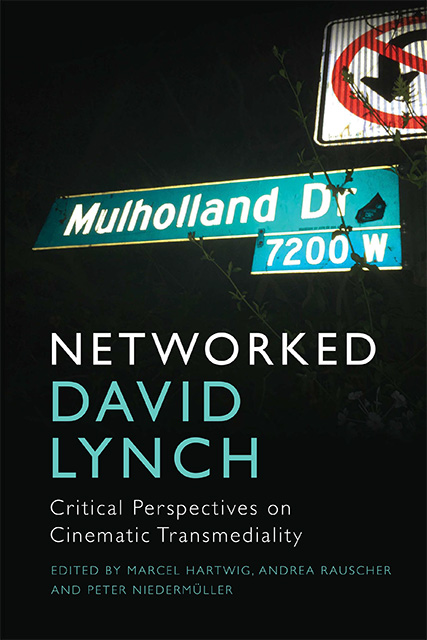
Networked David Lynch is a multi-disciplinary reconsideration of Lynch's œuvre in the context of the challenges and opportunities offered by transmedia environments and networks of the twenty-first century. This collection builds on state-of-the-art-research concepts like video-graphic criticism and video essays to provide a fresh and important approach to any study of David Lynch's œuvre. As such, Networked David Lynch is an attractive entry point to current media theory and recent film history, appealing to cinephiles, academics, researchers, and students.
This multi-disciplinary reader provides immediate relevance to university courses focusing on modern film history and on current theory in film, television, and media studies. The scope of approaches featured in the book provides an informative basis for courses on transmedia and media convergence, sound studies, musicology, cultural studies, and American studies.
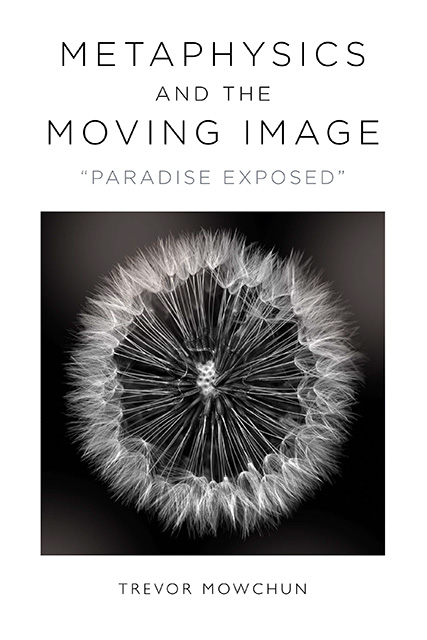
Metaphysics and the Moving Image is an investigation into the medium of film's inheritance of metaphysics - Western philosophy's oldest and most ambitious form of 'truth-seeking.' Why does the moving image of film take up this ancient quest at the very moment when philosophy sought to abandon it once and for all? As the long age of metaphysics comes to a close with the Nietzschean 'death of God' and its crisis of nihilism, the emergence of film at the dawn of a new century brings forth a new absolute value, both life-affirming and more-than-human: 'the world in its own image'. Film radically transforms the metaphysical paradigm from rational speculation through concepts to mechanical revelation through images and sounds - the 'dream machine' at the heart of the medium's capacity to enlighten and enthrall.
In this book, Trevor Mowchun discusses film theorists and philosophers such as Martin Heidegger, Stanley Cavell, Robert Bresson, and Heinrich von Kleist, in relation to films which possess a 'metaphysical film style,' including The Thin Red Line and The Turin Horse. Painting and photography are also considered a precursor to the moving image, but it's a specifically cinematic metaphysics which promises to lead us out of the traps of abstraction and alienation inadvertently set by old metaphysics. Mowchun demonstrates that in a post-metaphysical world, questions about being, value, truth, life and death return with renewed force, finding concrete yet open-ended responses in cinema.
Richard Linklater is a popular American filmmaker who is widely celebrated for the breadth of his oeuvre. Over the past three decades, Linklater has directed more than twenty features, ranging from non-linear independent films to Hollywood genre entertainment. Despite the popularity of Linklater's rich and varied body of work - and perhaps also because of this generic diversity - he remains under-represented in critical and scholarly fora.
ReFocus: The Films of Richard Linklater addresses this oversight, bringing together twelve original essays attending to Linklater as a filmmaker whose work engages with contemporary debates in American politics, gender, youth, and activism as well as significant concepts in film studies, including time and duration, rhythm, and movement. Together these essays form a dialogue on Linklater's ongoing role in contemporary American popular culture, and the impact his work has on discussions within (and beyond) film studies.
This is the first critical and theoretically grounded book-length study of Hajj literature (written texts about the experience of the Hajj) and Hajj practices of Bosnian Muslims. It redefines the ways pilgrimage can be understood and offers new methods for investigating the meaning and importance of Hajj for generations of premodern and modern believers. It also throws light on Balkan communities previously ignored by modern scholarship in Islamic, religious, and area studies. Breaking with the predominant academic trends of focusing on nationalism and ethnic conflict in the region, it instead puts the spotlight on the richness of texts, and visual and archival material, and focuses on genres that challenge the established literary canons.
Angelidi's work has become synonymous with Greek Experimental Cinema, while her films and her theoretical writings have been the subject of numerous film courses, critical essays and retrospectives. The inversion and juxtaposition of codes, as well as the dream-mechanism and the uncanny, comprise her main creative strategies. The complexity of cinematic heterogeneity and the narrative multiplicity of different filmic elements which characterize her work are examined in depth in this edited collection dedicated to Antoinetta Angelidi's oeuvre.
A range of international contributors uncover and reflect upon the anti- and non-fascist ethics situated in Deleuze and Guattari's philosophical framework and that of the scholarship that followed after. The 'new philosophy' that Deleuze and Guattari propose to us is engaged and situated and it asks us to map urgent issues, not by opposing ourselves to it, but by mapping how it is part of the everyday, and of ourselves. The global rise of fascism today demands a rigid and careful analysis. The concepts and themes that Deleuze (and Guattari) handed to us in their extensive oeuvre can be of immense help in capturing its micropolitics and macropolitics.
All of the contributions in this volume have a keen eye on the practices of fascism today, meaning that they all show us, very much in line with Deleuze's thinking, how fascism works. The book is organized in three parts. The first part (twenty-first century fascisms) focuses on the global threats technologies and algorithmic realities; the second part (situated fascisms) holds analyses of fascisms at work in different parts of the contemporary world; the third part deals with patriarchal fascism and offers concrete case-studies of sexualized and genderized modes of oppression.
This book is an account of the theory and practice of practitioners of the so-called 'second' or 'younger' Viennese school associated with Hans Sedlmayr and Otto Pächt and their short-lived journal, 'Kunstwissenschaftliche Forschungen'. It demonstrates the strong dependence of these writers on the work of Gestalt psychology which was emerging at the time. Gestalt theory emerges as the master key to interpreting Sedlmayr and Pächt's ideas about art and history and how it affected their practices.This fresh interpretive apparatus casts light on the power and originality of Sedlmayr's and Pächt's theoretical and empirical writings, revealing a practice-based approach to history that is more attuned to the visuality of art. Verstegen demonstrates the existence of a genealogy of Vienna formalism coursing throughout most of the twentieth-century, encompassing Johannes Wilde and his students at the Courtauld as well as Otto Demus in Byzantine studies. By bringing Gestalt theory to the surface, he dispels misunderstandings about the Vienna School theory and attains a deeper understanding of the promise that a Gestalt analytic holism - a non-intuitionist account of the relational logic of sense - is offered.
Freak Scenes explores the increased licensing of indie music and representation of indie music cultures within American independent cinema since the 1980s. Indie music has, since the 2000s, become highlighted in some indie films as an attraction, but this book probes how the appeal of indie music stretches back to the late 1970s, when punk music made its impact on filmmaking.
Sexton looks at a range of issues where indie music and indie film intersect, including commercial concerns, the growth of niche marketing, the increased employment of popular music in cinema and questions of authenticity, as well as the fraught tensions between commercial and artistic concerns. Case studies include: sonic authorship and indie music, representations of punk and indie scenes on screen, and an exploration of how racial and gender issues inform the representation and reception of indie cultures on film.
Yul Brynner's star image was built on cosmopolitan flair, shifting tales of origin, baldness, as well as film roles as foreign rulers, freedom fighters, army officials, gunslingers and secret agents of ever-shifting ethnicities. Whether Cossacks, marauding pirate captains or cross-dressing torch singers, Brynner's characters were invariably stand-outs.
This book explores his exotic and masculine star image and its transformations from lavish Orientalist Hollywood spectacles of the 1950s to 1960s European co-productions, 1970s action films and scifi. Extensively researched, it covers the actor's entire film catalogue, his rumoured yet unrealised projects, television work and stage appearances, as well as their international media reception. Thematically organised, the book inquires after racial casting politics, the construction of sex symbols, Brynner's humanitarian work and the recurring poses and gestures that characterised his performance style.
This book explores the ways in which affect, colonial histories, and militarism organise global security workforces within private military and security companies (PMSCs). It locates its analysis with Gurkhas; a group of militarised men from Nepal with over 200-years of military experience with the British and Indian armies and the Singaporean police, who now participate as security contractors in global markets. These men are celebrated in British popular culture for their heroic martial attributes and their broader military service to the United Kingdom. However, less known, is the fact that many Gurkhas located back in Nepal and their families are drawn into these markets under often exploitative relations. Drawing upon over a decade of ethnographic fieldwork with unprecedented access to these security communities throughout Nepal and in Afghanistan, the book's motivating questions are how security is made through these market relations and how is this security experienced by Gurkhas and their families.
In this book Phillip Cole calls for a radical review of what international protection looks like and who is entitled to it. The book brings together different issues of forced displacement in one place to provide a systematic overview. It draws attention to groups who are often overlooked when it comes to discussions of international protection, such as the internally displaced, those displaced by climate change, disasters, development infrastructure projects and extreme poverty. The study draws on extensive case studies, such as border practices by European Union states, the United States and its border with Mexico, and the United Kingdom. Cole places the experiences of displaced people at the centre, and argues that they should be key political agents in determining policy in this area.
Robert Louis Stevenson and the Pacific re-orients the intellectual biography of Robert Louis Stevenson by presenting him in the distinctive cultural environment of the Pacific. The book argues that Stevenson was religiously literate within a Scottish Presbyterian tradition and therefore well placed to grasp with subtlety the breadth and dynamics of a Christianized Pacific culture. It considers his legacy with respect to issues of indigenous sovereignty and agency and positions him within an important and wide-ranging modern debate about inculturation, defined as the emergence of Christianity from within a particular culture rather than imposed on it from outside. Through this study of a major Scottish writer, the book offers a model of interdisciplinary scholarship.
Drawing inspiration from Robert Greene's deathbed attack on Shakespeare as 'an upstart crow, beautified with our feathers,' 'The Bodger' (Elizabethan variant of 'botcher,' 'mender,' 'patcher') argues that Shakespeare's dramas are compositions of 'shreds and patches' pieced together by a mind of extraordinary synthetic acuity. Such patches include passages of dialogue that, as described in the sixteenth-century, 'lead objects before our eyes' by means of ekphrasis. The book offers substantial art-historical research into the only visual artist named by Shakespeare, Giulio Romano - who performs an important role in 'The Winter's Tale' as the alleged sculptor of a statue of the dead Queen. Giulio, heir to Raphael's workshop, is known primarily as a painter and architect. This research reveals he was also a designer of sculpture. Applying historical and theoretical materials to close readings of several plays, the focus is on the most critical issues of 'The Winter's Tale' - King Leontes' sudden fit of jealousy; Shakespeare's introduction of a surrogate playwright in the personification of Time, who refashions the play from tragedy to comedy, assisted by a behind-the-scenes female ghost writer; and the Queen's statue amazingly 'coming to life' through an interactive declaration of faith.
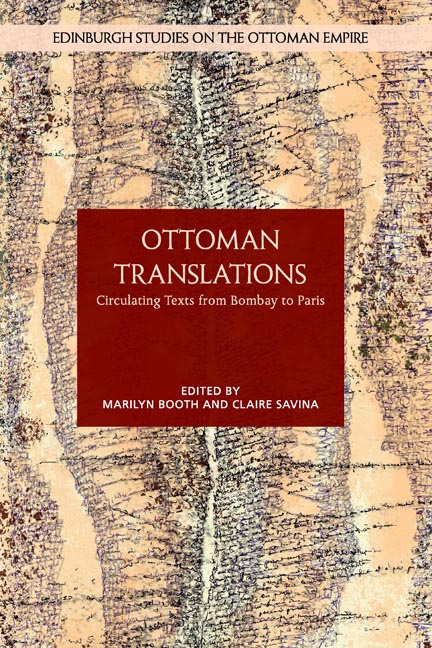
A vigorous translation scene across the nineteenth-century Ottoman Empire - government and private, official and amateur, acknowledged and anonymous - saw many texts from European languages rewritten into the multiple tongues that Ottoman subjects spoke, read and wrote. Just as lively, however, was translation amongst Ottoman languages, and between those and the languages of their neighbours to the east. This proliferation and circulation of texts in translation and adaptation, through a range of strategies, leads us to ask: What is an 'Ottoman language'?
This volume challenges earlier scholarship that has highlighted translation and adaptation from European languages to the neglect of alternative translations, re-centring translation as an Ottoman 'hub'. Collaborative work has allowed us to peer over the shoulders of working translators to ask how they creatively transported texts between as well as beyond Ottoman languages, with a range of studies stretching linguistically and geographically from Bengal to London, Istanbul to Paris, Andalusia to Bosnia.
This book tells the history of Herat, from its desolation under Chingiz Khan in 1222, to its capitulation to Tamerlane in 1381. Unlike the other three quarters of Khurasan (Balkh, Marw, Nishapur), which were ravaged by the Mongols, Herat became an important political, cultural and economic centre of the eastern Islamic world. The post-Mongol age in which an autochthonous Tajik dynasty, the Kartids, ruled the region set the foundations for Herat's Timurid-era splendors.
Divided into two parts (a political-military history and a social-economic history), the book explains why the Mongol Empire rebuilt Herat: its rationales and approaches; and Chinggisid internecine conflicts that impacted on Herat's people. It analyses the roles of Iranians, Turks and Mongols in regional politics; in devising fortifications; in restoring commercial and cultural edifices; and in resuscitating economic and cultural activities in the Herat Quarter.
This landmark volume presents the lived experience of British Muslims in regard to health inequalities, access to health services and involvement in health promotion initiatives. Exploring religion, ethnicity, racism, social class and deprivation, the book examines how British Muslims interact with the UK healthcare system and the subsequent marginalisation in accessing benefits from those systems. Authors expose the unequal distribution of health benefits among British Muslims and explore how this has come to the fore during the COVID-19 pandemic. Using reflexive, interpretive, critical and evidence-based data-driven scenarios from across the UK, this book identifies loopholes in the healthcare system affecting high-risk groups. In doing so, it analyses why and how British Muslims live with the worst health outcomes when compared with all deprived social groups and ethnicities in the country.
The world of post-truth is a world of intense disinformation, an offensive of pseudoscience and widespread skepticism about expert knowledge. It is a world in which the terms of the political game are imposed by illiberal democrats who undermine the authority of scientific institutions. The liberal-democratic politicians have had to take up the gauntlet thrown down to them in this way. However, according to the book's author, they have not been followed by liberal theorists. Liberal theorists have never attempted to confront the pessimistic vision of a world in which citizens cannot distinguish expert from pseudo-expert and science from pseudo-science. The dominant liberal theories are based on the assumption that citizens are either competent to participate in major political decisions or that they can easily acquire such competence. The book strikingly explores a very different perspective. How would the theory and practice of liberal democracy have to change if we assume that laypersons will never appreciate the relevance of the arguments put forward by experts?
This book narrates the rise and fall of Kurdish nobility in the Ottoman Empire from the sixteenth through to the nineteenth-century. Focusing on one noble Kurdish family based in the emirate of Palu, a fortressed town in the eastern provinces of the Ottoman Empire, it provides the first systematic analysis of the hereditary nobility in Kurdistan.
The book centres on the crucial moment in the 1840s during which the Ottoman state set out to abolish the hereditary privileges of the Kurdish beys, confiscating their large landholdings and setting the stage for a conflict over the fertile lands of Palu that would last nearly six decades. This tug-of-war between Armenian financiers, Armenian and Muslim sharecroppers, the Kurdish beys and the Ottoman state ended in 1895 with a series of massacres against the Armenian population of Palu. Through exhaustive archival research in an untapped body of sources, this book sheds light on the impact this conflict-filled process had on the intercommunal relations in the locality. In doing so, the author brings the voices of Armenian and Kurdish commoners to the fore and highlights the important roles that they, too, played in the local struggles and wider changes in governance.
As the first study to present the dissolution of the Kurdish nobility using a social history lens, the book gets to the heart of the historical transformations that changed Palu from a diverse and economically affluent town into an ethnoreligiously homogenised, culturally conservative and economically deprived place.
Jeffrey Bell argues that a motivating problematic for existentialist writers is the attempt to think through the implications of the problematic nature of life. He applies a Deleuzian theory of problems to an analysis of some key concepts in contemporary social and political theory. Building on the metaphysics of problems set out in his book, An Inquiry into Analytic-Continental Metaphysics, he provides a new way of integrating the concerns of existentialist writers into contemporary political and social debates.