To save content items to your account,
please confirm that you agree to abide by our usage policies.
If this is the first time you use this feature, you will be asked to authorise Cambridge Core to connect with your account.
Find out more about saving content to .
To save content items to your Kindle, first ensure no-reply@cambridge.org
is added to your Approved Personal Document E-mail List under your Personal Document Settings
on the Manage Your Content and Devices page of your Amazon account. Then enter the ‘name’ part
of your Kindle email address below.
Find out more about saving to your Kindle.
Note you can select to save to either the @free.kindle.com or @kindle.com variations.
‘@free.kindle.com’ emails are free but can only be saved to your device when it is connected to wi-fi.
‘@kindle.com’ emails can be delivered even when you are not connected to wi-fi, but note that service fees apply.
Hieronymus Bosch's winged triptych, The Garden of Earthly Delights (ca. 1490–1500), plays a key role in Roland Barthes’ late lecture course on The Neutral that took place at the Collège de France over thirteen weeks in 1978 (Figure 7.1). More specifically, the two grisaille outer panels from the triptych, painted grey on grey, are the focus of week four's session on the ‘figure-word’ Color and its relationship to grey/grisaille as the colour of the colourless Neutral and, along with a personal incident involving the spilling of a bottle of Neutral Tint (Teinte Neutre), sets the ‘tone on tone’ (ton sur ton) for the entire course (Figure 7.2). I want to bear down on Barthes’ engagement with grisaille as the fantasy of an aesthetic, ethics and politics of indifference that colours his late work. This might seem like a difficult claim to make, as Barthes’ very notion of the Neutral is what he calls a ‘diaphoralogy’ (diaphoralogie), based on the Greek word diaphora, which means difference (or that which distinguishes one thing from the other), and which Barthes simply translates as ‘nuance’. Diaphoralogy is Barthes’ neologism for what he calls a science of nuance, shimmers or scintillation, which he contrasts with adiaphoria, or indifference (indifférence), the latter defined as an absence of both passion and difference – a condition seemingly at odds with his ‘desire for the neutral’. But it is precisely in his discussion of grisaille – and the relationship of colour to the colourless – where a ‘slight difference’, and ‘dialectic of intensities’, is generated by a grey on grey that is not only an expression of his ‘desire’ for the Neutral, but rather its very drive and jouissance.
Spilled Ink and the Stained Soul of The Neutral
Before launching directly into a discussion of Bosch's triptych, Barthes introduces the relationship of colour to the Neutral with a ‘personal incident’, thus carrying out a promise he made in his inaugural lecture at the Collège that each course he taught there would derive from a personal fantasy. As such, this personal incident not only sets the tone for this session on Colour, and its relationship to the colourless, but for the entire course as such.
In the year following Sartre's death, Simone de Beauvoir published in Adieux a series of interviews she conducted with the philosopher in August and September of 1974. Toward the end of the final interview, Sartre says that his career as a professional educator helped him produce the publications through which he had hoped to achieve immortality—a kind of “quasi-survival” he imagined in the form of his literary reputation. De Beauvoir uses this opportunity to shift the conversation from the figurative immortality Sartre hoped to achieve in his writings to the topics of religious belief, the immortality of the soul, and Sartre's own impending death. “[T]here is still one question that I should like to ask you,” she says. “Has the idea of the survival of the soul, of a spiritual principle in us, a survival such as the Christians think of, for example—has that ever crossed your mind?” Sartre replies to de Beauvoir that he expects there will be “nothing after death,” but—intriguingly, and in spite of his atheism—he also admits that he has retained something akin to religious belief, a commitment to moral absolutes that, in Sartre's opinion, can only exist in a universe created and governed by a divine being. “In the moral field,” he states, “I’ve retained one single thing to do with the existence of God, and that is Good and Evil as absolutes. The usual consequence of atheism is the suppression of Good and Evil. It's a certain relativism.” In a divinely governed universe, it would appear that moral absolutes are built into the metaphysical nature of being, not simply as axiological beliefs imposed on creation from above, but as an essential part of material reality itself. Arguably, this is why there are no moral absolutes in a world without God. The material nature of reality depends on a divine creator whose absence results—according to Sartre—in a morally neutral universe.
That's so meta!' The emergence of the prefix-turned-adjective 'meta' to describe media productions is, no doubt, symptomatic of an increasingly media-savvy audience; it has also drawn attention to the lack of scholarship on meta-phenomena in film and television studies.
Meta in Film and Television Series aims to make up for this. Meta is defined as an intense form of reflexivity, that is characterized by its aboutness; meta-phenomena are not just an arsenal of devices but suppose an interpretive act and an active audience. Meta creates a framework with which to interrogate a work's relationship to its production, reception, medium, forms, and the world, and to explore its potentials and limitations. Meta supports the intuition latent in the popular usage that meta-phenomena are deeply entangled, while demonstrating that analysis stills requires such concepts to make sense of them.
Born in Oklahoma into the Chickasaw Nation, Wallace Fox directed films over the span of four decades. Known primarily for Westerns and mystery films, his output starred such famed actors as Bela Lugosi, Bob Steele, and Lon Chaney. ReFocus: The Films of Wallace Fox includes analysis of some of his best known films, including 'Wild Beauty', 'Gun Town', 'The Corpse Vanishes', 'Bowery at Midnight', 'Career Girl' and 'Brenda Starr, Reporter'. It reclaims the history and artistry of this major talent.
This study takes up Woolf's challenge to probe the relationship between education and work, specifically her education and her work as an essayist. It expands her education beyond her father's library to include not only a broader examination of her homeschooling but also her teaching at Morley College and her early book reviewing. It places Virginia Stephen's learning in the historical and cultural contexts of education for women, the working classes and writers in the late nineteenth and early twentieth century.
Weaving together Virginia Stephen's homeschooling, her teaching and her writing for the newspapers, Beth Rigel Daugherty demonstrates how these three strands shape Virginia Woolf's essay persona, her essays and her relationship with her readers. She also shows why Virginia Stephen's apprenticeship compels Virginia Woolf to become a pedagogical essayist. The volume publishes two holograph draft lectures by Virginia Stephen for the first time and mines rarely used archival materials. It also includes five appendices, one detailing Virginia Stephen's library and another her apprenticeship essays.
This is the first in a two-volume study of Virginia Woolf's essays that analyses Virginia Stephen's development and Virginia Woolf's achievements as an essay writer.
What is the line between the ancient and medieval worlds? 330? 476? 800? Most historians acknowledge that these are arbitrary distinctions, but they remain nevertheless, taking on lives of their own. Alex Feldman challenging us to see them as the same world, except for the imposition of a given monotheism.
In this process, he studies top-down, monotheistic conversions in Western Eurasia and their respective mythologisations, preserved both textually and archaeologically, serving as the foundation of recognisable state-formation.
Applying this idea to Byzantium's policies around the Black and Caspian Seas, he reveals how what we today call the 'Migration-Age' continued perpetually up to the Mongolian invasions and perhaps later. This book enhances our understanding, not only of Western history, but presents it in the context of global monotheisation.
By developing a metaphysics of problems, Jeffrey Bell shows how the history of both the analytic and continental traditions of philosophy can be seen to be an ongoing response to the problem of regresses. By highlighting this shared history, Bell brings these two traditions back together to address problems that have been essential to their projects all along and central to much of the history of philosophy.
We are in the midst of a return to Henri Bergson - the French philosopher whose influence touches the fields of continental philosophy, literary theory and art theory. This revival of interest in his work could even be called a full-blown Bergson renaissance. Tano S. Posteraro contributes to this increasingly serious study of Bergson's philosophy with a tight focus on Bergson's theory of evolution. He presents an alternative Bergson: not a phenomenologist whose central concern is the conscious experience of lived time or the lived body in time, but a systematic philosopher of biology with a robust, prescient and largely workable evolutionary programme.
Memorable for characters eccentric yet socially and economically representative, and for scenes alternately comic and tragic, John Galt's 1823 novel The Entail is a compelling story of greed, anxiety, and tradition against a background of social upheaval. In addition to making this remarkable novel available in a scholarly edition with annotations suitable both for the general reader and for research, the editors provide an introduction that makes its complex legal issues - of property, marriage law, trial procedures - accessible in the context of Scottish Romanticism and modernisation. Situating Galt's aesthetic choices in dialogue with the Romantic-era Scottish novel the volume discusses the text, Galt's letters, early periodical reviews, and recent scholarship. Through annotations that clarify Scots language and dialect as well as legal parlance, the editors highlight the novel's comic collisions of language and personalities, and the attention to social transformation that Galt painstakingly, although sometimes obliquely, details.
Missionary medicine flourished during the period of high European imperialism in the late 19th and early 20th centuries and was considered the best and surest method to overcome the distrust of and gain access to the indigenous population in the so-called Muslim World. Through studying the medical activities and infrastructures of the Church Missionary Society (CMS) in Persia and north-western British India, and building upon existing works on missionaries in the Middle East and British India, this book examines the practice of obtaining trust. A synthesis of Christian mission history, architectural history, emotions history and history of medicine and empire, Emotion, Mission, Architecture raises broader historical questions about the process of mobilising and regulating emotions in the Christian missionary contexts - contributing in turn to discussions on hybridity, missionary and local encounters, women's agency and the interactions between mission and empire.
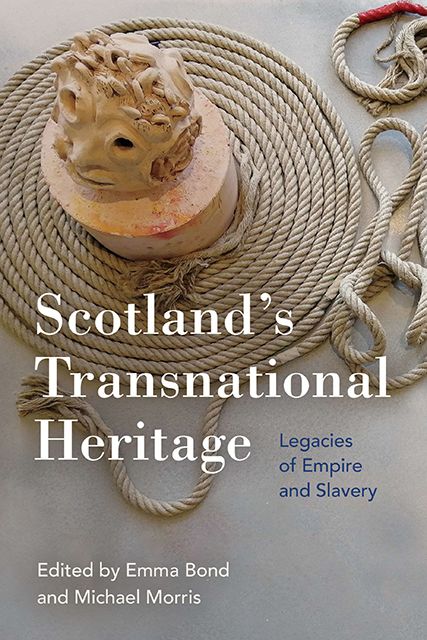
How do we re-think the way Scotland's history is told today? In the current context of calls to decolonise both the museum and the academy, how do we tell the stories of Scotland's role in networks of colonialism? Scotland's Transnational Heritage draws on the expertise of academics, museum professionals and creative practitioners working together to re-think the way that the transnational histories of Scotland are being told today. It outlines new historical examples of how Scottish trades and institutions benefitted from Empire. It gathers examples of contemporary case studies and innovative practices in storytelling that engage and inform. The book aims to inspire heritage and museum staff and academics to create new approaches to these histories, both in Scotland and beyond. It provides a timely snapshot of the exciting and diverse work taking place in the field in Scotland today.
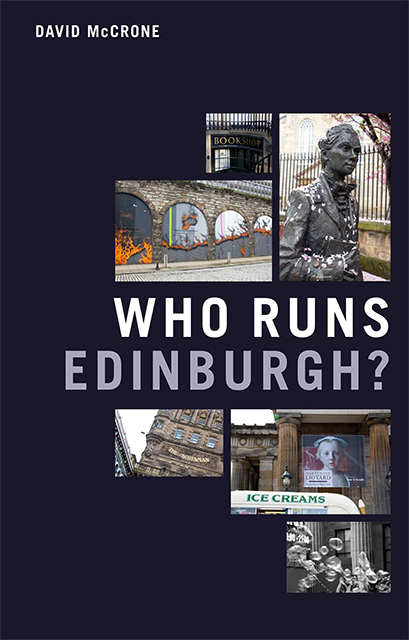
This book, written by a leading sociologist, tells Edinburgh's modern story and unveils its power structure. It examines its politics, formal and informal; its changing political economy; and the rise of its status as Festival city. Behind all this lies a complex system of money and culture, of presumed social status tied into a hierarchy of schools and institutions, universities, banks and finance houses. The book explores arguments about what sort of city Edinburgh should be and what it should look like. It examines planning controversies, from post-war developments through various 'holes in the ground' up to and including The Trams controversy. Studying Edinburgh lets us draw lessons about cities in general, and their roles in the modern world.
The Ayrshire Legatees, The Steam-Boat and The Gathering of the West first appeared as serials in Blackwood's Edinburgh Magazine during the magazine's most innovative phase. Introducing a colourful cast of narrators and characters who present idiosyncratic perspectives on current events as they travel between London, Edinburgh, and the rural west of Scotland, Galt's texts experiment with observation, dialogue, storytelling, and genre. Bringing these three interrelated texts together in one volume for the first time, this edition includes extensive explanatory notes that identify Galt's allusions, references to historical events and social and cultural practices of the period in which they are set. An appendix details the textual changes between the Blackwood's serials and the book versions. The editor's introduction explores the origins of Galt's texts in the pages of Blackwood's Magazine and their reliance on the magazine's unique dialogism, cross-talk among contributions and inside jokes, along with the influential context of the historical novel.
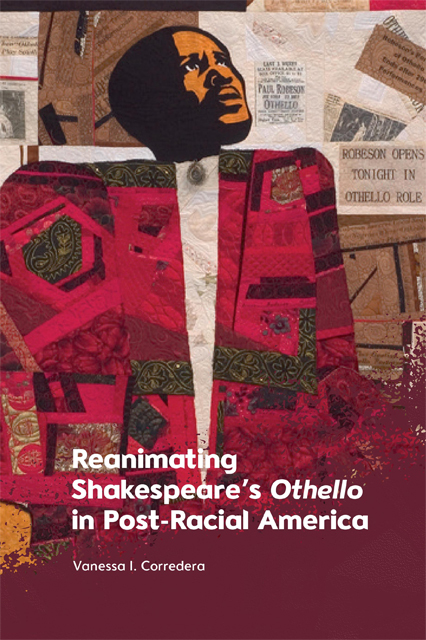
Othello famously supplicates, 'Speak of me as I am', pleading for the Venetians to 'nothing extenuate', leave out, or make thin (5.2.352). Othello's anxiety about narrative accuracy exposes his fear over his story's potential misrepresentation. As the first monograph to examine Othello's history of contemporary reanimations, Reanimating Shakespeare's Othello in Post-Racial America takes up this question of retelling Othello's story, turning to the play as re-crafted in a time and place imagined as having overcome racial injustice: post-racial America (2008-2016). This book analyses representations of Othello across genres and media including podcasts, television, film, graphic novels and performance, and argues that these representational choices of Othellos perpetuate varying racial frameworks that advance antiblack or antiracist versions of the play. By elucidating the presence and function of these competing frameworks, it illuminates and explains how to wrestle with the intersections between Shakespeare, Othello and the American racial imaginary in appropriations, scholarship, the classroom and beyond.
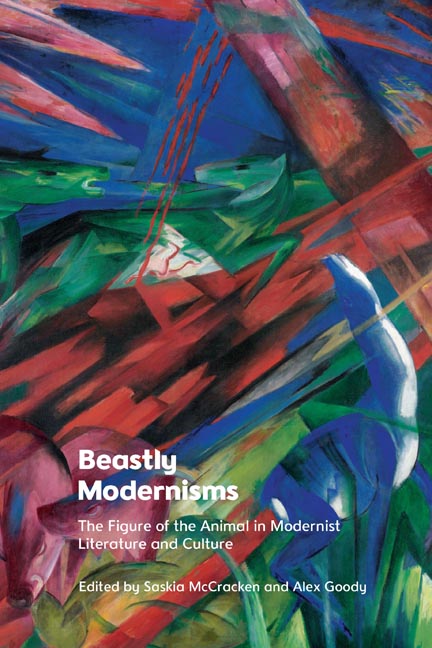
The intersection of modernist studies and critical animal studies is a new, progressive field that raises crucial questions about what it means to live with animals in modernity. Beastly Modernisms gathers essays from leading figures in the field alongside emerging scholars who, together, revisit canonical figures and decentre the canons and geographies of modernism. Grounded in interdisciplinary approaches, the contributions work with cultural history and theoretical frameworks to unearth the multispecies dynamics of twentieth-century literature and culture.
The chapters in Beastly Modernisms present a diverse range of approaches and topics, exploring dogs in Virginia Woolf to Republican China, animals and gender in surrealism to African-American texts, Sámi reindeer to rat propaganda, modernist jellyfish to metamodernist beasts, 1940s poetry to Indian Partition stories, charting the current and future state of modernist animal studies.
Combining film studies and ethnographic research methods within a memory studies framework, Coates examines the impact of cinema cultures on the everyday lives of viewers.
Film Viewing in Postwar Japan draws from four years of interviews, participant observation, questionnaire surveys, and written communications with over 100 study participants in the Kansai region of Western Japan. This is an in-depth study of memories of cinema-going among the generations who regularly attended film theatres between 1945-1968, the peak period of production and cinema attendance in Japan.
Through investigating the role of film viewership, broadly conceived, in the formation of a postwar sense of self, the reader will benefit from rare access to the voices of grass-roots viewers, who often tell a different version of cinema history and its effects than that available in extant scholarship.
This book examines how the representation of the ghost-soldier in literature published between 1914-1934, both marks the presence of trauma and attempts to make sense of it. Andrew Smith examines short stories, novels, poems and memoirs that employ ghosts to reflect upon feelings of loss, paralleling the literary context with accounts of shell-shock which construe the damaged soldier as psychologically missing and therefore spectre-like.
The author argues that literary and non-literary texts repeatedly deploy a form of the uncanny, familiar from a Gothic tradition, as a way of reflecting upon grief. In support of this claim, he draws on fiction by well-known authors such as M. R. James, E. F. Benson, Dorothy L. Sayers, and Dennis Wheatley, alongside largely forgotten contributions to The Strand and other periodical publications such as The Occult Review.
The first comparative study of estimative intelligence and strategic surprise in a European context, complementing and testing insights from previous studies centred on the United States.
This book provides the first assessment of the performance of three leading European polities in providing estimative intelligence during an era of surprise. It develops a new framework for conducting postmortems guided by a normative model of anticipatory foreign policy. The comparative analysis focuses on how the UK, the EU and Germany handled three cases of major surprises: the Arab uprisings, the rise to power of the Islamic State (ISIS), and the Russian annexation of Crimea. It considers not just government intelligence assessments, but also diplomatic reporting and expert open sources and how these assessments were received by organisational leaders. The book tests and develops new theories about the causes of strategic surprises, going beyond a common focus on intelligence versus policy failures to identify challenges and factors that cut across both communities. With the help of former senior officials, the book identifies lessons yet to be learnt by European polities to better anticipate and prepare for future surprises.
The Viking Age in Scotland reviews two decades of research that have taken place since the last archaeological survey of the Vikings in Scotland, published in 1998. Advances in scientific analysis have greatly improved our understanding of Scandinavian daily life between the late eighth and fifteenth-centuries, and new discoveries like the Galloway Hoard are extending our knowledge of Viking Age and Norse Scotland's international connections. Consequently, this book brings the study of Scottish Scandinavian archaeology into the new century, updating researchers on the latest finds and theories. In an engaging but scholarly volume that flows between chapters, expert authors guide the reader through the latest interdisciplinary research, from arrival and settlement to death and burial, via economy and exchange, power and politics, and environmental impact. Fully illustrated with photographs and maps, this is essential reading for anyone interested in Viking Scotland, and a key resource for teachers and students.