To save content items to your account,
please confirm that you agree to abide by our usage policies.
If this is the first time you use this feature, you will be asked to authorise Cambridge Core to connect with your account.
Find out more about saving content to .
To save content items to your Kindle, first ensure no-reply@cambridge.org
is added to your Approved Personal Document E-mail List under your Personal Document Settings
on the Manage Your Content and Devices page of your Amazon account. Then enter the ‘name’ part
of your Kindle email address below.
Find out more about saving to your Kindle.
Note you can select to save to either the @free.kindle.com or @kindle.com variations.
‘@free.kindle.com’ emails are free but can only be saved to your device when it is connected to wi-fi.
‘@kindle.com’ emails can be delivered even when you are not connected to wi-fi, but note that service fees apply.
The Anthem Companion to Harold Garfinkel brings together leading scholars and upcoming researchers in contemporary ethnomethodology to bring out the experimental character of Garfinkel's legacy in the social sciences and beyond. Therefore, the Companion takes its cue from Garfinkel's noted 'breaching experiments,' enabling the reflexive investigation of 'trust conditions' in situ, and asks how this research interest has been productively pursued and distinctively rearticulated, both within and beyond Garfinkel's oeuvre. Whilst Garfinkel's experimental legacy is often acknowledged, no systematic introduction to its distinctive outlook, tension-riddled diversification, and heuristic interest(s) is available to date. The Anthem Companion to Harold Garfinkel both fills and reflects upon that 'gap in the literature', thereby articulating ethnomethodology's experimental outlook, if not recasting its current research directions.
This book describes the ways in which judges, using JDR, have been facilitating problem-solving among litigants, and in the process, ensuring more just outcomes. JDR or judicial dispute resolution is similar to mediation (or alternative dispute resolution - ADR, as it is sometimes called), but it is provided by a judge, not a private mediator. Very little has been written about JDR, especially in Canada where it has been pioneered for several decades, because all the records have remained confidential. The story can now be told because the authors were given exclusive access to the records and the parties (including the JDR judges) in nine illustrative cases.
The authors provide a complete Teaching Appendix summarizing the JDR cases from the standpoint of a variety of legal specialties, while highlighting the differences between JDR and ADR.
Using case studies from Florida and the Caribbean region, this book summarizes the state of coral reef conservation today. The question this book answers is, what is the best way to protect the vulnerable coral reefs, with an ever-worsening climate crisis? The book's contribution is looking closely at people's avenues to participate in coral reef management, and how the public is increasingly making their voices heard in the management process.
Theology in the Early British and Irish Gothic, 1764-1832 reassesses the relationship between contemporary theology and the Gothic. Investigating Gothic aesthetics, depictions of the supernatural and portrayals of religious organisations, it explores how the Gothic engages with contemporary theologies, both Dissenting and Anglican. Moving away from the emphasis on either a monolithic Protestantism or on the Gothic as a secular mode, it shows the ways in which the Gothic exploration of the transcendent and the obscure cannot be separated from the diverse theologies of its day. The project maps how the Gothic not only reflects but actively engages in the theological debates and controversies contemporary to its efflorescence.
Sicilian puppet theater was the predominant form of cultural expression for working-class southern Italians and Sicilians from the early 1800s until the proliferation of television in the 1950s. This form of dramatic prose theater also flourished in diasporic Italian urban communities, bringing immigrants together for nightly performances of the same deeply cherished chivalric stories. Agrippino Manteo's scripts, examined for the first time in this study, are testimony to the rich substance of the Paladins of France narratives dramatized on the traditional opera dei pupi stage. Even beyond their historical and aesthetic value, the alternating episodes of love, enchantment, adventure, and warfare invite us to relive the passion, heartbreak, excitement, and magic of knights and damsels from around the globe - from Europe to North Africa to East Asia - who share the stage with a host of wizards, fairies, giants, and monsters. This study reconstructs the history of the Manteo family marionette theater in New York City across seven decades and three generations, provides translations of eight selected plays and 270 extant summaries, and offers comparative analyses uncovering the creative process of adaptation from Italian Renaissance masterpieces of chivalric poetry to nineteenth-century prose compilations to Agrippino Manteo's opera dei pupi dramatizations.
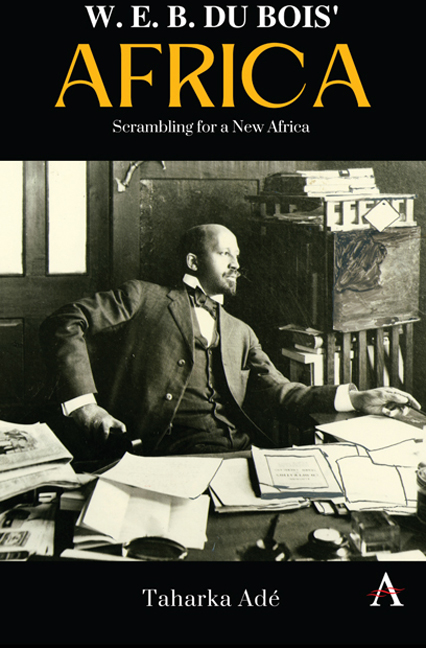
W. E. B. Du Bois was one of the leading figures of Pan-African thought and activism in the twentieth century. As a sociologist, Du Bois wrote much about the historical and social circumstances of African Americans while often acknowledging the African historical background of much of African American, or Negro, culture. In 1946 Du Bois published The World and Africa, which was a culmination of previous attempts at penning a narrative of African history beginning with his 1915 publication The Negro, in which he included the social-historical experience of African Americans within the continuity of African history. This book delivers for the first time a comprehensive Afrocentric investigation and critique of Du Bois's writings on African history. It argues that while Du Bois presented at the time a strong critique of the Eurocentric construction of African history, many of Du Bois's descriptions and arguments about African people and history were likewise flawed with interpretations that projected the cultural subjectivities of Europe. Further, while Du Bois rightfully presents the historical relationship between African Americans and Africa as a justification for Pan-African activism, this book contends that Du Bois's failure to center African culture instead of race leads to superficial justifications for Pan-African unity.
The Lure of Economic Nationalism addresses the continued appeal of economic nationalism. It places economic nationalism in both historical and contemporary contexts, from mercantilism and the writings of Friedrich List to Brexit in the United Kingdom and the Trump Administration in the United States. It also considers the alternative to economic nationalism in the form of a rules-based, multilateral trading system and the World Trade Organization. The book argues that going beyond zero-sum outcomes is better suited to address current problems, including rising tides of ethnonationalism in many countries and pandemics. The book is written in an accessible manner and draws deeply from research in economics and political science. It will be of interest to policymakers, economists, political scientists and the informed public.
The book shows how humor has changed since the advent of the internet: new genres, new contexts, and new audiences. The book provides a guide to such phenomena as memes, video parodies, photobombing, and cringe humor. Included are also in-depth discussions of the humor in phenomena such as Dogecoin, the joke currency, and the use of humor by the alt-right. It also shows how the cognitive mechanisms of humor remain unchanged. Written by a well-known specialist in humor studies, the book is engaging and readable, but also based on extensive scholarship.
The book demonstrates the experiences of Alice Childress, Lorraine Hansberry, and Suzan-Lori Parks in comparison with the dramas of each other and those of other African American women. These women playwrights created a militant theatre and a theatre of experience that applied to both the African American community in general and African and African American women in particular. They have been encompassed within African American woman's aesthetics that shares the militancy and experience characterized by a triple factor: race, gender, and class.
This book is neither biography nor a conventional film critique. Rather, the text explores aspects of Hitchcock's work in relation to theories drawn from the social sciences and philosophy. The various chapters focus not on specific films, but on broader ideas central to Hitchcock's work. There is, for instance, a chapter on his idea of the MacGuffin in which I use Ernesto Laclau's theories of equivalent substitution to explain how the MacGuffin functions in Hitchcock's works. There is also a chapter on his notion of 'pure cinema' which moves from the idea of purity as an anthropological concept to consider purity in relation to current debates regarding so-called hybrid media, and Hitchcock's relevance to these issues in respect of his dissatisfaction with the advent of sound to the cinema world. Broadly speaking, the book uses Hitchcock's films to illustrate ideas in the social sciences and philosophy and uses those same ideas to illustrate aspects of Hitchcock's films.
Population is a dangerous political category. It is not separable from the racist and class-based valorisation and devaluation of different lives. From global contraceptive implant programmes to right wing anti-immigration discourses, demographic interpretations of multiple current crises legitimise the states' grip on childbearing and mobility. The results are complex dimensions of reproductive racism and restrictive border regimes. Meanwhile, global social inequalities and racial capitalist extractivism stay out of the game.
The book analyses how demographic knowledge production and states' grip to the variable of population intertwine. It introduces the concept of the Malthusian matrix in order to understand how class-selective and racist hierarchies within population narratives are combined with gendered policies of reproductive bodies and behaviours.
Several chapters explore current reproductive racism, establishing a hierarchy between the birth of desirable and undesirable people. An upward redistributive family policy in Germany is promoting births within the privileged middle classes. And international population programs revive targets in order to increase the use of long-acting contraceptives in the Global South, within a market-oriented setting of Big Pharma promotion. Reproductive racism is also effective in migration policy strategies: narratives about 'migrant birth rates' circulate among ultra-right forces as well as seemingly apolitical demographic policy consultancy. The last sections discuss state-theoretical approaches and the intersectional feminist concept of reproductive justice in order to provide tools for critique and resistance.
The book collects thirty-two opinion pieces, essays, and two poems published by the author in leading media on a wide variety of public policy topics as recently as 2022. The articles and poems range over six broad areas: the moderation ideal, as illustrated by the abortion issue; American exceptionalism; civic discourse; the Trump presidency; campus life; and immigration, citizenship, and refugee policy. The author, a self-described 'militant moderate,' draws on his participation as a commentator in these and many other public debates.
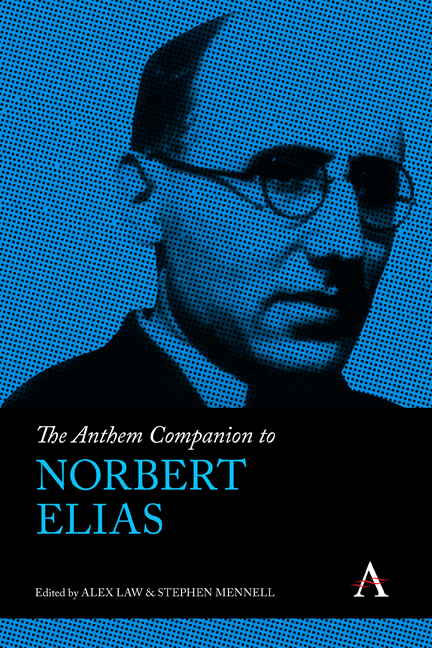
The book presents an authoritative assessment of Norbert Elias (1897-1990). It recognizes Elias as one of the major contributors to the development of sociological tradition in the past century and charts the continuing relevance of his conception of sociology for contemporary society. Only toward the end of his career as an academic did Elias's work begin to attract the attention of English-speaking sociologists, historians, and scholars of cultural studies. The book provides an authoritative and broad representation of Elias's oeuvre and work inspired by it. While Elias is best known for his major study of The Civilizing Process, the reach and subtle depths of Elias's conception of process sociology has been cemented more recently by the English-language publication of Elias's collected work of 18 volumes. The baton of process sociology is being passed on to further generations of sociologists.
Chapters from leading contributors outline the nature of the sociological practice of Elias and address fundamental questions of historical sociology, democratization, gender, racialization processes, and embodiment. Later chapters highlight the contribution of process sociology for understanding developments in nation, state and global sociology, criminology, art, and education.
Peruvian Foreign Policy in the Modern Era is a chronological treatment of Peruvian foreign policy from 1990 to the present. It focuses on the impact of domestic politics, economic interests, security concerns, and alliance diplomacy on contemporary Peruvian foreign policy.
In common with other Latin American states, sovereignty, territorial integrity, regionalism, continental solidarity, and economic independence were core goals of Peruvian foreign policy after independence. In modern times, successive Peruvian governments have continued to address these and related issues in a foreign policy grounded in pragmatism and notable for its emphasis on a rational combination of continuity and change. The Fujimori administration (1990-2000) set the stage for this shift in the direction, tone, and content of the nation's foreign policy with successor administrations refining and building upon the initiatives launched by Fujimori.
Drawing on his experiences directing films in Ireland, Haiti, Brazil and South Africa, McLaughlin reflects on the potential of documentary film to provide a platform for those who have experienced political violence to challenge dominant narratives that marginalises them, and that offers potential for personal and public healing. Using participatory methodologies, each case study analyses conditions of production, political context, participatory potential, and impact of the films on both survivors and the general public. Challenges are addressed and lessons suggested for similar projects in the areas of documentary film, transitional justice, participatory ethnography and political activism.
This book builds on Le Bon's classic, The Crowd, to evaluate the role of crowds in American culture, society, and politics. It offers a detailed description of Le Bon's book along with material on Freud's book on group psychology, crowds and cults, the semiotics of crowds, American national character and crowds, the 1/6 attack on the Capitol, and crowds and COVID-19.
In the past four or so decades, a significant amount of research efforts has been made to examine the rapid and constant social changes in China. However, most of the literature has focused on either macro- or micro-level issues, and what has not been adequately analysed is how the majority of ordinary people has reacted to and influenced the changes. This inadequacy has affected our understanding of Chinese society, its dynamics and the changing trends. Drawing upon a new perspective of competitive social repositioning, and the evidence recorded in numerous recent publications and interview data, this book seeks to re-examine the ever-changing, but under-researched, societal dynamics driving social transformations in China from 1964, when the communist heir narrative was rebranded and utilised, to 2000, when Jiang Zemin formulated the Three-Represents theory to modify the ideological political thinking of China's ruling elites. This analysis focuses on how a high proportion of aspirational citizens have kept repositioning themselves in China's changing distributions of social resources and social structure, how their attitudes and behaviours have been shaped over time, what characteristics of their choices are at different stages, and how their preferences have resulted in the zig-zag patterns of China's recent social change.
This volume introduces two unique and hitherto largely unknown contributions to the making of modern economic knowledge, and makes them available internationally for the first time in full English translation. Written in 1597 Barthelemy de Laffemas' General regulation for the establishment of manufacturers (originally in French: Reiglement général pour dresser les manufactures) is one of the earliest voices in the history of political economy emphasising the necessity of manufacturing and large-scale industry as the source of the wealth of nations. Located somewhat at the cross-roads between medieval Scholasticism and early mercantilism presents a basic version of the infant industry argument and European standard model of economic development which made it into later doctrines of thought including Enlightenment thinkers such as Colbert, Sir James Steuart or Friedrich List and nineteenth and twentieth century neomercantilism.
Leonhard Fronsperger's On the praise of self-interest (German original: Von dem Lob deß Eigen Nutzen, 1564) is the first documented instance of the 'Mandeville paradox', a theorem in modern economics usually associated with much later writings including Bernard de Mandeville's Fable of the Bees (1705/14), or Adam Smith's Theory of Moral Sentiments (1759) and Wealth of Nations (1776). Vested in Renaissance Humanism southern German military surgeon and polymath Fronsperger argues - without moving into the abstractions of neoliberalism - that possessive individualism and self-interest are key forces moving the human economy forward, contributing to virtuous cycles of enrichment and economic development.
One element explaining the financial crisis is what Hyman Minsky called ‘destabilizing stability’: long periods of stability lead to increasing vulnerability. This chapter argues that similar mechanisms are at work inside economics: long periods of economic progress in the core countries lead to increasingly abstract and irrelevant economic theories (‘terrible simplifications’). This leads to turning points towards more relevant economic theories, referred to as ‘1848 moments’. The chapter further outlines the key variables that need to be re-introduced into economic theory in order to furnish poor countries with the type of productive structures that makes it possible to eliminate poverty.
‘.. .soon or late, it is ideas, not vested interests,
which are dangerous for good or evil.’
John Maynard Keynes, closing words of The General Theory (1936).
The United Nations has announced that the number of chronically hungry people on the planet has exceeded the billion mark for the first time. It is extremely unlikely that any of them will ever hold a Swiss 1,000 franc banknote (worth more than 900 dollars), but if they did, they would see the portrait of a man who perceived the essence of the explanation as to why extreme poverty and extreme plenty coexist so naturally on this planet, and of the grim fate of the permanently starving – Swiss historian Jacob Burckhardt (1818–1897). Burckhardt, best known as a historian of the Italian Renaissance, coined the term ‘the terrible simplifiers’ to describe the demagogues who – in his dark vision of what the twentieth century would bring – would play central roles in the future (Dru 2001: 230). Events amply fulfilled Burckhardt's predictions of a cataclysmic twentieth century, of the rule of terrible simplifiers, men whom Burckhardt's colleague at the University of Basel, Friedrich Nietzsche, called power-maniacs (Gewaltmenschen), and John Maynard Keynes referred to in 1936 as ‘madmen in authority’.
A key common element in persistent world poverty and in the financial and (real) economic crisis is the ‘terrible simplification’ – a theoretical overshooting into irrelevant abstractions – that has taken place in economic theory after World War II. As unlikely as it may initially sound, I shall endeavour to explain in this chapter how – in spite of its apparent sophistication – equilibrium economics became ‘mathematized demagoguery’ based on an extremely simplistic world view.