To save content items to your account,
please confirm that you agree to abide by our usage policies.
If this is the first time you use this feature, you will be asked to authorise Cambridge Core to connect with your account.
Find out more about saving content to .
To save content items to your Kindle, first ensure no-reply@cambridge.org
is added to your Approved Personal Document E-mail List under your Personal Document Settings
on the Manage Your Content and Devices page of your Amazon account. Then enter the ‘name’ part
of your Kindle email address below.
Find out more about saving to your Kindle.
Note you can select to save to either the @free.kindle.com or @kindle.com variations.
‘@free.kindle.com’ emails are free but can only be saved to your device when it is connected to wi-fi.
‘@kindle.com’ emails can be delivered even when you are not connected to wi-fi, but note that service fees apply.
The double codes of law composed by R. Joseph Karo during the late sixteenth and early seventeenth centuries mark a watershed in the history of Jewish Halakhah (law). No further legal project was suggested in later generations. The books suggest a new reading beyond the aspects of positive law. R. Joseph Karo continued centuries-long traditions of Jewish erudition, in tandem with responding to global changes in history of law and legality both in Europe, and mainly in the Ottoman Empire. It is a global reading of Jewish Halakhah and modernization of Jewish culture in general.
Poetics of Race constitutes a critically and theoretically innovative analysis of racial and ethnic dynamics in Latin America, and their symbolic - artistic, ideological - representation. The book illustrates the relevance of cultural and racial minorities in different national contexts (particularly in Mexico, Brazil, the Andean region and the Caribbean) through the study of literary, filmic and visual productions that depict otherness, marginalization and popular resistance. The book focuses on negritude, indigenous cultures, andinismo, performance and cinematic discourses in which racial issues are displayed, elaborated and symbolized. The various critical approaches utilized in this volume also contribute to expand methodological horizons in the field while contributing to widening the corpus of literary texts and cultural practices in this area of studies.
This volume's relevance may be explained, first and foremost, during a time of unprecedented loss of life around the world each day. The data, which is oftentimes incomplete and misleading, nonetheless reveals the state as deficient as well as negligent in its response to social healthcare needs. This volume attests to the fact that pressing global public health concerns are ever present as subjects of societal discourse and debate in developed and developing states. Moreover, the COVID-19 pandemic makes the omission of the ethics of personal data collection analysis in the international relations literature even more salient given the rise of contact tracing and increased uses of mobile phone Apps to track citizens by states and firms across the globe, as this volume's chapters analyzing the responses to COVID-19 in Iran and Taiwan explain.
Hinge Epistemology is rapidly becoming one of the most exciting areas of epistemology and Wittgenstein studies. In connecting these two fields it brings a revived energy to both, opening them up to fresh developments. The essays in this volume extend the subject in terms of both depth and breadth. They present new voices and challenges within hinge epistemology. They explore new applications and directions of hinge epistemology, particularly as it relates to the philosophy of mind, society, ethics, and the history of ideas.
The book is a short introduction to comparative law and economics, a growing field in the interaction between law, economics and comparative political science. It is a guide to economists, lawyers and political scientists looking for a brief overview. It includes both strands of the traditional literature, namely the role of legal families and microeconomic analysis of legal rules in a comparative perspective. The study of courts at the global level is complemented by comparative judicial politics.
This book offers a psychological account of thrills (goosebumps and tears), of the epiphanic experience of seeing ordinary things in a profoundly new way, and of the experience of the sublime. The unifying characteristic of these 'strong experiences' is that they all begin with surprise. They are important in literature: literature is about these experiences, and literature can cause these experiences. This book offers an overview of theories of these kinds of experience, and of what might cause them to happen. In the final chapter, various literary strategies are explored as possible causes. The book draws on psychological accounts of surprise, and of emotion, and cognitive approaches to what knowledge is, why it is possible to have feelings of profound knowledge, and why what we know can sometimes not be put into words.
This book focuses on the first edition of Kenneth Frampton’s Modern Architecture: A Critical History, published in 1980. It searches for clues and positions that will provide the reader with an unprecedented insight into the significance of Frampton's historiography of modern architecture. It explores selected themes in line with Frampton's many-faceted contribution, certain aspects of which can be noted between the lines of his ongoing criticism of the present-day architecture, which inevitably lead us to a critical understanding of the past, the modernity of architecture's contemporaneity.
The compiled chapters attempt to open a window onto the constellation of themes that allowed Frampton to hold on to his anteroom view of history even amidst the flow of time and flood of temporalities spanning 1980–2020. The book elucidates how Frampton's critical presentation of the history of modern movement architecture and the book's classificatory mode contribute to our understanding of the contemporaneity of architecture today.
In a time when mass joblessness and precarious employment are becoming issues of national concern, it is useful to reconsider the experiences of the unemployed in an earlier period of economic hardship, the Great Depression. Focusing on the bellwether city of Chicago, this book reevaluates those struggles, revealing the kernel of political radicalism and class resistance in practices that are usually thought of as apolitical and un-ideological. From communal sharing to 'eviction riots', from Unemployed Councils to the nationwide movement behind the remarkable Workers' Unemployment Insurance Bill, millions of people fought to end the reign of capitalist values and usher in a new, more socialistic society. Today, their legacy is their resilience, their resourcefulness, and their proof that the unemployed can organize themselves to renew the struggle for a more just world.
With the increasing role of economic uncertainty, improving the efficiency of forecasts is ever so important. This book makes suggestions on how to evaluate the key economic indicators under uncertainty. It presents the interval method to study economic indicators, which will allow us to understand the possibilities of forecasting and the irregular nature of the economy. It is shown that with the accumulation of negative phenomena in a seemingly stable situation the effect of a compressed spring may snap into action. The book outlines the uncertainty relations in the economy, the minimal uncertainty interval, the effect of an expanding uncertainty band, sensitivity thresholds, as well as the principles of systematization and forecasting of economic indicators. The book presents ways to facilitate economic development, assess the quality of a forecast, and increase the efficiency of forecasts and decision-making in conditions of uncertainty.
This anthology explores the relationships and interdependencies between literary production and distinctions of taste by examining how the material aspects of literary texts, such as the cover, binding, typography and paper stock, reflect or even determine their cultural status. In many cases, for example, the distinctions between 'highbrow' and 'lowbrow' taste have little to do with the content of the texts themselves, as books often function as markers of socioeconomic status, like clothing or home décor. One might even go so far as to say that the concept of literary taste is more closely related to fashion sense than critical judgment. The anthology seeks to address this claim by examining how the tensions between consumerism and prestige reflect fundamental historical changes with regard to the development of technology, literacy and social power.
Julia Tanney’s Meaning, Mind, and Action challenges widely held presuppositions within philosophy in its classical 'analytic', 'naturalist', and 'cognitivist' forms. Beginning with canonical views in the philosophy of language and logic, the arguments are then applied to discussions of knowledge, action, causation, the nature of the mental, consciousness, and thinking.
Responding to a tradition that harks back to Plato and was resurrected by Mill, Frege, Russell, Moore, and the early Wittgenstein, Meaning, Mind, and Action challenges today's orthodoxy on its own terms, beginning with canonical views in the philosophy of language and philosophical logic. The arguments of these early chapters are then applied to the theory of knowledge, action, and causation, followed by those on the nature of the mental, consciousness, and thinking. The final section, on the logic of the mental, widens the arguments to include the subject of animal minds, the postulation of mental representations in cultural anthropology, the author's intention in literary theory, and the philosophical problem of irrationality in psychiatry.
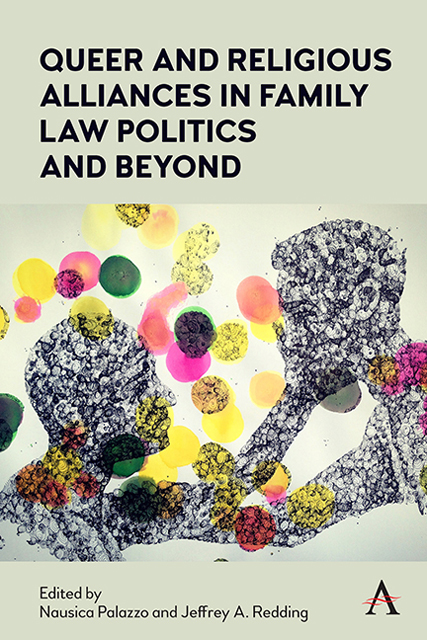
Family law is a site of social conflict and the erasure of non-traditional families. This book explores how conservative religious and progressive queer groups can cooperatively work together to expand family law's recognition beyond the traditional state-sponsored family. Various religious groups have shown an interest in promoting alternative family structures. For example, certain Muslim and Mormon communities have advocated for polygamy, thereby aligning with queer groups' interest in overcoming the engrafting of monogamy into state law. Advocacy by North American religious conservatives for reforms in favor of non-conjugal families and against same-sex marriage overlaps with certain queer efforts to legitimize friendships and non-traditional families more generally.
This book explores these potential areas of queer and religious political cooperation-including limitations and principled reservations to such cooperation. It then looks at additional future arenas of queer and religious political cooperation going beyond family law.
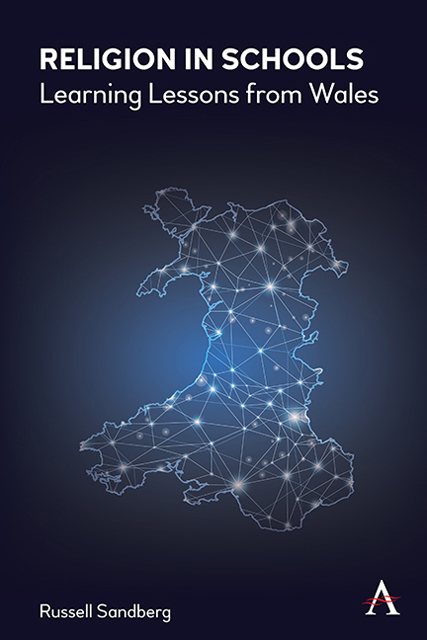
To what extent should religion be taught in classrooms? Should lessons also cover non-religious beliefs? Should the teaching of religion be compulsory or should it be a matter of choice by the parents or the child? Should faith schools be allowed to teach their religious beliefs? Should religious worship be compulsory for all pupils?
Questions of how religion operates within schools prove controversial and divisive. This book explores radical changes that are being made in Wales and the lessons that can be learnt. It examines the historical development of the law in this area, the new Welsh law, its potential shortcomings and areas that the new law leaves untouched, namely the rules on religious worship. The book is written by a leading authority on the interaction of law and religion whose work fed into Welsh parliament debates on the Curriculum and Assessment (Wales) Act 2021.
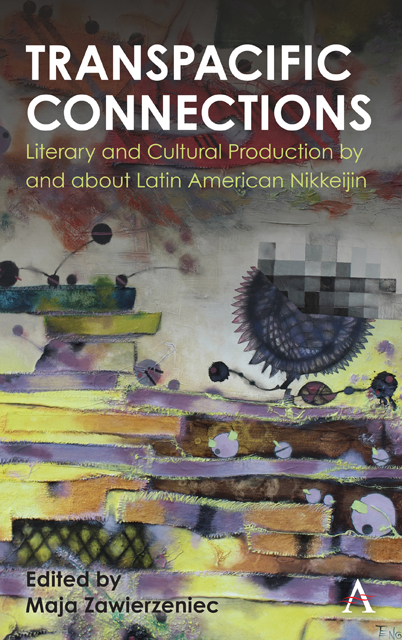
Transpacific Connections: Literary and Cultural Production by and about Latin American Nikkeijin is a cross-cultural work combining Latin American and Japanese studies. It contains original research on social and cultural relations between Japan and Latin America, ranging from Japanese inspirations in one of the Mexican most renowned poets, Brazilian dekasegi (temporary workers in Japan) described in a variety of testimonials, Japanese community in Brazil and its literary production, and a Mexican telenovela, inspired by the Japanese culture to European inspirations in a Nikkei Peruvian writer, Higa Oshiro.
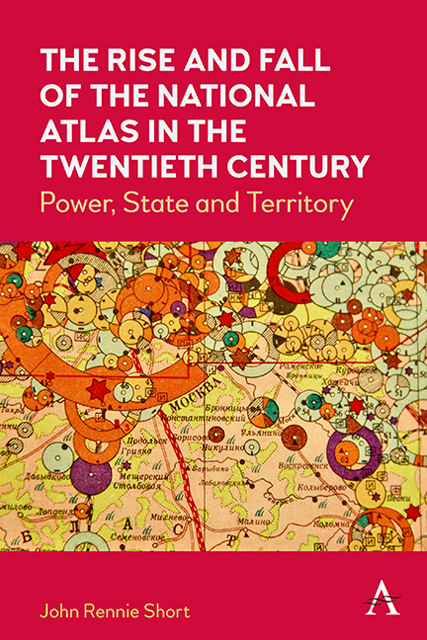
Between 1900 and 2000, more than seventy countries produced a national atlas, an official or quasi-official rendering of the nation-state in maps and accompanying text. This book considers the reasons behind and characteristics of this state-sponsored cartographic explosion. These national atlases mirror and embody some of the important themes of this turbulent century, including the complex connections between nation, state and territory, the rise of state-sponsored science; the growth of nation-states; colonialism and postcolonialism; and the geography of biopolitics.
This is the first book-length study of Sydney-based Horwitz Publications, the largest and most dynamic Australian pulp publisher to emerge after World War II. Although best known for its cheaply produced, sometimes luridly packaged, softcover books, Horwitz Publications played a far larger role in mainstream Australian publishing than has been so far recognised, particularly in the expansion of the paperback from the late 1950s onwards.
Horwitz Publications, Pulp Fiction and the Rise of the Australian Paperback examines the authorship, production, marketing and distribution of Horwitz pulp paperbacks. It includes ground-breaking material on the conditions of creative labour: the writers, artists and editors involved in the production of Horwitz pulp. The book also explores how Horwitz pulp paperbacks acted as a local conduit for the global modern: the ideas, sensations, fascinations, technologies, and people that came crashing into the Australian consciousness in the 1950s and 1960s.
The book, anchored in stimulating debates about the enlightenment ideas of publicness, analyses historical changes in the core phenomena of publicness: possibilities, conditions and obstacles to developing a public sphere in which the public reflexively creates, articulates and expresses public opinion. It is focused on the historical transformation from 'public use of reason' through the identification of 'public opinion' in opinion polls to contemporary opinion mining, in which the Enlightenment idea of public expression of opinion has been displaced by the technology of extracting opinions. It heralds a new critical impetus in theory and research of publicness at a time when critical social thought is sharply criticising and even abandoning the notion of the public sphere, much like the notion of public opinion decades ago, due to its predominantly administrative use.
This volume brings together thirteen papers on hinge epistemology written by Annalisa Coliva and published after her influential monographs Moore and Wittgenstein: Scepticism, Certainty and Common Sense (2010), and Extended Rationality: A Hinge Epistemology (2015). By mixing together Wittgenstein scholarship and systematic philosophy, they illuminate the significance of hinge epistemology for current debates on skepticism, relativism, realism and anti-realism, as well as alethic pluralism, and envision its possible extension to the epistemology of logic. Along the way, other varieties of hinge epistemology, such as Moyal-Sharrock's, Pritchard's, Williams' and Wright's, are considered, both with respect to Wittgenstein scholarship and in their own right.
Margot Norris has defined a generation in Joyce studies in at least two senses of the term. She has been, for upward of four decades, an exemplary voice on Joyce's oeuvre, the ideal reader of our title. Invited to keynote more Joyce conferences than anyone in the history of the field, and by a wide margin, Margot Norris has combined preeminence as a theoretician, an exegete, and a historical critic of all things Joyce. She has anchored what has come to be known as the “Joyce industry” like no other figure since the heyday of Hugh Kenner. But she has also defined a generation of Joyce studies in the sense of delineating the outline or form of our collective project, of simultaneously marking and pushing the boundaries of the field in all directions. No approach to Joyce's work has been foreign to Norris’ imagination or intractable to her powerfully prehensile intellect. To trace her career, accordingly, from the mid-1970s to recent times, is to follow the march of our investment in and engagement with Joyce's literary creation and its critical heritage—not that she has followed the prevailing footsteps, but that she has led the parade.
Appearing two years before Colin McCabe's James Joyce and the Revolution of the Word, widely credited with initiating the post-structuralist turn in Joyce studies, Margot Norris’ The Decentered Universe of Finnegans Wake had already executed that paradigm shift with respect to Joyce's most challenging, experimental opus, a foray beyond not only the avant-garde bourne of modernism, but beyond the pale of a postmodernism yet to be born. In her own words, Joyce's last work assaulted “not only the conventional literary modes but also many of the epistemological presuppositions of our culture.” Its means for accomplishing this radical demarché, on Norris’ account, is to enact a narrative anatomy of the infrastructure of language as such, in which our “empirical belief in the separation of inner and outer, subjective and objective, mental and physical—completely disintegrates.” By casting this Wakean “colliderscape,” an environment where human characters are periodically “melting into their landscape to become river and land, tree and stone,” Norris not only captures Joyce's disruption of the logic of identity at its most cosmic, but anticipates today's ecocritical indictment of the Enlightenment construction of the Anthropocene.