Flip it Open aims to fund the open access publication of 128 titles through typical purchasing habits. Once titles meet a set amount of revenue, we have committed to make them freely available as open access books here on Cambridge Core and also as an affordable paperback. Just another way we're building an open future.
To save content items to your account,
please confirm that you agree to abide by our usage policies.
If this is the first time you use this feature, you will be asked to authorise Cambridge Core to connect with your account.
Find out more about saving content to .
To save content items to your Kindle, first ensure no-reply@cambridge.org
is added to your Approved Personal Document E-mail List under your Personal Document Settings
on the Manage Your Content and Devices page of your Amazon account. Then enter the ‘name’ part
of your Kindle email address below.
Find out more about saving to your Kindle.
Note you can select to save to either the @free.kindle.com or @kindle.com variations.
‘@free.kindle.com’ emails are free but can only be saved to your device when it is connected to wi-fi.
‘@kindle.com’ emails can be delivered even when you are not connected to wi-fi, but note that service fees apply.
Making the child-rights identity detached from its social context and the possibility of self-identification serves to protect the child from traditional and social harmful practices directed toward children. At the same time, the monist identity of the child becomes placed out of reach of democratic deliberations and self-determination. The intersectionality of race and gender becomes two socially constructed concepts that cannot be addressed within the child-rights identity, which both serves to protect the child from discrimination but also risks making child rights detached from addressing crucial structural inequalities based on race and gender.
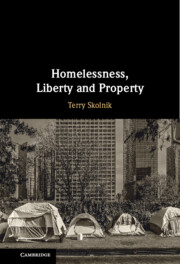
This book advances a theory of the State’s fiduciary duties to end homelessness, maintain public property’s shared value, and legitimize laws that govern public space. It argues that republicanism provides new insight into homelessness and the regulation of public property – insights that existing constitutional theory and legal philosophy typically overlook. This book’s overarching argument, original contributions, and advantages can be described as follows.
Violence and time are elements shaping the lives of children. For children, time is something that to a large part is placed in the future, while to adults, it is placed in the past; still, it is within this time that violence directed toward children occurs because they are children, often with the purpose of shaping their personhood and controlling them. To be able to speak freely about how time and violence socially construct the self-identity as a child is an important act of resistance against the use of violence constructing childhood but also an important form of protection. To fight violence, the child rights discourse must move beyond the child’s rights to be heard to also take seriously the right to freedom of speech.
This chapter discusses the State’s three fiduciary duties related to homelessness and public property. Its opening parts describe why the State and individuals are in a fiduciary relationship and why the State has an overarching fiduciary duty to counteract domination. It then discusses other fiduciary relationships that arise in public law contexts. It then explains how the State has three fiduciary duties, all of which seek to minimize domination. More specifically, the State has fiduciary duties to: (1) end homelessness and secure access to housing, (2) maintain public property’s shared value, and (3) legitimize laws that regulate public space. It elucidates the relationship between these three duties.
This chapter introduces the republican conception of liberty as non-domination. It explains how unhoused persons experience two forms of domination because they lack private property rights. First, others exert control over unhoused persons’ opportunities to obey laws that govern public property. Second, unhoused persons must make non-egalitarian sacrifices (or trade-offs) to obey laws that regulate public space.
This chapter defends the State’s fiduciary duties discussed in the previous chapter. It demonstrates why various other ameliorative or coercive governmental measures either fail to mitigate domination or exacerbate it. These governmental measures include increased shelter spaces, zoning, concentration strategies, and dispersal tactics. The final parts of this chapter demonstrate why encampments are a partially justifiable response to homelessness. Yet the State must provide access to housing because individuals cannot justifiably establish encampments as a form of self-help .
The UN Convention on the Rights of the Child created a legal subject without the possibility for children to exercise any agency in the making of their own identity. What differs between the child-rights identity based on age and a socially constructed identity, and self-identification is that age is a random event free from choice, detached from family context, delinked from any social context and disconnected from one’s self-image.
The CRC does not define the beginning of childhood, only its end. Human rights are granted to all humans based on their humanity. The justification for human rights is that every individual is born and has a rational mind. The monist construction of the child-rights identity is unique as a human right since it does not require either mind or body for its realization, as it is based on age and not the body and mind. The CRC is constructed to cover every child and in some cases from conception, which means that the rights of the child cannot meet liberal rights’ ideas of freedom as a foundation since the individual freedom is conditioned on the immaterial rational mind controling the material body, which the unborn child or very young child do not possess.
This chapter demonstrates how the punishments associated with laws that govern public property entrench individuals in homelessness, such that they will continue to experience non-egalitarian coercion and domination. It explores how these laws result in fines, fees, and surcharges that can result in significant criminal justice debt. It shows how punishments can result in collateral consequences that limit employment prospects and access to housing.
In Homelessness, Liberty and Property, Terry Skolnik establishes a novel theory about the government's duties to end homelessness, maintain public property's value, and legitimize laws that regulate public space. In doing so, Skolnik provides new insight into how the property law system and the regulation of public space limit unhoused persons' freedom and political equality. The book deepens our understanding of how various areas of law, such as constitutional law, legal philosophy, criminal law, and property law, approach the reality of homelessness and advances original arguments to provide new justifications for the right to housing. Skolnik concludes by offering a set of concrete proposals for how the government can reduce the incidence of homelessness and treat unhoused persons with greater concern and respect. This title is part of the Flip it Open Programme and may also be available open access. Check our website Cambridge Core for details.
Arguing for a pro-democratic approach in authoritarian times, this book challenges the focus on age in identifying children in child rights. It argues that, even for the purposes of a benevolent rights regime, adopting a monist construction of child identity artificially separates the law from reality, potentially foreclosing children's democratic deliberative agency in self-identification. An essential feature of other human rights regimes is the scope for a claimant to argue one's identity, or foundationally 'I am a human being;' but such a contention is foreclosed when identification as a child is decided uniquely by reference to age. Drawing on Critical Race Theory's narrative method and inspired by W.E.B. DuBois' identity construction, Professor Grahn-Farley advocates a new theoretical understanding of the child and of child rights, cognisant of social interaction and democratic participation. This book will appeal to researchers in child and human rights, and to sociologists, legal theorists and activists.__This title is part of the Flip it Open programme and may also be available Open Access. Check our website Cambridge Core for details.
The introduction sets the book’s agenda: to offer a novel account of crusade culture from the Mamlūk reconquest of Acre (1291) to the Ottoman siege of Constantinople (1453) drawing on Middle English romances and their contexts in various literary, historical, and legal documents (in English, French, Occitan, German, and Latin). The political culture to which post-1291 crusade romances belonged, I argue, was ambivalent, self-critical, and riddled with anxieties. These anxieties were about issues as fundamental and diverse as God’s endorsement of the crusading enterprise, the conversion of crusaders to Islam, sinfulness and divisions within the Christian community, and the morality of violence. After situating the book’s key claims within debates on Edward Said’s Orientalism and crusade literature, I present its methodology: engaged historicism, attention to how romance writers adapted their sources, and analysis of emotional rhetoric. The book’s contributions to the history of emotions and Middle English studies are discussed, as are the new insights it provides into the historical dimensions of the genre of romance.
This chapter discusses two Middle English Charlemagne romances, The Siege of Milan and The Sultan of Babylon, to illuminate post-1291 anxieties about royal politics, Christian infighting, and God’s will and support. It brings these romances into conversation with two main bodies of literary and historical material. The first consists of writings that polemically engage with the question of whether English and French kings should prioritize domestic affairs or crusading activity. The second consists of poems, letters, and chronicles that, written by Christians following crusading defeats, feature wrathful rebukes of God and threats of conversion to Islam. I draw on this latter corpus to offer a new interpretation of the literary motif of the “afflicted Muslim” who vents his military frustration on his “gods,” arguing that such depictions should be understood as projections of Latin Christian anxieties about God’s lack of support to the crusading enterprise.
This chapter turns to anxieties about the motivations of crusaders, focusing on the romance of Guy of Warwick. In fourteenth-century Europe, an ideology of “chivalric crusading” that sought to harmoniously combine courtly love, worldly self-advancement, and service to God gained wide popularity, disseminated by works such as Guillaume de Machaut’s La Prise d’Alixandre and the Livre des fais of Marshal Boucicaut. But this ideology was not without its critics: writers including John Gower, Philippe de Mézières, and Henry of Grosmont seized upon the notion of crusading as love-service to articulate complex critiques of the worldly ambitions of crusaders. Guy of Warwick intervenes in this debate by exploring the practical and experiential implications of fighting for worldly love and pious motives.
This chapter explores how the three Middle English Otuel romances grapple with concerns about the power of non-Christian empires, Christian military vulnerability, and rash crusader conduct caused by the Mongol conquests, the Mamlūk recovery of Acre, and Ottoman victories at Nicopolis and Constantinople. The first part of the chapter reads the Otuel romances against the development of a dialectic of fear and hope in contemporary political discourse: fear about Christendom’s vulnerability and hope that a powerful non-Christian ally would infuse the Christian community with much-needed strength. The second part of the chapter discusses how these romances engage with and adapt what I call “reverse Orientalism”: a pan-European mode in which Muslim figures (real or imaginary) are made to look down on and offer damning critiques of Christians.