Flip it Open aims to fund the open access publication of 128 titles through typical purchasing habits. Once titles meet a set amount of revenue, we have committed to make them freely available as open access books here on Cambridge Core and also as an affordable paperback. Just another way we're building an open future.
To save content items to your account,
please confirm that you agree to abide by our usage policies.
If this is the first time you use this feature, you will be asked to authorise Cambridge Core to connect with your account.
Find out more about saving content to .
To save content items to your Kindle, first ensure no-reply@cambridge.org
is added to your Approved Personal Document E-mail List under your Personal Document Settings
on the Manage Your Content and Devices page of your Amazon account. Then enter the ‘name’ part
of your Kindle email address below.
Find out more about saving to your Kindle.
Note you can select to save to either the @free.kindle.com or @kindle.com variations.
‘@free.kindle.com’ emails are free but can only be saved to your device when it is connected to wi-fi.
‘@kindle.com’ emails can be delivered even when you are not connected to wi-fi, but note that service fees apply.
This chapter examines H.D.’s Helen in Egypt (1961). While H.D. reviews her own life’s (Greek) work in her long poem in ways that recall Pound’s gathered currents in Women of Trachis, the challenge she sets herself is the opposite of that discernible in Pound’s late cantos: not coherence, but the embrace of proliferating images. The whole poem is an extended “hatching” of the Greek word eidolon ‘image, phantom, idol.’ The importance of the eidolon for H.D. has been previously recognized; the argument here differs in the specificity with which the author traces its lexical and conceptual translation throughout the poem. She reads the first part of Helen in Egypt both as a faithful and programmatic translation of Euripides’s Helen and as a revision of H.D.’s own previous writings on Helen. As with H.D.’s earlier translations, this one too catalyzes new writing: Helen in Egypt’s next two parts in subsequent years, where the Euripidean play’s import and relevance, as well as its unresolved tensions, are teased out. Helen in Egypt thus both performs and argues for the kind of approach to Greek here termed modernist hellenism: balancing freedom and constraint, “philology” and poetry.
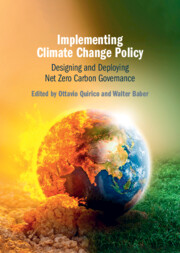
The chapters in this volume provide an interdisciplinary and comparative analysis of the implementation of climate change policies worldwide to assess whether they are meeting the aims set out in the 'Paris Agreement'. The first part compares climate policies employed by the EU, the US, Latin America, Russia, China, the Middle East, and Africa. The second explores ways of improving key regulatory mechanisms to increase the effectiveness of greenhouse gas mitigation and adaptation measures. This book argues that the international community should improve the effectiveness of enforcement mechanisms from the standpoint of secondary norms through an integrated approach. It is an indispensable resource for undergraduate and graduate students of environmental policy and governance, public policy, law and political science, as well as policy makers. This title is part of the Flip it Open Programme and may also be available as Open Access. Check our website - Cambridge Core - for details. (150, 992)
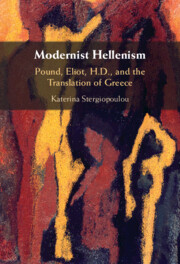
Modernist Hellenism argues that engagement with Greek was central to the evolution of modernist poetics throughout the first half of the twentieth century. It shows that Eliot, Pound, and H.D. all turn to Greek literature, and increasingly Greek tragedy, as they attempt to grapple not only with their own evolving poetics but also with changing sociocultural circumstances at large. Revisiting major modernist works from the perspective of each poet's translations and adaptations from Greek, and drawing on archival materials, the book distinguishes Pound and H.D.'s work from Eliot's and argues for the existence of a specifically modernist hellenism (rather than, say, classicizing or idealizing, decadent or heretical), which is personal, politicized, and unconstrained by institutional standards, but also profoundly textual, language-based, and engaged with classical scholarship. This title is part of the Flip it Open Programme and may also be available Open Access. Check our website Cambridge Core for details.
This chapter explores the principal constitutional challenges to laws that regulate unhoused persons and public property. Municipal ordinances have been challenged on the grounds that they are unconstitutionally vague or overbroad, impose cruel and unusual punishments, violate the right to travel, or infringe the right to equality. This chapter discusses the successes and shortfalls of these challenges. Its concluding parts discuss how U.S. and Canadian courts have rejected a positive right to housing.
The monist construction of the child-rights identity serves an important purpose of shielding the child from the harmful and abusive social and traditional practices that is part of the everyday life of so many children. However, its downside is that it does not allow children to exercise self-determination in the shaping of their own identity. The power to shape your identity sits at the heart of modern democracy and ideas of inclusion and equality. Complex intersectionality will allow the child to both maintain the protection that comes with its monist construction while also allowing for self-determination that takes the social context of the concrete child into consideration. This together with a deliberate practice of self-critique to challenge false hegemonic consciousness of the image of the child it thinks it serves. This might prepare child rights to serve a forceful and relevant theory for advocates to lean on when we are entering the full effects of the climate crisis, and this will be the most significant stress test of our democratic system we as a world community have experienced to this day.
International human rights as a legal regime is founded on the premise that the State is both the violator and the protector of the same set of rights. Universal positivism is the effort to eliminate the internal contradiction embedded within the heart of human rights law. This is done by creating international legal regimes that break through the sovereign veil of States for the benefit of the individuals within the States. This is a benevolent authoritarian move since international human rights treaties cannot be adjusted or addressed by the democratic will of its rights-holding subjects. Universal positivism’s focus on the State as the object of suspicion obscures the intrinsic dependency on the State for the actualizations of said rights, and how a democratic legal order will protect the individuals within the State in ways that international human rights cannot.
This chapter provides an overview of homelessness in the United States and Canada. It discusses the risk factors associated with homelessness. It explains how vagrancy laws historically regulated unhoused persons. These laws were struck down following the rise of the void for vagueness doctrine. This chapter discusses how local governments enacted narrowly tailored municipal ordinances that governed unhoused persons and public property, which withstood void for vagueness challenges.
This chapter explains why the State has greater power to regulate and police unhoused persons compared to people with access to housing. It shows how and why the State has more power to regulate need-alleviating conduct that occurs on public property than on private property. It demonstrates how laws that govern public property operate like legal rules that impose affirmative duties to act on unhoused persons. Yet others control whether unhoused persons can fulfil this affirmative duty, and unhoused persons must make non-egalitarian trade-offs to fulful their positive obligations.
This chapter explores the relationship between homelessness and two prominent conceptions of liberty: positive liberty as self-actualization and negative liberty as non-interference. It sets out how scholars have approached the relationship between homelessness, property, and both forms of liberty. It demonstrates how unhoused persons tend to lack positive and negative liberty.
Human rights are granted to all humans based on their humanity. The justification for human rights is that every individual is born free and equal in possession of a rational mind. The CRC does not define the begining of childhood, only its end at the age of 18. The monist construction of the child-rights identity is unique because, depending on national legal regulations around abortion, it is possible to apply it from the moment of conception and does not require being live-born.
This final chapter demonstrates how the State can fulfil its three fiduciary duties to end homelessness, maintain public property’s shared value, and legitimize laws that govern public space. This chapter unpacks each of these duties and explains their substantive content. Drawing on existing research, this chapter provides concrete proposals for how the State can respect each of its three fiduciary obligations related to homelessness and public property.
Who has the authority to decide on behalf of children the balance between advancing the child rights regime over the legal certainty of real children? This question is put to the test with the Swedish incorporation of the CRC into the national legal system without adhering to normal democratic safeguards; pairing the hierarchy of norms with the corresponding hierarchy of sources when conducing judicial review, or a political question doctrine to maintain the line between the courts and the democratically elected legislator. To incorporate the CRC directly without a process of transference, an international treaty that is as wide in scope and open for interpretation to be directly applicable in concrete cases has caused a persistent condition akin to Agamben’s state of exception, read through Swedish scholar Herbert Tingsten.
The child rights movement does not have a requirement of being built by children. When it speaks on behalf of children, where does its authority to represent children come from? Who has the legitimacy to demand major social change on behalf of children and between children? How can the child rights movement begin to open up to self-critique and discourse on how not to reproduce social inequalities of, for example, race, class, and gender? And when the child rights movement chooses the efficacy of the CRC over a democratic legal order, how is accountability for such decisions exercised?