Flip it Open aims to fund the open access publication of 128 titles through typical purchasing habits. Once titles meet a set amount of revenue, we have committed to make them freely available as open access books here on Cambridge Core and also as an affordable paperback. Just another way we're building an open future.
To save content items to your account,
please confirm that you agree to abide by our usage policies.
If this is the first time you use this feature, you will be asked to authorise Cambridge Core to connect with your account.
Find out more about saving content to .
To save content items to your Kindle, first ensure no-reply@cambridge.org
is added to your Approved Personal Document E-mail List under your Personal Document Settings
on the Manage Your Content and Devices page of your Amazon account. Then enter the ‘name’ part
of your Kindle email address below.
Find out more about saving to your Kindle.
Note you can select to save to either the @free.kindle.com or @kindle.com variations.
‘@free.kindle.com’ emails are free but can only be saved to your device when it is connected to wi-fi.
‘@kindle.com’ emails can be delivered even when you are not connected to wi-fi, but note that service fees apply.
The conclusion revisits the book’s key claims and maps new avenues for research on medieval European representations of, and self-definition in relation to, Muslims and Islam. It closes with a brief discussion of the qualified anti-crusade argument, grounded in imperfect ideas of equality, voiced by the French lawyer Honorat Bovet in his widely disseminated Arbre des batailles (1387).
The final chapter considers tensions between beliefs in the “healthy,” salvific character of crusading and anxieties about the morality of violence. It argues that, finding their origins in events that took place during the First Crusade, these tensions became especially acute in late medieval crusade culture, crystallizing in works by John Gower, John Wyclif, and Michel Pintoin, among others, and complexly articulated in The Siege of Jerusalem and Richard Coeur de Lion. The chapter reads these romances alongside literary and historical responses to the Christian conquest of Jerusalem in 1099, pogroms against Europe’s Jewish communities, and acts of cannibalism perpetrated by crusaders at the siege of Ma‘arra in 1098. The Siege of Jerusalem, Richard Coeur de Lion, and authors who wrote about these events deployed similar representational strategies to raise questions about the corruptive potential and human costs of holy war.
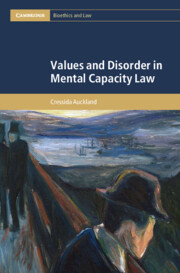
This book draws on the disciplines of law, philosophy, and psychiatry to interrogate whether the Mental Capacity Act 2005 meets the challenges posed by mental disorder to decision-making. It is often assumed that to allow space for individuality, any test for capacity must focus only on decision-making processes and not on the substance of the values that underpin decisions. Auckland challenges this assumption, arguing that the current law serves merely as a façade, behind which judgements can be made about the nature of a person's values, free from proper scrutiny. This book provides an in-depth analysis of when and how a person's disordered values should be relevant to the determination of their capacity, offering novel suggestions for reforming the capacity test to better reflect the impact of disorder on decision-making. It also explores the implications of this analysis for people found to lack capacity, concluding that reforms to the best interest provisions are urgently needed. This title is part of the Flip it Open Programme and may also be available Open Access. Check our website Cambridge Core for details.
The period from the Mamlūk reconquest of Acre (1291) to the Ottoman siege of Constantinople (1453) witnessed the production of a substantial corpus of Middle English crusade romances. Marcel Elias places these romances in dialogue with multifarious European writings to offer a novel account of late medieval crusade culture: as ambivalent and self-critical, animated by tensions and debates, and fraught with anxiety. These romances uphold ideals of holy war while expressing anxieties about issues as diverse as God's endorsement of the crusading enterprise, the conversion of Christians to Islam, the sinfulness of crusaders, and the morality of violence. Reinvigorating debates in medieval postcolonialism, drawing on emotion studies, and excavating a rich multilingual archive, this book is a major contribution to the cultural history of the crusades. This title is part of the Flip it Open programme and may also be available open access. Check our website Cambridge Core for details.
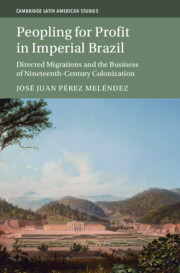
Peopling for Profit provides a comprehensive history of migration to nineteenth-century imperial Brazil. Rather than focus on Brazilian slavery or the mass immigration of the end of the century, José Juan Pérez Meléndez examines the orchestrated efforts of migrant recruitment, transport to, and settlement in post-independence Brazil. The book explores Brazil's connections to global colonization drives and migratory movements, unveiling how the Brazilian Empire's engagement with privately run colonization models from overseas crucially informed the domestic sphere. It further reveals that the rise of a for-profit colonization model indelibly shaped Brazilian peopling processes and governance by creating a feedback loop between migration management and government formation. Pérez Meléndez sheds new light on how directed migrations and the business of colonization shaped Brazilian demography as well as enduring social, racial, and class inequalities. This title is part of the Flip it Open programme and may also be available Open Access. Check our website Cambridge Core for details.
Criminal groups, like mafias and gangs, often get away with murder. States are responsible for providing justice but struggle to end this impunity, in part because these groups prevent witnesses from coming forward with information. Silencing Citizens explains how criminal groups constrain cooperation with the police not just by threatening retaliation but also by shaping citizens' perceptions of community support for cooperation. The book details a social psychological process through which criminal group violence makes community support for cooperation appear weaker than it is and thus reduces witnesses' willingness to share information with the police. The book draws on a wealth of data including original surveys in two contrasting cities - Baltimore, Maryland in the Global North and Lagos, Nigeria in the Global South. This title is part of the Flip it Open Programme and may also be available Open Access. Check our website Cambridge Core for details.
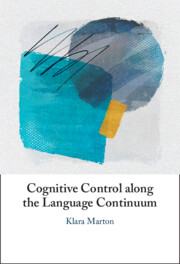
This book provides a comprehensive review of the interactions between language and cognitive control in children. Broadening its scope beyond specific dimensions of language and cognition, it provides an extensive review of the dynamic changes in cognitive control along the entire language continuum. It integrates behavioral and neurophysiological findings from different disciplines, such as bilingualism, cognitive psychology, and communication disorders. A better understanding of the relationship between cognitive control and language in various speakers allows us to develop more sensitive experimental paradigms, as well as more efficient assessment and intervention methods. This title is part of the Flip it Open Programme and may also be available open access. Check our website Cambridge Core for details.
This book explores the role that values and value judgements play in assessments of capacity. In doing so, it has attempted to grapple with a fundamental tension that lies at the heart of our capacity legislation. On the one hand, the liberal intuitions that underpin the test for capacity suggest that people ought to be free to make decisions according to their own values and beliefs, no matter how unusual or eccentric these may be. On the other, there are certain beliefs or ways of valuing that we intuitively regard as so abnormal, and so harmful, that we think that far from facilitating decisions based on them, people ought instead to be protected from them. We characterise these beliefs, values, or behaviours as ‘disordered’, yet as the foregoing analysis has shown, the line between the disordered and the eccentric is far from clear cut, being both socially and culturally contingent, and reliant on complex clinical judgements, rather than a matter of objective medical fact.
This chapter will explore how the provisions governing best interests assessments ought to be reformed so as to better ensure that an agent’s authentic desires are being prioritised in decisions being taken about them. The starting point should be that the assessor ascertains ‘so far is reasonably practicable’ the individual’s wishes, feelings, beliefs, and values. This should then be supplemented by a presumption that the agent’s wishes and feelings will be determinative of what is in their best interests, except when giving effect to them will expose the person to a risk of significant harm. Even where the harms are significant, however, there will still be occasions where the agent’s wishes and feelings should nonetheless take precedence; where to do otherwise would involve frustrating their deeply and authentically held beliefs, values, or commitments. This chapter will highlight some of the potential considerations which ought to guide assessors in these circumstances. It will propose that assessors be provided with a list of factors that they must take into account when determining the degree of weight to be ascribed to the agent’s wishes, which reflect these considerations.
The language continuum is defined by the dimensions of language ability (from language talent to language disorder) and bilingual language proficiency (from monolingual to multilingual) in this chapter. Although the terms “language ability” and “proficiency” are often used interchangeably in the literature, we systematically differentiate these two dimensions in order to explain variations in speakers from different linguistic backgrounds. Cross-linguistic data are presented to strengthen this argument. The differentiation of these two language dimensions is important for professionals to prevent the over- and underdiagnosis of children who come from language minority groups or exhibit bilingual language disorder. A discussion of similarities in language acquisition between typically developing monolingual and bilingual first language speakers and between monolingual and bilingual children with developmental language disorder is included to highlight common features along the language dimensions. Within-subject approaches and different measures of assessment are described to support the classification of children from diverse linguistic environments.
We have seen rapid development of various brain training methods in the past few decades that quickly became popular among educators, despite the lack of evidence about these products’ effectiveness. Some negative outcomes prompted researchers from both neuroscience and education to develop collaboratively neuroscience-based approaches to educational and clinical practices. This chapter discusses fundamental training-related questions, such as neuroplasticity, transfer, and individual differences and provides a detailed examination of one domain-specific method (i.e., working memory training) and a multi-domain approach (i.e., music training). Based on the findings, we point out how critical it is to determine the specific cognitive or linguistic skills that researchers intend to target with a given training method prior to the beginning of the training process. Further, it is essential to identify the overlapping processing components and underlying neural regions between the training tasks and the post-training measures to achieve transfer to untrained tasks.