A collection of out-of-copyright and rare books from the Cambridge University Library and other world-class institutions that have been digitally scanned, made available online, and reprinted in paperback.
To save content items to your account,
please confirm that you agree to abide by our usage policies.
If this is the first time you use this feature, you will be asked to authorise Cambridge Core to connect with your account.
Find out more about saving content to .
To save content items to your Kindle, first ensure no-reply@cambridge.org
is added to your Approved Personal Document E-mail List under your Personal Document Settings
on the Manage Your Content and Devices page of your Amazon account. Then enter the ‘name’ part
of your Kindle email address below.
Find out more about saving to your Kindle.
Note you can select to save to either the @free.kindle.com or @kindle.com variations.
‘@free.kindle.com’ emails are free but can only be saved to your device when it is connected to wi-fi.
‘@kindle.com’ emails can be delivered even when you are not connected to wi-fi, but note that service fees apply.
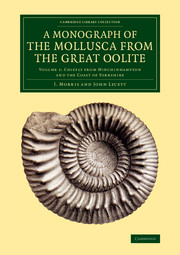
The Bathonian Great Oolite Group is a fossiliferous series of calcareous and argillaceous rocks that are only rarely oolitic in composition. Based upon the collection of physician John Lycett (1804–82), made in quarries on Minchinhampton Common in the Cotswolds, this monograph, written in collaboration with the geologist John Morris (1810–86), covers only that part of the Great Oolite found in this location. However, it also includes species found on the coast of Yorkshire, near Scarborough, which would be included in the Inferior Oolite. The significance of this work is that it is one of just a handful of monographs describing and illustrating the British Jurassic gastropod and bivalve fauna. Having received no significant revision since the late 1940s, it remains a key reference point for Jurassic molluscs. Volume 1 comprises three parts published between 1850 and 1854, covering cephalopods, gastropods and worms as well as bivalves.
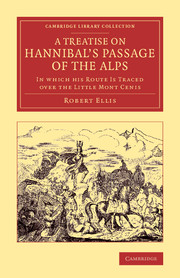
The controversy over the route taken by Hannibal, the Carthaginian army and his famous elephants in their crossing of the Alps to attack Rome in 218 BCE began within fifty years of the event and has continued for many centuries. A particular scholarly dispute emerged in the 1850s between Robert Ellis (1819/20–85) and William John Law (1786–1869), and was fought in the pages of the Journal of Classical and Sacred Philology and in books. Ellis, a classical scholar, had surveyed the Alpine passes in 1852 and again in 1853, when he published this work, claiming that the Little Mount Cenis route was the one used. Law responded immediately in the Journal, and later published his own theory, to which Ellis riposted in 1867 with An Enquiry into the Ancient Routes between Italy and Gaul, also reissued in this series. Modern scholarship doubts, however, that either man was right.
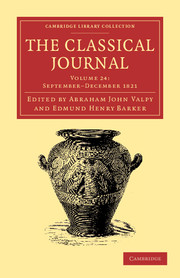
A precursor of modern academic journals, this quarterly periodical, published between 1810 and 1829 and now reissued in forty volumes, was founded and edited by Abraham John Valpy (1787–1854). Educated at Pembroke College, Oxford, Valpy established himself in London as an editor and publisher, primarily of classical texts. Edmund Henry Barker (1788–1839), who had studied at Trinity College, Cambridge, became a contributor and then co-editor of this journal, which fuelled a scholarly feud with the editors of the Museum criticum (1813–26), a rival periodical (also reissued in the Cambridge Library Collection). Although its coverage overlapped with that of its competitor, the Classical Journal also included general literary and antiquarian articles as well as Oxford and Cambridge prize poems and examination papers. It remains a valuable resource, illuminating the development of nineteenth-century classical scholarship and academic journals. Volume 24 contains the September and December issues for 1821.
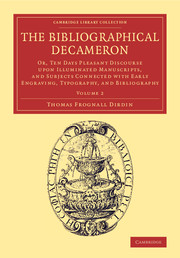
Bibliomania, the almost obsessive collecting of rare books and early editions by the aristocracy, which peaked in 1812 with the sale of the Valdarfer Boccaccio, was fuelled in no small part by the work of the bibliographer Thomas Frognall Dibdin (1776–1847). His most famous book, Bibliomania, popularised the word's use in England. The present work was first published in three volumes in 1817 and may be considered a continuation of Bibliomania in both style and content. Using a dialogue format with extensive footnotes, it covers all aspects of bibliography from early illuminated manuscripts and printed books through to contemporary book collectors and auctions. The work is notable for the number and quality of its illustrations. Volume 2 presents the rise and progress of printing, particularly on the Continent, and a survey of the history of bookbinding. Dibdin's Bibliomania (revised edition, 1811) and his Reminiscences of a Literary Life (1836) are also reissued in this series.
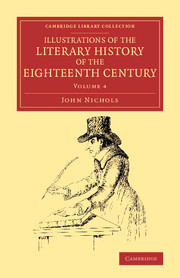
The subtitle of this eight-volume set is Consisting of Authentic Memoirs and Original Letters of Eminent Persons, and Intended as a Sequel to the 'Literary Anecdotes', which had been published in nine volumes by the author, editor and publisher John Nichols (1745–1826) between 1812 and 1815, and are also reissued in this series. Like its predecessor set, these 'illustrations' are a useful source of biographical material on authors and publishers at a time when many of the literary genres we take for granted, such as the novel, the autobiography and the analytical history, were first being developed. The volumes were published between 1817 and 1858, the project being continued after Nichols' death by his son and grandson. Among the 'eminent persons' included in Volume 4 are Isaac Newton, the poet Abraham Cowley, the topographer Richard Gough, and the Scottish jurist Lord Kaimes.
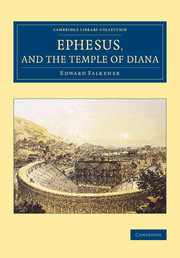
The English architect and archaeologist Edward Falkener (1814–96) spent a fortnight sketching the ancient ruins of Ephesus during his trip through Anatolia in the 1840s. In Part I of this 1862 publication, he tries to reconstruct the architectural features of Ephesian buildings, tracing the history of the city. Falkener's accomplished sketches and layouts display his artistic talent, which won him the grand medal of honour at the Paris Universal Exhibition in 1855. Part II focuses on the Temple of Artemis, one of the seven wonders of the ancient world. Falkener surveys ancient writings relating to the Greek temple, which still awaited rediscovery at that time. Although his speculations about the location of the temple were later proven wrong by John Turtle Wood, who correctly identified the site in 1869 (his 1877 account is also reissued in this series), Falkener's work added to the Victorian interest in ancient architecture.
A precursor of modern academic journals, this quarterly periodical, published between 1810 and 1829 and now reissued in forty volumes, was founded and edited by Abraham John Valpy (1787–1854). Educated at Pembroke College, Oxford, Valpy established himself in London as an editor and publisher, primarily of classical texts. Edmund Henry Barker (1788–1839), who had studied at Trinity College, Cambridge, became a contributor and then co-editor of this journal, which fuelled a scholarly feud with the editors of the Museum criticum (1813–26), a rival periodical (also reissued in the Cambridge Library Collection). Although its coverage overlapped with that of its competitor, the Classical Journal also included general literary and antiquarian articles as well as Oxford and Cambridge prize poems and examination papers. It remains a valuable resource, illuminating the development of nineteenth-century classical scholarship and academic journals. Volume 26 contains the September and December issues for 1822.
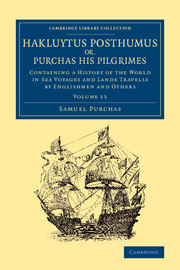
Richard Hakluyt's 12-volume Principal Navigations Voyages Traffiques and Discoveries of the English Nation, originally published at the end of the sixteenth century, and reissued by the Cambridge Library Collection in the edition of 1903–5, was followed in 1625 by Hakluytus Posthumus or, Purchas his Pilgrimes, now reissued in a 20-volume edition published in 1905–7. When first published in four folio volumes, the work was the largest ever printed in England. An Anglican priest, Samuel Purchas (1577–1626) was a friend of Hakluyt, and based his great work in part on papers not published by Hakluyt before his death. As well as being a wide-ranging survey of world exploration, it is notable as an anti-Catholic polemic, and a justification of British settlement in North America. Volume 13 includes voyages to the north-east and Siberia, the travels of Henry Hudson, a history of Iceland, and a journey to the Crimea.
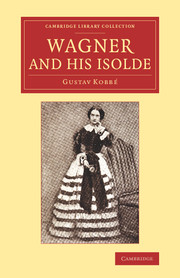
The German poet Mathilde Wesendonck (1828–1902), author of the texts of the Wesendonck Lieder, was the wife of Wagner's patron, the wealthy silk merchant Otto Wesendonck. From 1852 until 1858, the Wagners lived next to the Wesendoncks in Zurich and an intense relationship developed between Wagner and Mathilde, subsequently reflected in the impossible love at the heart of his opera Tristan und Isolde. Prepared by the American musicologist Gustav Kobbé (1857‒1918), who provides a helpful connecting narrative, this 1905 translation of a selection of 'the most intimate and striking' of Wagner's impassioned letters to Mathilde charts the course of the opera's creation. Written between 1853 and 1863, the letters show Wagner thinking aloud not only about Tristan but also the planning of Parsifal. As Mathilde's letters to Wagner were destroyed, the exact nature of their relationship and of her inspiration musically will never be fully established.
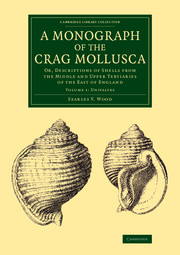
The Pliocene-Pleistocene Crags of East Anglia are an incredibly rich source of fossil shells, many belonging to extant Boreal and Mediterranean genera. Dominated by marine gastropods and bivalves, the deposits also contain evidence of terrestrial and non-marine gastropods and bivalves, brachiopods, and extensive epifauna including bryozoans. Published between 1848 and 1879 in four volumes, the latter two being supplements with further descriptions and geological notes, this monograph by Searles Valentine Wood (1798–1880) covers more than 650 species and varieties of fossil mollusc. For each species Wood gives a synonymy, diagnosis (in Latin), full description, dimensions, occurrence and remarks. The supplements also provide a breakdown of the species and their current distribution. The detailed plates were prepared by the conchologist George Brettingham Sowerby and his namesake son. Volume 1 (1848) covers gastropods and scaphopods, illustrated in 21 plates.
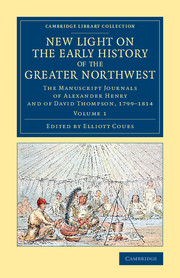
During the 1890s Elliott Coues (1842–1899), one of America's greatest ornithologists, edited several exploration narratives about the American Northwest, including Lewis and Clark's Travels. Coues tracked down the manuscript journals of two of Lewis and Clark's contemporaries, fur trader Alexander Henry (1765–1814) and geographer David Thompson (1770–1857), employees of the Northwest Company. Coues' abridged and edited version of Henry's text, accompanied by notes that draw heavily on Thompson's scientific records, appeared in 1897 in three volumes; in this reissue the index volume is included in Volume 2. Despite the deep prejudice evident in Henry's writing, Coues judged it a reliable account of his unscrupulous business dealings, and of the harsh realities he observed among many different First Nations peoples. Volume 1 covers the period from 1799 to 1808, when Henry travelled along the Red River and set up the Pembina River trading post.
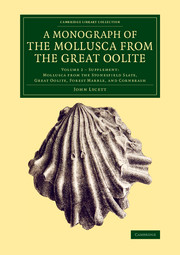
The Bathonian Great Oolite Group is a fossiliferous series of calcareous and argillaceous rocks that are only rarely oolitic in composition. Based upon the collection of physician John Lycett (1804–82), made in quarries on Minchinhampton Common in the Cotswolds, this monograph, written in collaboration with the geologist John Morris (1810–86), covers only that part of the Great Oolite found in this location. However, it also includes species found on the coast of Yorkshire, near Scarborough, which would be included in the Inferior Oolite. The significance of this work is that it is one of just a handful of monographs describing and illustrating the British Jurassic gastropod and bivalve fauna. Having received no significant revision since the late 1940s, it remains a key reference point for Jurassic molluscs. Volume 2 comprises the supplement published by Lycett in 1863, covering molluscs found in geological formations besides the Great Oolite.
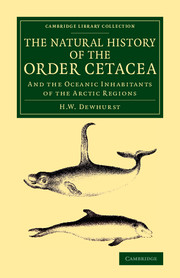
Before Henry William Dewhurst established himself in Bloomsbury, where he lectured in 1827–8 on anatomy and physiology, he served as a ship's surgeon and made a journey to Greenland and its surrounding seas in 1824. During that time he was able to study the large Arctic creatures that fascinated him, especially whales. In the decade after his return, he prepared this thorough description of polar sea life. Published in 1834, it includes many engraved illustrations. Whales were of especial interest in this period, owing to the use of their blubber in many household objects, and Dewhurst also touches on the practice of whaling. His work was one of the first studies to examine the different species of whales, as well as dolphins and other marine life. It stands as an important contribution to the development of Arctic zoology.
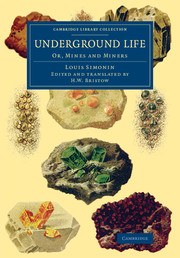
Born in Marseilles, Louis Simonin (1830–86) became a leading mining engineer of his age. He travelled widely on government and private commissions, particularly around the United States, where he was held in very high esteem. His posthumous renown rests primarily on this substantial work on mining, first published in 1867. The book is divided into three parts, dealing with coal mining, metal mining, and the mining of precious stones. It covers metallurgy and mineralogy, the history of mining, and techniques, methods and equipment. Bringing the struggles of miners to life, and enhanced by numerous illustrations by some of the leading engravers of the day, the book is regarded as having inspired and informed Émile Zola, whose great novel Germinal (1885) depicts coal miners' lives during a strike. Simonin's work reached a wide readership in his native France, and this English translation appeared in 1869.
William Wells Brown (1814?–84) was uncertain of his own birthday because he was born a slave, near Lexington, Kentucky. He managed to escape to Ohio, a free state, in 1834. Obtaining work on steamboats, he assisted many other slaves to escape across Lake Erie to Canada. In 1849, having achieved prominence in the American anti-slavery movement, he left for Europe, both to lecture against slavery and also to gain an education for his daughters. He stayed in Europe until 1854, since the Fugitive Slave Act of 1850 had made it possible that he could be taken back into slavery if he returned. Meanwhile, he had begun to write both fiction and non-fiction, and this account of his travels in Europe, prefaced by a short biography, was published in 1852. Brown was able to return to the United States in 1854, when British friends paid for his freedom.
Founded in 1868 by the Cambridge scholars John Eyton Bickersteth Mayor (1825–1910), William George Clark (1821–78), and William Aldis Wright (1831–1914), this biannual journal was a successor to The Journal of Classical and Sacred Philology (also reissued in the Cambridge Library Collection). Unlike its short-lived precursor, it survived for more than half a century, until 1920, spanning the period in which specialised academic journals developed from more general literary reviews. Predominantly classical in subject matter, with contributions from such scholars as J. P. Postgate, Robinson Ellis and A. E. Housman, the journal also contains articles on historical and literary themes across the 35 volumes, illuminating the growth and scope of philology as a discipline during this period. Volume 31, comprising issues 61 and 62, was published in 1910.
Richard Hakluyt's 12-volume Principal Navigations Voyages Traffiques and Discoveries of the English Nation, originally published at the end of the sixteenth century, and reissued by the Cambridge Library Collection in the edition of 1903–5, was followed in 1625 by Hakluytus Posthumus or, Purchas his Pilgrimes, now reissued in a 20-volume edition published in 1905–7. When first published in four folio volumes, the work was the largest ever printed in England. An Anglican priest, Samuel Purchas (1577–1626) was a friend of Hakluyt, and based his great work in part on papers not published by Hakluyt before his death. As well as being a wide-ranging survey of world exploration, it is notable as an anti-Catholic polemic, and a justification of British settlement in North America. Volume 17 concentrates on South America, with a voyage through the Straits of Magellan, the conquest of Peru, and historical material on the Incas.
As a Reference to Nichols, Priestley and Walker's New Map of Inland Navigation, Derived from Original and Parliamentary Documents in the Possession of Joseph Priestley, Esq.
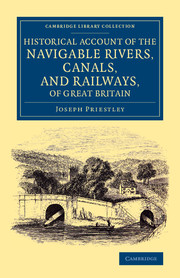
This account of the waterways and railways of Great Britain covers those transport routes and systems of inland navigation that had been completed or were in construction at the time of publication in 1831. Not to be confused with his polymath namesake, Joseph Priestley (1766–1852) entrenched his expertise as manager of the Aire and Calder Navigation. Here he provides alphabetical entries ranging from the Aberdare Canal in Glamorganshire to the Wyrley and Essington Canal in the Midlands. Details are given regarding location, construction, relevant Acts of Parliament, and even tonnage rates. Published to accompany a huge map of British inland navigation (a smaller version is featured here as the frontispiece), the book became a standard reference work in its day. Shedding light on the development of commercially crucial infrastructure, it remains valuable to readers and researchers interested in the history of British transport and technology.
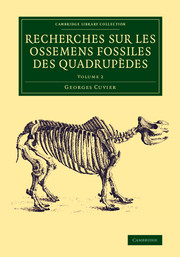
Georges Cuvier (1769–1832), one of the founding figures of vertebrate palaeontology, pursued a successful scientific career despite the political upheavals in France during his lifetime. In the 1790s, Cuvier's work on fossils of large mammals including mammoths enabled him to show that extinction was a scientific fact. In 1812 Cuvier published this four-volume illustrated collection of his papers on palaeontology, osteology and stratigraphy. It was followed in 1817 by his famous Le règne animal, available in the Cambridge Library Collection both in French and in Edward Griffith's expanded English translation (1827–35). Volume 2 of Recherches sur les ossemens fossiles describes eleven species of pachyderm found in recent alluvial deposits. They include elephants, mastodons, rhinoceros, hippopotamus, tapir and the hyrax (which Cuvier classified as an ungulate rather than a rodent). Cuvier argued from osteological comparisons with living species that all should be considered distinct species in their own right.
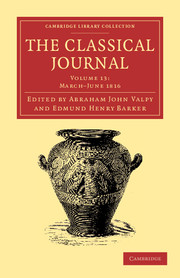
A precursor of modern academic journals, this quarterly periodical, published between 1810 and 1829 and now reissued in forty volumes, was founded and edited by Abraham John Valpy (1787–1854). Educated at Pembroke College, Oxford, Valpy established himself in London as an editor and publisher, primarily of classical texts. Edmund Henry Barker (1788–1839), who had studied at Trinity College, Cambridge, became a contributor and then co-editor of this journal, which fuelled a scholarly feud with the editors of the Museum criticum (1813–26), a rival periodical (also reissued in the Cambridge Library Collection). Although its coverage overlapped with that of its competitor, the Classical Journal also included general literary and antiquarian articles as well as Oxford and Cambridge prize poems and examination papers. It remains a valuable resource, illuminating the development of nineteenth-century classical scholarship and academic journals. Volume 13 contains the March and June issues for 1816.