A collection of out-of-copyright and rare books from the Cambridge University Library and other world-class institutions that have been digitally scanned, made available online, and reprinted in paperback.
To save content items to your account,
please confirm that you agree to abide by our usage policies.
If this is the first time you use this feature, you will be asked to authorise Cambridge Core to connect with your account.
Find out more about saving content to .
To save content items to your Kindle, first ensure no-reply@cambridge.org
is added to your Approved Personal Document E-mail List under your Personal Document Settings
on the Manage Your Content and Devices page of your Amazon account. Then enter the ‘name’ part
of your Kindle email address below.
Find out more about saving to your Kindle.
Note you can select to save to either the @free.kindle.com or @kindle.com variations.
‘@free.kindle.com’ emails are free but can only be saved to your device when it is connected to wi-fi.
‘@kindle.com’ emails can be delivered even when you are not connected to wi-fi, but note that service fees apply.
A prominent philanthropist, landowner and politician near Halifax, John Lister (1847–1933) was dedicated to his community. He founded a Catholic school in Halifax and a reformatory trade school in the grounds of his ancestral home. A keen local historian, Lister became involved in the Yorkshire Archaeological Society, particularly in the later years of his life. Along with four other volumes, he edited for the Society this 1924 publication. Transcribing customs records from Hull and records made by royal officials in the fourteenth and fifteenth centuries, Lister describes in his introduction how the wool trade developed and became a central part of the livelihood and character of Yorkshire. He discusses imports and exports, the lives of merchant families, and how the merchandise itself evolved as wool-working developed. Illuminating the social impact of a historically significant industry, this work remains relevant to researchers interested in the medieval economy.
A renowned Enlightenment polymath, Sir William Jones (1746–94) was a lawyer, translator and poet who wrote authoritatively on politics, comparative linguistics and oriental literature. Known initially for his Persian translations and political radicalism, Jones became further celebrated for his study and translation of ancient Sanskrit texts following his appointment to the supreme court in Calcutta in 1783. He spent the next eleven years introducing Europe to the mysticism and rationality of Hinduism through works such as his nine 'Hymns' to Hindu deities and his translation of the Sanskrit classic Sacontalá, influencing Romantic writers from William Blake to August Wilhelm Schlegel. Volume 5 of his thirteen-volume works, published in 1807, contains Jones' researches into Indian botany - including the comparative 'Botanical Observations on Select Indian Plants' - coupled with his groundbreaking Grammar of the Persian Language (1771), the work which established Jones as one of the eighteenth century's greatest orientalists.
Composed in the twelfth century by the leading Muslim jurist Burhan al-Din al-Marghinani (1135–97), the original Arabic al-Hidāyah remains a central text of Islamic personal law. This English translation, from a Persian version of the work, was prepared by the orientalist Charles Hamilton (c.1752–92) for the East India Company in 1791. Although since superseded, it remains a fascinating document in the history of colonial jurisprudence. The legal system was central to the entrenchment of British rule in India, providing the framework for active control of civil administration and the courts. Translations of Islamic texts were intended to remove the language barrier for colonial officials, and blurred British and native law for the first time. Volume 4 contains sections on the partition of property, the eating of meat, sacrifice, abominations, the cultivation of wasteland, prohibited drinks, hunting, pawning, crimes against the person, fines, wills, and hermaphrodites.
A renowned Enlightenment polymath, Sir William Jones (1746–94) was a lawyer, translator and poet who wrote authoritatively on politics, comparative linguistics and oriental literature. Known initially for his Persian translations and political radicalism, Jones became further celebrated for his study and translation of ancient Sanskrit texts following his appointment to the supreme court in Calcutta in 1783. He spent the next eleven years introducing Europe to the mysticism and rationality of Hinduism through works such as his nine 'Hymns' to Hindu deities and his translation of the Sanskrit classic Sacontalá, influencing Romantic writers from William Blake to August Wilhelm Schlegel. Volume 10 of his thirteen-volume works, published in 1807, contains Jones' important pre-India poetry and essays. These include his essays 'On the Arts, Commonly Called Imitative' and 'On the Poetry of the Eastern Nations' (1772), which anticipate Romantic themes of the sublime, as well as his Alcaic 'Odes', which establish Jones' radical political identity.
A highly influential Czech historian and politician, František Palacký (1798–1876) became in 1825 the first editor of the journal of the Bohemian Museum, a key cultural institution in the development of Czech nationalism. He was actively involved in the nineteenth-century Czech national revival, helping also to found the Czech national theatre. Entering politics in 1848, he served as president of the Prague Slavic Congress, and later became a member of the Austrian senate as a supporter of greater Czech autonomy. In this extensive work, comprising ten separate parts - published in German between 1836 and 1867 - Palacký gives a detailed account of Bohemian history until 1526. It remains an important and ambitious feat of scholarship, still relevant to students of central European history. The second part of Volume 4 (1860) deals with the years 1457–71 and the reign of George of Poděbrady.
Trained as a doctor, John Crawfurd (1783–1868) went on to have a distinguished career in colonial administration with the East India Company. He held senior posts in Java from 1811 to 1816, including that of resident at the court of Yogyakarta. A talented linguist and ethnologist, Crawfurd acquired a sound knowledge of ancient Kawi and contemporary Javanese. Upon his return to Britain in 1817, he became a fellow of the Royal Society and published this three-volume work on the Indonesian islands, principally Java, to great acclaim. Following further service abroad, he published accounts of his various missions in south-east Asia and an encyclopaedic sequel to the present work (all of which are reissued in the Cambridge Library Collection). Volume 3 examines political institutions and commerce, covering major exports and imports along with demographics, public revenue and laws.
A key figure in the history of Benares (Varanasi), James Prinsep (1799–1840) was instrumental in expanding Western knowledge of Indian civilisation. After briefly studying under Pugin, he became an assay master in Calcutta in 1819, and soon moved to Benares. His talents were many, and within a few years he had completed a detailed map of the city, designed a new mint, engineered a system to improve sanitation and begun studying the inscriptions and coins that helped him to decipher two ancient scripts and to establish the dates of Indian dynasties. Collected in 1858 and edited by the numismatist Edward Thomas (1813–86), these essays are generously illustrated, often in Prinsep's hand, and display the enormous breadth of his knowledge. Volume 2 includes essays on coins and philology, with the extensive tables and lists of historical weights and measures, and explanations of Indian chronology.
This classic tale by Robert Louis Stevenson (1850–94) was first published as a serial between 1881 and 1882 in the children's magazine Young Folks, where it received little attention, and then in the form of this book in 1883, which secured its everlasting fame. Telling the story of the young Jim Hawkins' search for the buried treasure of Captain Flint, it had a profound impact on how pirates were perceived in the popular imagination, immortalising treasure maps marked with an 'X', exotic locations, and one-legged seamen with parrots on their shoulders. Vividly drawn, the character of Long John Silver remains one of the most compelling antagonists in all of children's literature. The work of a masterful storyteller at the height of his powers, this coming-of-age adventure has been adapted for film and television countless times, and continues to delight readers of all ages.
William Knighton (d.1900) published this history of Ceylon (present-day Sri Lanka) in 1845. He spent most of his career there and in India, and published a number of vivid accounts of his experiences. This book surveys the ancient past of the island up to Knighton's own day, covering its many rulers and invaders as well as its shifting eras of unity and fracture into competing kingdoms. It gives an account of the first settlement, the establishment of Buddhism, the growth of the ancient capital Anuradhapura, the reign of Queen Anula (the first female ruler in Asia), the emergence of early Christianity, the development of the caste system, the medieval wars after the forming of the Jaffna Kingdom, the arrival of the Portuguese, the Dutch, and later the British invasion. Covering law, agriculture, arts, religion and language, this learned work remains relevant to students of Sri Lankan history and culture.
The Persian chronicler Ferishta (1560–1620) composed his great work, published in this four-volume English translation in 1829, at the court of Bijapur - where he spent most of his life - under the patronage of King Ibrahim Adil Shah II. It covers Muslim India from around 975 to 1612 and is notable for its balance, despite Ferishta's close involvement with some of the events and people he records. Valuable additions to the text made by the translator, East India Company officer John Briggs (1785–1875), include genealogical tables and notes, as well as a comparative chronology of events in Europe and India. Volume 2 examines the descendants of Timur (or Tamerlane) and the founding by Babur of the Mughal dynasty in the early sixteenth century. It also contains coverage of the kings of the Deccan to the dissolution of the Bahmani sultanate after 1518.
Published in 1793–6, amid controversy following the death of John Wesley (1703–91), this two-volume work vied with others for status as the most authentic biography of the Methodist leader. Wesley had left his papers to his physician John Whitehead (c.1740–1804) and the ministers Thomas Coke and Henry Moore, but Whitehead monopolised the papers in the preparation of his biography, refusing to allow his fellow executors access - the dispute is mentioned in the prefatory matter to Volume 1. Volume 2 continues the narrative from Wesley's voyage to America in 1735 until his death. It also includes assessments of his character and writings, as well as Whitehead's analysis of the state of Methodism at the time of writing. This remains an important critical appraisal of the movement's early history, offering researchers valuable insights into the contemporary debates over the future and structure of Methodism.
Published in English in 1884, this is the posthumous third edition of an 1862 study by the German orientalist Martin Haug (1827–76). He produced this groundbreaking analysis and comparison of Sanskrit and the Avesta while professor of Sanskrit at the Government College of Poona. His time in India enabled him to make an unprecedented study of Zoroastrian texts, becoming the first to translate the seventeen Gathas into a European language, thereby helping to highlight that they were composed by Zoroaster. Edward William West (1824–1905), an engineer and self-taught orientalist, met Haug in India. Having read this work's first edition, he was inspired to study further the Pahlavi language. On his and Haug's return to Europe in 1866, they worked closely together in translating and publishing Zoroastrian texts. West's edition of Haug's Essays includes several updates, unpublished papers from Haug's collection, appendices of further translations, and a biography of the author.
Best known for his ideas relating to evolution, French naturalist Jean-Baptiste Lamarck (1744–1829) first built his reputation as a botanist and was elected to the prestigious Académie des Sciences in 1779. His career took a new turn in 1793 when he was made professor of 'insects, worms and microscopic animals' at the Muséum National d'Histoire Naturelle, although he lacked prior knowledge of the subject area. Undaunted, Lamarck set out to classify organisms which few naturalists had considered worthy of study since Linnaeus. He was the first to distinguish vertebrates from 'invertebrates' - a term he coined - by the presence of a vertebral column. In this groundbreaking seven-volume work, published between 1815 and 1822, he arranges invertebrates into twelve classes, laying the foundations for the modern study of these organisms. In volume 7, first published in 1822, Lamarck continues to classify molluscs.
Published in 1793–6, amid controversy following the death of John Wesley (1703–91), this two-volume work vied with others for status as the most authentic biography of the Methodist leader. Wesley had left his papers to his physician John Whitehead (c.1740–1804) and the ministers Thomas Coke and Henry Moore, but Whitehead monopolised the papers in the preparation of his biography, refusing to allow his fellow executors access - the dispute is mentioned in the prefatory matter to Volume 1. In addition to tracing John's career up to 1735, this volume contains accounts of his relatives, notably a substantial life of his brother Charles (1707–88), distinguished hymnodist and fellow founder of Methodism. This remains an important critical appraisal of the movement's early history, offering researchers valuable insights into the contemporary debates over the future and structure of Methodism.
A highly influential Czech historian and politician, František Palacký (1798–1876) became in 1825 the first editor of the journal of the Bohemian Museum, a key cultural institution in the development of Czech nationalism. He was actively involved in the nineteenth-century Czech national revival, helping also to found the Czech national theatre. Entering politics in 1848, he served as president of the Prague Slavic Congress, and later became a member of the Austrian senate as a supporter of greater Czech autonomy. In this extensive work, comprising ten separate parts - published in German between 1836 and 1867 - Palacký gives a detailed account of Bohemian history until 1526. It remains an important and ambitious feat of scholarship, still relevant to students of central European history. Volume 4 deals with the era of George of Poděbrady; this first part (1857) covers the years 1439–57.
The greatest actor of his day, Sir Henry Irving (1838–1905) thrilled audiences with his tragedy and melodrama, his Hamlet and Richard III, most famously at the Lyceum Theatre in London. Born John Henry Brodribb, he took the name Irving for his first professional stage appearance in 1856. A long and exhausting apprenticeship followed, during which he played some 700 roles in theatres up and down the country before establishing his reputation in 1871 in the psychological thriller The Bells. In 1878, he took over the Lyceum and here, with his business manager Bram Stoker (1847–1912) and actress Ellen Terry (rumoured to be his mistress), he became the theatrical icon of his age. This engaging two-volume tribute by Stoker, his closest friend, was first published in 1906. Volume 2 includes a fascinating account of Irving's acting techniques and his receipt of a knighthood - the first actor to be thus honoured.
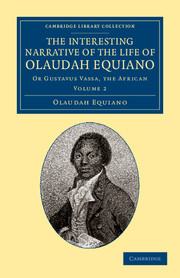
Nigerian-born Olaudah Equiano (c.1745–97), also known as Gustavus Vassa, was sold into slavery as a child and endured the horrors of the transatlantic slave ships. He later worked on board Royal Navy vessels, receiving an education and converting to Christianity. Buying his freedom in 1766, he embarked on several voyages before settling in London, where he became involved in the causes of anti-slavery and the welfare of former slaves. Published in 1789, this successful two-volume autobiography boosted the abolitionist cause, providing a first-hand account of the experience of Africans on both sides of the Atlantic. An important document in the history of slavery and immigration, it remains a classic work of black writing. Volume 2 recounts how Equiano achieved his freedom, his conversion to Christianity, his experience of shipwreck in the West Indies, and his life in England.
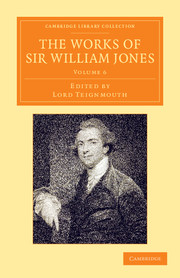
A renowned Enlightenment polymath, Sir William Jones (1746–94) was a lawyer, translator and poet who wrote authoritatively on politics, comparative linguistics and oriental literature. Known initially for his Persian translations and political radicalism, Jones became further celebrated for his study and translation of ancient Sanskrit texts following his appointment to the supreme court in Calcutta in 1783. He spent the next eleven years introducing Europe to the mysticism and rationality of Hinduism through works such as his nine 'Hymns' to Hindu deities and his translation of the Sanskrit classic Sacontalá. Volume 6 of his thirteen-volume works, published in 1807, contains Jones' Poeseos Asiaticae Commentariorum (1774). A work of comparative literature after mentor Robert Lowth's De Sacra Poesi Hebraeorum (1753) - in which Lowth established the Old Testament as a masterpiece of oriental literature - Poeseos provides detailed Latin commentary on the language and techniques of Arabic, Hebrew, Persian and Turkish poetry.
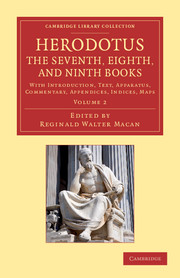
Fellow and Master of University College, Oxford, the classical scholar Reginald Walter Macan (1848–1941) published in 1908 this two-volume edition (in three parts) of the last books of Herodotus, which cover the Greco-Persian Wars during the period 486 to 479 BCE. Volume 2 contains appendices, indexes and maps pertinent to Books 7-9. Macan includes essays on supporting authorities, hypotheses on lost witnesses, and textual evidence presented by poets such as Pindar and the philosophers Plato and Aristotle. He also examines the events in the last books of The Histories, outlining the preparations of the Persians and Greeks for war, as well as reviewing the conflict's strategic aspects as it shifted from Thessaly through to Plataea and Sestos. Macan's edition remains valuable to scholars of the history of textual criticism and the historiography of the classical world.
Charles Edward Trevelyan (1807–1886) published Education of the People of India in 1838. The work is a rigorous defence of the educational reforms that took place in colonial India during the 1830s, which led to a western-based curriculum replacing traditional Indian learning. The work is a response to the arguments of orientalists such as H. H. Wilson (1786–1860), recently retired from government office in India, but still advocating an orientalist educational policy. In this work Trevelyan puts forward his arguments for the moral and intellectual advantages of English as the principle language of instruction and defends the government's resolution of March 1835 that specified that Indians should be educated by the study of European literature, culture and science. It was one of the most influential Anglicist tracts of the Indian educational debates, and it gives valuable insight into the ideas behind what became standard government educational policy.