Refine search
Actions for selected content:
26204 results in Theoretical Physics and Mathematical Physics
A characterisation of atomicity
- Part of
-
- Journal:
- Mathematical Proceedings of the Cambridge Philosophical Society / Volume 175 / Issue 2 / September 2023
- Published online by Cambridge University Press:
- 24 April 2023, pp. 459-465
- Print publication:
- September 2023
-
- Article
- Export citation
Relatively hyperbolic groups with strongly shortcut parabolics are strongly shortcut
- Part of
-
- Journal:
- Mathematical Proceedings of the Cambridge Philosophical Society / Volume 175 / Issue 2 / September 2023
- Published online by Cambridge University Press:
- 17 April 2023, pp. 367-380
- Print publication:
- September 2023
-
- Article
-
- You have access
- Open access
- HTML
- Export citation
PSP volume 174 issue 3 Cover and Back matter
-
- Journal:
- Mathematical Proceedings of the Cambridge Philosophical Society / Volume 174 / Issue 3 / May 2023
- Published online by Cambridge University Press:
- 13 April 2023, pp. b1-b5
- Print publication:
- May 2023
-
- Article
-
- You have access
- Export citation
The Picard group of vertex affinoids in the first Drinfeld covering
- Part of
-
- Journal:
- Mathematical Proceedings of the Cambridge Philosophical Society / Volume 175 / Issue 2 / September 2023
- Published online by Cambridge University Press:
- 13 April 2023, pp. 423-432
- Print publication:
- September 2023
-
- Article
-
- You have access
- Open access
- HTML
- Export citation
-
Let F be a finite extension of ${\mathbb Q}_p$. Let $\Omega$ be the Drinfeld upper half plane, and $\Sigma^1$ the first Drinfeld covering of $\Omega$. We study the affinoid open subset $\Sigma^1_v$ of $\Sigma^1$ above a vertex of the Bruhat–Tits tree for $\text{GL}_2(F)$. Our main result is that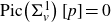 $\text{Pic}\!\left(\Sigma^1_v\right)[p] = 0$, which we establish by showing that $\text{Pic}({\mathbf Y})[p] = 0$ for ${\mathbf Y}$ the Deligne–Lusztig variety of $\text{SL}_2\!\left({\mathbb F}_q\right)$. One formal consequence is a description of the representation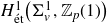 $H^1_{{\acute{\text{e}}\text{t}}}\!\left(\Sigma^1_v, {\mathbb Z}_p(1)\right)$ of $\text{GL}_2(\mathcal{O}_F)$ as the p-adic completion of $\mathcal{O}\!\left(\Sigma^1_v\right)^\times$.


PSP volume 174 issue 3 Cover and Front matter
-
- Journal:
- Mathematical Proceedings of the Cambridge Philosophical Society / Volume 174 / Issue 3 / May 2023
- Published online by Cambridge University Press:
- 13 April 2023, pp. f1-f2
- Print publication:
- May 2023
-
- Article
-
- You have access
- Export citation
Random amenable C*-algebras
- Part of
-
- Journal:
- Mathematical Proceedings of the Cambridge Philosophical Society / Volume 175 / Issue 2 / September 2023
- Published online by Cambridge University Press:
- 12 April 2023, pp. 345-366
- Print publication:
- September 2023
-
- Article
-
- You have access
- Open access
- HTML
- Export citation
-
What is the probability that a random UHF algebra is of infinite type? What is the probability that a random simple AI algebra has at most k extremal traces? What is the expected value of the radius of comparison of a random Villadsen-type AH algebra? What is the probability that such an algebra is $\mathcal{Z}$-stable? What is the probability that a random Cuntz–Krieger algebra is purely infinite and simple, and what can be said about the distribution of its K-theory? By constructing $\mathrm{C}^*$-algebras associated with suitable random (walks on) graphs, we provide context in which these are meaningful questions with computable answers.


Equations of mirrors to log Calabi–Yau pairs via the heart of canonical wall structures
- Part of
-
- Journal:
- Mathematical Proceedings of the Cambridge Philosophical Society / Volume 175 / Issue 2 / September 2023
- Published online by Cambridge University Press:
- 11 April 2023, pp. 381-421
- Print publication:
- September 2023
-
- Article
-
- You have access
- Open access
- HTML
- Export citation
Stable finiteness does not imply linear soficity
- Part of
-
- Journal:
- Mathematical Proceedings of the Cambridge Philosophical Society / Volume 175 / Issue 2 / September 2023
- Published online by Cambridge University Press:
- 11 April 2023, pp. 319-325
- Print publication:
- September 2023
-
- Article
- Export citation
Intermediate-scale statistics for real-valued lacunary sequences
- Part of
-
- Journal:
- Mathematical Proceedings of the Cambridge Philosophical Society / Volume 175 / Issue 2 / September 2023
- Published online by Cambridge University Press:
- 11 April 2023, pp. 303-318
- Print publication:
- September 2023
-
- Article
-
- You have access
- Open access
- HTML
- Export citation
-
We study intermediate-scale statistics for the fractional parts of the sequence $\left(\alpha a_{n}\right)_{n=1}^{\infty}$, where $\left(a_{n}\right)_{n=1}^{\infty}$ is a positive, real-valued lacunary sequence, and $\alpha\in\mathbb{R}$. In particular, we consider the number of elements $S_{N}\!\left(L,\alpha\right)$ in a random interval of length $L/N$, where $L=O\!\left(N^{1-\epsilon}\right)$, and show that its variance (the number variance) is asymptotic to L with high probability w.r.t. $\alpha$, which is in agreement with the statistics of uniform i.i.d. random points in the unit interval. In addition, we show that the same asymptotic holds almost surely in $\alpha\in\mathbb{R}$ when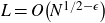 $L=O\!\left(N^{1/2-\epsilon}\right)$. For slowly growing L, we further prove a central limit theorem for $S_{N}\!\left(L,\alpha\right)$ which holds for almost all $\alpha\in\mathbb{R}$.


The Log Product Formula in Quantum K-theory
- Part of
-
- Journal:
- Mathematical Proceedings of the Cambridge Philosophical Society / Volume 175 / Issue 2 / September 2023
- Published online by Cambridge University Press:
- 11 April 2023, pp. 225-252
- Print publication:
- September 2023
-
- Article
- Export citation
-
We prove a formula expressing the K-theoretic log Gromov-Witten invariants of a product of log smooth varieties $V \times W$ in terms of the invariants of V and W. The proof requires introducing log virtual fundamental classes in K-theory and verifying their various functorial properties. We introduce a log version of K-theory and prove the formula there as well.

Paucity problems and some relatives of Vinogradov’s mean value theorem
- Part of
-
- Journal:
- Mathematical Proceedings of the Cambridge Philosophical Society / Volume 175 / Issue 2 / September 2023
- Published online by Cambridge University Press:
- 05 April 2023, pp. 327-343
- Print publication:
- September 2023
-
- Article
-
- You have access
- Open access
- HTML
- Export citation
-
When $k\geqslant 4$ and $0\leqslant d\leqslant (k-2)/4$, we consider the system of Diophantine equations We show that in this cousin of a Vinogradov system, there is a paucity of non-diagonal positive integral solutions. Our quantitative estimates are particularly sharp when
 \begin{align*}x_1^j+\ldots +x_k^j=y_1^j+\ldots +y_k^j\quad (1\leqslant j\leqslant k,\, j\ne k-d).\end{align*} $d=o\!\left(k^{1/4}\right)$.


Finite point configurations in products of thick Cantor sets and a robust nonlinear Newhouse Gap Lemma
- Part of
-
- Journal:
- Mathematical Proceedings of the Cambridge Philosophical Society / Volume 175 / Issue 2 / September 2023
- Published online by Cambridge University Press:
- 13 March 2023, pp. 285-301
- Print publication:
- September 2023
-
- Article
-
- You have access
- Open access
- HTML
- Export citation
-
In this paper we prove that the set $\{|x^1-x^2|,\dots,|x^k-x^{k+1}|\,{:}\,x^i\in E\}$ has non-empty interior in $\mathbb{R}^k$ when $E\subset \mathbb{R}^2$ is a Cartesian product of thick Cantor sets $K_1,K_2\subset\mathbb{R}$. We also prove more general results where the distance map $|x-y|$ is replaced by a function $\phi(x,y)$ satisfying mild assumptions on its partial derivatives. In the process, we establish a nonlinear version of the classic Newhouse Gap Lemma, and show that if $K_1,K_2, \phi$ are as above then there exists an open set S so that $\bigcap_{x \in S} \phi(x,K_1\times K_2)$ has non-empty interior.


Co-t-structures, cotilting and cotorsion pairs
- Part of
-
- Journal:
- Mathematical Proceedings of the Cambridge Philosophical Society / Volume 175 / Issue 1 / July 2023
- Published online by Cambridge University Press:
- 10 March 2023, pp. 89-106
- Print publication:
- July 2023
-
- Article
-
- You have access
- Open access
- HTML
- Export citation
-
Let $\textsf{T}$ be a triangulated category with shift functor $\Sigma \colon \textsf{T} \to \textsf{T}$. Suppose $(\textsf{A},\textsf{B})$ is a co-t-structure with coheart $\textsf{S} = \Sigma \textsf{A} \cap \textsf{B}$ and extended coheart $\textsf{C} = \Sigma^2 \textsf{A} \cap \textsf{B} = \textsf{S}* \Sigma \textsf{S}$, which is an extriangulated category. We show that there is a bijection between co-t-structures $(\textsf{A}^{\prime},\textsf{B}^{\prime})$ in $\textsf{T}$ such that $\textsf{A} \subseteq \textsf{A}^{\prime} \subseteq \Sigma \textsf{A}$ and complete cotorsion pairs in the extended coheart $\textsf{C}$. In the case that $\textsf{T}$ is Hom-finite, $\textbf{k}$-linear and Krull–Schmidt, we show further that there is a bijection between complete cotorsion pairs in $\textsf{C}$ and functorially finite torsion classes in $\textsf{mod}\, \textsf{S}$.


Motivic zeta functions of hyperplane arrangements
- Part of
-
- Journal:
- Mathematical Proceedings of the Cambridge Philosophical Society / Volume 175 / Issue 1 / July 2023
- Published online by Cambridge University Press:
- 07 March 2023, pp. 187-215
- Print publication:
- July 2023
-
- Article
-
- You have access
- Open access
- HTML
- Export citation
-
For each central essential hyperplane arrangement $\mathcal{A}$ over an algebraically closed field, let $Z_\mathcal{A}^{\hat\mu}(T)$ denote the Denef–Loeser motivic zeta function of $\mathcal{A}$. We prove a formula expressing $Z_\mathcal{A}^{\hat\mu}(T)$ in terms of the Milnor fibers of related hyperplane arrangements. This formula shows that, in a precise sense, the degree to which $Z_{\mathcal{A}}^{\hat\mu}(T)$ fails to be a combinatorial invariant is completely controlled by these Milnor fibers. As one application, we use this formula to show that the map taking each complex arrangement $\mathcal{A}$ to the Hodge–Deligne specialization of $Z_{\mathcal{A}}^{\hat\mu}(T)$ is locally constant on the realization space of any loop-free matroid. We also prove a combinatorial formula expressing the motivic Igusa zeta function of $\mathcal{A}$ in terms of the characteristic polynomials of related arrangements.


NAV volume 76 issue 2-3 Cover and Front matter
-
- Journal:
- The Journal of Navigation / Volume 76 / Issue 2-3 / March 2023
- Published online by Cambridge University Press:
- 15 August 2023, pp. f1-f2
- Print publication:
- March 2023
-
- Article
-
- You have access
- Export citation
Minimum required accuracy for HD maps
-
- Journal:
- The Journal of Navigation / Volume 76 / Issue 2-3 / March 2023
- Published online by Cambridge University Press:
- 22 June 2023, pp. 238-254
- Print publication:
- March 2023
-
- Article
-
- You have access
- Open access
- HTML
- Export citation
Ionospheric correction of S-band tracking radar data using NavIC S-band signals in missile test range applications
-
- Journal:
- The Journal of Navigation / Volume 76 / Issue 2-3 / March 2023
- Published online by Cambridge University Press:
- 05 April 2023, pp. 225-237
- Print publication:
- March 2023
-
- Article
- Export citation
Characterisation and position-aiding performance analysis of Doppler observation from android smartphones
-
- Journal:
- The Journal of Navigation / Volume 76 / Issue 2-3 / March 2023
- Published online by Cambridge University Press:
- 28 April 2023, pp. 375-393
- Print publication:
- March 2023
-
- Article
- Export citation
A collaborative collision avoidance strategy for autonomous ships under mixed scenarios
-
- Journal:
- The Journal of Navigation / Volume 76 / Issue 2-3 / March 2023
- Published online by Cambridge University Press:
- 05 April 2023, pp. 200-224
- Print publication:
- March 2023
-
- Article
- Export citation
Collision risk quantification for pairs of recorded aircraft trajectories
-
- Journal:
- The Journal of Navigation / Volume 76 / Issue 2-3 / March 2023
- Published online by Cambridge University Press:
- 26 April 2023, pp. 181-199
- Print publication:
- March 2023
-
- Article
-
- You have access
- Open access
- HTML
- Export citation
