Refine search
Actions for selected content:
26204 results in Theoretical Physics and Mathematical Physics
B - Appendix B Compendium of Sigma Matrix and Fierz Identities
- from Part V - The Appendices
-
- Book:
- From Spinors to Supersymmetry
- Published online:
- 06 July 2023
- Print publication:
- 08 June 2023, pp 807-818
-
- Chapter
- Export citation
13 - The Minimal Supersymmetric Standard Model
- from Part III - Realistic Supersymmetric Models
-
- Book:
- From Spinors to Supersymmetry
- Published online:
- 06 July 2023
- Print publication:
- 08 June 2023, pp 493-547
-
- Chapter
- Export citation
Bibliography
-
- Book:
- From Spinors to Supersymmetry
- Published online:
- 06 July 2023
- Print publication:
- 08 June 2023, pp 985-991
-
- Chapter
- Export citation
Part III - Realistic Supersymmetric Models
-
- Book:
- From Spinors to Supersymmetry
- Published online:
- 06 July 2023
- Print publication:
- 08 June 2023, pp 491-664
-
- Chapter
- Export citation
H - Appendix H Lie Group and Algebra Techniques for Gauge Theories
- from Part V - The Appendices
-
- Book:
- From Spinors to Supersymmetry
- Published online:
- 06 July 2023
- Print publication:
- 08 June 2023, pp 901-946
-
- Chapter
- Export citation
A - Appendix A Notations and Conventions
- from Part V - The Appendices
-
- Book:
- From Spinors to Supersymmetry
- Published online:
- 06 July 2023
- Print publication:
- 08 June 2023, pp 791-806
-
- Chapter
- Export citation
14 - Realizations of Supersymmetry Breaking
- from Part III - Realistic Supersymmetric Models
-
- Book:
- From Spinors to Supersymmetry
- Published online:
- 06 July 2023
- Print publication:
- 08 June 2023, pp 548-574
-
- Chapter
- Export citation
11 - Radiative Corrections in Supersymmetry
- from Part II - Constructing Supersymmetric Theories
-
- Book:
- From Spinors to Supersymmetry
- Published online:
- 06 July 2023
- Print publication:
- 08 June 2023, pp 434-478
-
- Chapter
- Export citation
Index
-
- Book:
- From Spinors to Supersymmetry
- Published online:
- 06 July 2023
- Print publication:
- 08 June 2023, pp 999-1010
-
- Chapter
- Export citation
1 - Two-Component Formalism for Spin-1/2 Fermions
- from Part I - Spin-1/2 Fermions in Quantum Field Theory, the Standard Model, and Beyond
-
- Book:
- From Spinors to Supersymmetry
- Published online:
- 06 July 2023
- Print publication:
- 08 June 2023, pp 3-51
-
- Chapter
- Export citation
I - Appendix I Interaction Vertices of the SM and Its Seesaw Extension
- from Part V - The Appendices
-
- Book:
- From Spinors to Supersymmetry
- Published online:
- 06 July 2023
- Print publication:
- 08 June 2023, pp 947-951
-
- Chapter
- Export citation
Part IV - Sample Calculations in the Standard Model and Its Supersymmetric Extension
-
- Book:
- From Spinors to Supersymmetry
- Published online:
- 06 July 2023
- Print publication:
- 08 June 2023, pp 665-788
-
- Chapter
- Export citation
Part I - Spin-1/2 Fermions in Quantum Field Theory, the Standard Model, and Beyond
-
- Book:
- From Spinors to Supersymmetry
- Published online:
- 06 July 2023
- Print publication:
- 08 June 2023, pp 1-328
-
- Chapter
- Export citation
Literature review on maritime cybersecurity: state-of-the-art
-
- Journal:
- The Journal of Navigation / Volume 76 / Issue 4-5 / July 2023
- Published online by Cambridge University Press:
- 06 June 2023, pp. 453-466
- Print publication:
- July 2023
-
- Article
- Export citation
Necessary condition for the L2 boundedness of the Riesz transform on Heisenberg groups
- Part of
-
- Journal:
- Mathematical Proceedings of the Cambridge Philosophical Society / Volume 175 / Issue 2 / September 2023
- Published online by Cambridge University Press:
- 23 May 2023, pp. 445-458
- Print publication:
- September 2023
-
- Article
- Export citation
-
Let $\mu$ be a Radon measure on the nth Heisenberg group ${\mathbb{H}}^n$. In this note we prove that if the $(2n+1)$-dimensional (Heisenberg) Riesz transform on ${\mathbb{H}}^n$ is $L^2(\mu)$-bounded, and if $\mu(F)=0$ for all Borel sets with ${\text{dim}}_H(F)\leq 2$, then $\mu$ must have $(2n+1)$-polynomial growth. This is the Heisenberg counterpart of a result of Guy David from [Dav91].


Sign changes of fourier coefficients of holomorphic cusp forms at norm form arguments
- Part of
-
- Journal:
- Mathematical Proceedings of the Cambridge Philosophical Society / Volume 175 / Issue 3 / November 2023
- Published online by Cambridge University Press:
- 23 May 2023, pp. 539-567
- Print publication:
- November 2023
-
- Article
-
- You have access
- Open access
- HTML
- Export citation
-
Let f be a non-CM Hecke eigencusp form of level 1 and fixed weight, and let $\{\lambda_f(n)\}_n$ be its sequence of normalised Fourier coefficients. We show that if $K/ \mathbb{Q}$ is any number field, and $\mathcal{N}_K$ denotes the collection of integers representable as norms of integral ideals of K, then a positive proportion of the positive integers $n \in \mathcal{N}_K$ yield a sign change for the sequence $\{\lambda_f(n)\}_{n \in \mathcal{N}_K}$. More precisely, for a positive proportion of $n \in \mathcal{N}_K \cap [1,X]$ we have $\lambda_f(n)\lambda_f(n') < 0$, where n′ is the first element of $\mathcal{N}_K$ greater than n for which $\lambda_f(n') \neq 0$.
For example, for $K = \mathbb{Q}(i)$ and $\mathcal{N}_K = \{m^2+n^2 \;:\; m,n \in \mathbb{Z}\}$ the set of sums of two squares, we obtain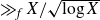 $\gg_f X/\sqrt{\log X}$ such sign changes, which is best possible (up to the implicit constant) and improves upon work of Banerjee and Pandey. Our proof relies on recent work of Matomäki and Radziwiłł on sparsely-supported multiplicative functions, together with some technical refinements of their results due to the author.
In a related vein, we also consider the question of sign changes along shifted sums of two squares, for which multiplicative techniques do not directly apply. Using estimates for shifted convolution sums among other techniques, we establish that for any fixed $a \neq 0$ there are $\gg_{f,\varepsilon} X^{1/2-\varepsilon}$ sign changes for $\lambda_f$ along the sequence of integers of the form $a + m^2 + n^2 \leq X$.


On the integral Hodge conjecture for varieties with trivial Chow group
-
- Journal:
- Mathematical Proceedings of the Cambridge Philosophical Society / Volume 175 / Issue 2 / September 2023
- Published online by Cambridge University Press:
- 17 May 2023, pp. 433-443
- Print publication:
- September 2023
-
- Article
- Export citation
-
We obtain examples of smooth projective varieties over ${\mathbb C}$ that violate the integral Hodge conjecture and for which the total Chow group is of finite rank. Moreover, we show that there exist such examples defined over number fields.

Coniveau filtrations and Milnor operation $Q_n$
$Q_n$
- Part of
-
- Journal:
- Mathematical Proceedings of the Cambridge Philosophical Society / Volume 175 / Issue 3 / November 2023
- Published online by Cambridge University Press:
- 08 May 2023, pp. 521-538
- Print publication:
- November 2023
-
- Article
- Export citation
-
Let BG be the classifying space of an algebraic group G over the field ${\mathbb C}$ of complex numbers. There are smooth projective approximations X of $BG\times {\mathbb P}^{\infty}$, by Ekedahl. We compute a new stable birational invariant of X defined by the difference of two coniveau filtrations of X, by Benoist and Ottem. Hence we give many examples such that two coniveau filtrations are different.


Zariski dense orbits for regular self-maps of split semiabelian varieties in positive characteristic
- Part of
-
- Journal:
- Mathematical Proceedings of the Cambridge Philosophical Society / Volume 175 / Issue 3 / November 2023
- Published online by Cambridge University Press:
- 02 May 2023, pp. 479-519
- Print publication:
- November 2023
-
- Article
- Export citation
Positive lower density for prime divisors of generic linear recurrences
- Part of
-
- Journal:
- Mathematical Proceedings of the Cambridge Philosophical Society / Volume 175 / Issue 3 / November 2023
- Published online by Cambridge University Press:
- 24 April 2023, pp. 467-478
- Print publication:
- November 2023
-
- Article
-
- You have access
- Open access
- HTML
- Export citation
-
Let $d \ge 3$ be an integer and let $P \in \mathbb{Z}[x]$ be a polynomial of degree d whose Galois group is $S_d$. Let $(a_n)$ be a non-degenerate linearly recursive sequence of integers which has P as its characteristic polynomial. We prove, under the generalised Riemann hypothesis, that the lower density of the set of primes which divide at least one non-zero element of the sequence $(a_n)$ is positive.


